
The Quiet Luxury of Genetic Diversity
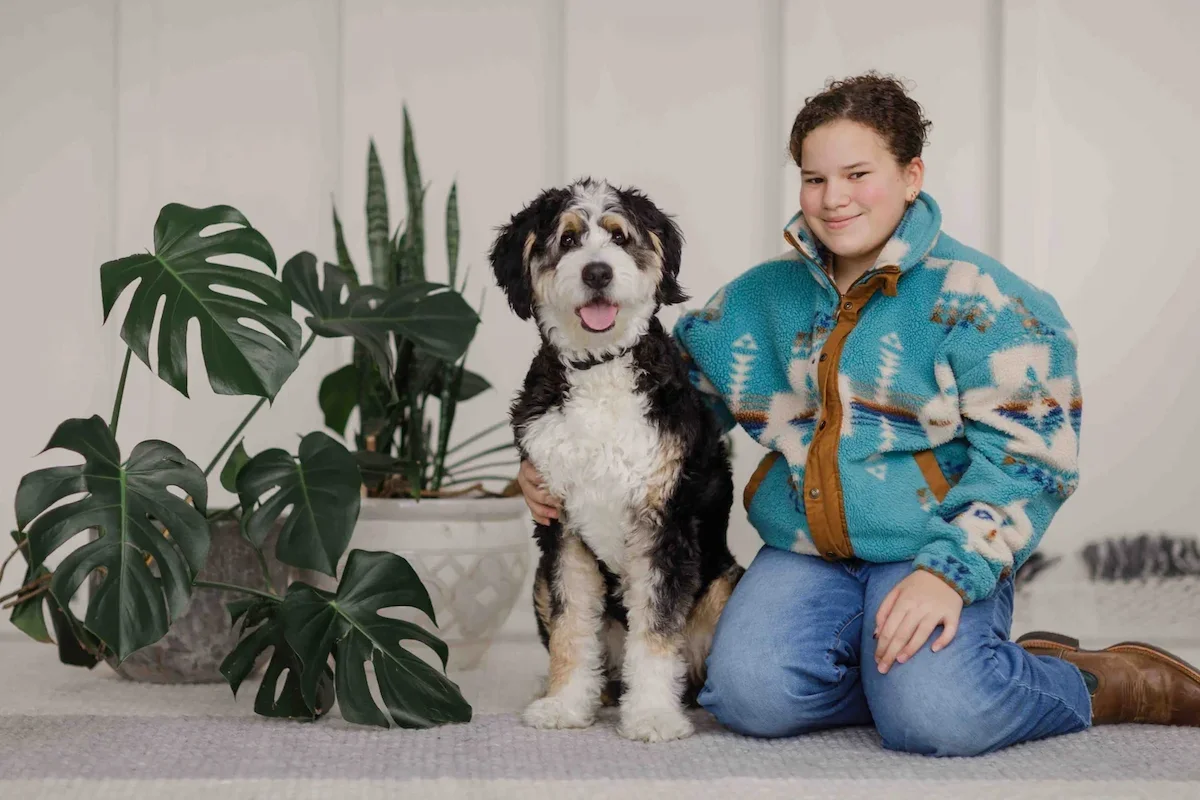
Penelope with her owner
Imagine the feeling of a cashmere throw on a winter evening, or the quiet confidence of a heritage timepiece on your wrist. True luxury is never loud. It is not defined by trends or ornamentation, but by endurance—by craftsmanship so thoughtful it continues performing long after the novelty fades.
At Stokeshire, we believe the same principle applies to the dogs we bring into the world. Every animal we raise is a testament to this philosophy.
While a beautiful coat and an affectionate temperament are the visible hallmarks of our puppies, the true luxury lies deeper—woven into the very architecture of their DNA. This foundational genetics ensures a robust future for each offspring.
We do not breed for the moment you take your puppy home. We breed for the decades that follow: the lazy Sunday mornings, the muddy boots by the door, the snow-filled evenings curled together on the couch.
That commitment to longevity begins with a principle that sounds complex but is beautifully simple in its impact:
True luxury is never loud.
At Stokeshire, we don’t breed for trends — we breed for decades. While coat and temperament are visible, the true foundation of healthy lives is deeper within a dog’s immune genetics. Genes like DRB1, DQA1, and DQB1 form the immune system’s recognition library. Greater genetic diversity doesn’t guarantee perfect health — but research shows it significantly reduces population-level disease risk. This is why we practice Strategic Genetic Stewardship: • Genetic COI analysis • DLA haplotype diversity • Multi-generation compatibility • Long-term population resilience. Our careful, selective breeding and mating practices aim to expand the gene pool and reduce the coefficient of inbreeding. Because health isn’t accidental. It’s designed.
genetic diversity.
Beyond the Surface: The Hidden Blueprint of Health
In the world of modern dog breeding, there is constant pressure to prioritize appearance—curl patterns, color trends, or size categories. This focus on a specific phenotypic trait can sometimes lead to a narrow gene pool. Yet biology requires far more than aesthetics to thrive.
It requires genetic variation.
Advancements in veterinary genetics over the last two decades have revealed a consistent truth across species: Populations with greater genetic diversity demonstrate stronger immune resilience and reduced disease susceptibility.
This is not philosophy. It is population genetics, impacting the entire population size of a dog breed.
The Immune System’s Recognition Library
Deep within your dog’s genome lies a group of genes known as the Dog Leukocyte Antigen (DLA) complex—the canine equivalent of the human Major Histocompatibility Complex (MHC). This specific locus acts as a crucial genetic marker.
These genes govern how the immune system:
Recognizes pathogens
Regulates the inflammatory response
Distinguishes foreign threats from the body’s own tissues
Among the most influential are three genetic markers:
DRB1
DQA1
DQB1
Together, they function as the immune system’s recognition library. Each allele contributes to this complex system.
When a dog carries high genetic diversity across these genes, the immune system has access to a broader catalogue of immune instructions. This allows it to respond effectively to threats—while also knowing when not to respond. Understanding allele frequency is key to this.
That balance is critical.
An immune system that cannot recognize threats becomes vulnerable. An immune system that cannot regulate itself becomes inflammatory.
Diversity supports both precision and restraint.
What the Science Shows
Modern research has repeatedly demonstrated the importance of immune gene diversity in dogs.
A foundational study by Angles et al. (2005) examined DLA-DRB1, DQA1, and DQB1 alleles across 25 American Kennel Club breeds. The findings revealed significant genetic diversity between breeds—but strikingly limited diversity within many purebred populations, reflecting historical bottlenecks and closed gene pools.
More recently, Gershony et al. (2019) identified specific DLA class II haplotypes associated with autoimmune disease susceptibility across multiple breeds. While these haplotypes do not cause disease outright, their findings reinforced an important pattern:
Reduced immune diversity correlates with increased autoimmune vulnerability at the population level.
Additional research has linked DLA haplotypes to immune-mediated conditions such as diabetes mellitus and inflammatory disease patterns, further underscoring the role immune genetics play in long-term health outcomes (Denyer et al., 2020).
A comprehensive review by Barragán-Sánchez et al. (2025) synthesizes decades of canine immunogenetic research, concluding that immune gene polymorphism is one of the most significant contributors to breed-specific disease risk and resilience.
Across the literature, one theme remains consistent:
Genetic diversity within immune genes acts as a protective biological buffer.
Why Diversity Matters in the Real World
Low immune diversity does not mean a dog is unhealthy. Many dogs with restricted DLA variation live full, joyful lives.
However, from a population-health standpoint, reduced diversity limits adaptability.
When immune systems share nearly identical instruction sets, they are less flexible in the face of:
Environmental stress
Hormonal shifts
Infection exposure
Inflammatory triggers
This is why certain traditional dog breeds, such as the Boxer or Great Dane, show elevated rates of allergies, endocrine disorders, and autoimmune disease—not due to poor care, but due to genetic uniformity inherited over generations through practices like inbreeding. This can also lead to a higher prevalence of carriers for specific genetic mutations.
Uniform systems are efficient.
But they are also fragile.
Intentionality Is the New Standard
At Stokeshire, we believe modern breeding requires more than preservation—it requires stewardship.
Our program is built on Strategic Genetic Stewardship, an approach that evaluates:
Genetic COI (Coefficient of Inbreeding)
DLA haplotypes and immune diversity
Multi-generation compatibility
Long-term population resilience
We do not crossbreed for novelty or trend.
We do so to restore biological balance.
By intentionally preserving and enhancing immune genetic diversity, our aim is to:
Support stronger immune recognition
Reduce population-level autoimmune risk
Improve longevity and systemic stability
Build dogs capable of thriving across life’s seasons
This is the difference between building on sand and building on stone.
When the foundation is strong, everything above it—nutrition, training, lifestyle, environment—performs better.
A Promise for the Years Ahead
We know you are not simply choosing a puppy.
You are choosing a companion for first steps and last naps, for holidays and heartbreaks, for chaos and quiet alike.
Genetics do not promise perfection. No ethical breeder would claim otherwise.
But responsible breeding is the discipline of stacking the odds—carefully, quietly, and with humility—in favor of health.
When you choose a Stokeshire puppy, you are choosing intention at the molecular level. A companion shaped not only by beauty and temperament, but by science, foresight, and respect for the biology that sustains life. Our commitment to genetic testing and gene mapping helps us understand each puppy's genotype and potential phenotype.
Because at Stokeshire, health is not accidental.
It is designed.
And that is the most luxurious gift we can offer.
Frequently Asked Questions
What is genetic diversity and why is it important in dog breeding?
Genetic diversity refers to the variety of genes within a species. In dog breeding, it's important because higher genetic diversity can lead to healthier dogs with lower susceptibility to genetic disorders and autoimmune diseases. It helps prevent the accumulation of harmful mutations and reduces the impact of inbreeding.
How does Strategic Genetic Stewardship work?
Strategic Genetic Stewardship is a breeding approach that focuses on maintaining and enhancing genetic diversity within dog populations by carefully selecting mating pairs based on these criteria. Breeders can promote long-term health and resilience in their dogs to reduce the risk of inherited diseases and to improve overall vitality for their offspring.
What are DLA haplotypes and their significance?
DLA haplotypes are specific genetic markers within the Dog Leukocyte Antigen (DLA) complex that help the body recognize pathogens, regulate immune responses, and help enhance the dog's overall health. These genes are a critical part of the canine genome.
Can dogs with low genetic diversity still be healthy?
Yes, dogs with low genetic diversity can still lead healthy lives. However, from a population health perspective, reduced diversity can limit adaptability to environmental stressors and increase vulnerability to diseases for the entire population.
How does Stokeshire ensure the health of their puppies?
Stokeshire ensures the health of their puppies through a combination of genetic testing, careful breeding practices, and a nurturing environment. Additionally, puppies are hand-raised in a family setting, receiving early socialization and care that promotes their physical and emotional well-being.
What should potential puppy owners consider when choosing a breeder?
When choosing a breeder, potential puppy owners should consider the breeder's commitment to health, genetic diversity, and ethical breeding practices. Understanding the heredity of the dog breed is crucial.
About the Author and Doodle Puppy Breeder: James Stokes of Wisconsin Designer Doodles
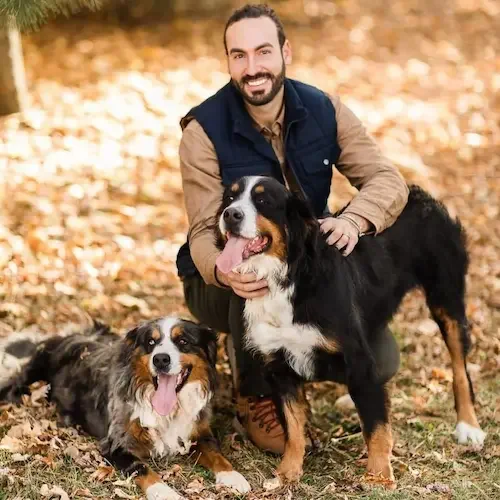
James Stokes is a reputable doodle dog breeder, a popular hybrid dog breed, and a responsible steward of the canine community. For over ten years, James has dedicated himself to raising healthy Doodle puppies that families can cherish, prioritizing their welfare. He works alongside his wife and children every day, ensuring each puppy from their litters receives loving care. Together, they have found wonderful homes for their Doodles across the U.S., Canada, and Mexico.
Health-tested puppies raised from proven, well-established lines and supported by a three-year genetic health guarantee, with breed-appropriate genetic testing conducted in line with current veterinarian and genetic best practices. This includes screening for carriers of genetic conditions.
Hand-raised in a family home, never kept in kennels or a whelping box for too long, ensuring optimal welfare and a healthy birth environment for every animal.
Socialized early with ENS, sounds, and plenty of family time. This helps develop positive behavior and a balanced temperament and energy levels, ensuring they feel safe and relaxed, and are ready for their first vaccine and initial dog training.
Lovingly matched to each family. Every Doodle puppy from our litters is chosen based on specific criteria to fit well with their family’s way of life and needs, ensuring a perfect pet.
Part of an ethical, small-scale breeding program, driven by heart, focusing on the overall health and nutrition of each animal, including what dogs eat for optimal development.
At Stokeshire, doodles are never “just pets,” but cherished family members. They are thoughtfully raised companions—designed to become steady, intuitive members of the family for life. Every decision we make is guided by the Stokeshire Method: pairing genetics, temperament, and early-life environment to raise dogs with excellent behavior who integrate naturally into real family rhythms, upholding the dog breed standard of our program.
Our doodle puppies are known for their balanced energy, emotional intelligence, and predictable temperaments, embodying the best of their dog breed characteristics. They thrive in a wide range of households—from active families to therapy-focused homes—and are often an excellent option for those seeking allergy-friendly companions. Like our Goldendoodles and Bernedoodles, which are popular hybrid dog breeds often involving the Golden Retriever and Poodle, each puppy is raised with the intention of becoming deeply bonded, well-mannered, and trusted at every stage of life.
Stokeshire is proudly based in Medford, Wisconsin, but our families span far beyond the Midwest. Through our concierge-style transport and placement process, part of our comprehensive program, we safely deliver puppies across the United States and into Mexico—ensuring a calm, carefully managed transition from our home to yours. From day one, your puppy’s journey is handled with the same care and intention with which they were raised.
Scientific References
- Kennedy, L. J. Major Histocompatibility Complex Diversity in Dogs & Disease Associations. Veterinary Information Network (VIN) .
- Angles, J. M., Kennedy, L. J., & Pedersen, N. C. (2005). Frequency and distribution of alleles of canine MHC-II DLA-DQB1, DLA-DQA1 and DLA-DRB1 in 25 representative American Kennel Club breeds. PubMed (PMID: 16101828) | Wiley (Full Text / PDF) .
- Gershony, L. C., Belanger, J. M., Short, A. D., Le, M., Hytönen, M. K., Lohi, H., Famula, T. R., Kennedy, L. J., & Oberbauer, A. M. (2019). DLA class II risk haplotypes for autoimmune diseases in the Bearded Collie offer insight to autoimmunity signatures across dog breeds. Canine Genetics and Epidemiology (DOI / SpringerOpen) .
- Denyer, A. L., Massey, J. P., Davison, L. J., Ollier, W. E. R., Catchpole, B., & Kennedy, L. J. (2020). Dog leucocyte antigen (DLA) class II haplotypes and risk of canine diabetes mellitus in specific dog breeds. Canine Medicine and Genetics (DOI / SpringerOpen) | PubMed (PMID: 33292601) .
- Barragán-Sánchez, P., Balastegui, M. T., Marín-García, P. J., & Llobat, L. (2025). Genetic Regulation of Immune Response in Dogs. Genes, 16(7), 764. MDPI (Full Text) .