
Doodle Puppies and Umbilical Hernias What Every Owner Needs to Know
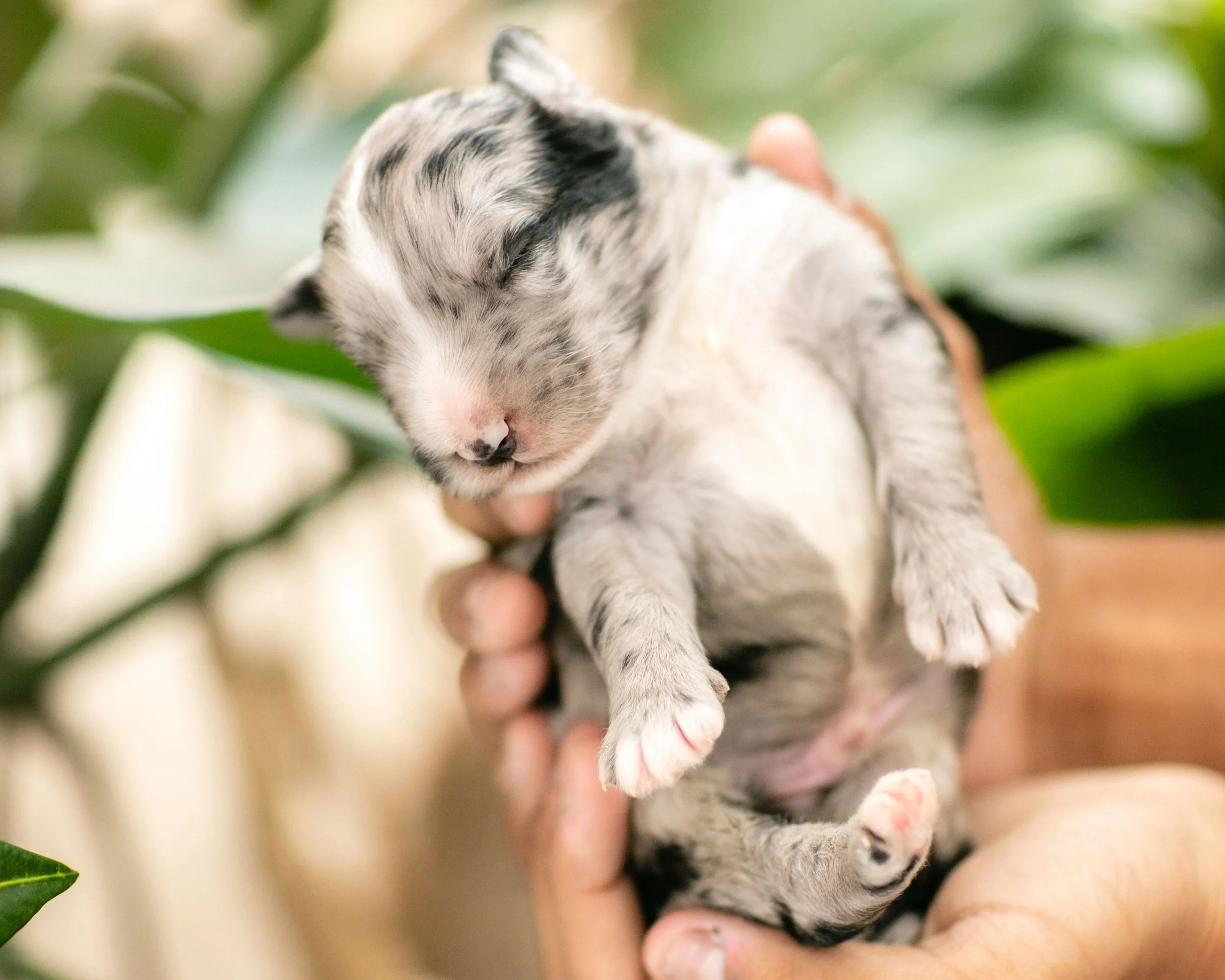
Umbilical Hernias in Doodle Puppies: What New Owners Should Know
When you bring home your adorable doodle puppy, the last thing you want to think about is health concerns. One condition that sometimes comes up in puppies is an umbilical hernia. These are fairly common, usually harmless, and often go unnoticed unless you know what to look for. Our goal here is to give you practical information so you feel confident—not alarmed—if your puppy has one.
What Is an Umbilical Hernia?
An umbilical hernia is a small bulge near your puppy’s belly button. It happens when the abdominal wall doesn’t close completely after birth, leaving a little opening where tissue or fat can poke through. Think of it like an “outie” belly button in people.
Small hernias (under ¼ inch / 1 cm): Often close on their own by 3–4 months of age.
Medium hernias: May stay the same size and never cause a problem.
Large or firm hernias: Should be monitored more closely, as they can sometimes trap tissue.
Why Do Puppies Get Them?
Umbilical hernias are usually the result of how the umbilical cord was handled at birth. Mother dogs naturally chew the cord to separate the puppy from the placenta. If she nibbles a bit too close, or if the muscles don’t seal properly, a hernia may form.
This means:
A single puppy in a litter may develop one, while the rest do not.
It does not always mean there’s a genetic problem.
Many puppies live long, healthy lives with small, harmless hernias.
Should You Be Concerned?
Most of the time, no. Umbilical hernias are rarely dangerous. The important things to watch for are:
Reducibility: If the bulge can be pushed back in, it’s usually nothing to worry about.
Growth or firmness: If it gets bigger, hard, painful, or your puppy shows signs of distress (vomiting, lethargy, discomfort), call your vet right away.
In rare cases, a piece of intestine can get trapped, which requires urgent surgery—but this is uncommon.
Do They Always Need Surgery?
Not necessarily. Many vets simply monitor small hernias, and some will recommend repairing them at the same time as a spay or neuter to avoid extra anesthesia. Immediate surgery is typically only needed if:
The hernia is very large,
It’s non-reducible (can’t be pushed back in), or
It shows signs of strangulation (pain, swelling, discoloration).
Caring for a Puppy with an Umbilical Hernia
Handle your puppy gently—don’t put pressure on the hernia.
Keep an eye on its size, shape, and firmness.
Ask your vet about it at routine visits, but don’t be surprised if it wasn’t noted at first; small hernias can be easy to miss.
Remember: a small, soft, reducible hernia is usually harmless and often closes naturally.
Final Thoughts
Umbilical hernias in doodle puppies can look concerning, but in most cases they are minor and manageable. The key is awareness, monitoring, and working with your vet to decide if any action is needed. Many puppies never require repair, and those that do usually have it handled easily during spay/neuter.
Bringing a puppy home should be a joyful experience. By knowing the basics about umbilical hernias, you can feel reassured and focus on what matters most—building a loving bond with your new best friend.
References
Chewy Editorial Team. (2023, February 7). Umbilical hernias in dogs: More common than you think. Chewy. https://www.chewy.com/education/dog/health-and-wellness/umbilical-hernias-in-dogs-more-common-than-you-think
Fatcheric, E. (2021, November 18). Umbilical hernias in puppies. Whole Dog Journal. https://www.whole-dog-journal.com/puppies/umbilical-hernias-in-puppies
Godfrey, H. (2022, May 25). Puppy hernia: Causes, signs, and treatment. The Vets. https://thevets.com/blog/puppy-hernia
VCA Animal Hospitals. (2023). Umbilical hernia in dogs. VCA Animal Hospitals. https://vcahospitals.com/know-your-pet/hernia-umbilical-in-dogs
WagWalking. (2015, September 30). Umbilical hernia in dogs – Symptoms, causes, diagnosis, treatment, recovery, management, cost. WagWalking. https://wagwalking.com/condition/umbilical-hernia