
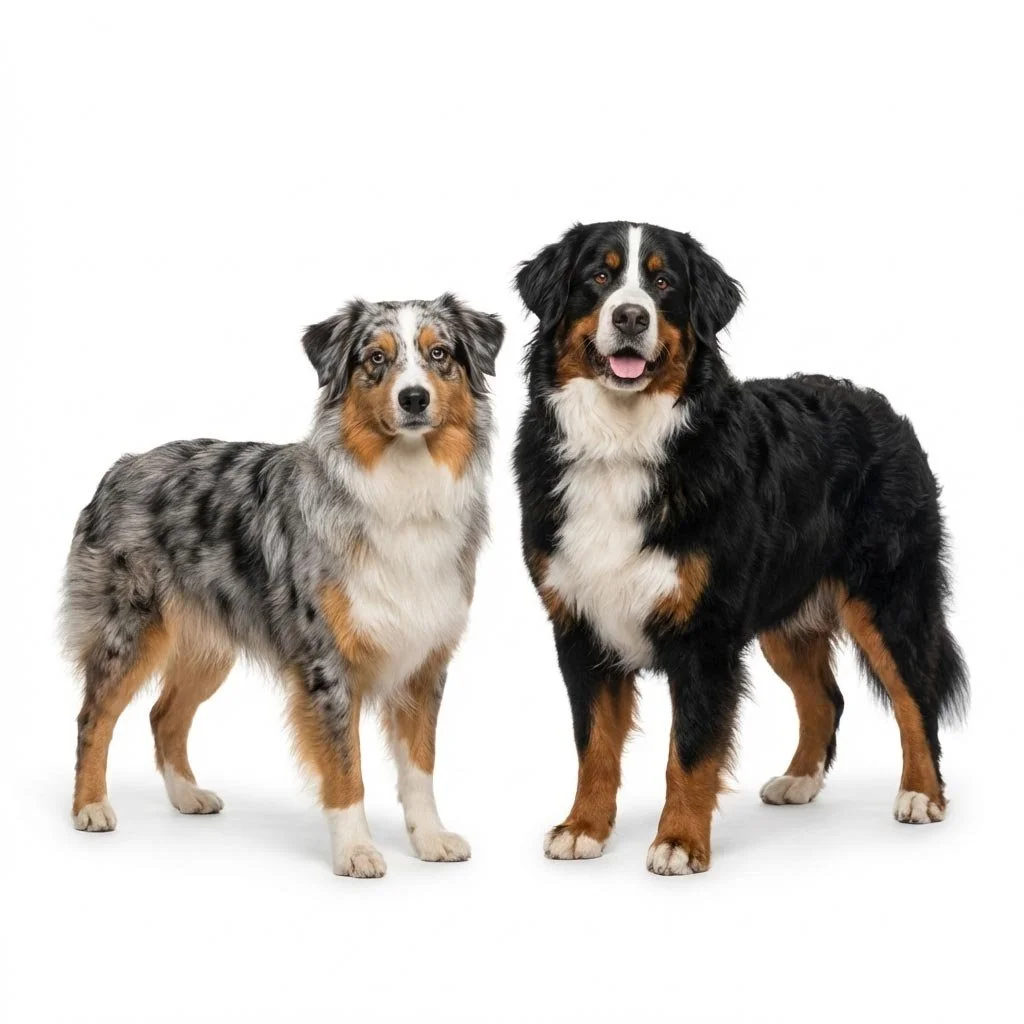
Australian Mountain Dog: The Complete Aussie Bernese Breed Guide
Also called: Aussie Bernese · Bernaussie · Aussie Mountain Dog · Berner Aussie Mix
The Australian Mountain Dog is an intentional cross between the Australian Shepherd and the Bernese Mountain Dog — developed to extend the Bernese's tragically short lifespan while preserving its gentle, loyal temperament. This is not a doodle. It is an unfurnished, double-coated working hybrid that sheds, thrives in cold climates, and carries the traditional look of both parent breeds.
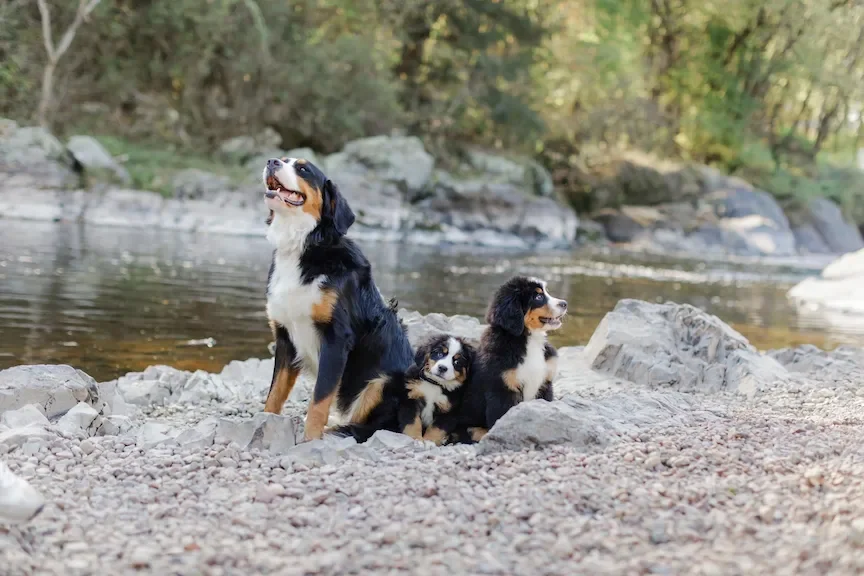
Australian Mountain Dog — Quick Facts
| Breed Type | Designer hybrid — intentional two-breed cross. Not AKC recognized. |
| Parent Breeds | Australian Shepherd × Bernese Mountain Dog |
| Also Called | Aussie Bernese, Bernaussie, Aussie Mountain Dog, Berner Aussie Mix |
| Stokeshire Focus | Standard and Medium Australian Mountain Dogs from health-tested parent dogs |
| Size Range | Standard (60–100 lbs, 22–28 in) · Medium (45–65 lbs, 18–22 in) |
| Coat Type | Unfurnished double coat — medium-to-long, dense, weather-resistant. Similar to both parent breeds. |
| Shedding | Yes — moderate year-round with heavy seasonal shedding in spring and fall. This is not a low-shedding dog. |
| Hypoallergenic | No. Unfurnished Australian Mountain Dogs shed and are not appropriate for allergy-sensitive households. Families needing a lower-shedding coat should consider the Australian Mountain Doodle. |
| Temperament | Gentle, intelligent, loyal, people-oriented, moderate herding drive, emotionally sensitive |
| Exercise Need | 60–90 minutes daily — combination of physical activity and mental stimulation |
| Trainability | High — responds well to positive reinforcement. Sensitive to harsh corrections. |
| Lifespan | Standard: 10–13 years · Medium: 12–15 years — significantly longer than purebred Bernese (6–8 years) |
| Best For | Active families, outdoor enthusiasts, those seeking Bernese temperament with extended lifespan, experienced and first-time dog owners committed to consistent training |
| Pricing | See Stokeshire puppy pricing — varies by size and coat color. |
What Is an Australian Mountain Dog?
An Australian Mountain Dog is an intentional first-generation (F1) cross between an Australian Shepherd and a Bernese Mountain Dog. The cross was developed to address a specific problem: the Bernese Mountain Dog's devastating health profile and tragically short lifespan. Published research indicates that approximately 50–67% of Bernese Mountain Dogs die from neoplastic disease, with histiocytic sarcoma alone affecting roughly 25% of the breed. Average lifespan for a purebred Bernese is commonly cited at 6–8 years.
The Australian Mountain Dog introduces the genetic diversity of the Australian Shepherd — a breed with a median lifespan of approximately 13.7 years according to a 2024 UK study — into the Bernese gene pool. The result is a companion dog that tends to carry the Bernese's calm, affectionate temperament and striking tri-color appearance while benefiting from hybrid vigor that can extend functional lifespan by 4–6 years over the purebred Bernese.
This is not a doodle. The Australian Mountain Dog carries no Poodle genetics. It is an unfurnished, double-coated dog that sheds, requires regular brushing, and is not marketed as hypoallergenic. Families seeking a lower-shedding version of this genetic combination should explore the Australian Mountain Doodle, which adds Poodle to the cross for coat modification.
The Australian Mountain Dog exists because the Bernese Mountain Dog deserves a longer life. The cross preserves what families love about the Bernese — the gentleness, the loyalty, the presence — and gives it more time.
The Two Parent Breeds
Understanding both parent breeds is the most accurate way to predict what an Australian Mountain Dog will need from its home. Each contributes distinct traits, health considerations, and behavioral tendencies.
Australian Shepherd
Developed as a working stock dog in the American West, the Australian Shepherd was bred for sustained physical output, sharp problem-solving, and deep handler responsiveness. It ranks among the most trainable and intelligent breeds available — and among the most demanding. The Aussie contributes athleticism, longevity (median ~13.7 years), and a strong work ethic to the cross. It also introduces the merle coat gene, MDR1/ABCB1 drug sensitivity (affecting approximately 50% of the breed), and herding behaviors that require early management in companion settings.
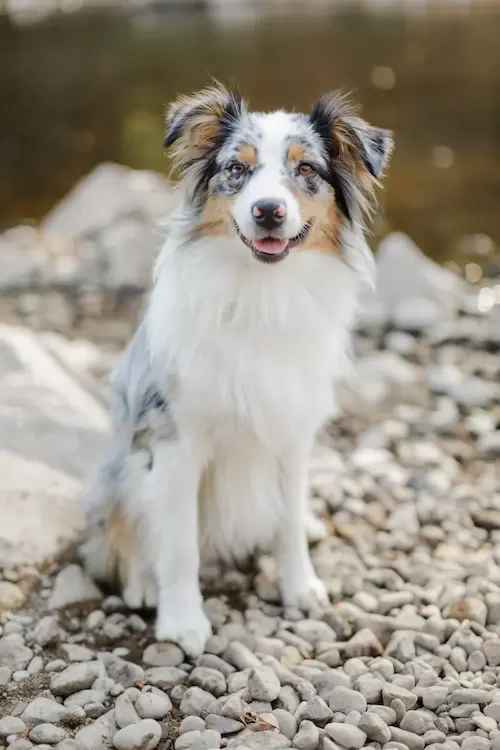
Valli — Blue Merle Tuxedo Australian Shepherd, Stokeshire breeding program
Bernese Mountain Dog
A member of the Swiss Sennenhunde group, the Bernese Mountain Dog was traditionally a versatile farm dog — drafting, herding, and guarding livestock in alpine environments. It is one of the most gentle and affectionate large breeds available. The breed's history includes a severe population bottleneck in the early 20th century, producing a coefficient of inbreeding (COI) near 0.395 — significantly higher than more genetically diverse breeds. This genetic narrowness directly drives the breed's vulnerability to histiocytic sarcoma, elbow dysplasia (heritability estimated at 24–43%), and hip dysplasia. The Bernese contributes the calm, emotionally sensitive, "soft" temperament that makes the Australian Mountain Dog so well-suited to family life.
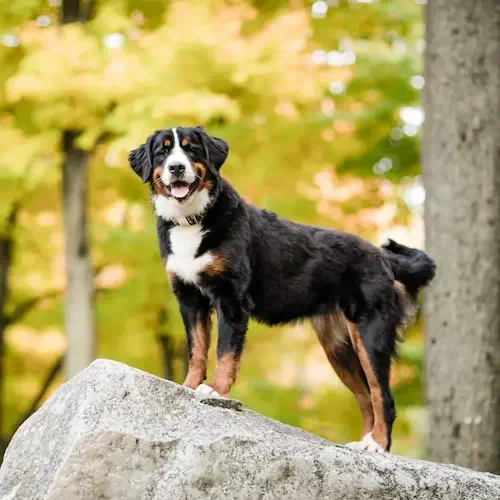
Feta — Bernese Mountain Dog, Stokeshire breeding program
The Healthier Bernese: Why This Cross Exists
The Bernese Mountain Dog is in a health crisis. Published veterinary research documents that approximately 50–67% of the breed dies from cancer, with histiocytic sarcoma — an aggressive immune-cell cancer that is often multi-focal and fatal within weeks — affecting roughly 25% of the population. The breed's average lifespan of 6–8 years is among the shortest of any large breed. This is not bad luck. It is a direct consequence of a genetic bottleneck that has produced a dangerously narrow gene pool with a COI near 0.395.
The Australian Mountain Dog is a targeted intervention in this crisis. By crossing the genetically bottlenecked Bernese with the more diverse Australian Shepherd (a breed with significantly lower inbreeding coefficients and a median lifespan approximately twice as long), breeders can dilute deleterious recessive alleles and introduce the heterosis — hybrid vigor — that broadens the dog's genetic resilience.
Lifespan Comparison
| Breed / Hybrid | Average Lifespan | Primary Mortality Driver |
|---|---|---|
| Bernese Mountain Dog | 6–8 years | Histiocytic sarcoma, neoplastic disease (50–67%) |
| Australian Shepherd | 12–15 years | Age-related degeneration, neurological |
| Australian Mountain Dog (Standard) | 10–13 years | Reduced cancer incidence, orthopedic/cardiac |
| Australian Mountain Dog (Medium) | 12–15 years | Age-related degeneration |
The hybridization shifts the Bernese mortality curve significantly — often providing families an additional 4–6 years of companionship. This does not render the dog immune to cancer or orthopedic disease. A 2024 Royal Veterinary College study on designer crossbreeds found that for the majority of health conditions (86.6%), there was no significant difference in risk between hybrids and their purebred parents. The primary benefit is not universal immunity — it is a targeted extension of lifespan and a reduction in the incidence of the specific, highly aggressive cancers that devastate the purebred Bernese population.
The Australian Mountain Dog does not promise a disease-free life. It promises more life — and for families who have lost a Bernese at six or seven years old, that distinction matters enormously.
Australian Mountain Dog Temperament
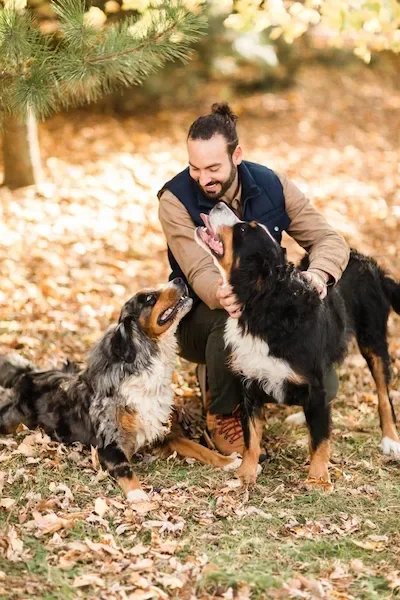
The Australian Mountain Dog's temperament draws on two distinct behavioral profiles: the Australian Shepherd's high-focus working drive and the Bernese Mountain Dog's calm, emotionally attuned loyalty. The result is a dog that tends to be spirited and engaged during outdoor activities but possesses a natural "off switch" that allows it to settle indoors — something purebred Australian Shepherds often struggle with.
Both parent breeds are emotionally sensitive. The Bernese is famously "soft" — responsive to tone of voice, prone to shutting down under harsh correction, and deeply bonded to its handler. The Australian Shepherd is similarly handler-focused but channels that sensitivity into working intensity. The Australian Mountain Dog inherits both tendencies, producing a companion that reads human emotion with unusual accuracy and responds well to positive reinforcement while being vulnerable to stress from inconsistent or punitive training methods.
Who the Australian Mountain Dog Is Best For
Active families with children of all ages who can provide daily structured exercise and consistent training. Outdoor enthusiasts — hikers, campers, cold-climate families — who want a robust, weather-tolerant companion. Families who have lost a Bernese to cancer and want the same temperament with a longer expected lifespan. Experienced and first-time owners who are committed to positive reinforcement training and early socialization.
Who Should Consider a Different Breed
Allergy-sensitive households — this is a shedding dog. Families who cannot commit to 60–90 minutes of daily exercise and mental stimulation. Those seeking a small or toy-sized dog. Households in very hot climates without reliable air conditioning — the double coat makes these dogs heat-sensitive. Families who travel frequently and cannot bring the dog along — Australian Mountain Dogs are deeply people-bonded and do not thrive when isolated.
Australian Mountain Dog Sizes
Adult size in Australian Mountain Dogs is influenced by the size of the Australian Shepherd used — standard or miniature — and the specific Bernese lineage. Stokeshire breeds both Standard and Medium Australian Mountain Dogs. Growth occurs rapidly in the first twelve months, with skeletal maturity typically reached between 18–24 months for standards and somewhat earlier for medium-sized individuals.
| Size | Adult Weight | Adult Height | Skeletal Maturity | Lifespan Est. |
|---|---|---|---|---|
| Standard | 60–100 lbs | 22–28 in | 18–24 months | 10–13 years |
| Medium | 45–65 lbs | 18–22 in | 15–20 months | 12–15 years |
No specific adult size is guaranteed in any hybrid breeding program — individual genetics, nutrition, and the variation within each parent breed all influence final outcomes. Females tend toward the lower end of each range, males toward the upper.
Growth management note: Large-breed puppies must grow at a steady, moderate rate. Rapid weight gain puts excessive strain on developing bone and cartilage, which can exacerbate underlying dysplastic tendencies. For puppies, the standard veterinary guideline is 5 minutes of structured leash exercise per month of age, twice daily, until growth plates are confirmed closed. High-impact exercise — sustained running on hard surfaces, repetitive jumping — should be avoided in puppies and young adolescents.
Coat Type, Shedding & Color Patterns
Coat Structure: Unfurnished Double Coat
The Australian Mountain Dog carries no Poodle genetics and is RSPO2-negative — meaning it does not carry the furnishings gene responsible for the "doodle look." It has a dense, medium-to-long double coat similar to both parent breeds: a coarser outer layer over a soft, insulating undercoat. This coat sheds moderately year-round and heavily during spring and fall "blowouts" when the undercoat turns over. It provides excellent insulation in cold weather and makes these dogs natural cold-climate companions, but also makes them sensitive to heat.
This is not a low-shedding dog. Families seeking the same genetic cross with a lower-shedding, furnished coat should explore the Australian Mountain Doodle, which adds Poodle to the mix. For more on the genetics of furnished vs. unfurnished coats, see our unfurnished doodle guide.
Grooming Requirements
Brushing 2–3 times per week to prevent matting, with daily attention during seasonal coat blows. Focus on high-friction mat zones: behind the ears, under the collar area, and in the leg feathering. Professional grooming every 8–12 weeks for coat health and early detection of skin issues. Regular nail trims, ear cleaning (especially important in dogs with floppy ears to prevent moisture-related infections), and dental care.
Color Patterns
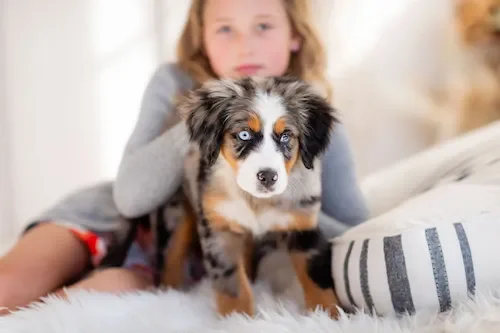
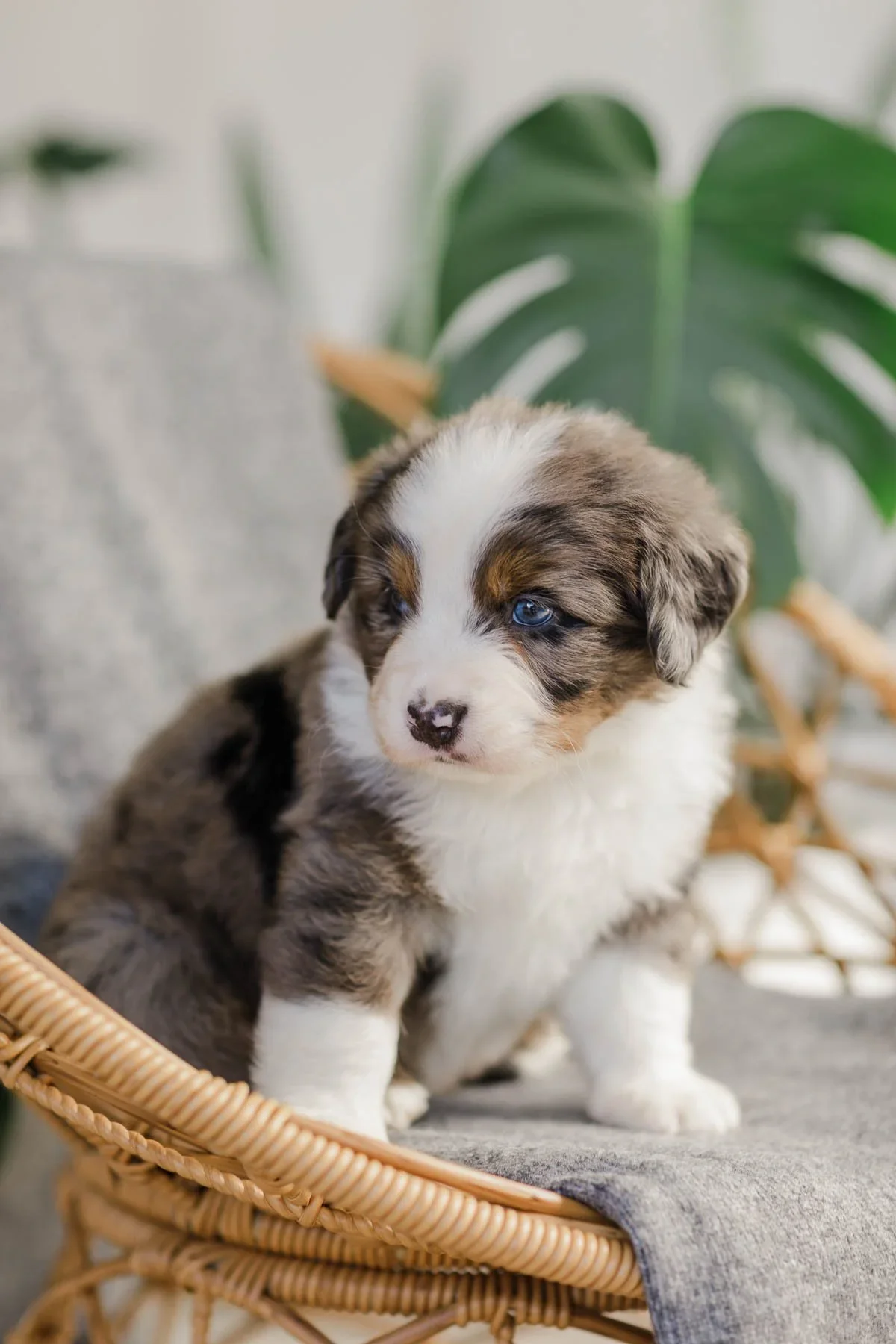
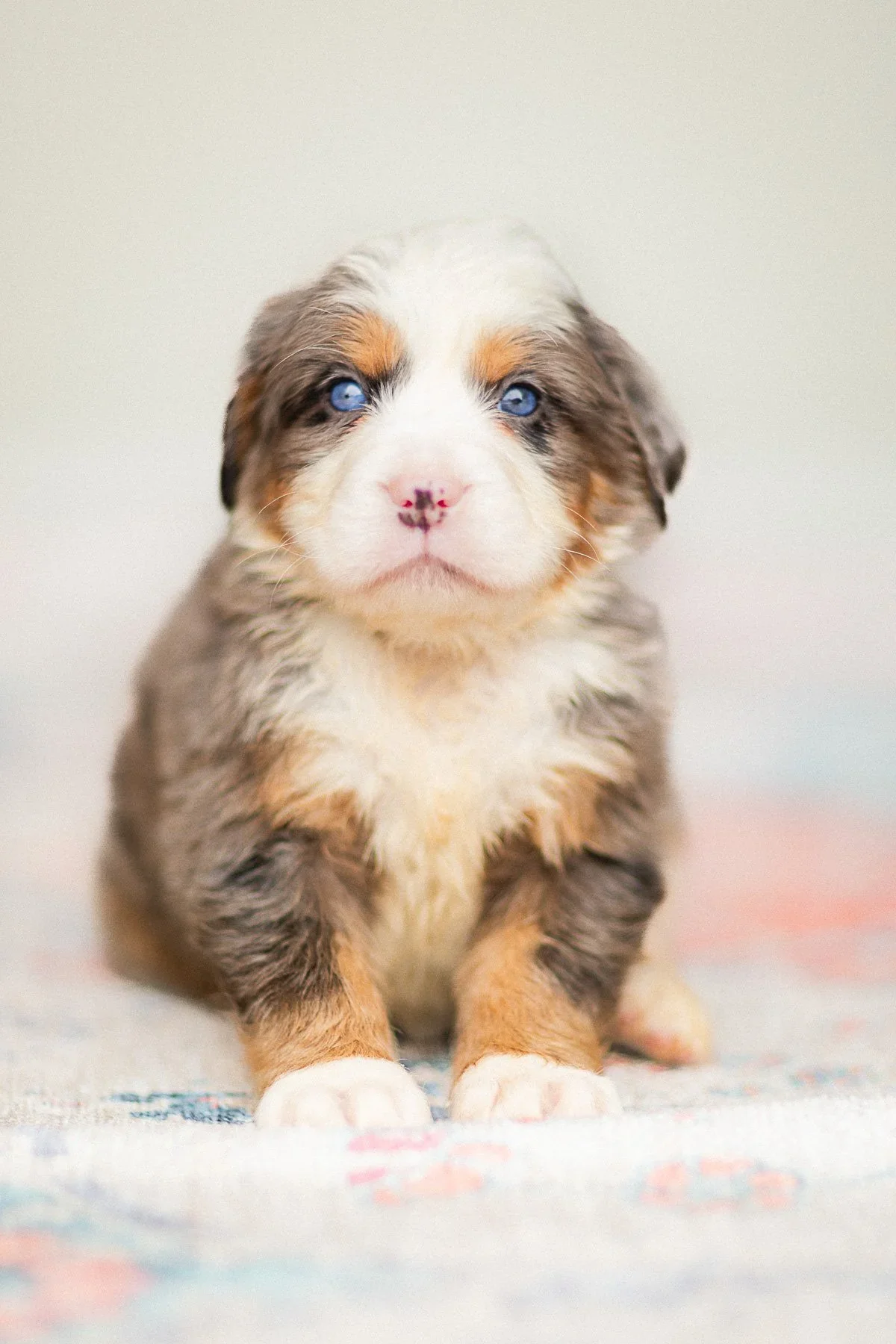
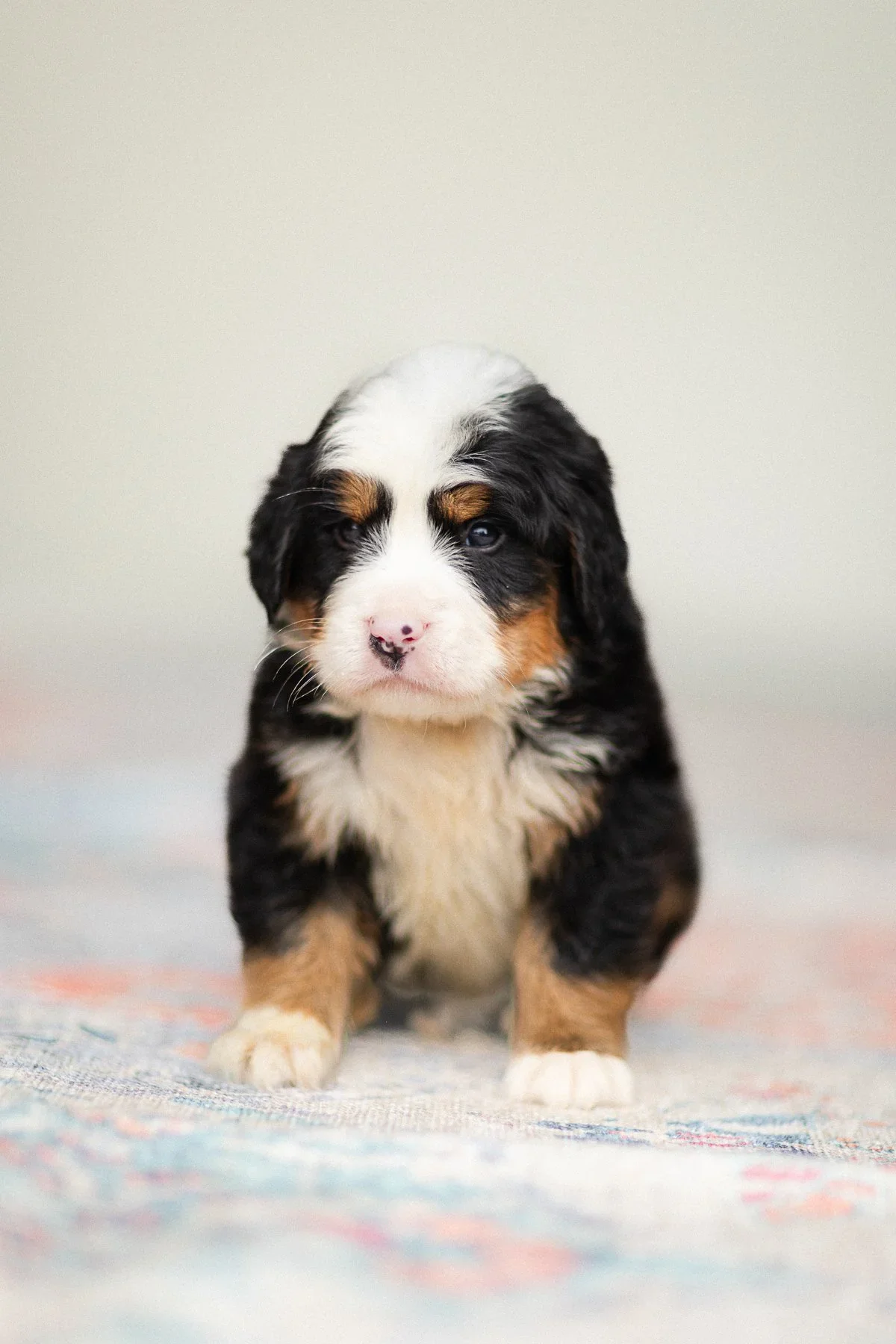
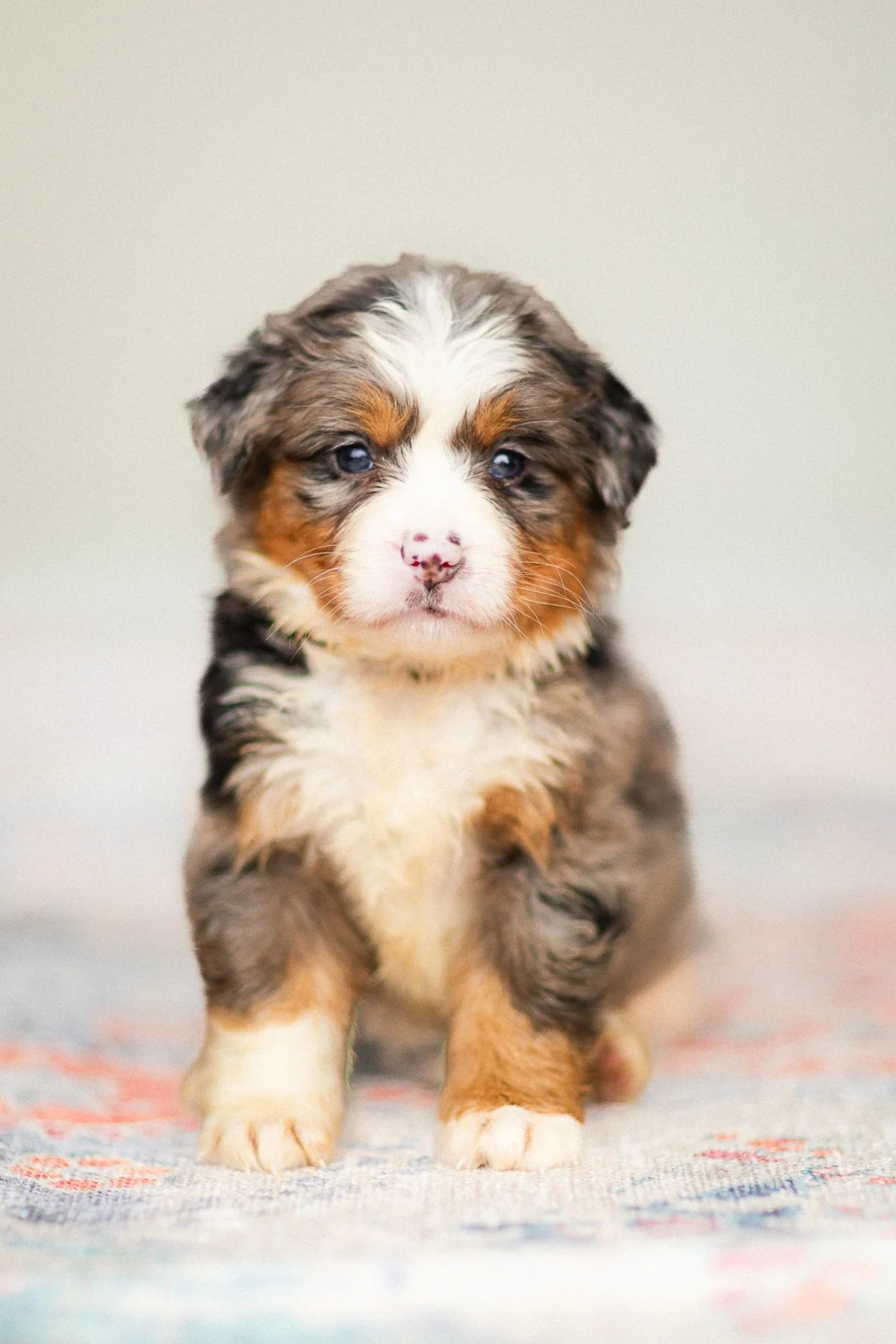
The Bernese Mountain Dog is genetically fixed for the tri-color pattern — black base with rust markings and white points. The Australian Shepherd introduces the merle gene (PMEL/SILV locus), which is not naturally found in purebred Bernese. Any Australian Mountain Dog carrying a merle pattern definitively confirms the presence of non-Bernese genetics — it cannot occur from Bernese lineage alone.
Classic Bernese pattern. Jet black base, rust points, white markings on face, chest, and feet.
Black base diluted to grey marbling with rust points and white. The most sought-after pattern. Often paired with blue or heterochromatic eyes.
Brown-based merle with lighter mottling, rust points, and white markings.
Chocolate base with tan points and white markings. Less common in Australian Mountain Dog programs.
Merle Safety: Double Merle Risk
Two merle-carrying dogs must never be bred together. When a dog inherits two copies of the dominant M allele (M/M — "double merle"), the extreme reduction in melanocytes during embryonic development leads to serious sensory impairments. Published data shows that while approximately 1% of single-merle Australian Shepherds are deaf, up to 56% of double-merle Aussies experience hearing loss. Visual impairments — including microphthalmia, cataracts, and colobomas — are also common in double-merle dogs.
Cryptic merles — dogs that appear solid in color but carry a short version of the merle insertion — present an additional risk. They can produce double-merle offspring if paired with a visible merle. DNA testing for the M-locus is the only definitive way to ensure safe pairings. Stokeshire confirms merle status via Embark on all breeding dogs before any pairing is made. Visual coat assessment is not sufficient.
Australian Mountain Dog Health Considerations
The Australian Mountain Dog inherits health considerations from both parent breeds. While hybrid vigor reduces the impact of some breed-specific conditions, it does not eliminate inherited risk. Responsible programs perform parent-breed-informed health screening on all breeding dogs before any litter is planned.
From the Bernese Lineage
Hip dysplasia (OFA evaluation). Elbow dysplasia (heritability 24–43% in Bernese; OFA evaluation). Histiocytic sarcoma risk (reduced but not eliminated by outcross). Gastric dilatation-volvulus (bloat) risk in deep-chested individuals. Degenerative myelopathy (SOD1 DNA test).
From the Australian Shepherd Lineage
MDR1/ABCB1 drug sensitivity (affects ~50% of Aussies; DNA test mandatory). Hereditary cataracts (HSF4 DNA test). Progressive retinal atrophy (PRA DNA test). Collie Eye Anomaly (CEA DNA test). Hip dysplasia (~10.8% in evaluated Aussies; OFA evaluation).
Orthopedic Management
Both parent breeds are predisposed to joint dysplasia. Published data suggests the risk of elbow dysplasia approximately doubles if even one parent is affected. The 5-minute exercise rule (per month of age, twice daily) protects growing joints. Early introduction of Omega-3 fatty acids and joint supplements may support cartilage health.
Bloat Prevention (GDV)
As a deep-chested hybrid, the Australian Mountain Dog carries gastric torsion risk. Feed multiple smaller meals per day rather than one large meal. Use slow-feed bowls. Avoid elevated feeding platforms. Some owners opt for prophylactic gastropexy during spay/neuter.
MDR1 (ABCB1) is a 4-base-pair deletion affecting the P-glycoprotein pump that protects the brain from toxins. Dogs with one or two copies of the mutation may have severe or fatal reactions to medications that are otherwise safe — including ivermectin (common in heartworm preventatives), loperamide (Imodium), acepromazine, and some chemotherapy agents. Approximately 50% of Australian Shepherds carry this mutation. Because every Australian Mountain Dog has Australian Shepherd lineage, MDR1 testing is not optional — it is essential. Stokeshire tests all breeding dogs for MDR1 status via Embark. Families should confirm their puppy's MDR1 status with their veterinarian before any medication is prescribed. A current list of affected medications is maintained by Washington State University's College of Veterinary Medicine.
Stokeshire's Health Testing Protocol
Every breeding dog at Stokeshire completes a full Embark genetic panel before inclusion in the program — screening for over 230 health conditions including MDR1, SOD1, HSF4, PRA, CEA, merle status, and coat genetics. Hip evaluations are performed by OFA-certified radiologists. Eye evaluations (CAER) are maintained on schedule. No pairing is made without confirmed MDR1 status and confirmed merle status on both parents. Families receive their puppy's genetic results at placement.
→ Full health testing guide: OFA and Embark explained, MDR1 drug list, what to ask breeders
Training an Australian Mountain Dog
Australian Mountain Dogs are highly trainable — both parent breeds rank among the top working and obedience breeds in canine intelligence assessments. The Australian Shepherd learns commands in fewer than five repetitions; the Bernese Mountain Dog, while slightly more deliberate, is deeply eager to please. The hybrid inherits both: quick acquisition and high handler focus.
The critical insight for this breed is the "soft" temperament inherited from the Bernese parent. Unlike some herding breeds that may tolerate firm, high-pressure correction, the Bernese component makes these dogs extremely sensitive to tone of voice and emotional state. Harsh corrections or shouting can cause the dog to shut down — effectively ceasing to learn as a defense mechanism. Positive reinforcement with consistent cues, short engaging sessions (10–15 minutes, two to three times daily), and patient repetition produces the most reliable adult behavior.
The Socialization Window: 3–14 Weeks
Both parent breeds can be naturally cautious around strangers. Without early, positive exposure to diverse people, environments, and situations during the 3–14 week primary socialization window, this caution can evolve into fearful or defensive behavior. At Stokeshire, Early Neurological Stimulation begins at Day 3. Sound desensitization, surface variation, and multi-person handling continue through all eight weeks before placement. Families should continue structured socialization through adolescence with positive, varied experiences.
Herding Drive Management
The Australian Shepherd's herding instinct is present in the cross at moderate levels — lower than a purebred Aussie, but still noticeable. This may present as circling, nipping at movement, or positioning behaviors around children, other pets, or cyclists. Early training that redirects herding impulses into structured activities — obedience, scent games, agility — is the most effective management approach. The Bernese component generally moderates the intensity, but the drive should be acknowledged and channeled rather than ignored.
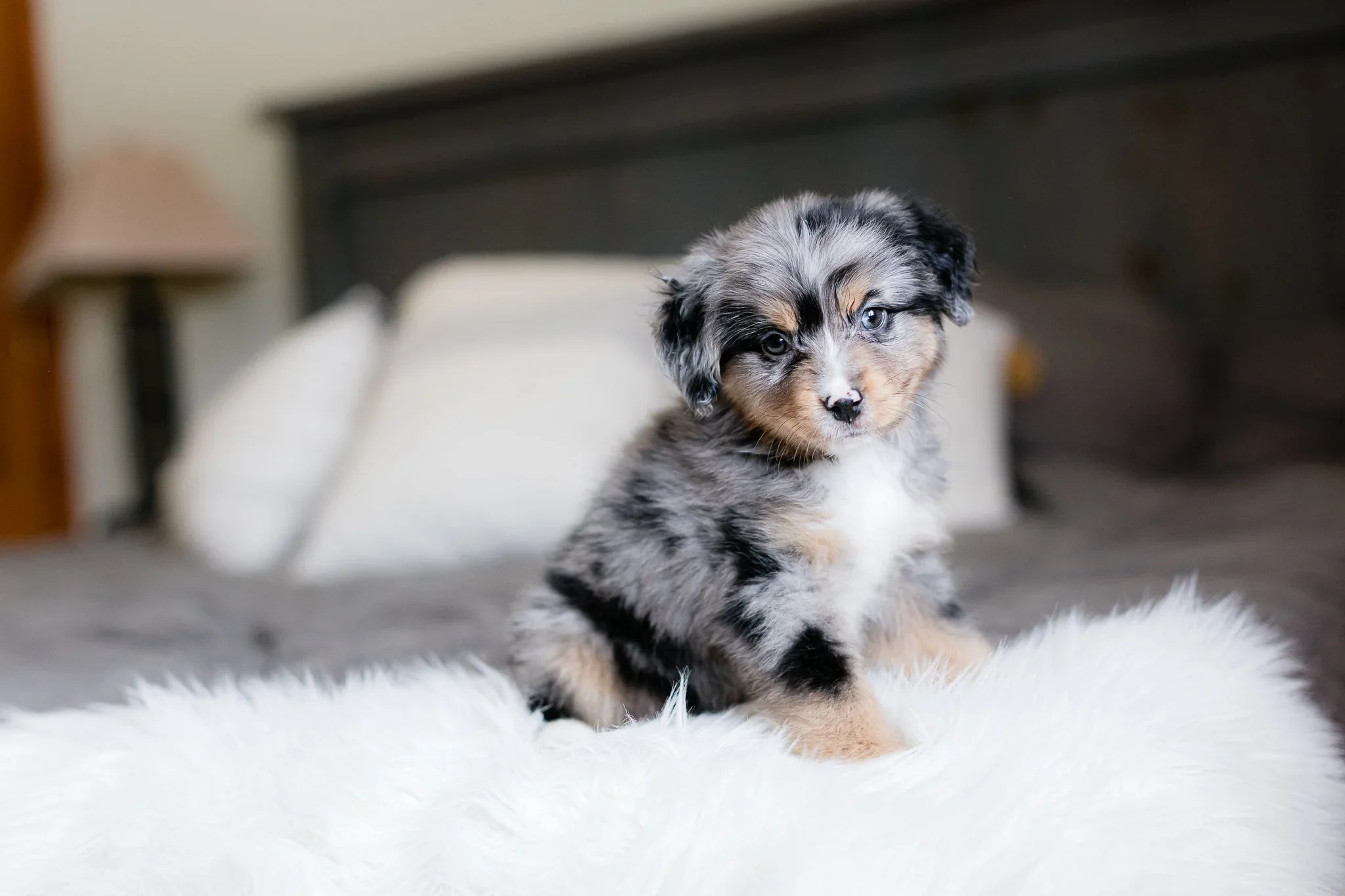
Australian Mountain Dog Puppies at Stokeshire
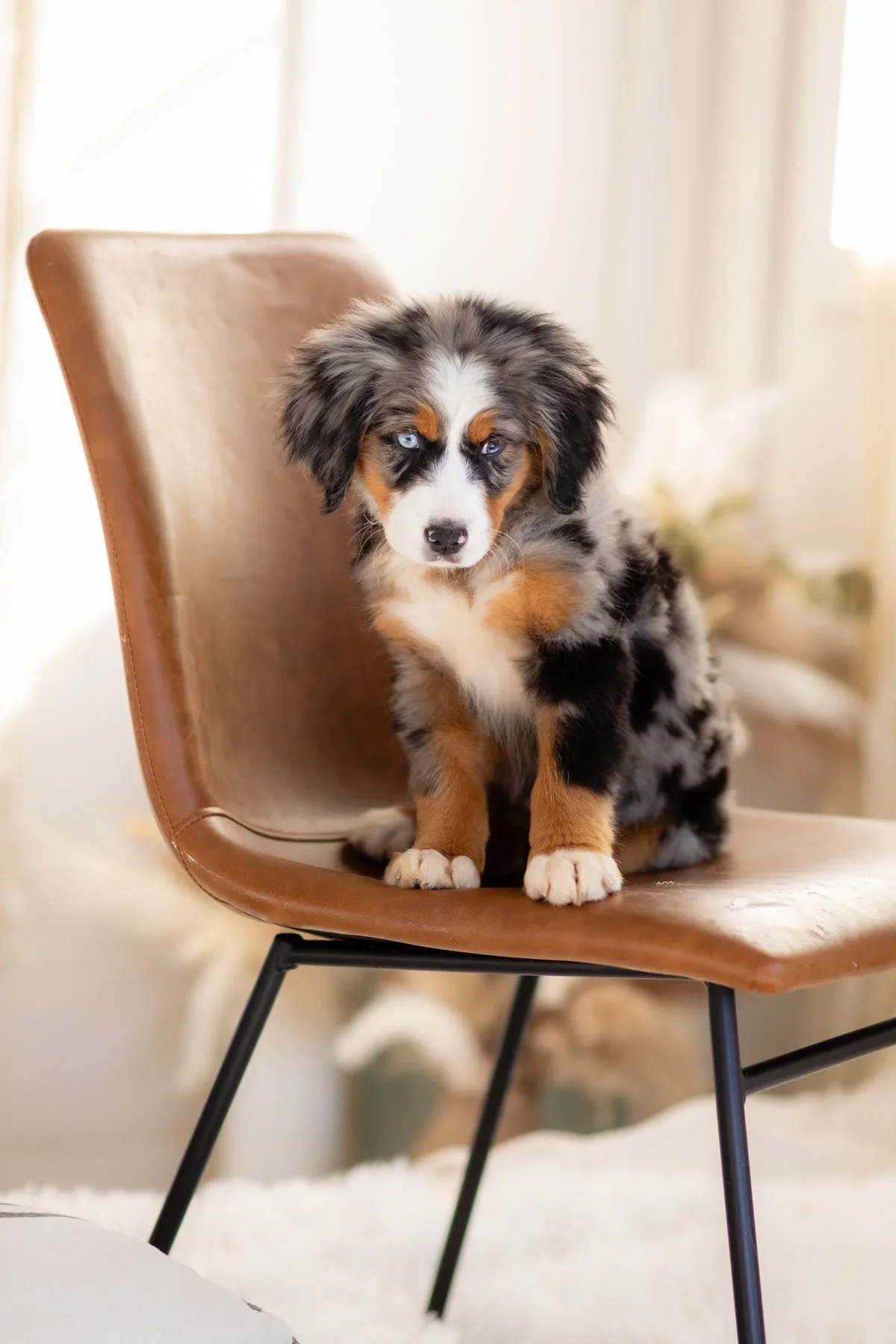
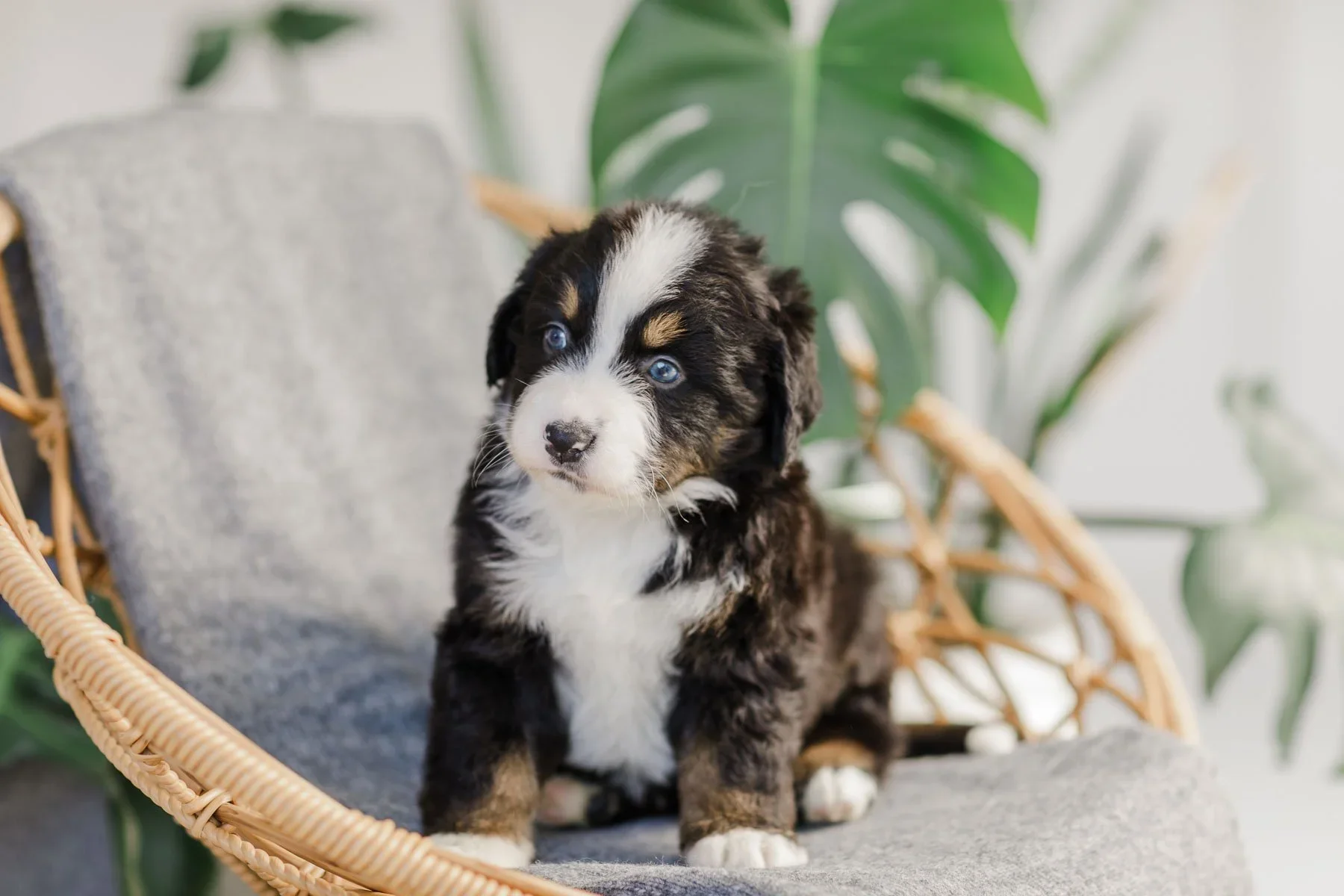
Australian Mountain Dog vs. Australian Mountain Doodle
The Australian Mountain Doodle (AMD) is a triple-cross hybrid that adds Poodle to the Australian Shepherd × Bernese Mountain Dog foundation. Both share the same two core parent breeds. The Poodle is what differentiates them — introducing the RSPO2 furnishings gene, lower-shedding coat genetics, and (in Toy and Mini Poodle lines) smaller sizing. Families deciding between the two are essentially choosing between a traditional unfurnished coat that sheds and a furnished doodle coat that sheds less but requires more grooming.
| Feature | Australian Mountain Dog | Australian Mountain Doodle |
|---|---|---|
| Parent Mix | Aussie × Bernese | Aussie × Bernese × Poodle |
| Coat Type | Unfurnished double coat | Furnished — wavy or curly |
| Shedding | Moderate to heavy — seasonal blowouts | Low to moderate — furnished coats shed less |
| Allergy Suitability | Not appropriate for allergy-sensitive homes | Lower-shedding options available (not guaranteed) |
| Grooming Demand | Brushing 2–3× weekly; pro grooming every 8–12 weeks | Brushing 3–5× weekly; pro grooming every 6–8 weeks |
| Mat Risk | Moderate — friction zones | High — furnished coats trap hair within the curl |
| Size Range | Medium & Standard (45–100 lbs) | Toy, Mini, Medium & Standard (10–80+ lbs) |
| Energy Level | Moderate to High | Moderate to High |
| Temperament | Gentle, loyal, moderate herding drive | Gentle, loyal, moderate herding drive |
| Trainability | High — soft temperament | Very High — Poodle adds training responsiveness |
| MDR1 Risk | Yes — Aussie lineage | Yes — Aussie lineage |
| Lifespan (Standard) | 10–13 years | 10–13 years |
| Best For | Families who want a traditional coat, cold-climate homes, outdoor/working households | Allergy-sensitive homes, families preferring lower shedding, wider size range options |
Neither is better. They serve different households. The Australian Mountain Dog appeals to families who prefer a natural double coat, enjoy the aesthetics of both parent breeds without modification, and are comfortable with shedding. The Australian Mountain Doodle appeals to families prioritizing reduced shedding and broader size options.
Australian Mountain Dogs at Stokeshire Designer Doodles
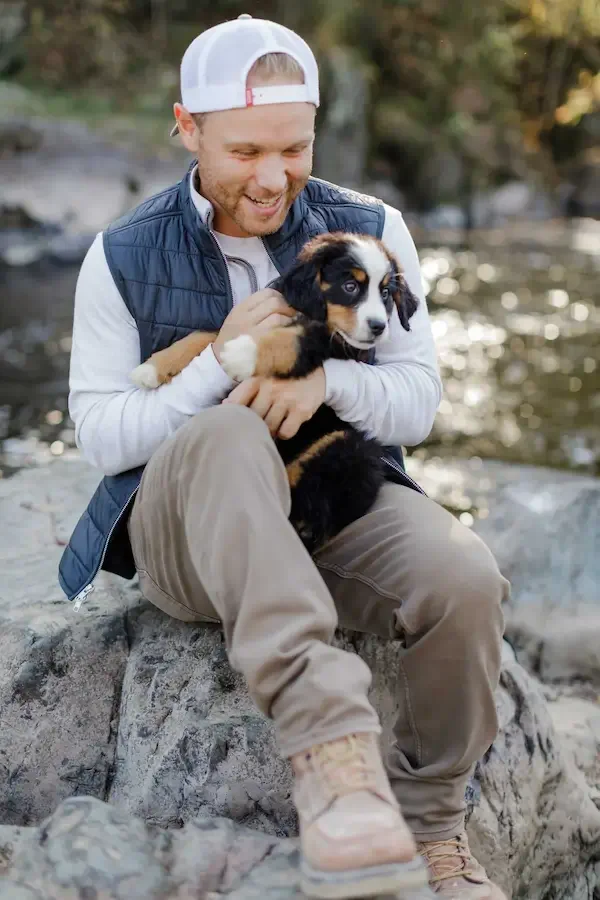
Stokeshire's Australian Mountain Dog program is built on a deliberate, health-first foundation. Our current breeding dogs — Apollo (F1 Australian Mountain Dog, blue merle tri), Feta (Bernese Mountain Dog), Valli (Blue Merle Tuxedo Australian Shepherd), and Mack — represent a carefully managed gene pool selected for structural soundness, temperament stability, and genetic diversity.
Apollo, our F1 Australian Mountain Dog stud, carries a genetic health profile that is clear across all 245 conditions tested by Embark. His pairing with Feta produces F1 Standard Australian Mountain Dogs. His offspring with Bernese dams represent the first generation of the cross; we are actively developing second-generation (F2) Australian Mountain Dogs that maintain the Bernese structure and coat colors while building on the longevity and genetic breadth introduced by the Australian Shepherd.
Valli, our Blue Merle Tuxedo Australian Shepherd dam, paired with Mack, produces Medium Australian Mountain Dogs — a smaller, athletic line that carries the same temperament profile in a more moderate frame suited to a wider range of living situations.
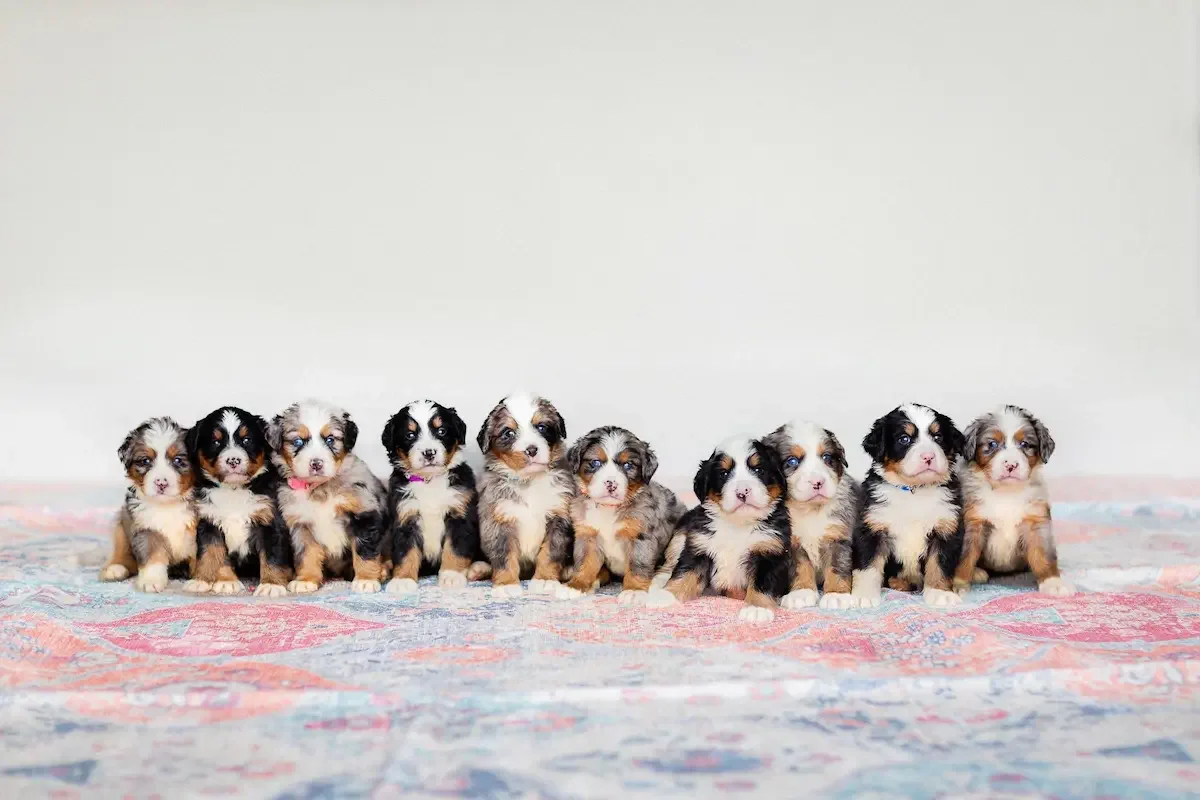
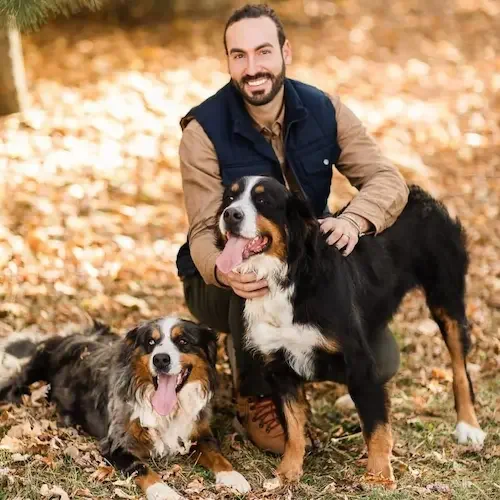
James Stokes
Stokeshire Designer Doodles is a therapy-grade breeding program based in Medford, Wisconsin, operated by James Stokes. The program has placed over 650 dogs with families across the United States and Mexico. Every breeding dog — including all Australian Mountain Dog parents — is Embark-tested and OFA-evaluated before inclusion in the program. Puppies are raised in a family home, not a kennel, with Early Neurological Stimulation beginning at Day 3 and progressive socialization through all eight weeks before placement.
Licensed under Wisconsin DATCP #514401-DS. W4954 County Road O, Medford, WI 54451.
Australian Mountain Dog Planned Litters
Current and upcoming Stokeshire Australian Mountain Dog litters are displayed below. All breeding pairs are Embark-tested and OFA-evaluated. Nationwide transport available.
Australian Mountain Dog FAQs
How long do Australian Mountain Dogs live compared to Bernese Mountain Dogs?
Are Australian Mountain Dogs good family dogs?
Do Australian Mountain Dogs shed?
What is MDR1 and why does it matter for Australian Mountain Dogs?
How much exercise does an Australian Mountain Dog need?
What is the difference between an Australian Mountain Dog and an Australian Mountain Doodle?
How big do Australian Mountain Dogs get?
Can merle Australian Mountain Dogs have health problems from the merle gene?
What health testing should Australian Mountain Dog breeders perform?