
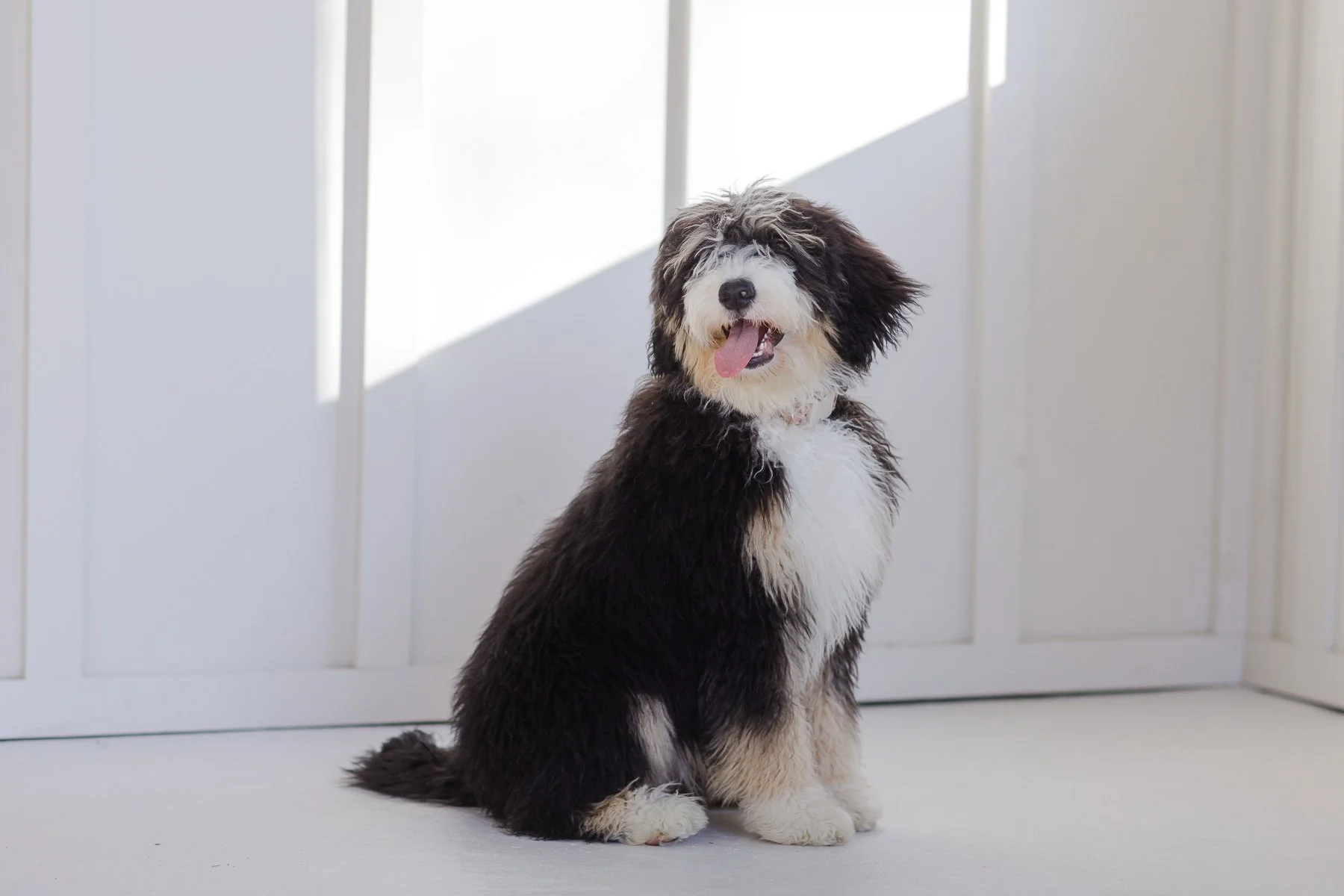
Australian Mountain Doodle Grooming Guide
Low-shedding doodle coats are not low-maintenance coats. The same coat structure that keeps hair out of your furniture traps it inside the coat — where it accumulates, tangles, and mats without consistent brushing. This guide explains the science behind doodle coat maintenance, establishes a realistic grooming schedule, identifies the high-risk mat zones, and walks through a puppy grooming introduction that sets your dog up for a lifetime of positive grooming experiences.
This page is part of Stokeshire's complete Australian Mountain Doodle breed guide.
Why Low-Shedding Coats Require More Brushing — Not Less
This is the most important thing most grooming guides get wrong, and it is the #1 reason doodle owners are caught off guard in the first year of ownership. The logic seems backward but is straightforward once you understand the hair growth cycle.
All dogs shed. Hair grows in cycles — an active growth phase (anagen), a transitional phase (catagen), and a resting/release phase (telogen) — after which the hair exits the follicle. In double-coated breeds like the Bernese Mountain Dog, released telogen hairs fall away from the coat and distribute into the environment: onto furniture, floors, and clothing. This is what most people call "shedding."
In furnished, curly-coated dogs like most Australian Mountain Doodles, the same hair cycling occurs — but released hairs are physically trapped within the curled and interlocking coat structure rather than falling free. The result is that environmental shedding appears minimal. But the released hair has to go somewhere: it tangles with neighboring hairs and begins accumulating into mats.
The lower the shedding, the higher the brushing requirement. These two facts are directly linked — they are not opposites.
What Matting Actually Does to a Dog
Mats are not merely cosmetic. Tightly matted coats pull on the skin continuously, causing discomfort and eventual skin lesions. They trap moisture and debris, creating conditions favorable to bacterial and fungal growth. Severe mats can hide external parasites and conceal wounds. In veterinary grooming literature, advanced matting is classified as a welfare concern — not just a maintenance issue.
How Often to Groom an Australian Mountain Doodle
Grooming frequency depends on coat type. The curlier and more furnished the coat, the more frequently brushing is required. Use the schedule below as a baseline — individual dogs may need more or less depending on coat density, lifestyle, and how quickly their coat tangles.
Brushing
Full-body line brush every 2–3 days. Pay special attention to high-friction zones (collar, armpits, groin, behind ears). Professional grooming every 6–8 weeks. Daily face wipe-down to prevent tear staining and moisture accumulation in facial furnishings.
Brushing
Full-body brush 3–4 times per week with a slicker brush and metal comb follow-through. Professional grooming every 6–8 weeks. Easier to maintain than curly coats but still develops mats in high-friction areas without regular attention.
Brushing
Brush 2–3 times per week. Easier coat to maintain than tighter curls. Still requires regular attention at mat-prone zones. Professional grooming every 8–10 weeks. More forgiving if a brushing session is missed, but neglect still leads to matting over time.
Brushing
Brush 1–2 times per week with a slicker or pin brush. Unfurnished coats shed more readily (hair falls free), which reduces mat risk but increases environmental shedding. Less professional grooming required. Nail trims and ear cleaning follow the same schedule as furnished coats.
Routine Maintenance Beyond Brushing
| Task | Frequency | Why It Matters |
|---|---|---|
| Professional Grooming | Every 6–10 weeks | Coat trim maintains manageable length; thorough dematting; sanitary trim; nail grind |
| Nail Trim | Every 3–4 weeks | Overgrown nails alter gait and cause joint stress; long nails are also a scratching hazard |
| Ear Cleaning | Every 1–2 weeks | Doodle ear canals trap moisture and debris; unchecked buildup leads to chronic infections |
| Ear Hair | As needed / pro visit | Excess hair in the ear canal traps debris; ask your groomer about appropriate plucking schedule |
| Teeth Brushing | Daily (ideal) / 3×/week minimum | Prevents tartar buildup, periodontal disease, and the systemic health effects of chronic oral bacteria |
| Eye Area Wipe | Daily | Furnished dogs accumulate moisture and debris in facial hair around the eyes; prevents tear staining and irritation |
| Bathing | Every 4–6 weeks or as needed | Over-bathing strips natural oils; use a pH-balanced dog shampoo; always brush fully before bathing — water tightens existing mats |
Where Doodles Mat Most: The 7 Problem Zones
Mats develop fastest in areas where the coat experiences repeated friction — where harness straps, collar edges, legs, and skin folds create mechanical pressure that tangles hair. These zones require extra attention during every brushing session, even if the rest of the coat seems fine.
The highest-friction zone. Ears move constantly, rubbing coat against coat. Check here first at every brushing session. Mat development here accelerates fastest, especially in curly coats.
The collar edge creates continuous friction across the neck coat. If a collar is worn full-time, this area needs daily inspection. Consider a breakaway collar or removing it between walks.
The front leg's full range of motion creates friction between the limb and chest coat. One of the most common sites for severe matting — and one of the most uncomfortable for the dog when neglected.
The rear legs create friction against the belly coat during walking. This area is often missed during casual brushing because it requires lifting or turning the dog.
If a harness is worn during walks, the chest and back straps create a mat zone wherever they contact the coat. Remove and inspect after every use. Consider alternating collar and harness use.
The beard and moustache accumulate food, moisture, and debris with every meal and drink. Daily wipe-down and regular face trim prevent the buildup that leads to skin irritation and odor beneath the mat.
The long coat between the paw pads and around the feet collects debris, moisture, and ice in winter. Trim paw feathering short or keep it checked regularly. Mats between pads can cause lameness.
Essential Grooming Tools for Australian Mountain Doodles
The right tools make brushing faster, more effective, and more comfortable for the dog. The wrong tools — or using the right tools incorrectly — can cause coat damage, skin irritation, and negative associations with grooming. The list below reflects the professional grooming standard for furnished doodle coats.
| Tool | Use | Notes |
|---|---|---|
| Slicker Brush | General brushing, surface tangles | Use the curved variety with flexible pins. Do not press hard — slicker burns are real. Use long, gentle strokes and work in sections. |
| Metal Greyhound Comb | Mat detection, finish combing | Run through the coat after slicker brushing. If the comb passes through freely from skin to coat tip, the area is mat-free. If it snags, return with the slicker. |
| Dematting Comb | Small tangle removal | For loose tangles not yet set into mats. Do not use on tight mats — clippers are safer. |
| High-Velocity Dryer | Drying after bath, blowing out loose coat | Dries thoroughly, prevents moisture-related skin issues, and blows out undercoat and loose hair. Use before brushing on bath day. |
| Detangler Spray | Brushing aid for tangles | A light mist of water-based detangler spray reduces friction on the coat and makes brushing more comfortable. Do not saturate — work lightly. |
| Nail Grinder or Clipper | Nail maintenance | Grinders are gentler and reduce the risk of cutting the quick. Introduce slowly with positive reinforcement. Start with one nail per session if needed. |
| Dog-Safe Ear Cleaner | Ear maintenance | Use a veterinarian-approved ear cleaner. Never use cotton swabs in the ear canal. Wipe only what is visible. |
Introducing Grooming to Your Puppy: The First 8 Weeks Home
Grooming tolerance is a trained behavior, not a natural one. Dogs that accept grooming calmly as adults were almost always introduced to it gradually and positively as puppies. Dogs that resist, struggle, or become anxious during grooming typically had early grooming experiences that were unpleasant — rushed, painful, or performed without reward. The first 8 weeks home are the most important grooming weeks of a dog's life.
Week 1–2: Touch Association
Handle every part of the puppy's body daily: ears, paws, between toes, mouth, tail, under the belly. Pair every touch with a small treat. The goal is not grooming — it is conditioning the puppy to associate being handled with positive outcomes. No brushes or tools yet.
Week 2–3: Introduce the Brush
Let the puppy sniff and investigate the slicker brush while it receives treats. Touch the brush lightly to the puppy's back and immediately reward. One to two strokes per session. The session ends before the puppy becomes uncomfortable. Keep it under two minutes.
Week 3–4: Short Brushing Sessions
Gradually extend brushing to 3–5 minutes. Work through the body in sections: back, then sides, then legs. Introduce the metal comb with the same reward pairing. Always end on a positive note — before the puppy signals it wants to stop, not after.
Week 4–6: High-Sensitivity Zone Introduction
Begin working around the ears, armpits, and paws — the mat-prone zones where most dogs are most touch-sensitive. Use higher-value treats. Keep these sessions brief at first. Patience here pays dividends for the next 12–15 years.
Week 6–8: First Professional Grooming Visit
Schedule the puppy's first professional grooming visit before the coat needs significant work — ideally a "puppy intro" appointment that is shorter, low-stakes, and focused on acclimation rather than a full groom. The first visit sets the tone for every future visit. Choose a groomer who works without forced restraint and uses positive reinforcement handling.
Grooming FAQ
How often should an Australian Mountain Doodle be groomed professionally?
Australian Mountain Doodles with curly or wavy furnished coats should see a professional groomer every 6–8 weeks. Fleece-coated dogs can often extend to 8–10 weeks. Unfurnished AMDs require less frequent professional grooming — typically every 10–12 weeks — though nail trims and ear cleaning should remain on the same schedule regardless of coat type. Delaying professional grooming beyond 10 weeks for a furnished, curly coat typically results in mat removal being the primary work of the appointment rather than a trim, which is more uncomfortable for the dog and more expensive.
What happens if you don't brush a doodle regularly?
Without consistent brushing, released hair accumulates within the coat and forms mats — dense, compressed tangles that tighten over time. Mild mats can still be brushed out, but moderately to severely matted coats require professional removal, typically with clippers. This is more uncomfortable for the dog, more expensive than routine grooming, and in severe cases can be a welfare concern — mats pull continuously on the skin, trap moisture and parasites, and can cause skin lesions. The most common presentation groomers see in neglected doodle coats is a dog that appears to have a normal surface coat but has dense matting against the skin that was not visible without parting the hair.
Should I brush my doodle before or after a bath?
Always brush fully before bathing. Water causes any existing tangles to tighten and can set loose mats into firm ones that are much harder to remove. If you bathe a partially matted coat, you may need to have it clipped out. Brush through the entire coat with a slicker brush and confirm pass-through with a metal comb before putting the dog in water. After bathing, use a high-velocity dryer to dry thoroughly — air drying a doodle coat can take hours and leaves moisture trapped against the skin, which increases the risk of hot spots and yeast growth.
What is a "puppy cut" and is it right for my doodle?
A puppy cut is a general term for an even, all-over trim that keeps the coat short and manageable — typically 1–2 inches all over. It is the most practical grooming choice for most Australian Mountain Doodle owners because it reduces mat risk, shortens brushing time, and is comfortable for the dog year-round. It does not mean the dog looks like a puppy — it simply describes the even-length trim. The alternative is a longer coat trim, sometimes called a "teddy bear cut," which maintains more coat length and requires significantly more brushing commitment.
Reviewed by the Stokeshire Breeding Team · Updated March 2026
Back to the Full Australian Mountain Doodle Guide
Coat genetics, sizes, health testing, temperament, and therapy dog potential — everything about the Australian Mountain Doodle in one place.
Full Breed Guide View Planned Litters