
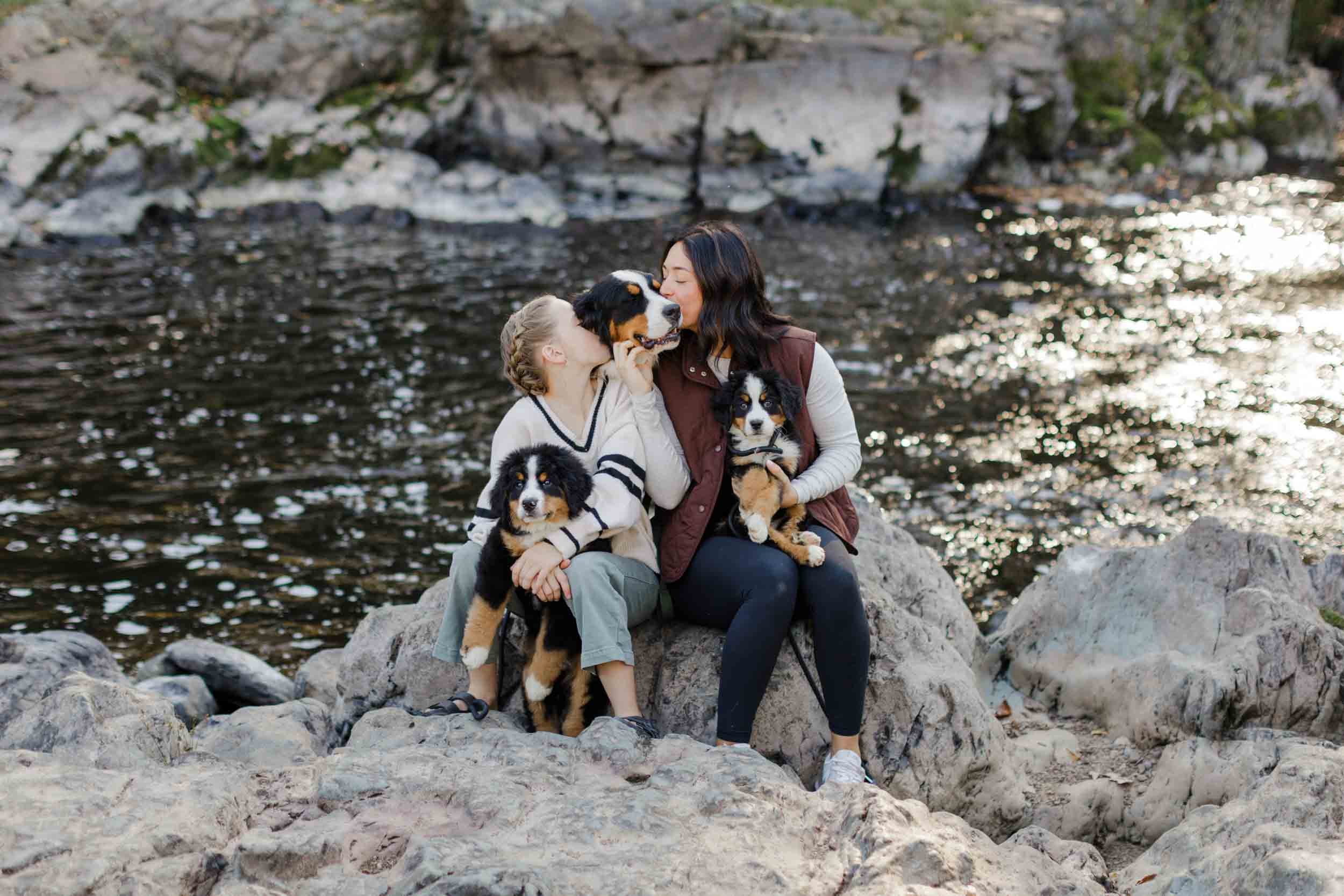
Australian Mountain Doodle Size Guide:
Toy, Mini, Medium & Standard
Adult size in Australian Mountain Doodles is primarily determined by the Poodle parent used in breeding. Understanding the four size categories — and the growth timelines, weight ranges, and exercise needs associated with each — helps families find the right fit before committing to a puppy.
This page is part of Stokeshire's complete Australian Mountain Doodle breed guide.
How Poodle Parent Size Determines AMD Size
The Poodle is the primary size determinant in Australian Mountain Doodle crosses because the Poodle contributes the smallest body frame of the three parent breeds (in Miniature and Toy varieties) or the most size variability (in Standard varieties). The Bernese Mountain Dog is consistently large — typically 70–115 lbs — while the Australian Shepherd varies between 40–65 lbs. When a Toy or Miniature Poodle is used, their smaller frame is the dominant size driver downward.
In multi-generational programs, size can be further refined through selective pairing over generations. In F1 crosses, more size variability within a litter is expected because the three parent breeds contribute different size genetics that do not always average predictably. No specific adult size is guaranteed in any hybrid breeding program.
Australian Mountain Doodle Size Categories
Produced using Toy Poodle or Toy Aussiedoodle crosses. The smallest AMD size — city-friendly, apartment-suitable, and increasingly popular with urban families. Full growth typically reached by 10–12 months. Longest average lifespan of the four sizes (14–16 years). Coat, temperament, and intelligence traits are consistent with larger sizes — only the frame is smaller.
The most commonly requested size. Produced using Miniature Poodle crosses. Large enough to be robust companions for active families, small enough for flexible living situations. Full growth typically by 12 months. Average lifespan 13–15 years. The mini size is a strong candidate for therapy work — small enough for lap access, large enough for confident public presence.
A versatile mid-range size produced through Standard Poodle crosses in multi-generational programs, or naturally occurring in some F1 pairings. Balances the athleticism of the full-size cross with a more manageable frame. Full growth typically by 12–18 months. Average lifespan 12–14 years. Suitable for active households with or without a yard.
The largest AMD size, produced using Standard Poodle crosses with full-size Bernese Mountain Dog and Australian Shepherd parents. Significant presence — well-suited to active families, larger homes, and rural properties. Full growth by 18–24 months (skeletal maturity takes longer in large breeds). Average lifespan 10–13 years. Most exercise and space demands of the four sizes.
Size Comparison Chart
Full Growth Timeline by Size
| Size | When Full Height Reached | When Full Weight Reached | Growth Plate Closure |
|---|---|---|---|
| Toy | 8–10 months | 10–12 months | ~10–12 months |
| Mini | 10–12 months | 12 months | ~12 months |
| Medium | 12–14 months | 14–18 months | ~14–16 months |
| Standard | 14–18 months | 18–24 months | ~18–24 months |
How Size Affects Life Expectancy
The relationship between body size and lifespan in dogs is one of the most consistent findings in canine longevity research. Smaller dogs reliably live longer than larger dogs of the same species — a pattern that applies across breeds and within hybrid crosses. In Australian Mountain Doodles, this means Toy and Mini AMDs can typically be expected to live significantly longer than Standard AMDs.
| Size Category | Typical Lifespan Estimate |
|---|---|
| Toy AMD | 14–16 years |
| Mini AMD | 13–15 years |
| Medium AMD | 12–14 years |
| Standard AMD | 10–13 years |
Estimates based on parent breed life expectancy data and established canine size-lifespan relationships. Individual lifespan is also influenced by genetics, health testing quality, body condition, diet, and veterinary care. These figures are estimates, not guarantees.
Size FAQ
How big do Australian Mountain Doodles get?
Australian Mountain Doodle adult size depends primarily on the Poodle parent used in the cross. Toy AMDs typically reach up to 15 lbs. Mini AMDs typically reach 26–35 lbs. Medium AMDs typically reach 36–50 lbs. Standard AMDs typically reach 50–100 lbs. No specific adult size can be guaranteed in any hybrid breeding program — individual genetics, generation structure, and the size of the Bernese and Aussie Shepherd parents all influence the final outcome.
Are mini Australian Mountain Doodles different in temperament from standard?
Temperament in Mini vs. Standard AMDs is primarily shaped by the same three parent breeds and should not differ significantly based on size alone. Mini AMDs do carry more Miniature Poodle influence, which some owners describe as slightly higher energy and more vocal behavior than Standard Poodle-based crosses. In practice, the most important temperament determinant is the socialization, training, and handling a puppy receives in its first weeks of life — not its adult size.
Can Australian Mountain Doodles live in apartments?
Toy and Mini Australian Mountain Doodles adapt well to apartment living provided their daily exercise and mental stimulation needs are met consistently. They do not require a yard — they require time and activity from their owner. Medium and Standard AMDs can also live in apartments with disciplined daily exercise routines, but their larger size and higher energy output make apartment living more demanding for both dog and owner. All size categories of AMD can experience separation anxiety, which should be addressed through gradual conditioning and a consistent routine regardless of living situation.
Reviewed by the Stokeshire Breeding Team · Updated March 2026
Back to the Full Australian Mountain Doodle Guide
Coat genetics, health testing, temperament, training, and the complete Stokeshire program — all in the full breed guide.
Full Breed Guide View Planned Litters