
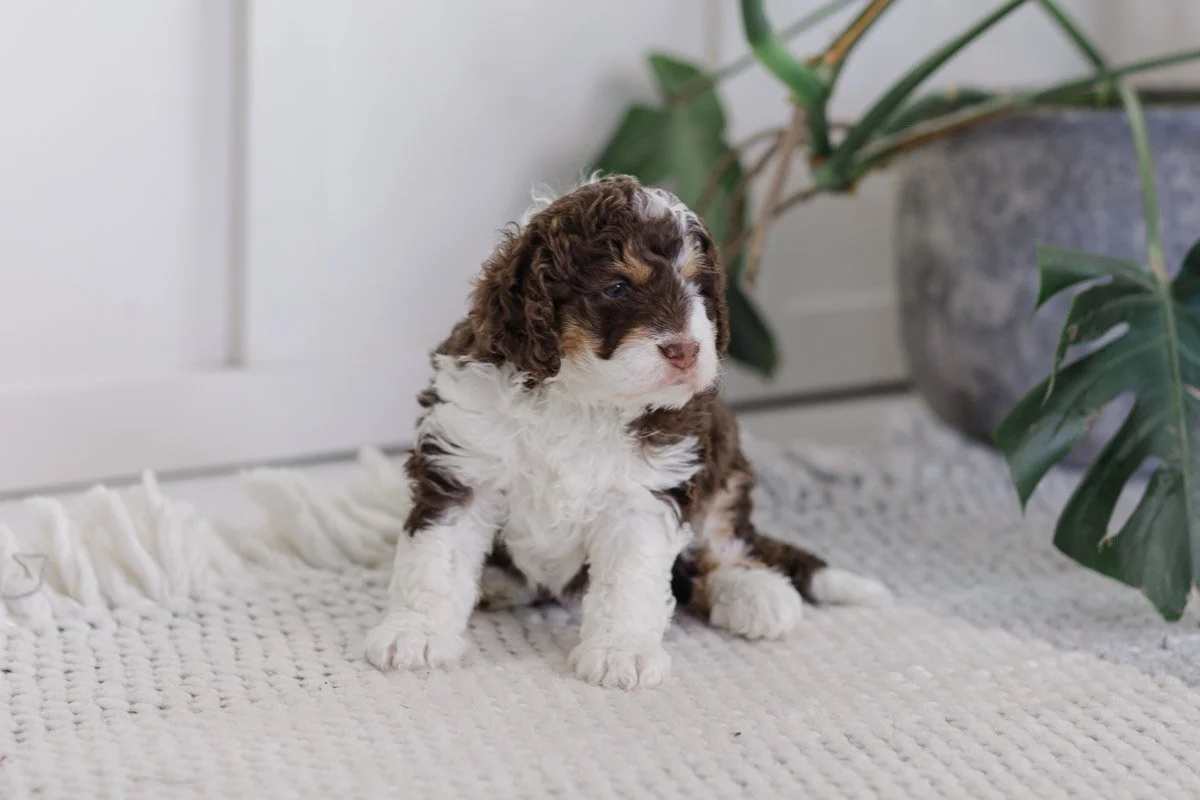
Bernedoodle Health & Lifespan: Hybrid Vigor, Cancer Risk & Testing Guide
How long do Bernedoodles live? The answer depends on size, breeding quality, and how well the Bernese Mountain Dog's devastating health profile has been addressed through hybrid vigor. This guide covers the Bernese cancer crisis that motivated the breed's creation, what hybrid vigor actually does and does not do, lifespan by size, every health condition Bernedoodles may inherit, PennHIP vs. OFA hip evaluation, the complete genetic screening checklist, and what to ask any breeder before committing.
The Bernese Mountain Dog Health Crisis
The Bernedoodle exists because the Bernese Mountain Dog is in a health crisis. Understanding this context is essential for evaluating Bernedoodle health claims — because the primary value proposition of the breed is the targeted intervention in the Bernese's genetic vulnerabilities.
Published veterinary research documents that approximately 50–67% of Bernese Mountain Dogs die from neoplastic disease. Histiocytic sarcoma — an aggressive immune-cell cancer that is often multi-focal and fatal within weeks of diagnosis — affects roughly 25% of the breed. The average lifespan of a purebred Bernese is commonly cited at 6–8 years, among the shortest of any large breed.
These outcomes are not random. They are a direct consequence of genetic bottleneck. The Bernese Mountain Dog breed was rebuilt from a small number of founders in the early 20th century, producing a coefficient of inbreeding (COI) measured near 0.395 — significantly higher than more genetically diverse breeds like the Labrador Retriever (0.218) or the Border Collie (0.037). This narrow gene pool has concentrated deleterious recessive alleles, driving the breed's extreme cancer susceptibility and elevated rates of hip dysplasia, elbow dysplasia (heritability estimated at 24–43%), and degenerative myelopathy.
The Bernedoodle introduces the Poodle's significantly more diverse genome into this bottlenecked population. The result is hybrid vigor — heterosis — which dilutes the concentration of harmful recessives and broadens the dog's genetic resilience.
The Bernedoodle was not created for aesthetic novelty. It was created because the Bernese Mountain Dog's temperament deserves a longer, healthier life — and outcrossing to the Poodle is the most effective available tool for providing it.
Hybrid Vigor: What It Actually Does — and Doesn't Do
Hybrid vigor (heterosis) is the phenomenon wherein offspring of two genetically distinct parents exhibit enhanced health, resilience, and functional traits compared to their purebred ancestors. In the Bernedoodle, it works by introducing a wider gene pool that reduces the probability of inheriting identical recessive disease alleles from both parents.
What Hybrid Vigor Does
It significantly extends lifespan compared to the purebred Bernese — often adding 4–6 years of functional companionship. It reduces the incidence of breed-specific cancers that devastate the Bernese population, pushing the onset of age-related disease later in the life cycle. It broadens the dog's genetic resilience against recessive conditions that require two copies to manifest (like von Willebrand's disease or degenerative myelopathy). The effect is strongest in F1 crosses, where the genetic distance between parents is greatest.
What Hybrid Vigor Does Not Do
It does not provide universal immunity to disease. A 2024 Royal Veterinary College study on designer crossbreeds found that for the majority of health conditions (86.6%), there was no significant difference in risk between hybrids and their purebred parents. Furthermore, some hybrids showed increased risk for specific conditions, such as ear infections. Hybrid vigor does not eliminate conditions that are polygenic (like hip dysplasia, where multiple genes contribute), dominant (like merle-associated sensory deficits), or environmental (like bloat, which is influenced by chest depth, feeding practice, and activity timing).
The benefit of the Bernedoodle is not disease-proof genetics. It is a targeted intervention: the specific, catastrophic cancers that kill Bernese Mountain Dogs at 6–8 years are diluted and delayed, giving families meaningfully more time with their companion. Families who understand this distinction — more time, not guaranteed perfect health — are the families best prepared for Bernedoodle ownership.
Bernedoodle Lifespan by Size
Lifespan in Bernedoodles is strongly correlated with adult size. Smaller dogs live longer — a pattern consistent across virtually all canine breeds and hybrids. The primary drivers are reduced cumulative stress on the cardiovascular and musculoskeletal systems, lower incidence of bloat and joint dysplasia, and reduced cancer risk associated with smaller body mass.
| Size | Adult Weight | Average Lifespan | Primary Longevity Factors |
|---|---|---|---|
| Bernese Mountain Dog (purebred) | 70–115 lbs | 6–8 years | High cancer mortality (50–67%), genetic bottleneck (COI ~0.395) |
| Standard Poodle | 45–70 lbs | 12–15 years | Broader gene pool, lower cancer incidence |
| Standard Bernedoodle | 70–90+ lbs | 12–15 years | Hybrid vigor, weight management, cardiac health monitoring |
| Medium Bernedoodle | 25–49 lbs | 13–16 years | Balance of hybrid vigor and manageable systemic stress |
| Mini Bernedoodle | 20–45 lbs | 14–17 years | Reduced orthopedic and cardiovascular stress |
| Toy Bernedoodle | 10–24 lbs | 15–18 years | Lowest systemic physical stress, minimal bloat/dysplasia risk |
The Bernedoodle nearly doubles the Bernese Mountain Dog's expected lifespan. For families who have lost a Bernese at six or seven years old — which is a tragically common experience — this extension is the single most important reason the breed exists.
Health Conditions Bernedoodles May Inherit
Bernedoodles inherit health predispositions from both parent breeds. While hybrid vigor reduces the impact of many recessive conditions, it does not eliminate polygenic, dominant, or structurally-influenced health risks. Understanding what each parent contributes helps families and veterinarians prioritize screening and preventive care.
Hip Dysplasia
Abnormal hip joint development causing pain, lameness, and eventual arthritis. Both parent breeds are predisposed. Approximately 14% of evaluated Bernese are affected. Heritable — but also influenced by growth rate, nutrition, and exercise during development. OFA or PennHIP evaluation on both parents before breeding is essential. The 5-minute exercise rule for puppies protects developing joints.
Elbow Dysplasia
Abnormal elbow joint development. The Bernese Mountain Dog carries particularly high risk — heritability estimated at 24–43%, with prevalence reported between 24.5–70% in various studies. Published data suggests the risk approximately doubles if even one parent is affected. OFA elbow evaluation on both parents is critical for Bernedoodle breeding programs.
Cancer
The Bernese Mountain Dog's cancer mortality rate (50–67%) is the primary reason the Bernedoodle was created. Histiocytic sarcoma affects roughly 25% of the purebred Bernese population. The Poodle outcross dilutes this risk but does not eliminate it — Standard Bernedoodles still carry elevated cancer risk compared to the general canine population. Smaller Bernedoodle sizes tend to carry lower cancer risk consistent with the size-cancer correlation in veterinary literature.
Bloat (GDV)
Gastric dilatation-volvulus is a life-threatening emergency where the stomach fills with gas and twists on itself. Standard Bernedoodles are at risk due to the Bernese's deep chest structure. Prevention: feed multiple smaller meals rather than one large meal, use slow-feed bowls, avoid vigorous activity immediately after eating. Some owners opt for prophylactic gastropexy during spay/neuter surgery.
Progressive Retinal Atrophy (PRA)
A degenerative eye condition leading to progressive vision loss and eventual blindness. Both the Bernese and Poodle carry PRA-related variants. DNA testing (prcd-PRA) identifies carriers and affected dogs. Responsible breeding avoids mating two carriers, ensuring no puppy inherits two copies of the disease allele.
Von Willebrand's Disease Type 1
A genetic bleeding disorder that reduces the blood's ability to clot properly. Both the Bernese and Poodle populations carry vWD Type 1. DNA testing identifies carriers. Clinical presentation ranges from mild (prolonged bleeding after surgery) to moderate. Carrier-to-carrier matings must be avoided to prevent clinically affected offspring.
Degenerative Myelopathy (DM)
A progressive spinal cord disease caused by SOD1 gene variants, leading to hind-limb weakness and eventual paralysis. Both parent breeds carry DM variants. DNA testing identifies at-risk, carrier, and clear dogs. Onset typically occurs in senior dogs. There is no cure — management focuses on maintaining mobility and quality of life.
Skin Allergies
Estimated to affect 30–40% of Bernedoodles. Presents as persistent itching, hot spots, ear infections, and hair loss. Can be environmental (pollen, dust mites) or food-related (protein sensitivities). Food elimination trials may require 2–3 months to identify triggers. Early veterinary consultation is recommended at first signs. Floppy ears increase infection risk due to trapped moisture.
Standard Bernedoodles may carry risk for cardiac conditions including dilated cardiomyopathy (DCM) and subaortic stenosis, inherited from both parent breeds. Cardiac screening via echocardiogram is recommended for Standard Bernedoodle breeding dogs. Clinical signs — exercise intolerance, coughing, rapid breathing — should prompt immediate veterinary evaluation.
PennHIP vs. OFA: Two Approaches to Hip Health
Hip evaluation is one of the most important health screenings for any Bernedoodle breeding program. Two primary methods are used — and they differ significantly in methodology, objectivity, and predictive accuracy.
| Feature | OFA (Orthopedic Foundation for Animals) | PennHIP (Pennsylvania Hip Improvement Program) |
|---|---|---|
| Method | Single radiograph in extended-hip position | Three radiographic views (Compression, Distraction, Hip-Extended) under sedation |
| Scoring | Subjective grading: Excellent, Good, Fair, Borderline, Mild, Moderate, Severe | Objective Distraction Index (DI) — a quantitative measurement of joint laxity |
| What It Measures | Radiographic appearance of the hip joint in one position | Actual joint laxity — the primary predictor of future arthritis |
| Criticism | Extended position can mask laxity by stretching the joint capsule. Subjective grading introduces evaluator variability. | Requires sedation and specialized training. Not all veterinary clinics offer it. |
| Earliest Age | 24 months for official certification | 16–20 weeks for preliminary DI measurement |
| Predictive Value | Moderate — identifies existing structural abnormalities | Higher — laxity measurement predicts future arthritis risk before symptoms appear |
| Industry Standard | Most widely used in North America | Growing adoption; preferred by progressive breeding programs |
A PennHIP Distraction Index of ≤ 0.30 is associated with minimal risk of developing osteoarthritis. A DI ≥ 0.30 indicates increasing susceptibility. The DI provides a continuous, objective measurement — unlike OFA's categorical grades, which can vary between evaluators and may not detect subclinical laxity.
We recommend PennHIP methodology over OFA scoring for its objective, quantitative measurement that more accurately predicts future orthopedic health. We use PennHIP in our own breeding evaluations. Both methods are acceptable, but families evaluating breeders should ask which method was used and request documentation of specific results — not just "hips cleared." A breeder who provides a DI score is giving you more useful information than one who provides an OFA grade alone.
The Complete Health Screening Checklist
Every responsible Bernedoodle breeding program should perform the following tests on both parents before any litter is planned. This checklist is what families should ask any breeder to provide documentation for — and what Stokeshire performs on every breeding dog in our program.
Questions to Ask Any Bernedoodle Breeder
What health tests have both parents completed, and can you provide documentation? What is the COI (coefficient of inbreeding) for this pairing? What hip evaluation method was used — OFA or PennHIP — and what were the specific scores? Are both parents DNA-tested for DM, PRA, and vWD? What is the merle status of both parents? What is the RSPO2 status of both parents (critical for predicting coat type)? Can I see the Embark results for both parents? What health guarantee do you provide, and what conditions does it cover? What is the cancer history in the parent dogs' lineages?
Preventive Care by Lifestage
Puppyhood (0–12 Months)
Growth management is the priority. Standard and Ultra Bernedoodle puppies must grow at a steady, moderate rate — rapid weight gain exacerbates dysplastic tendencies. Feed large-breed-specific puppy food formulations with appropriate calcium-to-phosphorus ratios. Follow the 5-minute exercise rule (5 minutes per month of age, twice daily) until growth plates close. Avoid high-impact activities on hard surfaces. Complete the vaccination schedule on time. Begin grooming socialization early. Establish a veterinary relationship and discuss bloat prevention strategies for Standard-sized puppies.
Adolescence & Adulthood (1–7 Years)
Maintain body condition score at ideal weight — obesity is the single greatest modifiable risk factor for orthopedic disease and reduced lifespan in large-breed dogs. Continue structured daily exercise (45–90 minutes depending on size). Monitor for early signs of skin allergies (itching, hot spots, ear infections), which may emerge in the first two years. Joint supplements (Omega-3 fatty acids, glucosamine, chondroitin) may support cartilage health, particularly in Standard sizes. Annual veterinary wellness exams. Dental care — especially critical in Toy and Mini sizes where dental crowding is more common.
Senior Years (7+ Years)
Increase veterinary check-ups to twice annually. Monitor for signs of degenerative myelopathy (hind-limb weakness, stumbling, difficulty rising). Cardiac screening becomes more important in Standards. Adjust exercise to accommodate any joint stiffness while maintaining mobility. Cancer screening awareness — report any unusual lumps, unexplained weight loss, lethargy, or changes in appetite to your veterinarian promptly. Quality-of-life assessment becomes an ongoing conversation as the dog ages.
Stokeshire's Health Testing Protocol
Every breeding dog at Stokeshire completes a full Embark genetic panel before inclusion in the program — screening for over 230 health conditions including DM, PRA, vWD, coat genetics, merle status, and COI calculation. Hip evaluations are performed using PennHIP methodology for its objective Distraction Index measurement. Eye evaluations (CAER) are maintained on schedule. Cardiac evaluation via echocardiogram is performed on Standard breeding dogs.
No pairing is made without confirmed genetic status on both parents. No two carriers of the same recessive condition are ever mated. Merle status is confirmed before any pairing involving merle genetics. COI is calculated for every proposed pairing — we select for genetic diversity, not just phenotypic traits. Families receive their puppy's Embark genetic results at placement, along with parent health documentation.
This is what it means to breed with intention: every test, every pairing decision, and every piece of documentation exists to give the puppy — and the family — the strongest possible foundation for a healthy, long life together.
Bernedoodle Health & Lifespan FAQs
How long do Bernedoodles live?
Are Bernedoodles healthier than Bernese Mountain Dogs?
What is the most common health problem in Bernedoodles?
What is PennHIP and why does it matter for Bernedoodles?
What health tests should Bernedoodle parents have?
Do smaller Bernedoodles live longer?
What is bloat and are Bernedoodles at risk?
What is hybrid vigor and does it really work?