
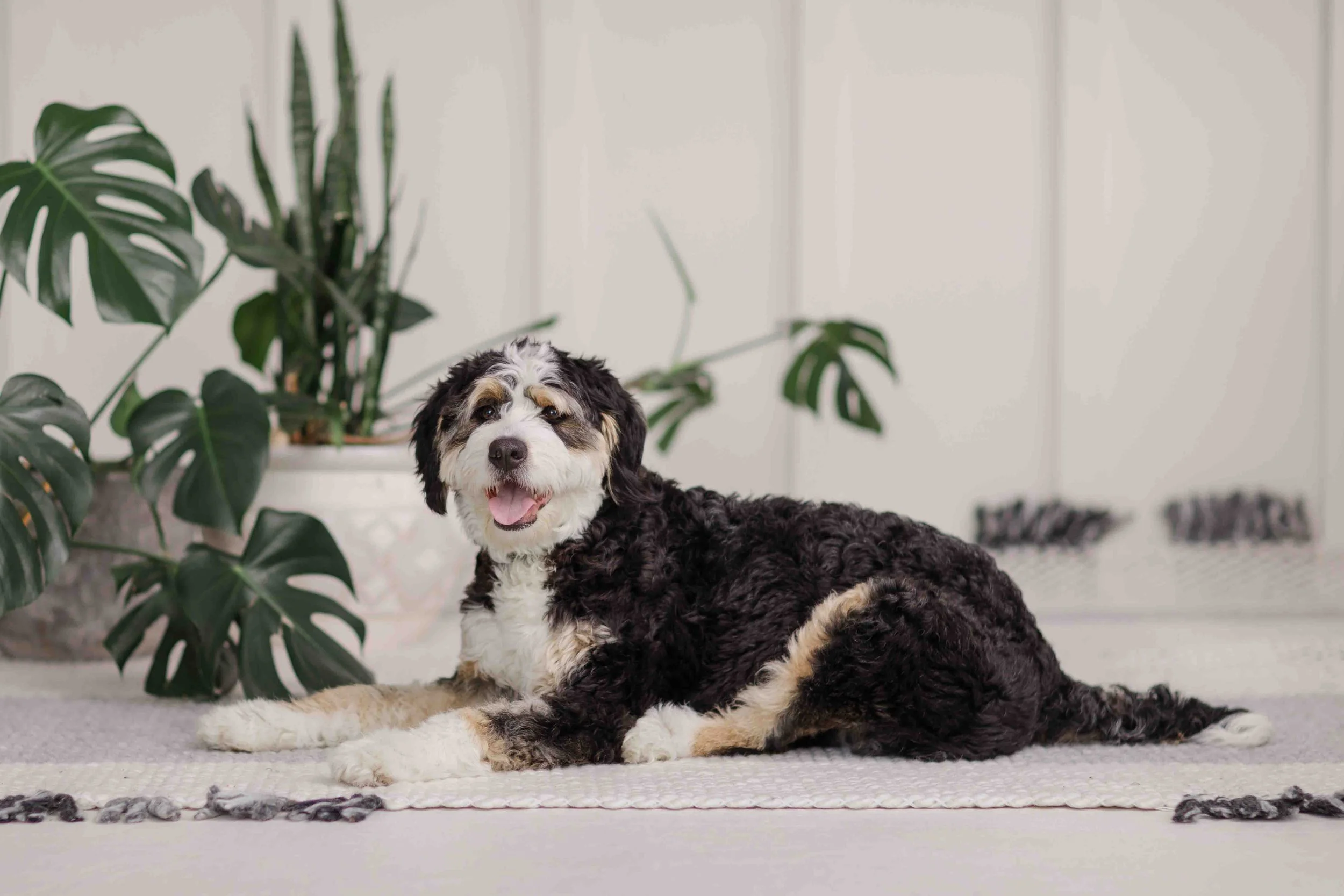
Best Doodle
for First-Time
Owners.
Your first dog teaches you more than any book can. The right breed makes that education joyful. The wrong one makes it expensive, exhausting, and sometimes heartbreaking.
Intelligence is not
the same as easy.
Doodles are marketed as "smart, friendly, and easy to train." The first two are generally true. The third depends entirely on which breed you choose and how much structure you provide.
First-time owners need a breed that forgives inconsistency in early training - one that cooperates naturally rather than testing boundaries. Not every doodle does this. The breeds below are ranked by how forgiving they are for someone learning alongside their dog.
If you are reading this page, you are already doing more research than most first-time buyers. That matters. The families who invest time in breed selection before purchase invest less in behavioral remediation after.
Doodle breeds by trainability
and forgiveness.
Best for beginners
Best for beginners
Suitable with patience
Committed beginners
Active beginners only
Experienced owners
Rankings reflect general breed tendencies and assume a family home environment. Individual dogs vary. Professional training support significantly expands the range of breeds a first-time owner can succeed with.
Five things first-time
doodle owners underestimate.
These are not reasons to avoid getting a doodle. They are reasons to prepare for one. Every item on this list is manageable with planning and realistic expectations. They become problems only when they arrive as surprises.
Low-shedding doodles require professional grooming every 6-8 weeks and at-home brushing 2-5 times per week. Annual grooming costs for a medium-to-large doodle range from $800 to $1,500. Neglected coats mat, causing pain and skin infections. This is a medical commitment, not a cosmetic one.
Between 6 and 18 months, even well-trained puppies may temporarily regress - ignoring commands they previously followed, testing boundaries, and displaying behaviors they had outgrown. This is a normal developmental phase, not a training failure. It passes with consistency. It escalates with frustration.
A doodle that runs for an hour but receives no mental stimulation comes home fitter with the same behavioral issues. Puzzle feeders, nose work, and structured training sessions produce more calmness than walks or runs. Budget 15-20 minutes of daily brain work in addition to physical exercise.
Veterinary care, supplies, food, grooming, and training in year one typically add $3,000 to $6,000 beyond the puppy's purchase price. Families who budget only for the puppy are the families who cut corners on training - which costs far more to fix later.
Potty breaks every 1-2 hours, supervised play, socialization outings, short training sessions, and constant monitoring. If both adults work full-time outside the home, plan for midday help - a dog walker, family member, or professional daycare. Puppies left alone for 8+ hours develop separation anxiety and destructive habits.
How much time a
doodle puppy actually needs.
This is the question first-time owners ask last and should ask first. A puppy does not integrate into your existing schedule. Your schedule adapts to the puppy for the first six months, then gradually returns to normal as the dog matures and training takes hold.
Professional training
is not a luxury for
first-time owners.
The first 16 weeks of a puppy's life represent the most critical socialization and learning window. What happens during this period shapes the dog's behavioral baseline for life. First-time owners who invest in professional training during this window spend less on behavioral remediation in years two through five than owners who wait.
This is not about outsourcing the relationship. It is about building the foundation correctly so the relationship can grow. Training teaches the owner as much as the dog.
The families who tell us their Stokeshire dog "was easy from day one" are almost always the families who invested in Doodle School. The dog was not easier. The foundation was better.
Six mistakes first-time
doodle owners make.
Coat color, pattern, and "cute factor" have zero correlation with temperament, trainability, or compatibility. The tri-color merle is not a better dog than the solid black. Choose temperament first. Appearance is a bonus.
The first 16 weeks are the critical socialization window. Families who wait until problems emerge spend 3-5x more on remediation than they would have on proactive training. Start on day one.
A matted doodle is not a grooming problem. It is a health emergency. Budget the time and money before you commit. If you cannot brush 3 times per week and afford grooming every 6-8 weeks, reconsider the coat type.
A $1,500 puppy with no health testing is not a bargain. It is a gamble. The difference between a $2,000 puppy and a $5,000 puppy is not profit margin - it is health testing, early socialization, and breeder support that reduce your lifetime cost.
Puppies left alone for 8+ hours develop separation anxiety and destructive behavior. If both adults work outside the home, arrange midday breaks, a dog walker, or professional daycare for the first year.
No doodle puppy is calm. Puppies are learning machines with developing impulse control. The calm adult dog you want is the product of 12-18 months of consistent training, structure, and patience. If you need calm now, consider an adult dog.
First-time doodle owners.
Your first dog
deserves your
best preparation.
Tell us about your lifestyle, experience, and expectations. We will recommend the breed, size, and training path that sets you up for success - not just for the first week, but for the first decade.