
Golden Mountain Doodle: The Complete Breed Guide
Also called: GMD · Golden Bernedoodle · Swiss Mountain Goldendoodle · Double Doodle
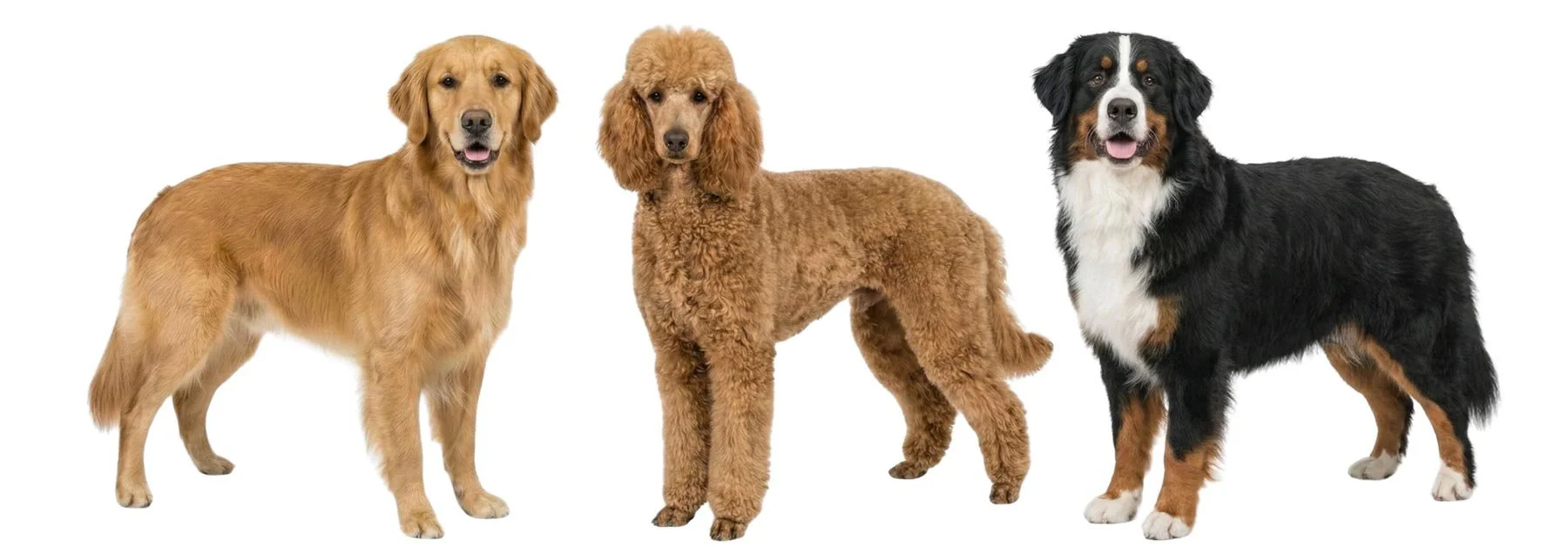
The Golden Mountain Doodle is a triple-cross hybrid that combines three of the most beloved companion breeds in the world: Golden Retriever, Bernese Mountain Dog, and Poodle. It inherits the Goldendoodle's social confidence and the Bernedoodle's gentle loyalty — in the same dog. For families torn between those two breeds, the GMD often resolves the decision. This guide covers everything: how the cross is produced, what each breed contributes, temperament, sizes, coat genetics, health, training, and why this may be the most balanced family companion available.
Golden Mountain Doodle — Quick Facts
| Breed Type | Designer hybrid — intentional three-breed cross. Not AKC recognized. |
| Parent Breeds | Golden Retriever × Bernese Mountain Dog × Poodle |
| Also Called | GMD, Golden Bernedoodle, Swiss Mountain Goldendoodle, Double Doodle |
| Origin | First intentionally produced around 2013 by Sherry Rupke of SwissRidge Kennels (Ontario, Canada) — the same breeder who established the Bernedoodle |
| How Produced | Typically: Bernedoodle × Goldendoodle, or Bernedoodle × Poodle (with Golden lineage), or Golden Mountain Dog × Poodle. All paths combine all three foundation breeds. |
| Size Range | Standard (50–80+ lbs) · Medium (30–55 lbs) · Mini (15–35 lbs) |
| Coat Types | Wavy, curly, or straight — same RSPO2/KRT71/MC5R genetics as all Poodle crosses |
| Shedding | Low to moderate in furnished dogs; higher in unfurnished. No dog is completely non-shedding. |
| Temperament | Balanced, friendly, loyal, trainable, emotionally sensitive, socially confident. Combines Bernedoodle calm with Goldendoodle enthusiasm. |
| Energy Level | Moderate — higher than Bernedoodle, lower than Goldendoodle. The Bernese "off switch" + Golden adaptability. |
| Exercise Need | 45–75 minutes daily depending on size |
| Trainability | Very high — Golden eagerness to please moderates Bernese stubbornness |
| Lifespan | Standard: 10–13 years · Medium/Mini: 12–16 years |
| Best For | Families with children, therapy/service work, first-time owners, moderately active households, families torn between Bernedoodle and Goldendoodle |
| Pricing | See Stokeshire puppy pricing |
What Is a Golden Mountain Doodle?
A Golden Mountain Doodle is a triple-cross hybrid that carries the genetics of three foundation breeds: the Golden Retriever, the Bernese Mountain Dog, and the Poodle. Unlike the Goldendoodle (Golden × Poodle) or the Bernedoodle (Bernese × Poodle), the GMD incorporates all three genomes — creating a companion with the widest temperament range and the broadest genetic diversity of any common Poodle cross. The breed is widely attributed to Sherry Rupke of SwissRidge Kennels in Ontario, Canada, who produced the first intentional Golden Mountain Doodle litters around 2013 — the same breeder credited with establishing the Bernedoodle as a recognized hybrid.
The GMD can be produced through several breeding paths. The most common: crossing a Bernedoodle with a Goldendoodle, which produces first-generation offspring carrying approximately equal contributions from all three breeds. Alternative paths include crossing a Golden Mountain Dog (Golden × Bernese, without Poodle) with a Poodle, or crossing a Bernedoodle with a Poodle that carries Golden Retriever lineage. Regardless of the production path, the defining characteristic of a Golden Mountain Doodle is that all three foundation breeds are represented in its genome.
The name "Golden Mountain Doodle" is a portmanteau: "Golden" from the Golden Retriever, "Mountain" from the Bernese Mountain Dog, and "Doodle" from the Poodle influence. The breed is also called the "Golden Bernedoodle," "Swiss Mountain Goldendoodle," or generically a "Double Doodle" — though this last term can also refer to other multi-breed doodle crosses and is less specific.
The Golden Mountain Doodle exists for families who want the Bernedoodle's loyalty and the Goldendoodle's friendliness in the same dog — with the Poodle providing the intelligence, coat genetics, and genetic diversity that ties the cross together.
What Each Breed Contributes to the GMD
The Golden Mountain Doodle's temperament is not a random blend — each breed contributes specific, identifiable traits that shape the hybrid's behavioral and physical profile. Understanding these contributions explains why the GMD produces such a balanced companion.
Golden Retriever
Contributes outgoing friendliness, eagerness to please, social confidence with strangers, retrieving drive, and higher energy. The Golden moderates the Bernese's stranger-caution, making the GMD more universally approachable than the Bernedoodle. Also contributes cancer risk (~60% lifetime incidence in purebred Goldens) and hip dysplasia susceptibility.
Bernese Mountain Dog
Contributes the calm indoor temperament, deep family loyalty, emotional sensitivity, and the natural "off switch" that allows the dog to settle when exercise needs are met. The Bernese moderates the Golden's high energy, preventing the GMD from being as demanding as a pure Goldendoodle. Also contributes cancer risk (50–67% mortality in purebred Bernese) and elbow dysplasia susceptibility.
Poodle
Contributes the RSPO2 furnishings gene (lower-shedding coat), KRT71 curl gene, cognitive flexibility ranked #2 in working intelligence, trainability, and the genetic diversity that dilutes cancer risk from both the Golden and Bernese lineages. Also provides the size range — Standard, Miniature, and Toy Poodle parents determine the GMD's adult size.
Why the Golden Mountain Doodle Exists
The Golden Mountain Doodle was not created for aesthetic novelty. It was created because the two most popular Poodle crosses — the Bernedoodle and the Goldendoodle — each carry a specific temperament trade-off that the other breed resolves.
The Bernedoodle's trade-off is a stubborn streak and stranger-caution inherited from the Bernese Mountain Dog. Families who want the Bernedoodle's calm loyalty but struggle with its training challenges or its initial wariness with new people find that the Golden Retriever's eagerness to please and social openness moderates both traits in the GMD.
The Goldendoodle's trade-off is high energy and a less "settled" indoor temperament inherited from the Golden Retriever's field-dog heritage. Families who want the Goldendoodle's friendliness but find it too demanding for their household energy level find that the Bernese Mountain Dog's calm indoor disposition and natural off-switch moderates the Golden's drive in the GMD.
The Poodle — present in all three crosses — contributes the same intelligence, coat genetics, and trainability. But in the GMD, it serves a third function: by combining three independent genomes, the triple-cross produces the broadest genetic diversity of any common Poodle hybrid. This means the GMD carries the most diluted concentration of breed-specific disease alleles — a meaningful advantage given that both the Golden Retriever and the Bernese Mountain Dog carry elevated cancer risk.
If the Bernedoodle is the calm, loyal companion and the Goldendoodle is the outgoing, enthusiastic partner, the Golden Mountain Doodle is the balanced, adaptable family dog that draws from both temperament profiles without inheriting the extremes of either. It is the compromise that doesn't feel like a compromise.
Golden Mountain Doodle Temperament
The GMD's temperament is its primary selling point — and the reason most families choose the breed. The combination of all three parent breeds produces a dog that is friendly without being overwhelming, loyal without being clingy, trainable without requiring expert-level handling, and calm enough to settle indoors while still engaged enough to enjoy active outdoor time.
Who the GMD Is Best For
Families with children of all ages. Moderately active households — hiking, park outings, backyard play, but not requiring marathon-level endurance. First-time dog owners who want a forgiving, trainable companion. Therapy and service work candidates — the GMD's combination of emotional sensitivity and social confidence makes it increasingly popular for certification programs. Families torn between Bernedoodle and Goldendoodle who want the strengths of both without the trade-offs of either.
Who Should Consider a Different Breed
Very low-energy households — the pure Bernedoodle may be a better match. Highly active, outdoor-adventure families seeking maximum energy — the pure Goldendoodle may be better suited. Those unwilling to commit to coat maintenance. Households seeking a guard dog. Those expecting a fully hypoallergenic dog.
Golden Mountain Doodle Sizes
GMD size is determined primarily by the Poodle genetics in the cross. Because the GMD involves two larger foundation breeds (Golden Retriever at 55–75 lbs, Bernese at 70–115 lbs), Standard GMDs tend to be substantial dogs. Mini and Medium sizes are achieved by incorporating Miniature or Moyen Poodle lineage.
| Size | Adult Weight | Adult Height | Growth Complete | Lifespan Est. |
|---|---|---|---|---|
| Standard | 50–80+ lbs | 21–27 in | 14–20 months | 10–13 years |
| Medium | 30–55 lbs | 17–22 in | 11–16 months | 12–15 years |
| Mini | 15–35 lbs | 13–18 in | 10–13 months | 13–16 years |
Size variability in GMDs can be higher than in two-breed crosses because three distinct size contributions interact. F1 GMD litters (Bernedoodle × Goldendoodle) tend to produce a wider range of adult sizes than Multigen GMD litters where sizes have been stabilized through selective breeding. Families with strict size requirements should discuss expected ranges based on specific parent measurements.
GMD Coat Types, Color Patterns & the Triple-Breed Advantage
The GMD's coat genetics are identical to all Poodle crosses — RSPO2 (furnishings), KRT71 (curl), MC5R (shedding), and FGF5 (length) determine the coat's appearance and maintenance requirements. What makes the GMD unique is its color palette: because it carries genetics from three breeds, the GMD produces the widest range of coat colors and patterns of any single Poodle cross.
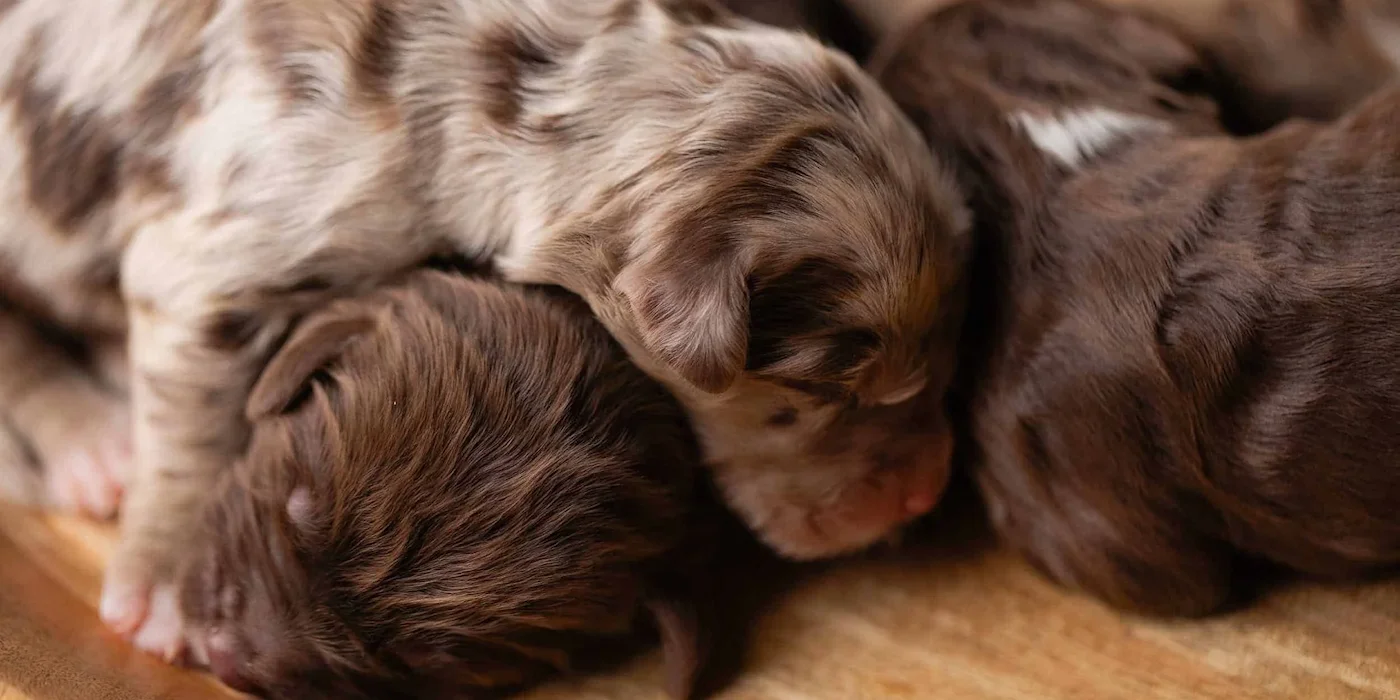
The Bernese contributes tri-color potential (black, white, rust). The Golden contributes warm tones (cream, apricot, red). The Poodle introduces phantom, merle, parti, sable, and solid variants. The intersection of all three palettes means a single GMD litter can produce tri-color puppies, merle puppies, red parti puppies, cream puppies, and phantom puppies — a diversity not achievable in either the Bernedoodle or Goldendoodle alone.
Black, white, and rust — Bernese heritage. Among the most sought-after GMD patterns.
Golden Retriever influence. Rich auburn to warm peach. May fade with progressive graying gene.
Ranges from near-white to pale gold. Very common in GMD litters with cream Goldendoodle parentage.
Mottled/marbled pattern from Poodle lineage. Blue merle and chocolate merle. Requires DNA testing for safe pairings — double-merle offspring face serious health risks.
Dark base with lighter markings above eyes, on cheeks, chest, and legs.
50%+ white with large patches. Possible because multiple Poodle gene pools contribute parti genetics.
Dark-tipped hair over lighter base. Clears over time as dark tips are groomed away.
Rich brown from Poodle B-locus genetics. May lighten to café au lait with age.
Coat texture types — curly, wavy, and straight — follow the same genetics and grooming requirements as all Poodle crosses. Curly coats shed least but mat fastest (daily brushing, professional grooming every 4–6 weeks). Wavy coats are the most common and most popular (every-other-day brushing, grooming every 6–8 weeks). Straight/flat coats shed most but require the least mat maintenance. Annual grooming costs typically range from $600–$1,500.
GMD Health: Three-Breed Genetic Diversity
The Golden Mountain Doodle's most significant health advantage is its three-breed genetic diversity. Both the Golden Retriever (~60% cancer incidence) and the Bernese Mountain Dog (50–67% cancer mortality) carry devastating cancer risk. In two-breed crosses, the Poodle dilutes one breed's risk. In the GMD, the Poodle's genetic diversity dilutes both — and the Golden and Bernese contribute different genomic backgrounds that further reduce the probability of inheriting identical deleterious recessive alleles.
This does not make the GMD disease-proof. It inherits predispositions from all three parent breeds. But the triple-cross structure provides the broadest hybrid vigor of any common Poodle cross — a meaningful advantage for families concerned about cancer and heritable disease.
Cancer Risk
Reduced compared to purebred Bernese (50–67%) and Golden (60%) through double dilution. The GMD carries three independent genomic backgrounds, reducing the concentration of breed-specific cancer alleles. Risk is lowered but not eliminated — smaller GMDs tend to carry lower cancer risk consistent with the size-cancer correlation in veterinary literature.
Hip & Elbow Dysplasia
Both the Golden Retriever and Bernese Mountain Dog are predisposed to hip dysplasia; the Bernese carries particularly high elbow dysplasia heritability (24–43%). PennHIP evaluation on both parents is essential. Growth management in Standard GMD puppies — controlled exercise, large-breed puppy food, avoiding high-impact activity before growth plate closure — reduces developmental orthopedic risk.
Bloat (GDV)
Standard GMDs carry bloat risk from both the Bernese's deep chest and the Golden's large frame. Prevention: feed multiple smaller meals, use slow-feed bowls, avoid vigorous exercise around mealtimes. Prophylactic gastropexy during spay/neuter is an option for high-risk individuals. Symptoms — retching without vomiting, distended abdomen, restlessness — require immediate emergency care.
Ear Infections & Skin Allergies
Floppy ears from both the Golden and Bernese parent contribute to trapped moisture and infection risk. Weekly ear cleaning is essential — especially after swimming. Skin allergies (environmental and food-based) may affect 15–30% of GMDs. Food elimination trials, omega-3 supplementation, and early veterinary consultation help manage symptoms.
Health Testing Protocol
Every GMD breeding dog at Stokeshire completes a full Embark genetic panel (230+ conditions), PennHIP or OFA hip evaluation, OFA elbow evaluation, eye certification (CAER), and cardiac screening for Standards. Merle status is confirmed before any pairing involving merle genetics. No two carriers of the same recessive condition are mated. Families receive complete genetic documentation at placement.
Training a Golden Mountain Doodle
The GMD is one of the most trainable multi-breed hybrids available. The Golden Retriever's eagerness to please — the trait that makes Goldendoodles so forgiving for first-time owners — moderates the Bernese Mountain Dog's stubborn streak, producing a dog that is responsive, cooperative, and motivated by handler engagement without the negotiation that characterizes many Bernedoodles during adolescence.
Positive reinforcement with consistent cues is the standard approach. The emotional sensitivity inherited from both the Bernese and the Poodle means harsh corrections cause confusion or shutdown — but the Golden's resilience provides a buffer that makes the GMD slightly more forgiving of training inconsistencies than the pure Bernedoodle. Short, engaging sessions (10–15 minutes, two to three times daily) maintain focus. Impulse control exercises, "leave it" training, and structured settle commands build the self-regulation that pays dividends through adolescence.
Exercise Requirements
Standard GMDs typically need 45–75 minutes of daily exercise — less than the Goldendoodle's 60–90+ minute requirement, more than the Bernedoodle's 30–60 minutes. The GMD benefits from a mix of physical activity (walks, fetch, swimming) and mental stimulation (puzzle feeders, scent games, training sessions). The Bernese influence provides a more natural off-switch than the Goldendoodle — GMDs typically settle indoors more readily after exercise needs are met.
Separation Anxiety
The GMD carries moderate separation anxiety risk — less than the Bernedoodle's intense "velcro" attachment but more than a truly independent breed. The Golden Retriever's working independence (developed for retrieval at distance from the handler) provides some resilience. Gradual desensitization to departures and crate training as a safe space should begin from Day 1. Families who work from home should still practice scheduled separation to build tolerance.
Bernedoodle vs. Goldendoodle vs. Golden Mountain Doodle
The question families ask most often: how does the GMD differ from the Bernedoodle and the Goldendoodle? This table summarizes the core differences across every dimension that matters for family selection.
| Feature | Bernedoodle | Goldendoodle | Golden Mountain Doodle |
|---|---|---|---|
| Parent Breeds | Bernese × Poodle | Golden × Poodle | Golden × Bernese × Poodle |
| Energy Level | Low to moderate | Moderate to high | Moderate — balanced |
| Calm Indoors | Good | Moderate | Good |
| Stranger Friendliness | Cautious at first | Immediately friendly | Friendly — Golden moderates Bernese caution |
| Stubbornness | Moderate — Bernese deliberation | Low — Golden eagerness | Low — Golden eagerness moderates Bernese |
| Trainability | High | Very high | Very high |
| Separation Anxiety | Higher risk | Moderate risk | Moderate — more balanced attachment |
| Cancer Risk Dilution | Single outcross (Poodle) | Single outcross (Poodle) | Double outcross (Golden + Bernese + Poodle) |
| Color Range | Tri-color, merle, phantom, sable | Cream, apricot, red, parti | All of the above — widest palette |
| Therapy Suitability | Excellent — calm sensitivity | Excellent — social engagement | Excellent — combines both strengths |
| First-Time Owner | Good with commitment | Excellent | Excellent |
| Exercise Need | 30–60 min/day | 60–90+ min/day | 45–75 min/day |
→ Full comparison: Bernedoodle vs. Goldendoodle — with the GMD as the third option
Golden Mountain Doodles at Stokeshire
The Golden Mountain Doodle is a primary breed in Stokeshire's program. Our GMD litters are produced by crossing Embark-tested Bernedoodle and Goldendoodle parents — combining the Bernese's calm loyalty, the Golden's social confidence, and the Poodle's intelligence and coat genetics. We produce GMDs in Medium and Standard sizes, with every pairing informed by full genetic panels, hip evaluation results, and temperament assessment.
Because the GMD carries genetics from all three foundation breeds, we can produce an unusually wide range of coat colors and patterns from a single litter — tri-color, merle, parti, phantom, cream, red, and sable are all possible depending on the specific parent genetics. Our goal is to produce GMD puppies that resemble Bernedoodles in aesthetic and calm temperament while carrying the Golden Retriever's trainability, social confidence, and expanded color palette.
Many families discover the GMD through our Bernedoodle vs. Goldendoodle comparison — they arrive wanting one of the two and realize the GMD combines both. Our temperament-based matching process helps families navigate this decision based on lifestyle, energy level, and what kind of relationship they want with their dog.
James Stokes
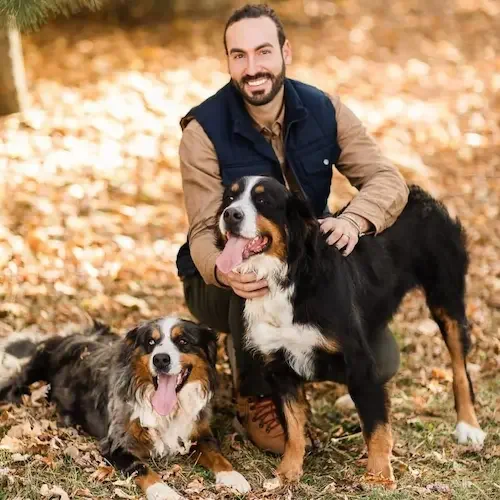
Stokeshire Designer Doodles is a therapy-grade breeding program based in Medford, Wisconsin, operated by James Stokes. The program has placed over 650 dogs with families across the United States and Mexico. Every breeding dog is Embark-tested and hip-evaluated before inclusion. Puppies are raised in a family home with Early Neurological Stimulation beginning at Day 3.
Licensed under Wisconsin DATCP #514401-DS. W4954 County Road O, Medford, WI 54451.
Golden Mountain Doodle Puppies at Stokeshire
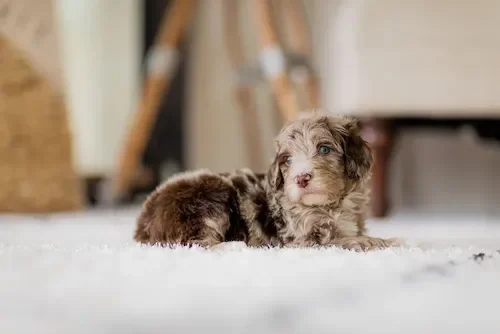

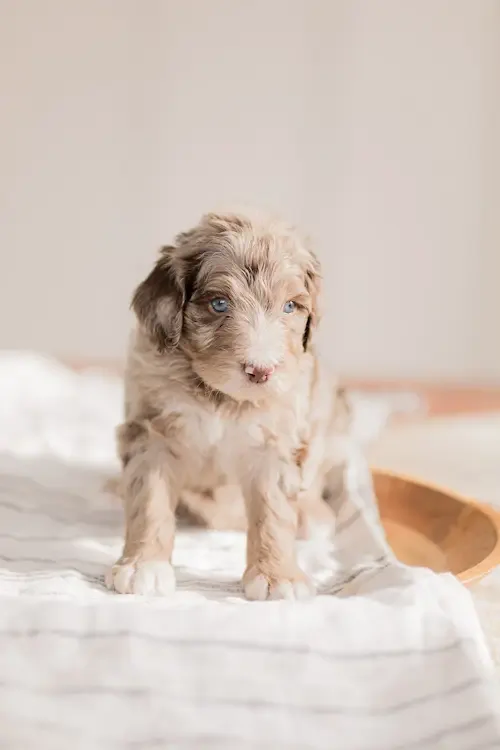

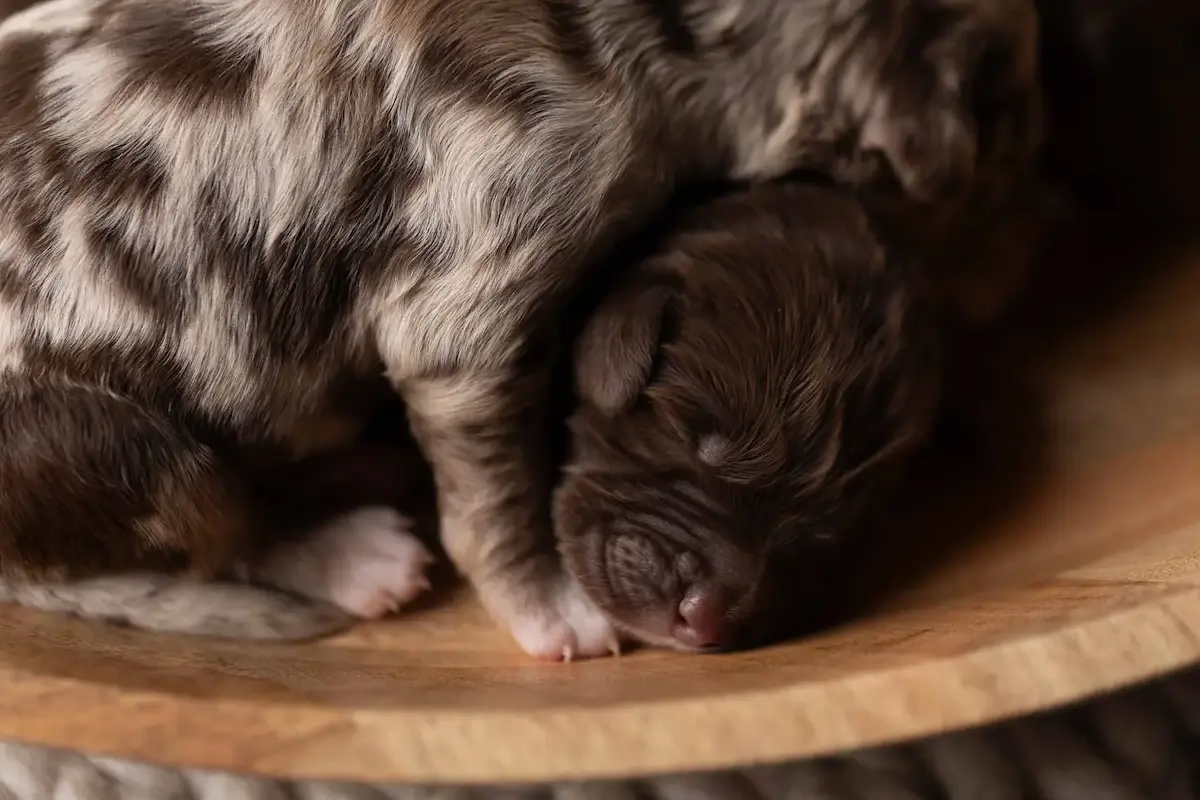
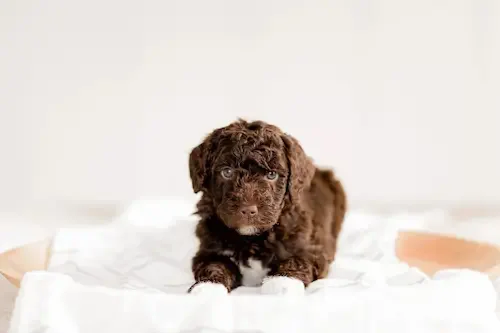
Golden Mountain Doodle Planned Litters
Current and upcoming Stokeshire GMD litters are displayed below. All breeding pairs are Embark-tested and hip-evaluated. Nationwide transport available.
Golden Mountain Doodle FAQs
What is a Golden Mountain Doodle?
How is a Golden Mountain Doodle different from a Bernedoodle or Goldendoodle?
How big do Golden Mountain Doodles get?
Are Golden Mountain Doodles hypoallergenic?
How long do Golden Mountain Doodles live?
Are Golden Mountain Doodles good with kids?
What colors do Golden Mountain Doodles come in?
Are Golden Mountain Doodles easy to train?
What health problems do Golden Mountain Doodles have?
Are Golden Mountain Doodles good therapy dogs?