
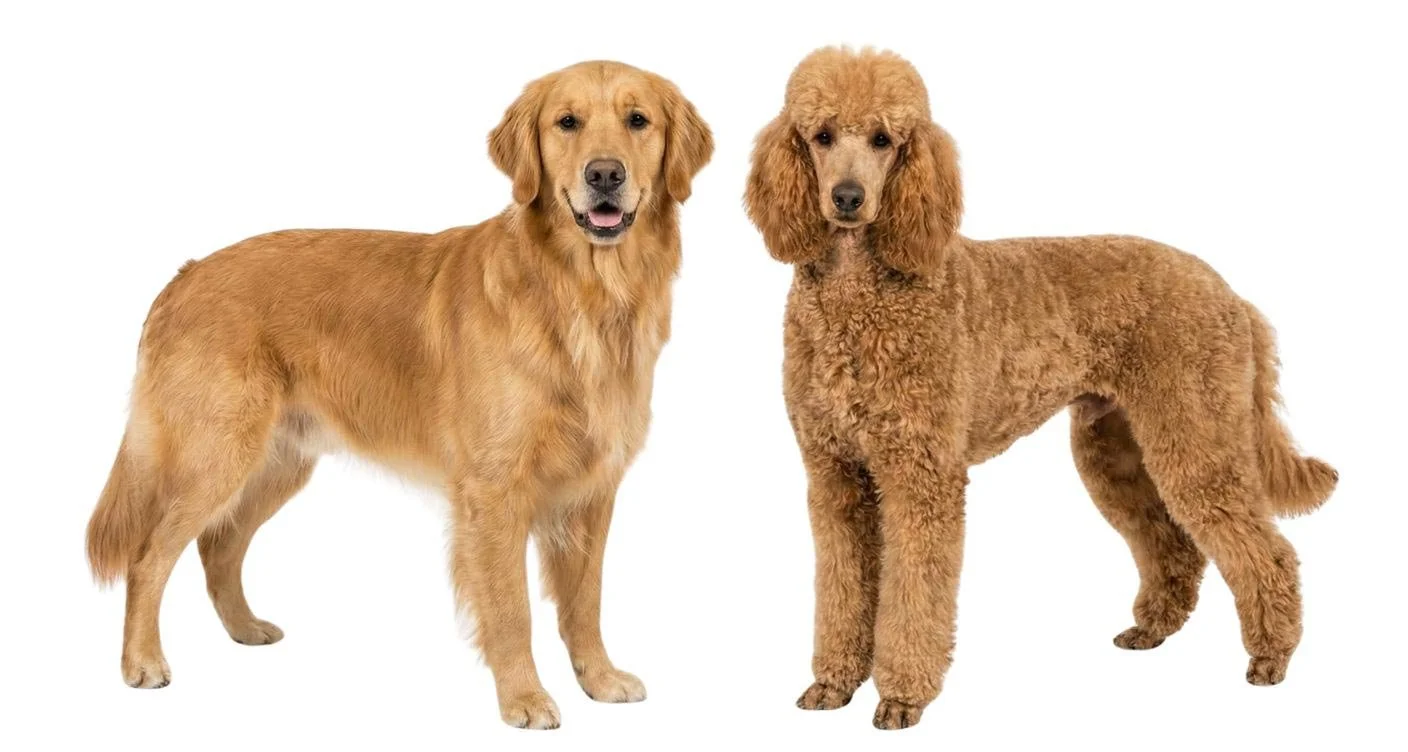
Goldendoodle: The Complete Breed Guide
Also called: Groodle · Golden Poo · Goldenpoo
The Goldendoodle is an intentional cross between the Golden Retriever and the Poodle — combining the Golden's universally friendly temperament with the Poodle's intelligence, trainability, and lower-shedding coat genetics. It is the most popular doodle breed in the world and one of the most forgiving first-dog choices for families. This guide covers everything: temperament, sizes, generations, coat science, grooming, health, and what 15 years with a Goldendoodle actually looks like.
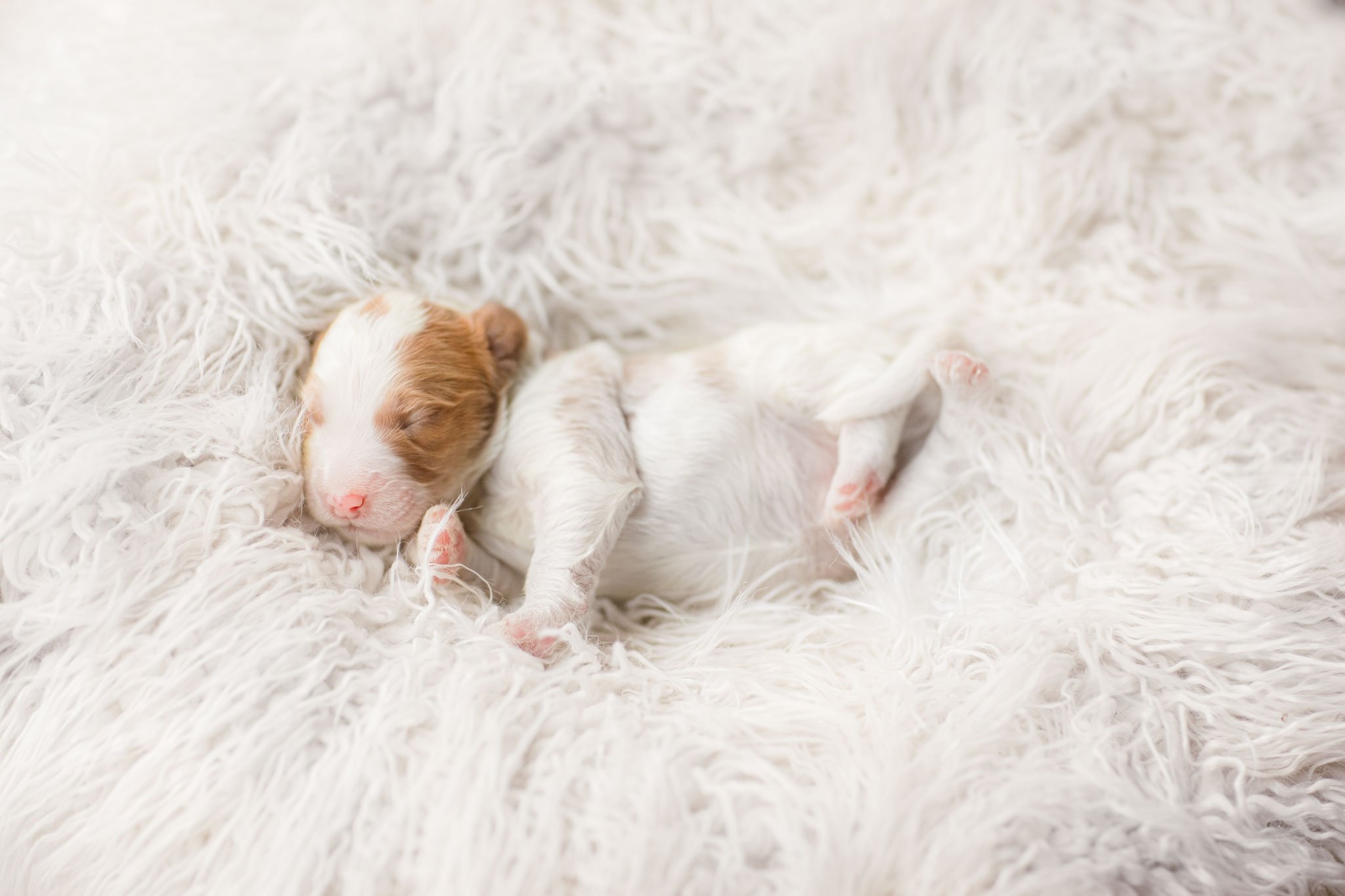
Goldendoodle — Quick Facts
| Breed Type | Designer hybrid — intentional two-breed cross. Not AKC recognized as a breed. |
| Parent Breeds | Golden Retriever × Poodle |
| Also Called | Groodle, Golden Poo, Goldenpoo |
| Origin | First intentionally crossed in 1969 by Monica Dickens (Australia) for guide dog work; commercialized in the 1990s across North America and Australia |
| Size Range | Standard (50–75+ lbs) · Medium (30–50 lbs) · Mini (15–35 lbs) · Toy (10–20 lbs) |
| Coat Types | Wavy, curly, or straight — determined by RSPO2 (furnishings), KRT71 (curl), and MC5R (shedding) genetics |
| Shedding | Low to moderate in furnished dogs; higher in unfurnished or straight-coated individuals. No dog is completely non-shedding. |
| Temperament | Outgoing, enthusiastic, friendly, eager to please, socially confident, playful. One of the most forgiving breeds for first-time owners. |
| Exercise Need | 60–90+ minutes daily depending on size — higher energy than most doodle breeds due to Golden Retriever field-dog heritage |
| Trainability | Very high — Golden eagerness to please combined with Poodle intelligence produces one of the most trainable companion dogs available |
| Lifespan | Standard: 10–15 years · Mini: 12–16 years · Toy: 14–17 years |
| Best For | Active families, first-time dog owners, therapy and service work, social households, families with children |
| Pricing | See Stokeshire puppy pricing |
What Is a Goldendoodle?
A Goldendoodle is an intentional hybrid cross between a Golden Retriever and a Poodle. The history of this cross is older than most people realize. In 1969, Monica Dickens — great-granddaughter of the Victorian novelist Charles Dickens — initiated a pioneering program in Australia to develop a guide dog that combined the Golden Retriever's intuitive, gentle temperament with the Poodle's intelligence and low-allergen coat. Her objective was not a commercial pet but a service dog suitable for handlers with severe respiratory allergies. These early experimental crosses (1969–1980s) laid the groundwork for the hybrid's core characteristics: emotional stability, cognitive flexibility, and a coat that could open the Golden Retriever temperament to allergy-sensitive homes.
The global expansion of the Goldendoodle occurred in the 1990s, following the well-publicized success of the Labradoodle program in 1989. North American breeders established dedicated Goldendoodle programs by the mid-1990s, with the West Coast of the United States serving as an early hub. By the late 1990s, the development of smaller sizes — achieved by incorporating Miniature and Toy Poodles — further catalyzed the breed's popularity among urban and suburban families. The name "Goldendoodle" is a portmanteau of "Golden" and the existing "-doodle" convention; in Australia, the term "Groodle" became the standard nomenclature.
The Parent Breeds: Deep Working Lineages
The Golden Retriever was developed in the Scottish Highlands by Sir Dudley Marjoribanks (Lord Tweedmouth), who crossed a yellow Retriever named Nous with a Tweed Water Spaniel named Belle in 1868, later incorporating Red Setters and Bloodhounds to produce a breed with an exceptional nose, a soft mouth for carrying game undamaged, and a gentle, biddable disposition. Today the Golden Retriever ranks among the top three AKC-registered breeds — its popularity reflecting a temperament that is consistently outgoing, patient, eager to please, and socially confident in virtually every environment.
The Poodle, despite its modern association with fashion, originated in Germany as a "Pudelhund" — a water retriever bred for waterfowl work. The traditional Poodle clips were functional, designed to protect vital organs and joints from cold water while reducing waterlogged coat weight. The breed contributes the RSPO2 furnishings gene that produces the lower-shedding "doodle coat," intelligence that ranks among the highest of all domestic breeds (Stanley Coren ranked Poodles #2 in working intelligence), and the size range that makes Mini and Toy Goldendoodles possible. The Poodle's genetic diversity also provides hybrid vigor when crossed with the Golden Retriever — diluting the breed-specific cancer risk that affects approximately 60% of Goldens during their lifetime.
The Goldendoodle exists because the Golden Retriever's temperament is among the most universally appealing in the canine world — and the Poodle provides the coat genetics, size range, and genetic diversity to bring that temperament to families who couldn't otherwise live with a heavy-shedding breed. It is the fusion of two of the most accomplished working retriever lineages in the canine world.
The Two Parent Breeds
Every Goldendoodle inherits traits from both parents. Understanding what each breed contributes — and what health risks each carries — is the most accurate way to predict what a Goldendoodle will need from its home.
Golden Retriever
Developed in Scotland as a field retriever for waterfowl hunting. The Golden contributes the outgoing, universally friendly temperament that makes Goldendoodles one of the most social doodle breeds. It also contributes: high energy (field-dog endurance), strong retrieving instinct (mouthiness during puppyhood), eagerness to please that makes training straightforward, and a natural confidence with strangers that requires minimal socialization coaching. Health challenges from the Golden side: approximately 60% lifetime cancer incidence (hemangiosarcoma and lymphoma are the most common types), hip dysplasia, elbow dysplasia, progressive retinal atrophy, ichthyosis, and subvalvular aortic stenosis.
Poodle
Available in Standard, Miniature, and Toy sizes — the Poodle parent determines the Goldendoodle's adult size. The Poodle contributes the RSPO2 furnishings gene (the "doodle look"), the KRT71 curl gene, and the MC5R shedding variant responsible for lower environmental shedding. It also contributes the cognitive flexibility, problem-solving ability, and emotional attunement that make Poodle crosses among the fastest-learning companion dogs available. Poodle health considerations include hip dysplasia (Standards), patellar luxation (Minis/Toys), progressive retinal atrophy (prcd-PRA), von Willebrand's disease, sebaceous adenitis, and Addison's disease.
The Golden Retriever Cancer Crisis
The Golden Retriever faces a cancer crisis comparable in severity to the Bernese Mountain Dog's. Approximately 60% of Golden Retrievers are affected by cancer during their lifetime, with hemangiosarcoma and lymphoma being the most common types. The Morris Animal Foundation's Golden Retriever Lifetime Study — one of the largest longitudinal canine health studies in history — has been tracking over 3,000 Goldens to understand the genetic and environmental factors driving this epidemic.
The Goldendoodle introduces the Poodle's different genetic background into this landscape. Hybrid vigor dilutes the concentration of breed-specific cancer-driving alleles, and the broader genetic diversity reduces the probability of inheriting identical deleterious recessives from both parents. The effect is a meaningful extension of functional lifespan — Standard Goldendoodles typically live 10–15 years compared to the purebred Golden's 10–12 year average, with smaller sizes living longer.
As with all hybrid benefits, this is a reduction in risk, not an elimination. Goldendoodles still carry elevated cancer susceptibility compared to the general canine population. Health testing on both parents remains the primary tool for reducing heritable risk.
Goldendoodle Generations: F1, F1B, F2 & Multigen
Generation describes the breeding structure behind a Goldendoodle and directly influences coat predictability, shedding level, and allergy suitability. The labels describe the ratio of Golden to Poodle genetics and the distance from purebred ancestors.
| Generation | Genetic Structure | Coat Expectation | Shedding | Allergy Suitability |
|---|---|---|---|---|
| F1 | 50% Golden / 50% Poodle | Wavy to slightly curly; variable | Low to moderate | Mild allergies — not severe |
| F1B | ~25% Golden / 75% Poodle | Curlier, more consistent furnishings | Very low to non-shedding | Moderate to severe allergies |
| F1BB | ~12.5% Golden / 87.5% Poodle | Tight curls; most Poodle-like coat | Nearly zero | Best option for severe allergies |
| F2 | ~50% Golden / 50% Poodle (F1 × F1) | High variability; unfurnished possible | Variable — depends on RSPO2 status | Unpredictable for allergies |
| F2B | ~37.5% Golden / 62.5% Poodle | More consistent than F2; usually wavy-curly | Low | Good for mild to moderate allergies |
| Multigen | Multiple generations — selectively bred | Most consistent wavy or curly | Very low | Most suitable for allergies |
The "unfurnished" trait — where a Goldendoodle lacks the characteristic facial hair and sheds more like a Golden Retriever — can appear in F2 litters when both parents carry recessive RSPO2 genes. Approximately 25% of F2 litter puppies may be unfurnished. This is why genetic testing matters: coat predictability is not about marketing labels, it is about understanding which genes each parent carries.
Stokeshire generation note: We produce F1 and Multigen Goldendoodle litters. All breeding dogs are Embark-tested for coat genetics (RSPO2, KRT71, MC5R, FGF5) before any pairing is made. Our Multigen lines offer the most consistent coat outcomes for allergy-sensitive families.
Goldendoodle Temperament
The Goldendoodle's temperament is a blend of the Golden Retriever's outgoing, enthusiastic friendliness and the Poodle's cognitive complexity and emotional attunement. The result is a dog that approaches life with cheerful confidence — greeting strangers like old friends, adapting to new environments with minimal stress, and maintaining enthusiasm for activity, play, and human engagement throughout its lifespan. This universal friendliness is the trait that makes the Goldendoodle the most popular doodle breed in the world and one of the easiest companion dogs for first-time owners.
The Golden Retriever was developed as a field dog — bred to sustain physical and mental output over long retrieval sessions in challenging environments. This produces a Goldendoodle with a higher energy baseline than most doodle breeds. Standard Goldendoodles typically need 60–90+ minutes of daily exercise including both physical activity and mental stimulation. Dogs that are physically exercised but cognitively under-stimulated may develop retriever-specific displacement behaviors: mouthing, carrying objects constantly, or restless pacing.
Who the Goldendoodle Is Best For
Active families who enjoy outdoor activities — hiking, swimming, running, park outings. First-time dog owners who want a forgiving, easy-to-train companion. Social households where the dog will meet many people, children, and other animals. Therapy and service work candidates — the Goldendoodle's social confidence and trainability make it one of the most commonly certified therapy breeds. Households that can provide 60+ minutes of daily physical and mental engagement.
Who Should Consider a Different Breed
Low-energy households or families seeking a calm, low-activity companion — the Bernedoodle may be a better temperament match. Families away from home for extended periods without prior separation conditioning. Those unwilling to commit to the grooming demands of a furnished coat. Households seeking a guard dog — Goldendoodles are among the friendliest breeds alive and make poor watchdogs. Those expecting a fully hypoallergenic dog — no dog is completely allergen-free.
Goldendoodle Sizes: Standard Through Toy
Goldendoodle size is determined primarily by the Poodle parent. Standard Poodle crosses produce Standard Goldendoodles; Miniature Poodle crosses produce Mediums and Minis; Toy Poodle crosses produce Toys. The Golden Retriever parent contributes a fairly consistent size range (55–75 lbs), so variation in Goldendoodle size comes almost entirely from the Poodle side.
| Size | Adult Weight | Adult Height | Growth Complete | Lifespan Est. |
|---|---|---|---|---|
| Standard | 50–75+ lbs | 20–26 in | 14–18 months | 10–15 years |
| Medium | 30–50 lbs | 17–21 in | 11–15 months | 12–16 years |
| Mini | 15–35 lbs | 13–18 in | 10–13 months | 12–16 years |
| Toy | 10–20 lbs | 10–15 in | 8–11 months | 14–17 years |
No specific adult size is guaranteed in any hybrid program. Females tend toward the lower end of each range, males toward the upper. The 16-week weight doubling formula provides a useful baseline estimate, but genetic variability in F1 generations can produce outcomes 15–20% above or below prediction.
Goldendoodle Coat Types, Color Patterns & Genetics
Goldendoodle coat genetics are identical to other Poodle crosses — the same four genes (RSPO2, KRT71, MC5R, FGF5) control furnishings, curl, shedding, and length. Whether a Goldendoodle sheds, how curly the coat is, and whether it is appropriate for allergy-sensitive homes are determined by testable gene variants — not by generation label, color, or marketing language.
Controls facial furnishings — beard, eyebrows, moustache. Furnished dogs (FF or Ff) have the classic "doodle look" and shed less. Unfurnished dogs (ff) shed comparably to a Golden Retriever.
Determines coat curl. Two copies = curly; one = wavy; zero = straight. Curlier coats shed least but mat fastest.
Influences hair growth cycle. Poodles typically carry the low-shedding variant. Shedding is multigenic — no single gene guarantees a non-shedding outcome.
Controls overall coat length. Most furnished Goldendoodles carry the long-coat variant through Poodle lineage.
Coat Texture Types
Curly (Wool) Coat: Closest to the Poodle. Tight curls or ringlets. Lowest shedding. Highest grooming demand — daily brushing, professional grooming every 4–6 weeks. Most suitable for allergy-sensitive households.
Wavy (Fleece) Coat: The hallmark Goldendoodle appearance — soft, flowing waves. Low to moderate shedding. Moderate grooming — brushing every other day. The most popular Goldendoodle coat type.
Straight (Flat) Coat: Most resembles the Golden Retriever parent. Moderate to higher shedding. Lowest mat risk. Not appropriate for allergy-sensitive homes. Sometimes called a "flat coat Goldendoodle" or "improper coat."
Goldendoodle Color Patterns
The Golden Retriever contributes a warm color palette (cream through deep red), while the Poodle introduces the broader range of color genetics including phantom, parti, merle, and silver variants.
Most common Goldendoodle color. Ranges from near-white to pale gold. Often deepens slightly with maturity.
Warm golden-peach tone. Classic "teddy bear" appearance. May lighten with age due to progressive graying gene.
Deep auburn to mahogany. Most saturated Goldendoodle color. Highly sought after. May fade to apricot or gold over time.
Rich brown from the Poodle's recessive B-locus genetics. May lighten to café au lait with the fading gene.
At least 50% white with large patches of another color. Bold, high-contrast pattern. Less common in F1 crosses.
Solid dark base with lighter markings in defined locations: above eyes, on cheeks, chest, legs, and under tail.
Mottled/marbled pattern. Requires the M-locus gene from the Poodle parent. Blue merle and chocolate merle are most common. Requires DNA testing for safe pairings.
Solid black Goldendoodles are less common — requires specific K-locus genetics. May develop silver undertones with age.
The Fading Gene
Many Goldendoodles carry the Poodle's progressive graying gene, which causes coat colors to lighten over the first two years. Deep reds may fade to apricot or cream. Rich chocolates may lighten to café au lait. This is a normal genetic process, not a health concern. Breeders should prepare families for the possibility of color change — the puppy coat and the adult coat may look significantly different.
Merle Safety
Two merle-carrying dogs must never be bred together. Double-merle offspring (M/M) face significant risk of bilateral deafness (up to 56% in published studies) and visual impairments including microphthalmia, cataracts, and colobomas. Cryptic merles — dogs that appear solid but carry a short merle insertion — require DNA testing to identify. The recessive red genotype (e/e) can mask merle, making the dog appear solid cream or apricot while still carrying the merle allele. Visual coat assessment alone is never sufficient to determine merle status. Stokeshire confirms merle status on all breeding dogs via Embark before any pairing, and we breed merle dogs only to confirmed non-merle partners.
Goldendoodle Grooming Requirements
The Goldendoodle's coat is high-maintenance. Lower shedding does not mean lower grooming — it means different grooming. The same coat structure that retains hair within the curl rather than releasing it into your home also accumulates tangles and mats without consistent brushing. This is the single most underestimated aspect of Goldendoodle ownership.
Curly / Wool Coat
Highest demand. Mats rapidly at friction zones — behind ears, under legs, collar area. Line brushing essential. Daily metal comb check for hidden mats near the dermis.
Wavy / Fleece Coat
Most popular Goldendoodle coat. Moderate maintenance but still mat-prone. Slicker brush for surface work, metal comb for deep checks. Teddy Bear Cut is the standard request.
Straight / Flat Coat
Lowest mat risk but highest shedding. Regular brushing manages loose undercoat. Not appropriate for allergy-sensitive homes.
Ear care: Goldendoodle ears — inherited from the Golden Retriever's floppy ear structure — trap moisture and debris, creating bacterial and yeast infection risk. This is compounded by the breed's love of water (retrieving instinct). Weekly cleaning with veterinary-approved solutions is essential, especially after swimming.
Grooming budget reality: Professional grooming every 6–8 weeks typically runs $75–$150+ per session depending on size and coat condition. Annual grooming costs for a Goldendoodle often range from $600–$1,500. Families should budget for this before committing to the breed.
Goldendoodle Health Considerations
While hybrid vigor reduces the impact of some breed-specific conditions, Goldendoodles inherit health predispositions from both parent breeds. Comprehensive screening on all breeding dogs is the primary tool for reducing heritable risk.
From the Golden Retriever
Cancer risk — approximately 60% lifetime incidence in purebred Goldens. Hemangiosarcoma and lymphoma most common. Hip and elbow dysplasia. Cranial cruciate ligament (CCL) tears — a knee injury common in active Goldendoodles, especially when combined with excess weight. Progressive retinal atrophy (PRA). Ichthyosis (a skin condition causing flaking and scaling). Subvalvular aortic stenosis (SAS — a congenital heart defect). Hypothyroidism.
From the Poodle
Hip dysplasia (Standards) or patellar luxation (Minis/Toys). Progressive retinal atrophy (prcd-PRA). Von Willebrand's disease. Sebaceous adenitis. Addison's disease. Idiopathic epilepsy. Neonatal encephalopathy (rare, testable).
Ear Infections
Among the most common Goldendoodle health complaints. Floppy ears + love of water + hair growth in ear canals = trapped moisture and bacterial/yeast buildup. Weekly ear cleaning is preventive maintenance, not optional grooming. Dogs with chronic ear infections should be evaluated for food sensitivities or environmental allergies.
Skin Allergies
Goldendoodles share the same allergy predisposition as other doodle breeds. Environmental allergens (pollen, dust mites) and food sensitivities (common protein triggers) present as itching, hot spots, ear infections, and hair loss. Food elimination trials may require 2–3 months. Early veterinary consultation recommended at first signs.
Bloat (GDV)
Gastric dilatation-volvulus is a life-threatening emergency where the stomach fills with gas and twists on itself. Standard Goldendoodles carry moderate risk due to chest depth — lower than the Bernedoodle's Bernese-derived deep chest, but still a consideration for larger individuals. Prevention: feed multiple smaller meals rather than one large meal, use slow-feed bowls, avoid vigorous activity for one to two hours around mealtimes. Many owners of Standard Goldendoodles opt for prophylactic gastropexy — a surgery that tacks the stomach to the abdominal wall — during spay or neuter. Symptoms include retching without vomiting, distended abdomen, restlessness, and drooling. GDV requires immediate emergency veterinary intervention.
Stokeshire's Health Testing Protocol
Every breeding dog at Stokeshire completes a full Embark genetic panel before inclusion in the program — screening for over 230 health conditions. Hip evaluations use PennHIP methodology for its objective Distraction Index measurement. Eye evaluations (CAER) are maintained on schedule. No pairing is made without confirmed genetic status on both parents, and no two carriers of the same recessive condition are mated. Families receive their puppy's Embark genetic results at placement.
The Goldendoodle Association of North America (GANA) maintains tiered health testing standards for member breeders — Gold, Silver, and Bronze levels based on the depth of genetic screening, hip clearances, cardiac evaluation, and eye certification performed. GANA also publishes a code of ethics requiring take-back commitments (lifetime responsibility for any dog produced), minimum breeding age requirements, and prohibitions on pet store and wholesale sales. Stokeshire's testing protocols meet or exceed GANA Gold Paw standards.
Training a Goldendoodle
Goldendoodles are among the most trainable companion dogs available. The Golden Retriever's strong eagerness to please — a trait bred over generations for cooperative handler work in the field — combines with the Poodle's ranked #2 working intelligence to produce a dog that learns commands quickly, retains training well, and complies readily with minimal stubbornness. For first-time owners, this makes the Goldendoodle one of the most forgiving breeds to train.
Training Approach: What Works
Positive reinforcement with consistent cues. The Goldendoodle's desire to please means that praise, play, and treats are all effective motivators. Short, engaging sessions (10–15 minutes, two to three times daily) keep the dog focused. The Golden Retriever's soft temperament means that harsh corrections cause confusion rather than compliance — but the breed is resilient enough that minor training inconsistencies don't create the lasting behavioral damage they can in more sensitive breeds like the Bernedoodle.
Managing the Retriever Mouth
The Golden Retriever was bred to carry game birds in its mouth without damaging them. This instinct produces a Goldendoodle puppy that is mouthy — constantly picking up objects, carrying toys, and using its mouth to explore and interact. This is not aggression; it is breed-appropriate behavior that needs channeling, not punishment. Redirect to appropriate chew toys, teach "drop it" and "leave it" early, and provide plenty of retrieval-based play. The mouthiness typically moderates by 12–18 months as the dog matures and learns impulse control.
Exercise Requirements
Standard Goldendoodles typically need 60–90+ minutes of daily exercise. This should include both physical activity (walks, fetch, swimming — Goldendoodles often love water) and mental stimulation (training sessions, puzzle feeders, scent games). Mini and Toy Goldendoodles need proportionally less — 30–60 minutes is often sufficient. Under-exercised Goldendoodles tend to develop restlessness, excessive barking, and destructive behavior. A tired Goldendoodle is a well-behaved Goldendoodle — the field-dog energy needs an outlet.
Separation Anxiety
Goldendoodles carry moderate separation anxiety risk — lower than the Bernedoodle's "velcro" attachment style but still significant for a social breed. The Golden Retriever's independent streak (developed for working at distance from the handler) provides slightly more resilience to being alone. Gradual desensitization to departures and crate training as a "safe space" should still begin from Day 1. Families who work from home should practice scheduled separation to build tolerance.
Goldendoodle Nutrition: What to Feed & How Much
Feeding a Goldendoodle requires balancing energy provision with weight control. Obesity is one of the most significant modifiable risk factors for joint disease and reduced lifespan — and Goldendoodles, with their food-driven Golden Retriever heritage, are particularly prone to overeating when allowed free access to food.
Key Nutritional Priorities
High-quality protein: Real meat (chicken, turkey, lamb, or salmon) should be the first ingredient. Protein supports muscle development, immune function, and coat health. Avoid formulas where the first ingredient is a grain or filler.
Omega-3 and Omega-6 fatty acids: Found in fish oil, flaxseed, and salmon-based formulas. Essential for reducing skin inflammation (important given the breed's allergy predisposition), supporting brain function, and maintaining coat softness. The dense Goldendoodle coat requires a steady intake of fatty acids to stay healthy and mat-resistant.
Complex carbohydrates: Sweet potatoes, oatmeal, and brown rice provide sustained energy without the blood sugar spikes of corn or wheat fillers — which are also common allergen triggers in sensitive dogs.
Joint support: Glucosamine and chondroitin supplementation is recommended for Standard Goldendoodles, particularly those over 50 lbs. Omega-3s provide additional anti-inflammatory support for hip and elbow health.
Feeding Schedule by Lifestage
| Life Stage | Frequency | Dietary Focus |
|---|---|---|
| Puppy (0–6 months) | 3–4 meals per day | Balanced growth, skeletal development. Large-breed puppy formula for Standards. |
| Adolescent (6–12 months) | 2–3 meals per day | Transition to adult formula. Monitor weight — adolescent Goldendoodles gain rapidly. |
| Adult (1–7 years) | 2 meals per day | Weight maintenance, joint health, coat condition. Avoid free-feeding. |
| Senior (7+ years) | 2 meals per day | Lower calorie, higher fiber. Joint supplements. Cognitive support (DHA/EPA). |
Body condition rule: You should be able to feel your Goldendoodle's ribs easily with light pressure but not see them prominently. If you cannot feel the ribs without pressing firmly, the dog is overweight. Caloric needs can vary 20–30% depending on activity levels, metabolism, and seasonal changes — adjust portions based on body condition rather than bag guidelines alone.
How the Goldendoodle Compares
Stokeshire breeds Goldendoodles alongside Bernedoodles, Golden Mountain Doodles, and Australian Mountain Doodles. Families exploring the Goldendoodle often ask how it differs from these related breeds — particularly the Bernedoodle, which shares the Poodle parent but uses the Bernese Mountain Dog instead of the Golden Retriever.
The core difference is temperament: the Goldendoodle is more outgoing, higher energy, easier to train, and friendlier with strangers. The Bernedoodle is calmer, more deeply bonded, more emotionally sensitive, and better suited to lower-energy households. For families torn between the two, the Golden Mountain Doodle — which combines Golden Retriever, Bernese Mountain Dog, and Poodle — offers a balanced middle ground with the strengths of both.
Goldendoodles at Stokeshire Designer Doodles
Stokeshire's Goldendoodle program produces F1 and Multigen litters from Embark-tested parents in Mini and Medium sizes. Our foundation Goldendoodle dam — Mozzi — is an F1 cream Goldendoodle who produces cream, parti, and red puppies depending on the sire pairing. Every litter benefits from the same health testing protocols, Early Neurological Stimulation, and eight-week developmental program that we apply across all breeds in our program.
The Goldendoodle is often the entry point for families discovering the broader Stokeshire breed ecosystem. Families who love the Goldendoodle's friendliness but want the Bernese's calm loyalty may explore our Golden Mountain Doodle program. Those seeking maximum trainability and cognitive complexity may explore our Australian Mountain Doodle line. Our matching process helps families navigate these options based on lifestyle, energy level, and what kind of relationship they want with their dog.
James Stokes
Stokeshire Designer Doodles is a therapy-grade breeding program based in Medford, Wisconsin, operated by James Stokes. The program has placed dogs with families across the United States and Mexico. Every breeding dog is Embark-tested and hip-evaluated before inclusion. Puppies are raised in a family home with Early Neurological Stimulation beginning at Day 3 and progressive socialization through all eight weeks before placement.
Licensed under Wisconsin DATCP #514401-DS. W4954 County Road O, Medford, WI 54451.
Goldendoodle Planned Litters
Current and upcoming Stokeshire Goldendoodle litters are displayed below. All breeding pairs are Embark-tested and hip-evaluated. Nationwide transport available.
Goldendoodle FAQs
Are Goldendoodles hypoallergenic?
How big do Goldendoodles get?
How long do Goldendoodles live?
Are Goldendoodles good with kids and families?
Are Goldendoodles easy to train?
How much exercise does a Goldendoodle need?
How much grooming does a Goldendoodle need?
What is the difference between a Goldendoodle and a Bernedoodle?
What health problems do Goldendoodles have?
Do Goldendoodle coat colors change?