
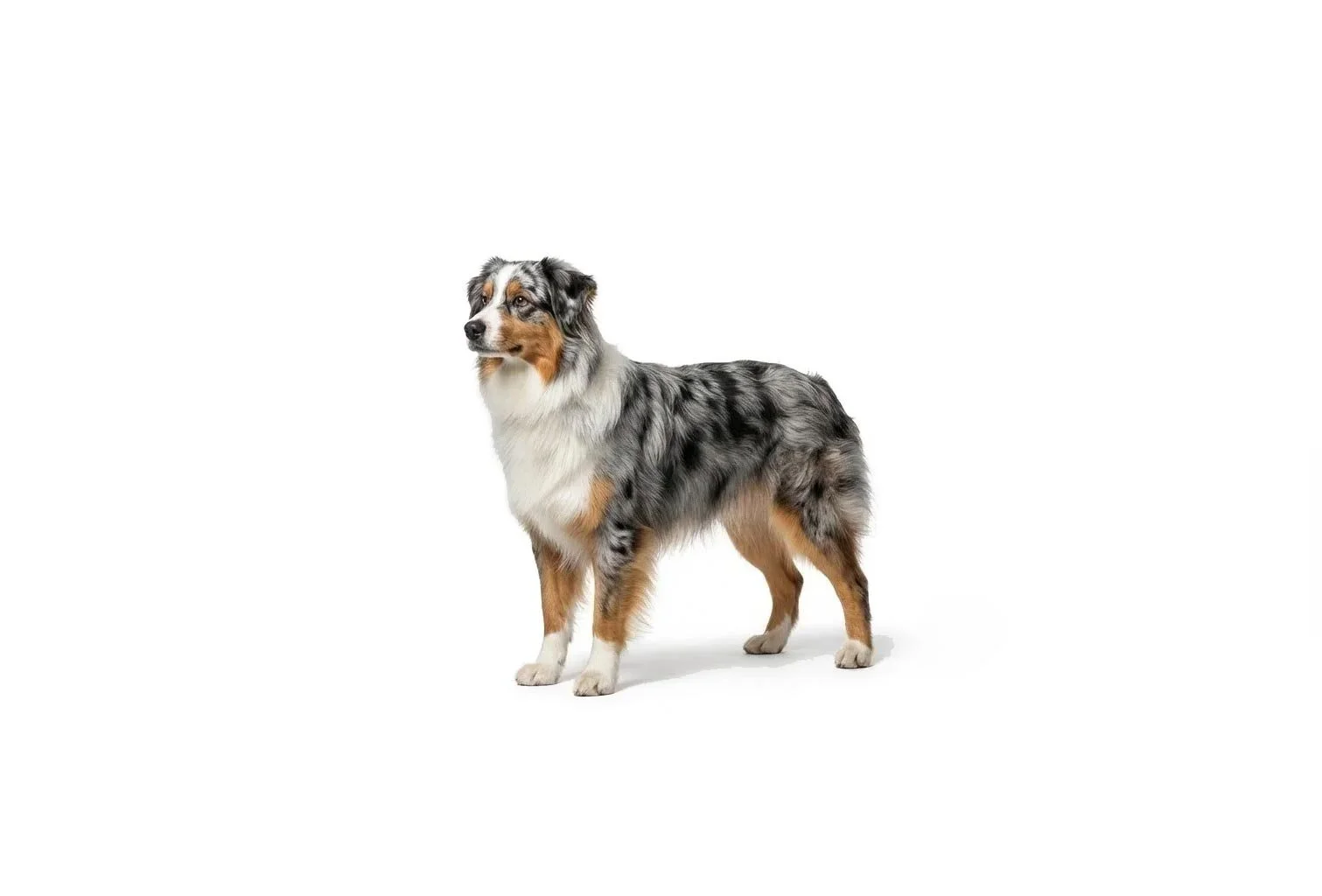
Australian Shepherd:
Complete Breed Guide
The Australian Shepherd is a high-drive American herding breed developed in the western United States during the 19th and 20th centuries. Despite the name, the breed is not from Australia. It is one of three foundation breeds in the Australian Mountain Doodle program at Stokeshire Designer Doodles.
Also called: Aussie · Working Aussie · American Shepherd
Explore Australian Mountain Doodles Read FAQ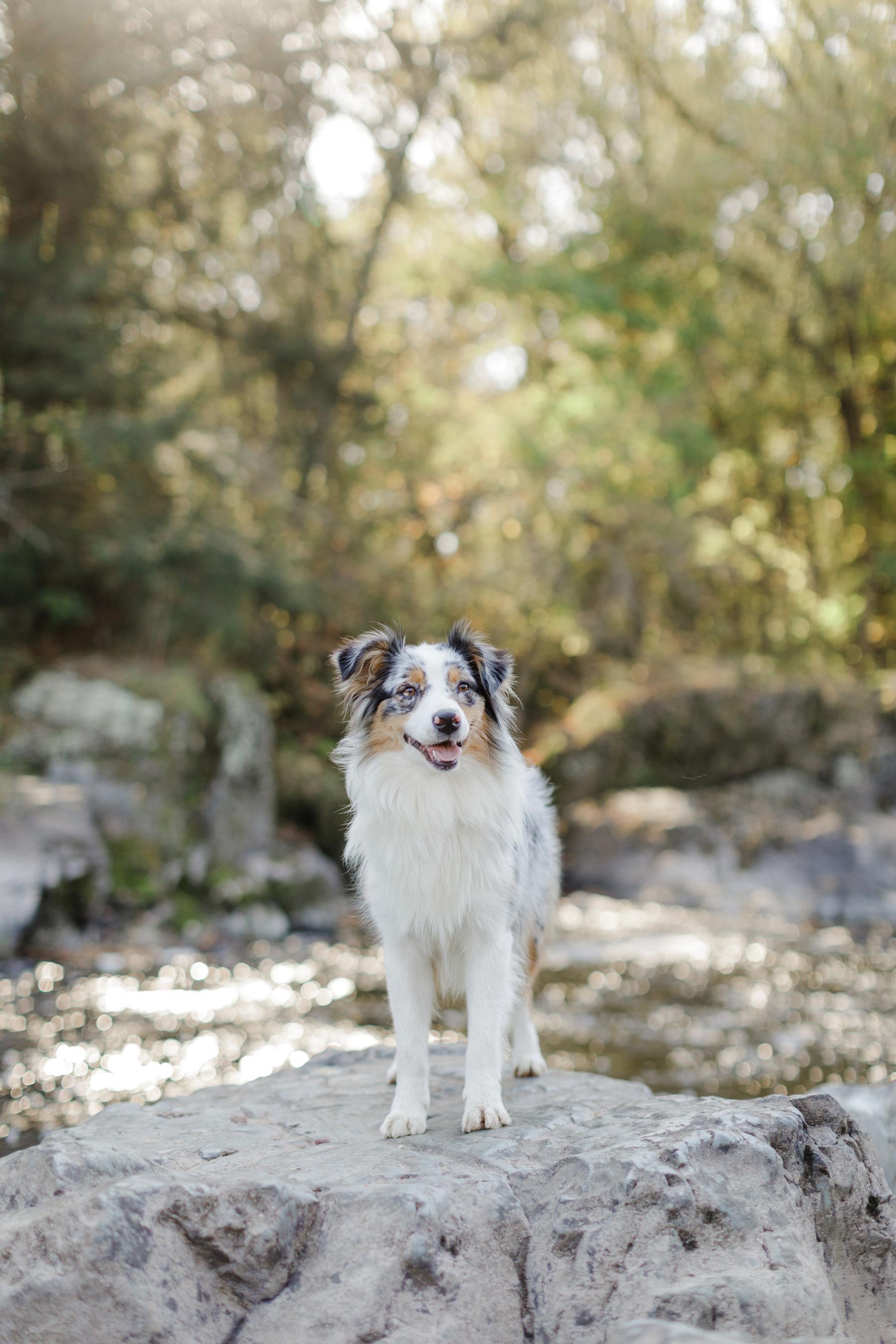
Australian Shepherd — Quick Facts
| Breed Group | Herding (AKC, recognized 1993) |
| Country of Origin | United States — developed in the American West, not Australia |
| Parent Clubs | Australian Shepherd Club of America (ASCA, founded 1957) and United States Australian Shepherd Association (USASA, AKC parent club) |
| Size | Males 20–23 in / 50–65 lbs · Females 18–21 in / 40–55 lbs |
| Recognized Colors | Black, blue merle, red, red merle — with optional white and copper trim |
| Coat | Medium-length double coat, weather-resistant; seasonal heavy shedders |
| Temperament | Intelligent, intense, loyal, reserved with strangers |
| Energy Level | High to very high — requires 60–120+ minutes of structured daily exercise |
| Trainability | Very high; sensitive to handler tone |
| Lifespan | 12–15 years |
| Critical Health Concern | MDR1 (ABCB1) drug sensitivity — affects roughly 50% of the breed and is the single most important health consideration |
| Stokeshire Program | Australian Shepherds are raised as part of our Australian Mountain Doodle breeding program. Pick of Litter Aussies are available by application with a $500 add-on above standard pricing. |
What Is an Australian Shepherd?
The Australian Shepherd is a medium-sized, intensely intelligent herding breed developed primarily in the American West during the 19th and 20th centuries. Despite the name, it is not an Australian breed. The dogs that became the foundation stock arrived in California with Basque shepherds who had passed through Australia on their way to the United States. American ranchers associated the dogs with the port of arrival, and the name stuck.
Today the Australian Shepherd is an AKC-recognized breed in the Herding Group, distinguished by its medium-length double coat, striking merle and tri-color patterns, and its signature combination of working drive and emotional attunement. The breed is registered with two major parent organizations in the United States: the Australian Shepherd Club of America (ASCA), which has prioritized working ability since 1957, and the United States Australian Shepherd Association (USASA), which became the AKC parent club after the breed gained AKC recognition in 1993.
Australian Shepherds tend to be devoted, demanding, and difficult to ignore. They are not low-maintenance dogs. Their original purpose — managing stock across the American West — produced a breed with stamina, problem-solving capacity, and a strong tendency to bond intensely with one or two primary handlers. In a family home that meets these needs, the result is one of the most rewarding companion dogs available. In a household that does not, the result tends to be anxiety, destructive behavior, and a frustrated dog.
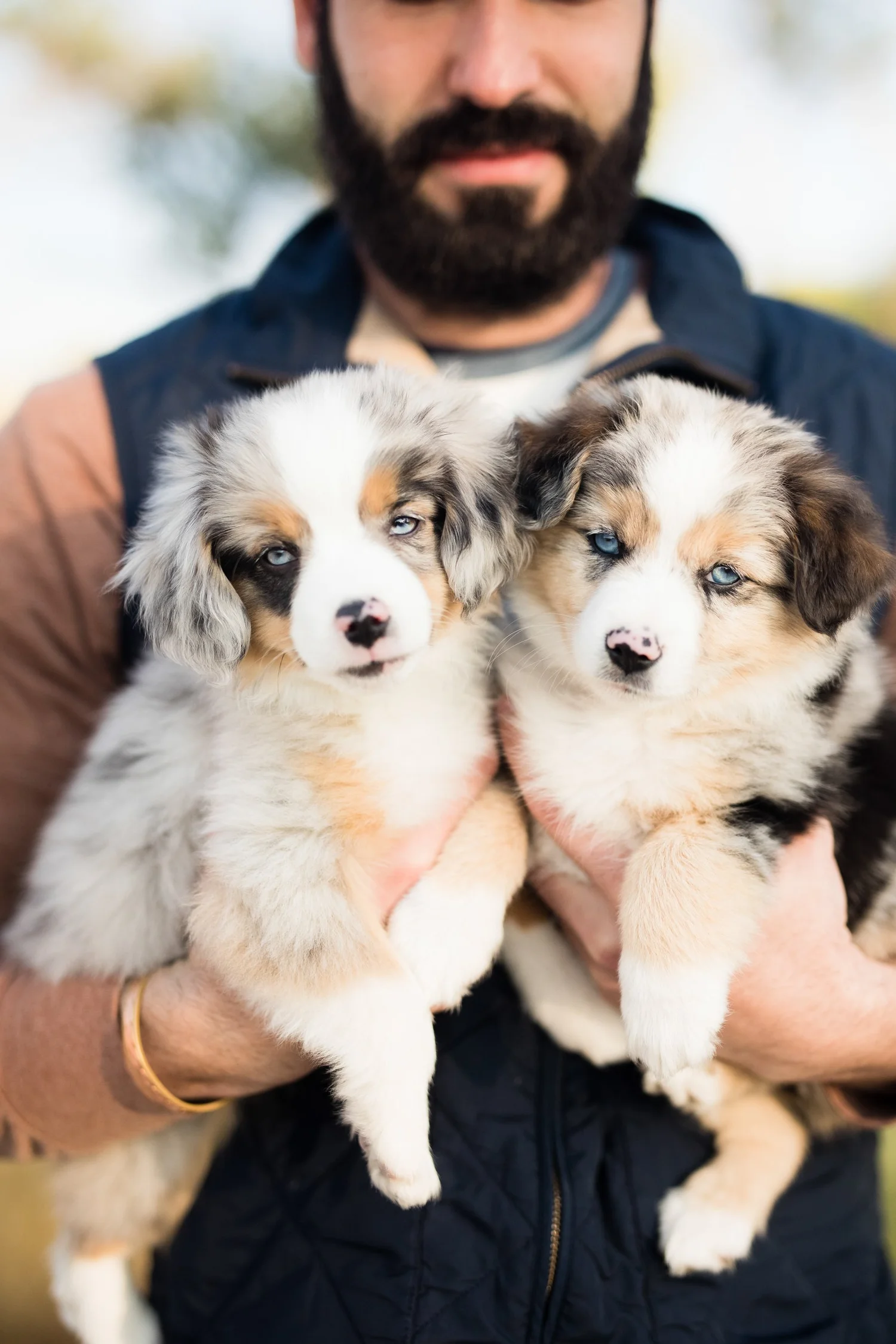
The Australian Shepherd is not from Australia. It is American. The Basque shepherds who brought the foundation dogs simply traveled through Australia first.
The Real Origin of the Australian Shepherd
The biological precursors to the modern Australian Shepherd were not from Australia at all. They were Pyrenean herding dogs — close cousins of the modern Berger des Pyrénées — used by the Basque people in the mountainous border region between France and Spain. The Basque were renowned for their expertise in transhumance and sheep management.
In the mid-1800s, two economic pressures changed the trajectory of the breed permanently. The California Gold Rush created a sudden surge in demand for sheep and wool in the western United States. Simultaneously, the post-Civil War era expanded the American livestock industry across California, Colorado, Wyoming, and the broader West. Basque shepherds — already an experienced labor pool — followed the work. Many migrated first to Australia, where the wool trade was booming, and then onward to California with their flocks of Merino sheep and their small, agile herding dogs.
When these shepherds arrived at American ports, primarily in San Francisco, they brought their dogs with them. American ranchers, observing dogs disembarking from Australian ships, naturally associated them with that country. The name "Australian Shepherd" became a descriptor of the most recent port of origin rather than a statement of breed history. By the time anyone noticed the misnomer, it was already permanent.
Selection Pressures in the American West
Once established in North America, the breed underwent a rigorous process of selection driven entirely by functional utility. Ranchers in California, Colorado, and Wyoming valued herding ability, endurance, and intelligence over aesthetic consistency. The breed was likely interbred with British collie types and other early herding dogs to enhance biddability and stamina. National visibility grew through rodeo performers like Jay Lister in the early 20th century, who used Australian Shepherds in trick performances that introduced the breed to a wider American audience.
Registry Timeline
| Year | Event | Significance |
|---|---|---|
| 1957 | National Stock Dog Registry | First registry to officially record Australian Shepherds |
| 1957 | ASCA founded | Australian Shepherd Club of America formed to preserve working heritage |
| 1977 | ASCA breed standard | First comprehensive document outlining ideal traits |
| 1979 | UKC recognition | United Kennel Club recognized the breed for working utility |
| 1993 | AKC recognition | Admitted to the Herding Group on January 1, 1993 |
| 2015 | Mini American Shepherd | AKC recognized the smaller derivative as a separate breed |
AKC recognition was contested within the breed community. Many ASCA members feared that the show ring would shift focus from working ability to conformation, diluting the very traits that defined the breed. This led to the formation of the United States Australian Shepherd Association (USASA) as the AKC parent club, while ASCA maintained its independent registry and emphasis on working evaluation.
Working, Show, and Companion Lines
Within the modern Australian Shepherd population, three primary lines have emerged through different selection pressures:
- Working lines tend toward leaner, more athletic frames; shorter or more practical coats; and intense, high-drive temperaments that may lack a settled "off switch."
- Show lines are bred to AKC or ASCA conformation standards and typically have heavier bone structure, more profuse coats, and more moderate energy levels.
- Modern companion lines are bred specifically for family life, with breeders prioritizing adaptability and softer temperaments while retaining the breed's intelligence.
Physical Characteristics & Breed Standard
Both AKC and ASCA describe the Australian Shepherd as slightly longer than tall, with a balanced silhouette that prioritizes athletic capability over showy aesthetics. Both standards emphasize that "quality is not to be sacrificed in favor of size."
Size and Proportions
| Sex | Height at Withers | Typical Weight |
|---|---|---|
| Male | 20–23 inches (51–58 cm) | 50–65 lbs |
| Female | 18–21 inches (46–53 cm) | 40–55 lbs |
Males should appear masculine without being cloddy or coarse. Females should appear feminine without being slight of bone. Both should give an overall impression of athletic power tempered by elegance.
Coat and Texture
The Australian Shepherd carries a medium-length, double coat specifically evolved to function in the temperature extremes of the American West. The outer coat is straight to slightly wavy and weather-resistant. The undercoat varies in density depending on climate and season — thicker in colder regions and thinner in warmer areas.
Moderate feathering is present on the backs of the forelegs and the breeches (rear legs), with a distinct mane and frill that tends to be more profuse in males than in females. As a double-coated breed, Australian Shepherds shed seasonally — moderate year-round shedding intensifies twice yearly during heavier coat blow periods. Weekly brushing is the minimum required to manage matting and reduce indoor shedding.
Recognized Colors
The breed standard recognizes four base colors. All four may appear with or without white markings and copper (tan) trim:
- Blue Merle — a genetically black dog with the merle gene, expressed as a mottled pattern of black and gray patches
- Red Merle — a genetically red (liver) dog with the merle gene, expressed as red and beige or ivory patches
- Solid Black — a strong, clear black coat
- Solid Red — a liver-colored coat
White markings are regulated to prevent the masking of health issues. White is acceptable on the neck (full or partial collar), chest, legs, and muzzle. White must not predominate on the head, and the eyes must be fully surrounded by colored pigment. These restrictions exist for sound genetic reasons that connect directly to the merle gene's interaction with white pigmentation — discussed in detail in the coat genetics section.
Eye Color and Heterochromia
Australian Shepherds are famous for striking eye colors. Permissible colors include brown, blue, amber, or any variation or combination, including flecks and marbling. Blue eyes occur through two distinct genetic mechanisms: as an extension of the merle gene's depigmentation effect, or independently through a separate non-merle blue-eye gene. Heterochromia, where one eye is blue and the other brown, is common, as are split eyes that contain multiple colors in a marbled or geometric pattern.
The Tail and Natural Bobtail
The Australian Shepherd carries a maximum tail length of four inches under both major breed standards. Approximately 20% of Australian Shepherd puppies are born with a natural bobtail (NBT), caused by a mutation in the T-box transcription factor T gene. The NBT mutation is autosomal dominant, but the homozygous BT/BT genotype is embryonic-lethal. Breeding two natural-bobtail dogs together typically results in a 25% reduction in litter size, as embryos with two copies of the mutation fail to develop in utero. In regions where docking remains legal, dogs born with long tails are traditionally docked shortly after birth to prevent injury during stockwork.
Head, Ears, and Expression
The Australian Shepherd's head is clean-cut, strong, and proportioned to the body. The skull is flat to slightly domed with a moderate but well-defined stop. Length and width of the skull are approximately equal, and the muzzle is equal to or slightly shorter than the back skull. Ears are triangular and set high on the head; at full attention, they break forward and over, or to the side as a "rose ear." Prick ears (standing straight up) and hanging hound-like ears are considered severe faults under the breed standard. The expression is attentive, animated, and intelligent — what the standards describe as "keen but friendly."
Australian Shepherd Temperament
The Australian Shepherd is a high-drive herding breed with a temperament that reflects more than a century of selective breeding for autonomous stock management. In a working context, this is an asset. In a family home that does not understand the breed's needs, this same temperament becomes the primary source of behavioral problems.
Modern canine behavioral genetics has refined what we previously assumed about breed-based temperament prediction. A 2022 genomics study by Morrill and colleagues, published in Science, found that breed ancestry explains approximately 9% of an individual dog's behavioral variation — meaning environment, socialization, and training collectively explain far more than breed alone. With that framing established, certain behavioral patterns do tend to appear consistently in well-bred Australian Shepherds.

The Herding Instinct in Non-Working Homes
Australian Shepherds tend to retain their herding instinct regardless of whether they ever encounter livestock. In a family home, this instinct manifests in three predictable patterns:
- Heel-nipping at running children, joggers, cyclists, and other pets — the dog is attempting to "gather" or stop motion. This is not aggression. It is functional herding directed at the wrong target.
- Circling and gathering — Australian Shepherds often physically circle family members, treating the household as a flock that must be kept together.
- Shadowing — the well-known "Velcro dog" tendency to remain in the immediate vicinity of the primary handler at all times.
Energy and Cognitive Intensity
Australian Shepherds carry a high to very high physical and cognitive drive. They were bred to work continuously across rough terrain for hours at a time. Without appropriate physical and mental outlets, this drive frequently converts into anxiety, obsessive-compulsive behaviors (such as fence-running or shadow-chasing), and destructive chewing. Walking is not enough. The breed requires structured activity that engages both body and mind.
Wariness Versus Friendliness
Unlike the Labrador Retriever, which tends to be gregarious with strangers by default, the Australian Shepherd is often described as "reserved" with unfamiliar people. The breed possesses natural guarding instincts and a tendency toward wariness with new humans or sudden environmental changes. They are not typically aggressive, but they are alert watchdogs who will vocalize to alert their handlers of perceived threats. Early and ongoing socialization is the difference between an alert, balanced adult and a fear-reactive one.
Bond Intensity and Separation Sensitivity
The Australian Shepherd forms an exceptionally tight bond with its primary handler — often described in the working dog literature as a partnership rather than a pet-owner relationship. This intensity has a downside. Without intentional independence training from puppyhood, Australian Shepherds tend to develop separation sensitivity or distress when left alone for extended periods. The breed thrives on inclusion in daily human activities and does not tend to tolerate isolation gracefully.
The Critical Socialization Window: 3–14 Weeks
The 3–14 week developmental period is the primary socialization window during which a puppy's adult temperament is largely shaped. During this window, puppies are most receptive to learning and forming positive associations with novel humans, environments, surfaces, and sounds. Research published in peer-reviewed veterinary behavior journals indicates that puppies isolated from novel experiences past 14 weeks show significantly higher rates of lifelong fear and aggression than well-socialized peers. Veterinary behavioral consensus suggests targeting approximately 90 positive novel exposures by 14 weeks of age for a balanced adult temperament. At Stokeshire Designer Doodles, this window is the foundation of our entire developmental program.
* Possible only with extreme commitment to off-property exercise. Working lines are not recommended for apartment living regardless of owner commitment.
Who the Australian Shepherd Is Not Ideal For
- Households where the dog will be left alone 8+ hours daily without conditioning for independence
- Families unable to commit to 60–120 minutes of structured daily exercise plus mental engagement
- Owners expecting low-maintenance grooming — the breed sheds seasonally and requires weekly brushing
- First-time dog owners not prepared for a sensitive, high-drive working breed
- Households without children old enough to understand the herding instinct (toddlers may be vulnerable to nipping)
If most or all of these constraints apply to your household, the Australian Mountain Doodle may be a better fit. The AMD cross moderates the Aussie's intensity through Bernese Mountain Dog and Poodle genetics while preserving the intelligence and visual appeal that draws families to Aussies in the first place.
Exercise and Mental Stimulation Requirements
Physical Exercise
Australian Shepherds require, at minimum, 60 to 120 minutes of structured physical exercise daily. Working-line dogs often need more. A simple daily walk is insufficient for this breed and tends to produce frustrated, under-stimulated dogs that develop nuisance behaviors regardless of how well they are trained otherwise.
Effective physical activity for an Australian Shepherd includes jogging, hiking, swimming, fetch, and structured play with another dog of compatible energy. For puppies, the standard guideline is five minutes of structured leash exercise per month of age, twice daily, until growth plates close — typically 12 to 14 months for Australian Shepherds. High-impact activity on hard surfaces should be avoided before skeletal maturity.
Mental Stimulation
For an Australian Shepherd, cognitive fatigue is often more effective at producing a settled dog than physical exhaustion alone. The breed requires consistent mental engagement to function well in a family setting.
Practical forms of mental engagement include puzzle feeders that require problem-solving for meals, structured scent work in the home or yard, ongoing trick training in 10–15 minute sessions two or three times daily, and regular exposure to novel environments and surfaces. Dogs that are physically exercised but mentally under-stimulated tend to develop anxiety and compulsive behaviors regardless of activity level.
Sport Excellence
The Australian Shepherd's combination of agility, speed, biddability, and handler focus has made the breed dominant in nearly every major canine sport. Australian Shepherds excel at agility (where their lateral cuts and quick turns are unmatched among medium-sized breeds), competitive herding trials, flyball, disc dog, dock diving, and AKC obedience and rally. For families who want a dog to compete with, this breed sits near the top of the practical options.
Are Australian Shepherds Easy to Train?
Australian Shepherds are among the most trainable companion breeds available, though their intelligence is often geared toward independent problem-solving rather than rote command-following. In Stanley Coren's widely cited The Intelligence of Dogs, the Australian Shepherd ranks 42nd of 138 breeds for working and obedience intelligence — meaning they typically learn a new command within 15 to 25 repetitions.
This Coren rank is sometimes treated as definitive, but it understates what most experienced trainers observe in practice. Coren's metric measures reliability with repetitive commands, not adaptive intelligence — the ability to solve novel problems independently. By that broader measure, Australian Shepherds rank significantly higher and are widely regarded as among the smartest breeds in active sports and working contexts.
The AVSAB Position on Training Methods
The American Veterinary Society of Animal Behavior (AVSAB) advocates strongly for positive reinforcement-based training methods for all dogs, citing both efficacy and reduced welfare risk versus aversive methods. For Australian Shepherds specifically, this guidance carries additional weight. The breed is sensitive — herding dogs were selected for responsiveness to subtle handler cues, and Australian Shepherds tend to interpret harsh corrections as a fundamental betrayal of the partnership. Methods involving choke chains, electronic shock collars, alpha rolls, or other physical corrections frequently produce learned helplessness, fear-related aggression, and a breakdown of the handler-dog relationship in this breed.
Positive reinforcement with consistent cues, short focused sessions, and clear markers produces the fastest and most durable training results in Australian Shepherds. Treats, toys, and access to handler engagement all serve as effective reinforcers.
Handler Sensitivity and the "Thinking Dog" Pattern
Australian Shepherds tend to be "thinking" dogs — they often offer behaviors during training rather than waiting passively for direction. They actively look for what works, and they will exploit ambiguity in commands or boundaries if those boundaries are not clearly defined early. Consistent handlers who mark and reward desired behaviors with precision tend to produce the most reliable dogs. Inconsistent handlers tend to produce dogs that have learned to test boundaries until they find what works.
The Socialization Window in Practice
The 3 to 14 week socialization window is the foundation of long-term temperament. At Stokeshire Designer Doodles, Early Neurological Stimulation (ENS) begins at Day 3 of life and continues with progressive sensory, surface, and social exposures through all eight weeks before placement. Sound desensitization, multiple-handler exposure, and structured novel-environment work are part of every puppy's pre-placement development. This investment is one of the primary reasons Stokeshire-raised Australian Shepherds — and the AMD puppies that carry their genetics — tend to develop into stable, adaptable adult dogs.
Australian Shepherd, Mini American Shepherd, Toy Aussie
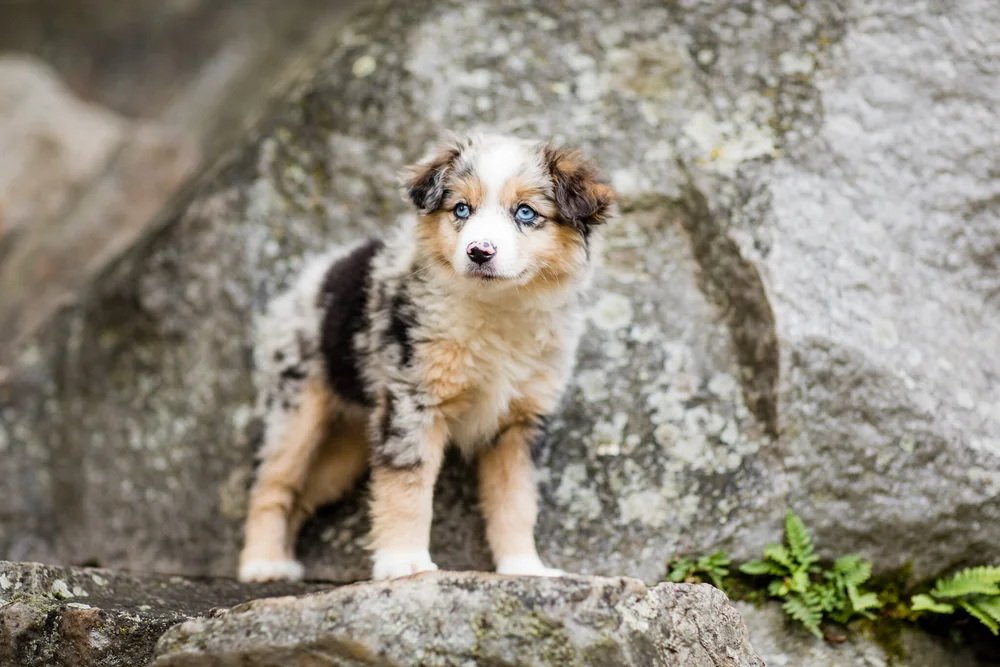
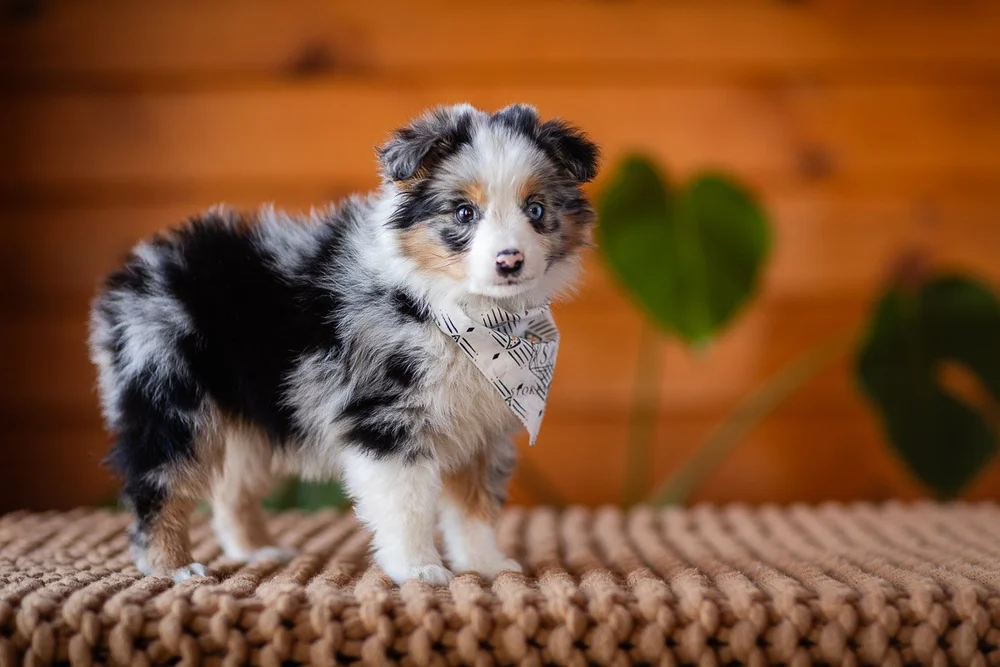
The "Australian Shepherd family" includes three size categories that buyers frequently confuse. They are not interchangeable. The standard Australian Shepherd is the original AKC-recognized breed. The Miniature American Shepherd is an AKC-recognized separate breed (recognized 2015) developed from smaller Aussies. The Toy Aussie is a size variant that is not recognized by AKC or ASCA. Each has distinct standards, distinct search intent, and distinct considerations for prospective owners.
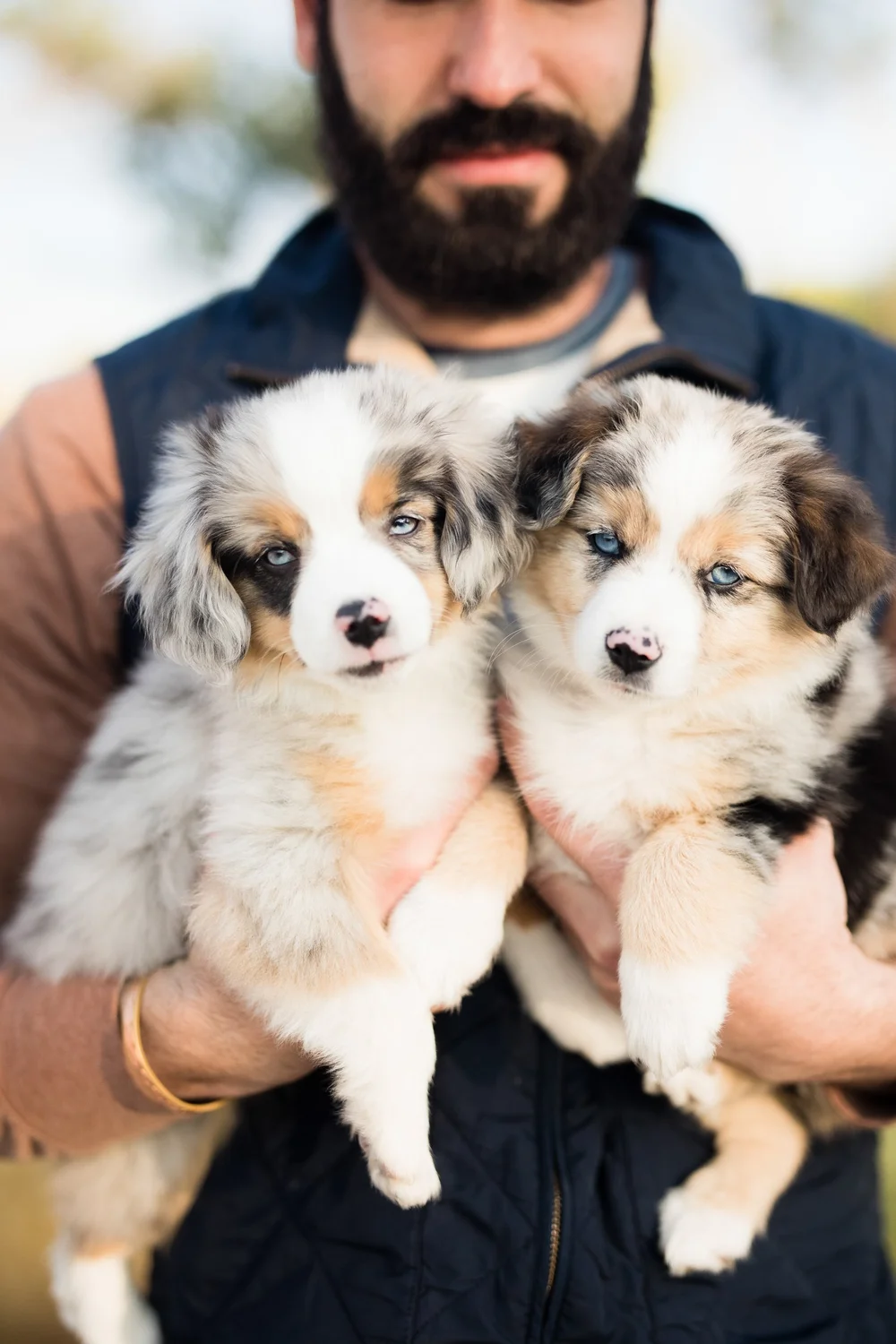
Australian Shepherd
18–23 in · 40–65 lbs
The original American herding breed. Bred for ranch work in the American West. Highest energy and working drive of the three sizes. AKC Herding Group.
This page covers the Standard Australian Shepherd.
Miniature American Shepherd
13–18 in · 20–40 lbs
An AKC-recognized separate breed developed in California in the 1960s from smaller Aussies. Retains intelligence and drive in a smaller frame. Distinct breed standard.
Toy Aussie
10–14 in · 12–20 lbs
A smaller size variant maintained by some breeders. Not recognized by the AKC or ASCA as a distinct breed. Carries the same temperament and health considerations as the Australian Shepherd.
Health Considerations in Australian Shepherds
The median lifespan of an Australian Shepherd is 12 to 15 years. The breed is regarded as athletic and generally robust, but its development through a relatively narrow gene pool has consolidated several heritable health risks that require active management. Responsible breeders use a combination of DNA panels, OFA evaluations, and pedigree analysis to reduce the incidence of these conditions over generations. Prospective owners should expect every breeder of any size variant — Standard, Mini American Shepherd, or Toy Aussie — to provide documented results on the priority health tests outlined below.
MDR1 (ABCB1) — The Most Important Health Topic in This Breed
The single most critical health priority for the Australian Shepherd is the MDR1 mutation, also written as ABCB1. This gene encodes P-glycoprotein, a drug transporter found at the blood-brain barrier. Under normal conditions, P-glycoprotein acts as an ATP-dependent efflux pump that removes specific drugs and toxins from the central nervous system, preventing neurological damage.
Approximately 50% of the Australian Shepherd population carries a four-base-pair deletion in the ABCB1 gene. This mutation produces a truncated, non-functional protein. In affected dogs, the blood-brain barrier no longer effectively excludes specific drugs, which then accumulate in the brain and produce severe neurotoxicity. Clinical signs of an MDR1-related drug reaction include tremors, disorientation, ataxia, excessive salivation, blindness, seizures, and in severe cases coma or respiratory arrest. These are not rare adverse reactions — they are predictable outcomes when an MDR1-affected dog receives a P-glycoprotein substrate at standard doses.
MDR1 Genotypes and Clinical Implications
| Genotype | Clinical Designation | P-Glycoprotein Function | Risk Level |
|---|---|---|---|
| Normal / Normal | Clear / Wild-Type | Full function — toxins efficiently pumped from CNS | Negligible |
| Mutant / Normal | Heterozygous / Carrier | Partial function — limited drug regulation | Moderate; cautious dosing required |
| Mutant / Mutant | Homozygous / Affected | No function — blood-brain barrier compromised | High; lethal reactions possible at standard doses |
Drugs to Avoid or Use With Caution
Research from the Veterinary Clinical Pharmacology Laboratory at Washington State University (WSU) — the laboratory that originally identified the mutation in 2001 — has identified specific medications that pose the greatest threat to MDR1-affected dogs. These include:
- Loperamide (Imodium) — one of the most dangerous over-the-counter medications. Causes immediate neurological crisis in affected dogs. Should never be administered without confirmed MDR1 status.
- Acepromazine — common sedative. Requires 25–50% dose reduction in affected dogs to avoid prolonged sedation or respiratory depression.
- Butorphanol — analgesic. Requires similar dose reduction.
- Vincristine and Doxorubicin — chemotherapy agents. Increased systemic toxicity due to failure of P-glycoprotein-mediated drug clearance.
- Macrocyclic lactones (high-dose ivermectin) — strictly contraindicated in affected dogs at the doses used to treat mange or demodex.
Importantly, the low doses of ivermectin and similar agents found in FDA-approved monthly heartworm preventatives are generally considered safe even in homozygous-affected dogs, because the active ingredient concentration sits below the threshold required to trigger neurotoxicity. Owners should always confirm their dog's MDR1 status with their veterinarian before any sedation, anesthesia, or chemotherapy procedure.
Orthopedic Health: Hip and Elbow Dysplasia
Canine Hip Dysplasia (CHD) is a multifactorial condition where the ball-and-socket joint of the hip fails to develop properly, leading to joint laxity and progressive osteoarthritis. The underlying predisposition is heritable, but environmental factors during the growth phase — caloric intake, body condition, and exercise intensity on hard surfaces — contribute meaningfully to whether and how severely the disease expresses.
The Orthopedic Foundation for Animals (OFA) provides standardized radiographic evaluations that grade hips on a seven-point scale. OFA data indicates that dogs certified with normal hips at 24 months of age have approximately a 95% probability of remaining free of clinical dysplasia throughout life. Australian Shepherds show moderate dysplasia rates in the OFA database, which is why responsible breeders prioritize Excellent, Good, or Fair OFA-certified parents in their pairings.
| OFA Grade | Description | Breeding Recommendation |
|---|---|---|
| Excellent | Superior conformation; femoral head fits tightly into deep, well-formed socket | Highly recommended |
| Good | Well-formed and congruent joint with good coverage | Recommended |
| Fair | Minor irregularities; wider joint space, shallower socket | Acceptable when paired with Excellent partner |
| Mild | Significant subluxation; femoral head partially out of socket | Should not be bred |
| Moderate | Ball barely seated; arthritic changes often present | Disqualified from breeding |
| Severe | Complete dislocation or extreme subluxation; severe arthritis | Disqualified from breeding |
Elbow dysplasia is also prevalent in the breed, affecting an estimated 4 to 9% of the population per the Australian Shepherd Health and Genetics Institute (ASHGI). Like hip dysplasia, it requires radiographic screening and may not produce clinical lameness until joint damage is already established.
Hereditary Eye Conditions
The Australian Shepherd is susceptible to a cluster of hereditary ocular conditions, several of which can be screened via DNA panels. Hereditary cataracts are the most common, with approximately 70% of cases linked to a mutation in the HSF4 gene. The mutation follows a dominant inheritance pattern with incomplete penetrance, meaning a single copy carries risk but does not guarantee disease. Onset can occur as early as one year of age or as late as seven years, which makes selective breeding without DNA testing impractical.
Hereditary Cataracts (HSF4)
Bilateral lens opacities, typically beginning in the posterior cortex. Variable age of onset (1–7 years). DNA test available. Approximately 70% of cases tied to HSF4 mutation.
Progressive Retinal Atrophy (prcd-PRA)
Gradual death of retinal photoreceptors leading to total blindness. Late onset typical. DNA test available — responsible breeders identify carriers and avoid carrier-to-carrier pairings.
Collie Eye Anomaly (CEA)
Congenital choroidal abnormality that can lead to retinal detachment or blindness in severe cases. Inherited primarily from collie-related lineage. DNA test available. Early ophthalmologic puppy screening important — clinical signs can become invisible after 8 weeks of age.
Iris Coloboma
Structural defect where a portion of the iris is missing. Most common in merle dogs. Can cause sensitivity to bright light. Identified through ophthalmologic examination.
Cancer and Autoimmune Disease
Neoplasia is a significant late-life concern for the Australian Shepherd. ASHGI data identifies hemangiosarcoma and lymphoma as the two most common inherited cancers in the breed. Hemangiosarcoma is an aggressive cancer of the blood vessels, often initiating in the heart or spleen, and tends to progress rapidly. A 2010 ASHGI breed health survey found that hemangiosarcoma and lymphoma together accounted for approximately 45% of deaths in the breed. The strong familial clustering suggests a meaningful genetic component, though environmental triggers also play a role in disease onset.
Autoimmune thyroiditis is another frequently documented condition in the breed. The OFA thyroid registry monitors prevalence, and periodic thyroid testing is recommended in breeding stock. Onset typically occurs between one and six years of age. Symptoms include unexplained weight gain, lethargy, and chronic skin or coat issues. The condition is well-controlled with daily levothyroxine but is irreversible once established.
Idiopathic epilepsy is also prevalent in the breed, with an estimated frequency of 4 to 9%. Onset typically occurs after the dog has entered breeding age, which complicates selection pressure. While most affected dogs can be managed with anti-seizure medication, the condition remains a lifelong burden for the dog and the household.
Australian Shepherd Coat & Color
The visual diversity of the Australian Shepherd is the product of sophisticated genetic interactions, primarily centered on the merle locus. Understanding this genetics is not optional for responsible breeders — and it directly affects the merle and tri-color patterns that show up in Australian Mountain Doodles, since the merle gene flows from the Aussie parent into AMD litters.
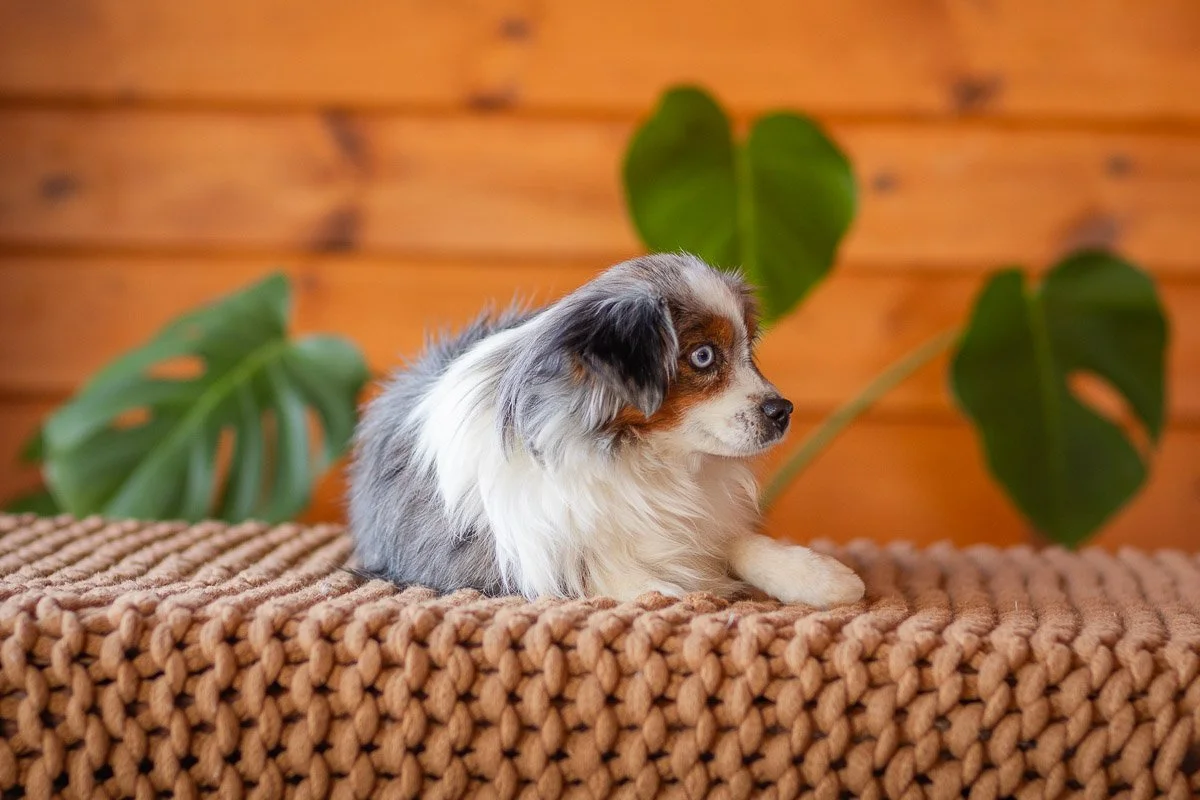
Blue merle tri-color expression
The Merle Gene (PMEL/SILV Locus)
The merle phenotype is an autosomal, incompletely dominant trait caused by a SINE (short interspersed nuclear element) insertion in the PMEL gene, also known as the SILV locus. A dog with a single copy of the merle allele (Mm) displays the breed-characteristic mottled pattern of pigment patches on a solid or piebald base coat. Two copies of the merle allele (MM) produce a "double merle," and the genetics of double merle expression are why merle-to-merle breeding is one of the cardinal ethical violations in this breed.
Cryptic Merle and Atypical Alleles
Recent genomic research has identified that the merle allele is not a single fixed sequence — it varies in length, and different lengths produce different visual expressions. This matters for breeding because some genotypically merle dogs appear visually solid, which means they can produce double merle offspring even when paired with a partner whose merle status was assumed safe based on appearance alone.
| Allele | PolyA Length | Visual Expression |
|---|---|---|
| Mc (Cryptic) | 200–230 bp | Dog appears solid; no visible merle patterning |
| Mc+ (Cryptic Plus) | 231–246 bp | Usually solid appearance; rare slight pigment fading |
| Ma (Atypical) | 247–254 bp | Diluted or brownish coat; blue eyes common |
| M (Classic Merle) | 265–268 bp | Typical merle patches of diluted and full pigment |
| Mh (Harlequin) | 269+ bp | Large white or light grey areas; sometimes "tweed" |
The clinical implication is straightforward: every potential breeding dog needs a length-resolving merle DNA test, regardless of visual appearance. A "solid" dog can carry cryptic merle, and pairing two cryptic carriers can produce double-merle puppies with severe sensory defects.
Double Merle: Why It Must Be Avoided
When two merle dogs are bred together, statistically 25% of offspring inherit two copies of the merle gene (MM). These "double merle" puppies are characterized by predominantly white coats and severe developmental defects — including microphthalmia (abnormally small eyes), congenital blindness, and deafness caused by absence of pigment-producing melanocytes in the inner ear. These outcomes are entirely preventable. Reputable breeders never pair two merle-carrying dogs, regardless of size variant or whether the cross is purebred or hybrid. Stokeshire confirms full merle status on every breeding parent through Embark before any pairing decision is finalized.
Base Color Genetics: Black vs Red
The base color of the Australian Shepherd is determined by eumelanin expression. Black is dominant; red (liver) is recessive. Both base colors can carry the merle pattern (producing blue merle from a black base, or red merle from a red base) and both can appear with white markings and copper trim. The combination of base color, merle status, white markings, and copper trim produces the wide visual range that makes the breed visually distinctive.
White Markings and Auditory Risk
The breed standard's restrictions on white pigmentation around the head are not aesthetic preferences — they exist for sound genetic reasons. The melanocytes responsible for hearing in the inner ear are derived from the same embryonic cell line as the melanocytes that produce coat pigment. Excessive white in this region — particularly when more than 25% of the ear lacks pigment — is associated with elevated risk of congenital deafness. Dogs that pair excessive white with a double-merle genotype carry the highest risk of combined sensory defects.
"Rare" Colors as a Red Flag
The marketing of "rare," "exotic," "lavender," "lilac," or "platinum merle" coloration in Australian Shepherds is generally a red flag rather than a premium signal. These colors are typically the result of the dilution gene, which is associated with Color Dilution Alopecia (CDA) — a chronic skin condition causing infections and permanent hair loss, often manifesting between six months and three years of age. Ethical breeders prioritize the dog's health over visual novelty. Buyers who encounter a breeder marketing "rare" colors at premium pricing should ask specifically about CDA risk and request comprehensive coat-genetic test results before committing.
What Australian Shepherds Do Beyond the Family Home
While the modern Australian Shepherd is primarily kept as a companion, the breed's working capabilities are not vestigial. Australian Shepherds continue to perform meaningful work in several specialized roles, and understanding these roles helps prospective owners appreciate the genetic foundation underneath the breed's family-life behavior.
- Herding — Australian Shepherds remain a staple breed on cattle, sheep, and poultry operations across North America. They are described in the working dog literature as "authoritative" workers, using a combination of eye, body movement, and (when necessary) a heel-nip to control livestock.
- Search and rescue (SAR) — frequently deployed for stamina, scenting ability, and adaptability. Common in air-scenting (locating airborne human scent across wilderness areas), tracking and trailing (following a specific individual's scent), and disaster Urban Search and Rescue (USAR) deployments after earthquakes or building collapses.
- Service work — Australian Shepherds work as mobility service dogs (door operation, retrieval, balance bracing), psychiatric service dogs (Deep Pressure Therapy, grounding interventions), and medical alert dogs (blood pressure, heart rate, pre-seizure alerting).
- Therapy work — calmer-spectrum Australian Shepherds work in schools, hospitals, hospice settings, and disaster relief, providing comfort to vulnerable individuals. Therapy work requires significant socialization to handle high-stress public environments.
- Detection — used in specialized agricultural detection roles (including pilot programs identifying Little Cherry Disease in orchards) and in field-deployed law enforcement work.
- Sport competition — Australian Shepherds are among the dominant breeds in disc dog, flyball, and AKC agility, providing both an outlet for working drive and considerable family entertainment value.
The Australian Shepherd in a Family Home
The Australian Shepherd can be an outstanding family dog. It can also be the wrong dog for a family that did not understand what it was committing to. Both outcomes are common, and the difference between them is largely determined by the household's willingness to meet the breed's exercise, training, and engagement needs.
Ideal Home Environment
An ideal home for an Australian Shepherd is active, engaged, and structured. Rural and suburban homes with yard access tend to suit the breed best, but the yard alone does not exercise the dog. The household must commit to one to two hours of structured daily activity that includes both physical exercise and mental engagement. Owners who dog-sport, hike, run, or compete in agility tend to thrive with this breed.
Apartment Living
Apartment living is technically possible but demanding. Working-line Australian Shepherds are not generally recommended for apartment environments. Show-line and companion-line dogs can adapt to apartment life when their owners are extremely committed to off-property exercise — typically two hours of daily structured activity outside the home, plus regular mental stimulation indoors. Without this commitment, apartment-dwelling Australian Shepherds tend to develop nuisance behaviors quickly: barking, pacing, destructive chewing, and anxiety.
With Children
Australian Shepherds tend to do well with their own family's children when raised together with proper socialization. The herding instinct creates one specific risk worth understanding. The breed may attempt to "gather" running children by nipping at their heels or circling them, particularly during high-activity play. This is functional herding behavior, not aggression — but it can be distressing to young children and requires active redirection into structured play (fetch, training games, or formal sport activity that channels the drive appropriately). Households with toddlers should plan to actively manage this dynamic from the puppy's first day home.
With Other Pets
Australian Shepherds can live harmoniously with other dogs and cats when properly socialized during the 3–14 week window. Without that exposure, the breed can be reactive to small animals — particularly cats, small dogs, and small wildlife — and may attempt to herd them. Early socialization with a calm, well-mannered cat or small dog typically prevents this from becoming a lifelong problem.
Grooming Requirements
The double coat sheds moderately year-round and heavily twice yearly during seasonal coat blow. Weekly brushing is the minimum necessary to manage matting, particularly in friction zones (behind the ears, hindquarters, and around the collar). Regular ear cleaning is recommended because the moderate ear leather can trap moisture. Bathing every six to eight weeks is typically sufficient. Professional grooming is optional for most pet-home Australian Shepherds, though some owners prefer monthly de-shedding sessions during heavy shed seasons.
How the Australian Shepherd Influences the Australian Mountain Doodle
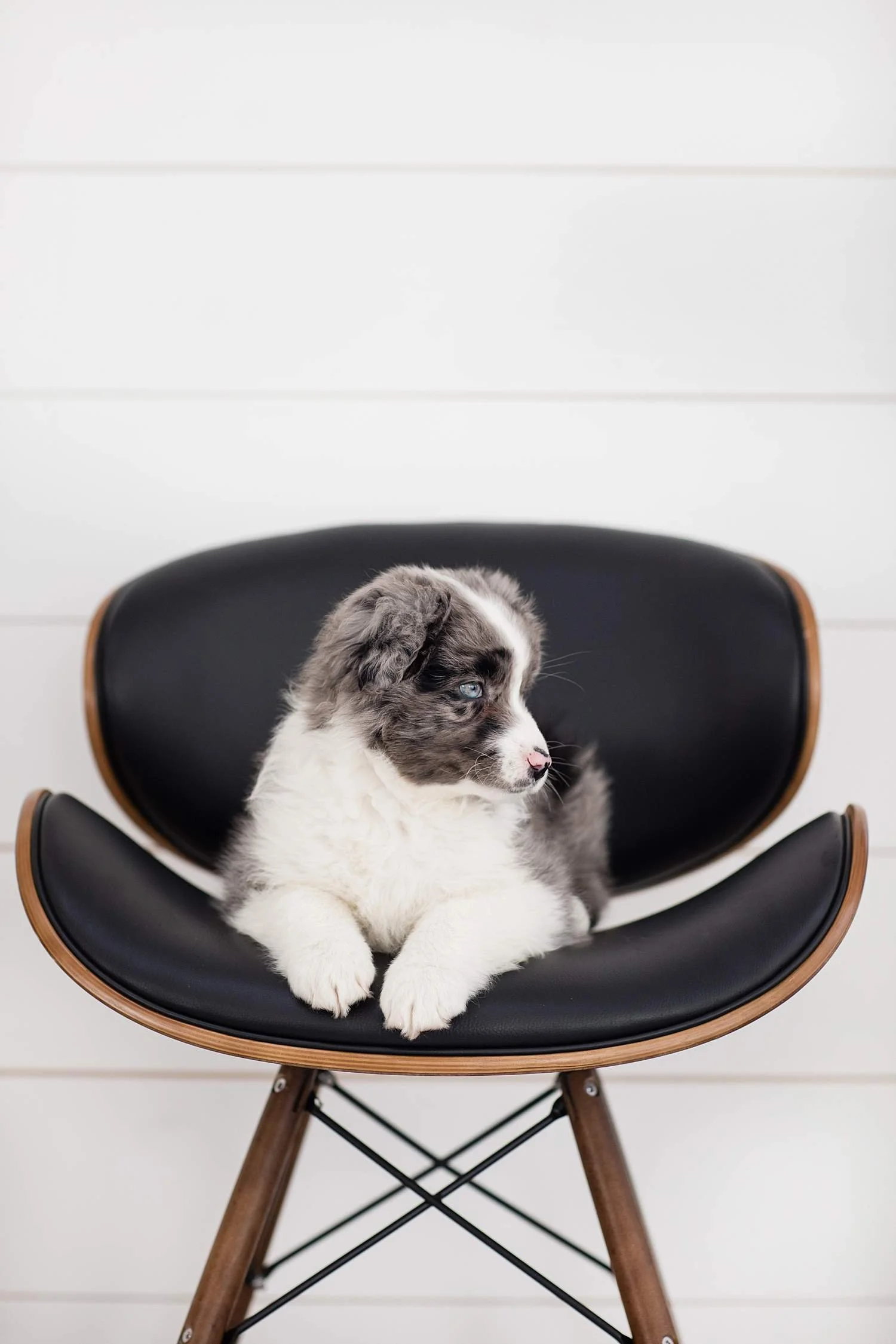
The Australian Mountain Doodle (AMD) is a triple-cross hybrid that combines three foundation breeds: the Australian Shepherd, the Bernese Mountain Dog, and the Poodle. The Australian Shepherd provides specific genetic contributions to the AMD that no other parent breed can. Understanding what the Aussie contributes — and what the Bernese and Poodle moderate — is the clearest way to understand whether the AMD or the standard Australian Shepherd is the right dog for a particular family.
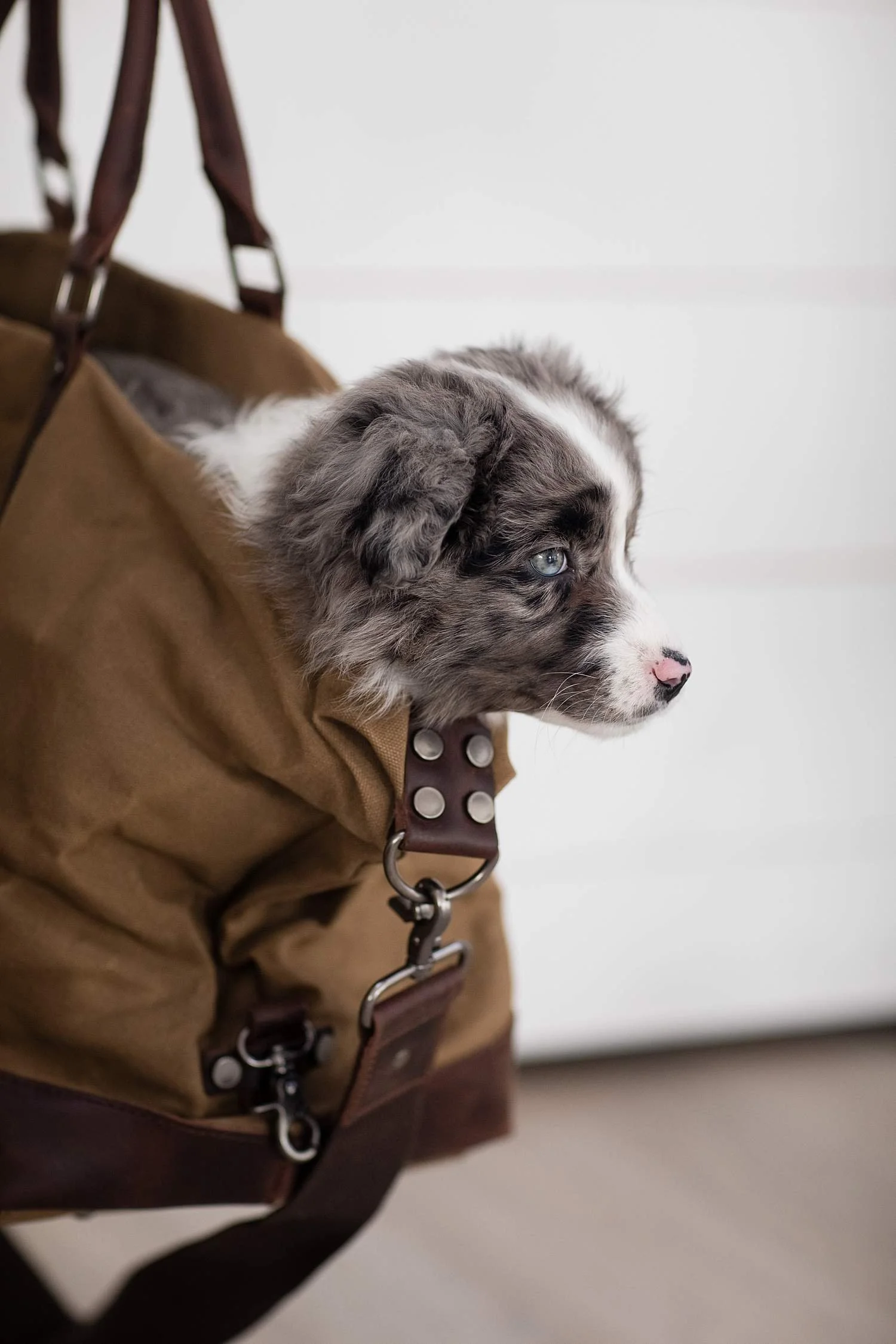
What the Australian Shepherd Contributes to the AMD
- Working intelligence and biddability — the Australian Shepherd's combination of problem-solving capacity and handler responsiveness is one of the primary reasons families seek out AMDs in the first place.
- The merle gene — every blue merle, red merle, and merle parti AMD inherits the merle pattern from the Australian Shepherd lineage. Neither the Bernese Mountain Dog nor the Poodle naturally carry merle. Without the Aussie parent, AMDs would not have the striking marbled coat patterns the breed is known for.
- The tri-color foundation in the Aussie line — combined with the Bernese tri-color contribution, produces the rich tri patterns that distinguish the AMD visually.
- MDR1 genetic risk — this is not a feature of the Aussie parent. It is a risk that must be actively managed in every AMD pairing. Stokeshire's full AMD health testing protocol tests every Aussie or Aussie-derived parent for MDR1 status before any breeding decision.
What the Bernese and Poodle Moderate
The reason the AMD exists as a breed is that the Australian Shepherd alone is too intense for many families that admire the breed's traits but cannot meet its working-dog needs. The Bernese Mountain Dog contributes calm, gentle, anchoring temperament and family devotion. The Poodle contributes biddability, low-shedding coat genetics (RSPO2 furnishings, MC5R shedding), and emotional attunement. The result is a dog that retains the Aussie's intelligence and visual appeal while moderating the energy intensity and adding allergy-friendlier coat options.
Merle Inheritance from Aussie to AMD
Because the Bernese Mountain Dog and Poodle do not naturally carry merle, responsible AMD breeders pair a merle-carrying Aussie or Aussiedoodle with a non-merle Bernedoodle or Poodle to safely produce blue merle and red merle AMDs without any risk of double-merle defects. The same restrictions that apply to merle-to-merle breeding in purebred Australian Shepherds apply directly to AMD pairings. Stokeshire confirms full merle status on every parent dog before any breeding decision regardless of cross.
Why Stokeshire Chose the Australian Shepherd as a Foundation Breed
The Australian Shepherd is one of the three breeds in our AMD program because the breed's combination of intelligence, working drive, and visual diversity is genuinely difficult to source elsewhere. Without the Aussie, the AMD would lack its problem-solving foundation, its merle genetics, and its sport-capable athletic profile. With it, the AMD becomes a dog that families can actually live with — provided the Bernese and Poodle moderating contributions are present in proper proportion. Our breeding program prioritizes Aussies that have completed full Embark genetic panels, OFA evaluations, and temperament documentation before being considered for inclusion.
Choosing a Reputable Australian Shepherd Breeder
The popularity of the Australian Shepherd has produced an unfortunate side effect: an influx of breeders who prioritize coat color and quick litter turnover over the genetic and developmental work that produces healthy, well-tempered dogs. Prospective owners who do not know what to look for tend to absorb the consequences of these decisions over the dog's lifetime — often in the form of expensive medical bills, behavioral issues, or premature loss.
Six Questions Every Australian Shepherd Buyer Should Ask
- Have both parent dogs been DNA tested for MDR1, HSF4 cataracts, prcd-PRA, CEA, and full merle status? "Vet checked" is not the same as DNA tested. Demand documentation.
- Are both parents OFA-certified for hips and elbows? Request the OFA registration numbers. They are searchable in the public OFA database.
- What is the puppy's MDR1 status, and have you provided the test result in writing? Every Aussie puppy should leave its breeder with documented MDR1 results.
- Can I visit the breeding facility and meet the parents? Reputable breeders welcome visits. Breeders who refuse facility visits or only meet in parking lots are red flags.
- What is your contract's lifetime return clause? Reputable programs commit to taking the dog back at any point in its life if the family cannot keep it. This is a basic standard of welfare.
- What is your socialization protocol from Day 3 through eight weeks? Programs that cannot answer this question specifically are not actively socializing puppies during the critical 3–14 week window.
Red Flags
- Marketing of "rare," "exotic," "lavender," "lilac," or "platinum merle" colors at premium pricing — frequently associated with Color Dilution Alopecia and irresponsible color-first breeding
- No DNA test documentation provided, or "vet check" offered in place of formal genetic testing
- Breeders unwilling or unable to show OFA certifications
- Multiple litters available simultaneously across many size variants — indicates volume-first operation
- Refusal of facility visits or insistence on parking-lot pickup
- No contract, no return clause, no health guarantee
- Merle-to-merle pairings or unwillingness to discuss merle genotype testing
About the Author
About the Stokeshire Breeding Program
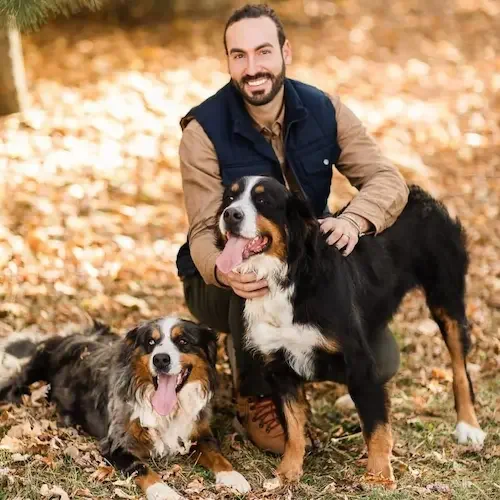
Australian Shepherd Pick of Litter at Stokeshire
Stokeshire's primary breeding focus is the Australian Mountain Doodle. We do raise purebred Australian Shepherds within our program, and Pick of Litter selection is available to families specifically seeking the parent breed. Pick of Litter pricing is a $500 add-on above standard puppy pricing. Visiting our Wisconsin facility by appointment is welcome.
Apply for a Stokeshire Puppy Read the FAQReviewed by the Stokeshire Breeding Team · Updated May 2026
Australian Shepherd FAQs
What is the difference between an Australian Shepherd, a Mini American Shepherd, and a Toy Aussie?
The standard Australian Shepherd is the original AKC-recognized breed (recognized 1993), measuring 18–23 inches and 40–65 lbs. The Miniature American Shepherd is an AKC-recognized separate breed (recognized 2015) developed in California in the 1960s from smaller Aussies, measuring 13–18 inches and 20–40 lbs. The Toy Aussie is a smaller size variant maintained by some breeders but not officially recognized by the AKC or ASCA. All three share similar temperament, exercise needs per pound of body weight, and the same critical health considerations — particularly the MDR1 mutation.
Why is it called Australian Shepherd if the breed is American?
The name is a misnomer. The dogs that became the foundation stock arrived in California with Basque shepherds who had passed through Australia on the way to the United States during the mid-1800s. American ranchers associated the dogs with the most recent port of arrival rather than their actual genetic origin. The breed was developed and refined entirely in the American West.
What is MDR1 and why does it matter?
MDR1 (also called ABCB1) is a genetic mutation that causes severe sensitivity to specific medications including the antidiarrheal loperamide (Imodium), the sedatives acepromazine and butorphanol, and certain chemotherapy agents like vincristine and doxorubicin. Approximately 50% of Australian Shepherds carry the mutation. In affected dogs, these drugs cross the blood-brain barrier and accumulate in the central nervous system, producing seizures, neurological damage, or in severe cases coma and respiratory arrest. Every Aussie should have a documented MDR1 DNA test result before undergoing any sedation, anesthesia, or medical treatment. See full health testing protocol →
Are Australian Shepherds good family dogs?
Australian Shepherds tend to be excellent family companions for active households that can commit to 60–120 minutes of daily structured exercise plus mental engagement. They bond intensely with their families and are deeply loyal. They are not low-maintenance dogs. Households with toddlers should plan to actively manage the breed's herding instinct, which can manifest as nipping at running children. For families drawn to the Aussie's qualities but wanting a moderated energy level, the Australian Mountain Doodle is often a better fit.
Can Australian Shepherds live in apartments?
Apartment living is technically possible but demanding. It is generally not recommended for working-line Australian Shepherds. Show-line and companion-line dogs can adapt with extreme commitment to off-property exercise — typically two hours of structured daily activity outside the home plus regular indoor mental stimulation. Without that commitment, apartment-dwelling Aussies tend to develop nuisance behaviors quickly.
How much exercise does an Australian Shepherd need?
Adult Australian Shepherds require a minimum of 60–120 minutes of structured physical exercise daily, plus mental stimulation through training, puzzle feeders, or scent work. Working-line dogs often need more. For puppies, the standard guideline is 5 minutes of structured exercise per month of age, twice daily, until growth plates close around 12–14 months. High-impact activity on hard surfaces should be avoided before skeletal maturity.
Are Australian Shepherds aggressive?
Australian Shepherds are not typically aggressive. They are naturally reserved with strangers and possess strong guarding instincts. Without early socialization, this protectiveness can manifest as fear-reactivity toward unfamiliar people or dogs. With proper exposure during the 3–14 week socialization window and ongoing positive socialization, Australian Shepherds develop into stable, alert adult dogs.
Why do Australian Shepherds nip?
Nipping is functional herding behavior, not aggression. The breed was selected for centuries to control livestock movement by nipping at heels. In a family home, this instinct is often directed at running children, joggers, cyclists, or other pets. Redirection into structured play (fetch, training games, dog sports) typically resolves the behavior. Households with toddlers should plan to actively manage this dynamic from the puppy's first day.
What colors do Australian Shepherds come in?
The four breed-standard colors are blue merle, red merle, solid black, and solid red. All four may appear with white markings and copper (tan) trim. The merle gene flowing from the Australian Shepherd parent is also responsible for the merle patterns seen in Australian Mountain Doodles. Marketing of "rare" colors like lavender, lilac, or "platinum merle" is generally a red flag rather than a premium signal — these are typically dilution-gene expressions associated with Color Dilution Alopecia.
How long do Australian Shepherds live?
The median lifespan of an Australian Shepherd is 12 to 15 years. Longevity is influenced by parent health testing, body condition, diet, exercise consistency, and veterinary care. Hemangiosarcoma and lymphoma are the most common cancer-related causes of late-life death in the breed. Maintaining healthy weight and annual wellness exams are among the most evidence-supported ways families can support longevity.
Are Australian Shepherds easy to train?
Australian Shepherds are exceptionally trainable when training uses positive reinforcement and consistent handling. The American Veterinary Society of Animal Behavior recommends reward-based methods for all dogs, and Australian Shepherds — being sensitive to handler tone — respond particularly well. Aversive methods (choke chains, e-collars, alpha rolls) tend to backfire on this breed and produce fear-reactivity rather than reliable behavior. Aussies are intelligent enough to find loopholes if boundaries are not clearly defined; consistency is the difference between a delightful adult dog and a frustrated one.
What is a double-merle Australian Shepherd?
A double-merle is a dog that has inherited two copies of the merle gene (genotype MM) from two merle parents. Approximately 25% of offspring from a merle-to-merle pairing inherit this genotype. Double-merle dogs are characterized by predominantly white coats and severe developmental defects including microphthalmia (abnormally small eyes), congenital blindness, and deafness from absence of pigment in the inner ear. These outcomes are entirely preventable and are the reason responsible breeders never pair two merle-carrying dogs together. Stokeshire confirms full merle status on every breeding parent through Embark before any pairing decision.
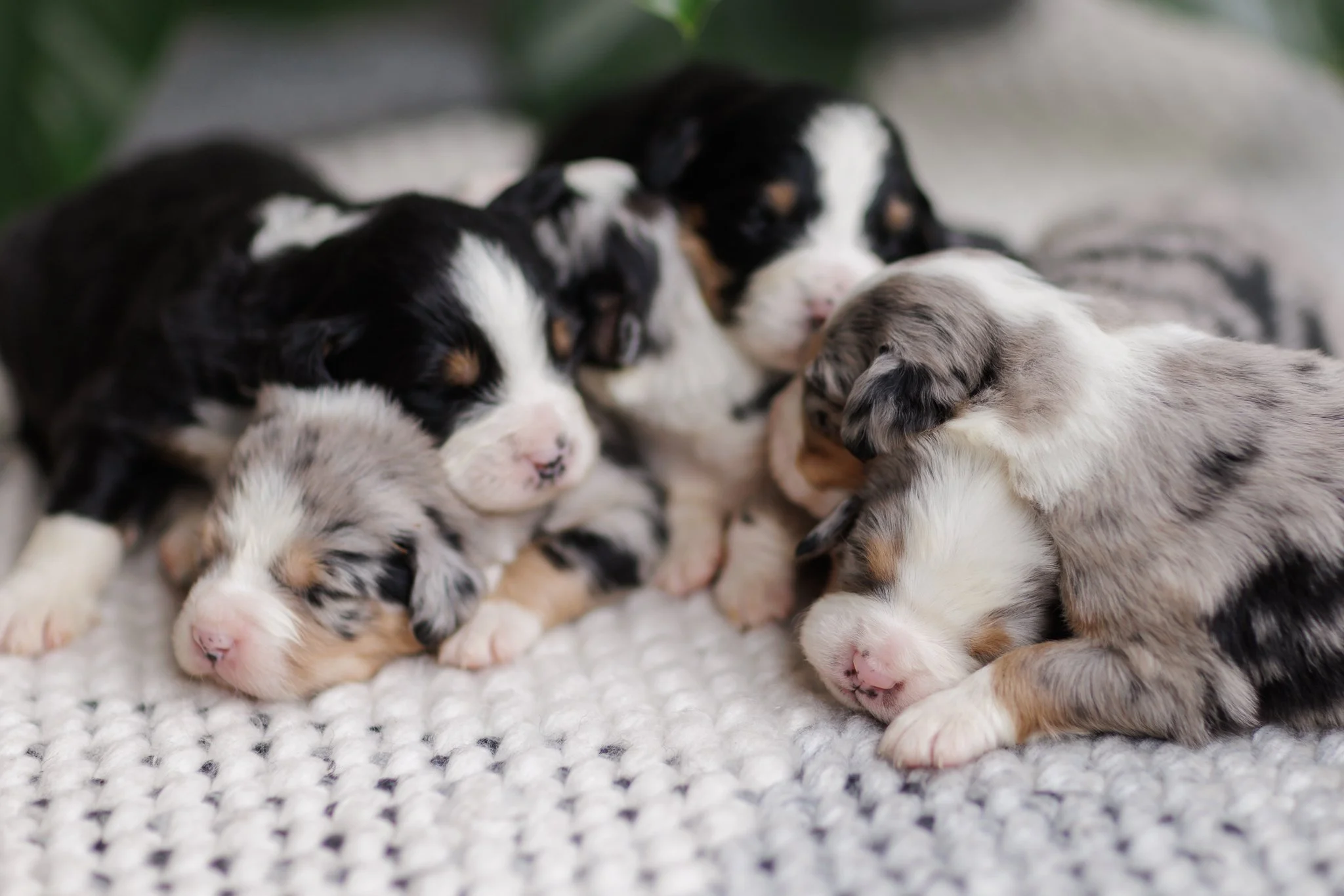
Consider the Australian Mountain Doodle
The Australian Mountain Doodle preserves the Aussie's intelligence, working capacity, and visual diversity while moderating intensity through Bernese Mountain Dog and Poodle genetics. AMDs are Stokeshire's primary breeding focus, raised in our family home in Medford, Wisconsin, with health-tested parents and a structured developmental program beginning on Day 3 of life.
Explore Australian Mountain Doodles Apply for a Stokeshire Puppy