
Bernese Mountain Dog vs Bernedoodle
Same heart. Different health outcomes, coat, lifespan, and daily realities. Here is what actually separates them.
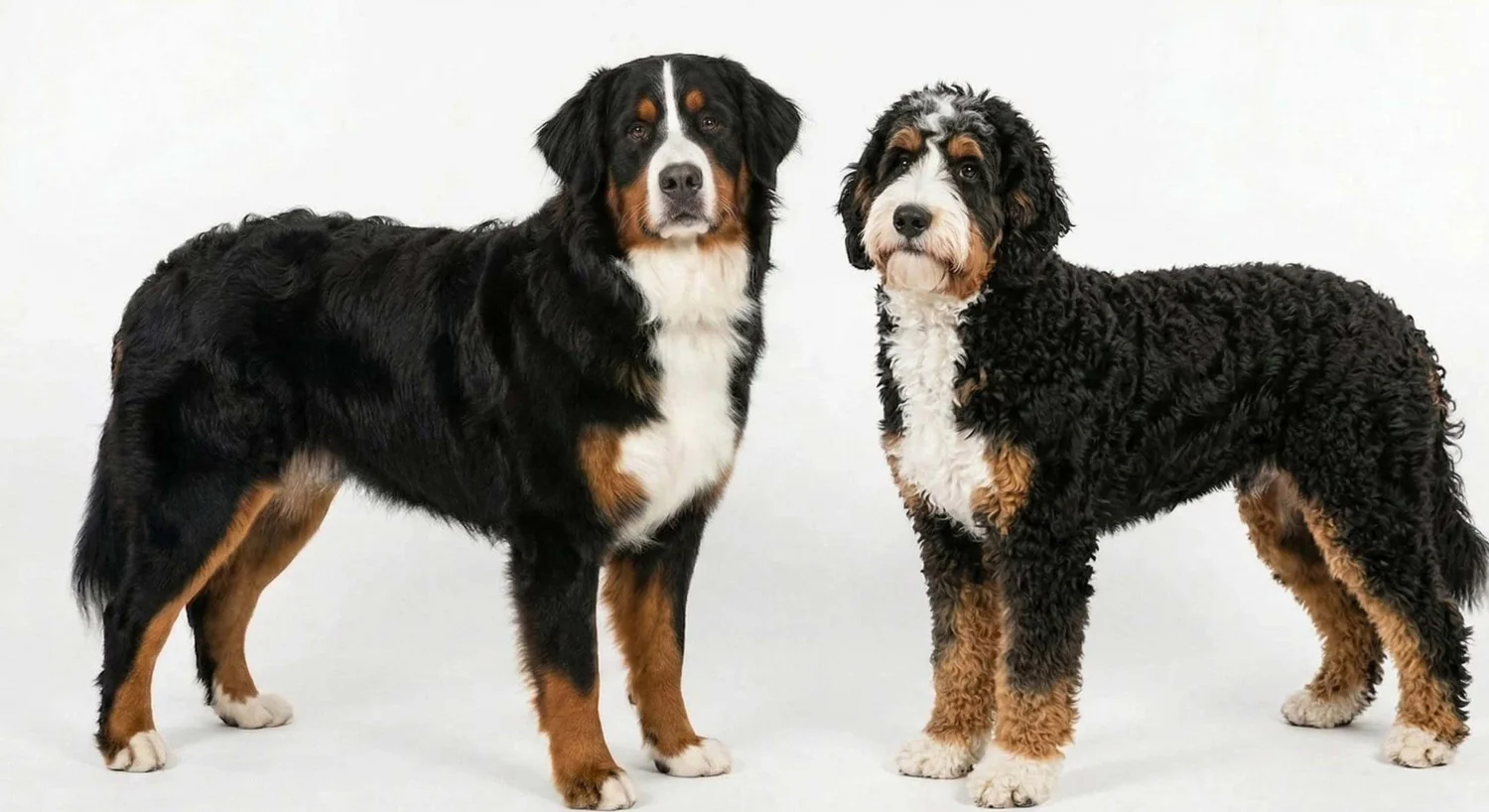
Why Families Compare These Two
The Bernedoodle exists because of the Bernese Mountain Dog. Every trait families love in a Bernedoodle traces back to the Bernese: the calm loyalty, the emotional intuition, the gentle nature with children, the deep attachment to family. The Poodle side brings intelligence, coat versatility, and the genetic diversity that the purebred Bernese cannot access from within its own gene pool.
This comparison is not about declaring a winner. It is about understanding what each option offers and what each requires, so families can choose with clarity rather than emotion.
We raise both. We know both. This guide reflects what we see in our own program, not speculation from a website that has never whelped a litter of either.
Bernese Mountain Dog vs Bernedoodle: Side by Side
| Trait | Bernese Mountain Dog | Bernedoodle |
|---|---|---|
| Origin | Purebred, Canton of Bern, Switzerland | Bernese Mountain Dog x Poodle cross |
| Avg Lifespan | 6 - 8 years | 12 - 15+ years |
| Cancer Risk | High (67% mortality rate) | Significantly reduced via outcross |
| Weight | 70 - 115 lbs | 25 - 90 lbs (varies by generation and Poodle size) |
| Shedding | Heavy, year-round with seasonal blowouts | Low to moderate (coat and generation dependent) |
| Coat Type | Long, thick double coat; tri-color only | Wavy, curly, or straight; wide color range |
| Allergy Consideration | Not suitable for allergy-sensitive homes | May be suitable in furnished coat varieties |
| Temperament | Calm, loyal, gentle, reserved with strangers | Calm, loyal, playful, socially confident |
| Trainability | Moderate to high; slow to mature | High; Poodle intelligence accelerates learning |
| Energy Level | Moderate | Moderate |
| Heat Tolerance | Poor; built for cold climates | Better; coat and frame flexibility help |
| Size Options | Large only | Mini, medium, and standard available |
| AKC Recognized | Yes (Working Group, 1937) | No (designer hybrid) |
| Genetic Diversity | Low (closed stud book) | Higher (F1 outcross) |
| Typical Price | $2,000 - $4,000+ | $3,500 - $5,000+ |
Lifespan: The Biggest Difference
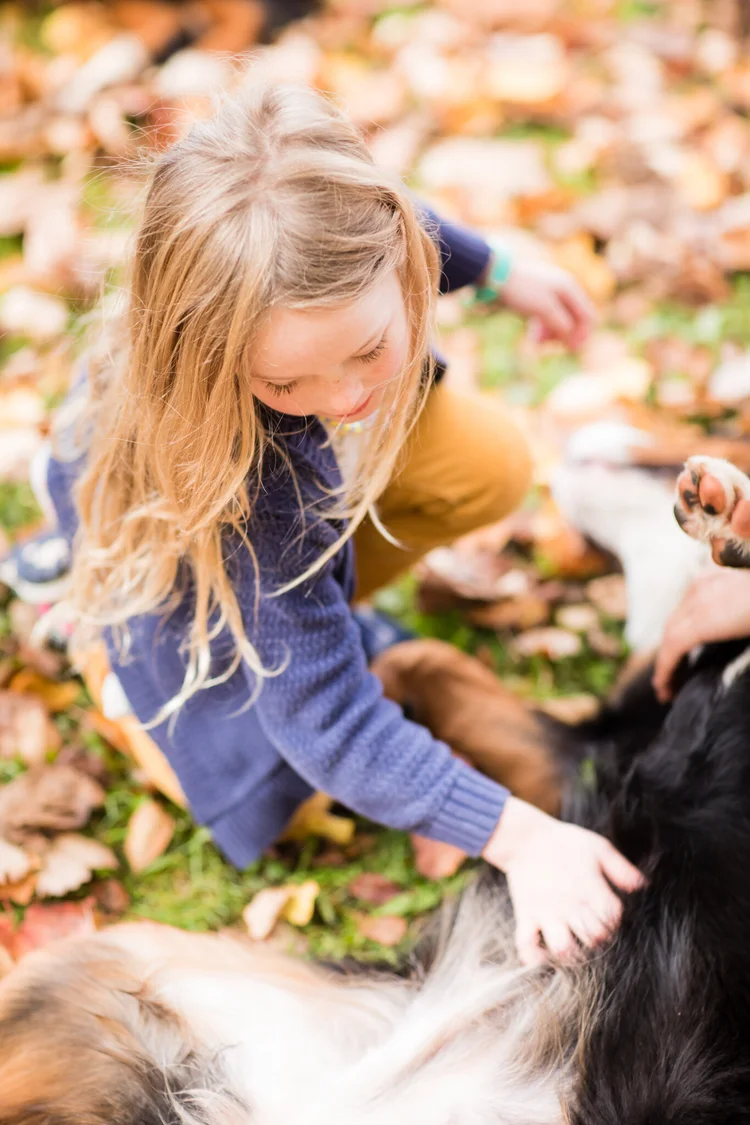
This is the single factor that moves most families from a purebred Bernese to a Bernedoodle. The lifespan difference is not marginal. It is, in many cases, nearly double.
A Bernese puppy brought home when a child is five years old may not be there when that child turns twelve. A Bernedoodle brought home at the same time may still be running beside that child in high school. For families with young children, that math matters.
The Bernese's shorter lifespan is not a failure of individual breeders. It is a population-level consequence of a restricted gene pool and a breed-wide cancer burden that cannot be bred out from within a closed stud book. The Bernedoodle's longer lifespan reflects the benefits of outcrossing: introducing Poodle genetics diversifies the genome and reduces the concentration of disease-associated alleles.
Health: What Each Breed Carries
Bernese Mountain Dog
Cancer accounts for approximately 67% of all Bernese deaths, with histiocytic sarcoma affecting roughly 25% of the breed population. Hip and elbow dysplasia are common. Bloat (GDV) risk is elevated due to the deep chest. Degenerative myelopathy and Von Willebrand disease are also present in the breed.
Health testing can identify carriers for some conditions, but the breed's cancer susceptibility is embedded in the genetic architecture of the population itself, not isolated to specific lines.
Bernedoodle
F1 Bernedoodles benefit from hybrid vigor, which reduces the concentration of recessive disease genes from either parent breed. Cancer rates are significantly lower than in purebred Bernese. Hip and elbow dysplasia risk remains present but is reduced when both parents are health-tested.
Bernedoodles are not immune to health issues. Responsible programs screen both parents for hips, elbows, eyes, heart, and relevant DNA panels. The Poodle side introduces its own risks, including progressive retinal atrophy (PRA) and certain autoimmune conditions, which is why testing matters on both sides.
Our approach: Every Stokeshire breeding dog is health-tested through OFA and Embark. We monitor COI (coefficient of inbreeding) on every pairing, and our 3-year genetic health guarantee covers structural and hereditary conditions. Read our white paper on Bernese population genetics.
Temperament: What Stays, What Changes
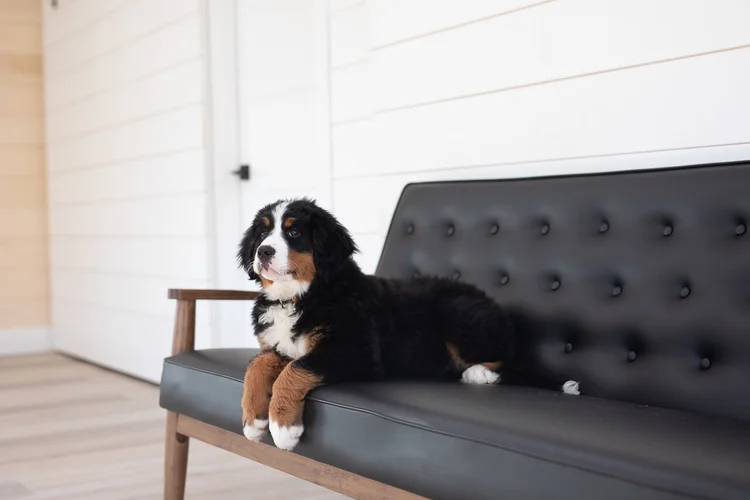
The core Bernese temperament carries through to the Bernedoodle. Both are calm, loyal, people-oriented, and gentle with children. Both form deep attachments to their families and prefer to be included in daily life rather than left alone.
Where they differ is at the edges. The purebred Bernese tends to be more reserved with strangers and slower to warm up in new environments. The Poodle influence in a Bernedoodle typically adds social confidence and quicker adaptability. Bernedoodles are often more outgoing in public settings, more comfortable with novelty, and slightly more playful into adulthood.
Neither temperament is better. The Bernese's discernment is part of its appeal for families who value a calm, watchful companion. The Bernedoodle's openness works well for families with active social lives, frequent visitors, or multiple children.
Shedding and Coat: The Practical Reality
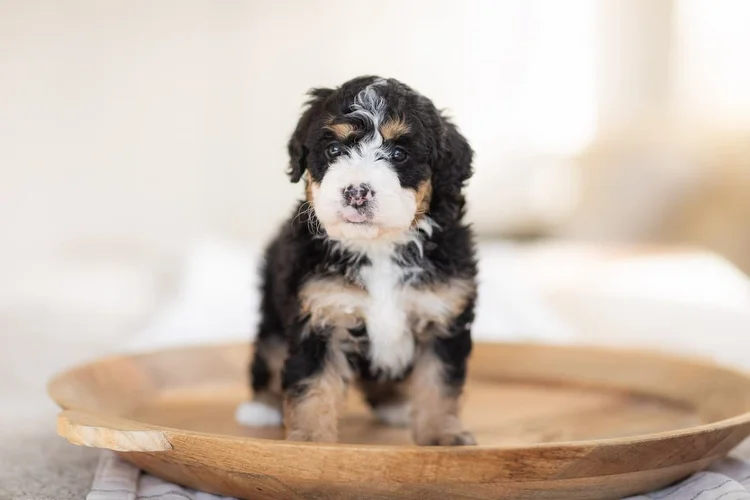
The Bernese Mountain Dog sheds heavily. Year-round. With two seasonal blowouts that will coat every surface in your home. There is no version of a purebred Bernese that does not shed. If shedding is a concern for your household, the Bernese is not the right fit.
The Bernedoodle offers coat flexibility. Furnished (wavy or curly) Bernedoodles carry the RSPO2 gene from the Poodle, which produces a low-to-non-shedding coat. Unfurnished Bernedoodles (those without the furnishings gene) will shed more like the Bernese parent. Coat type is testable through DNA, so reputable programs can tell you before you commit what coat your puppy will carry.
The trade-off: low-shedding Bernedoodle coats require more grooming. Professional grooming every 6 to 8 weeks and regular brushing between appointments is necessary to prevent matting. The Bernese sheds more but requires less structured grooming beyond brushing.
Size: One Option vs Many
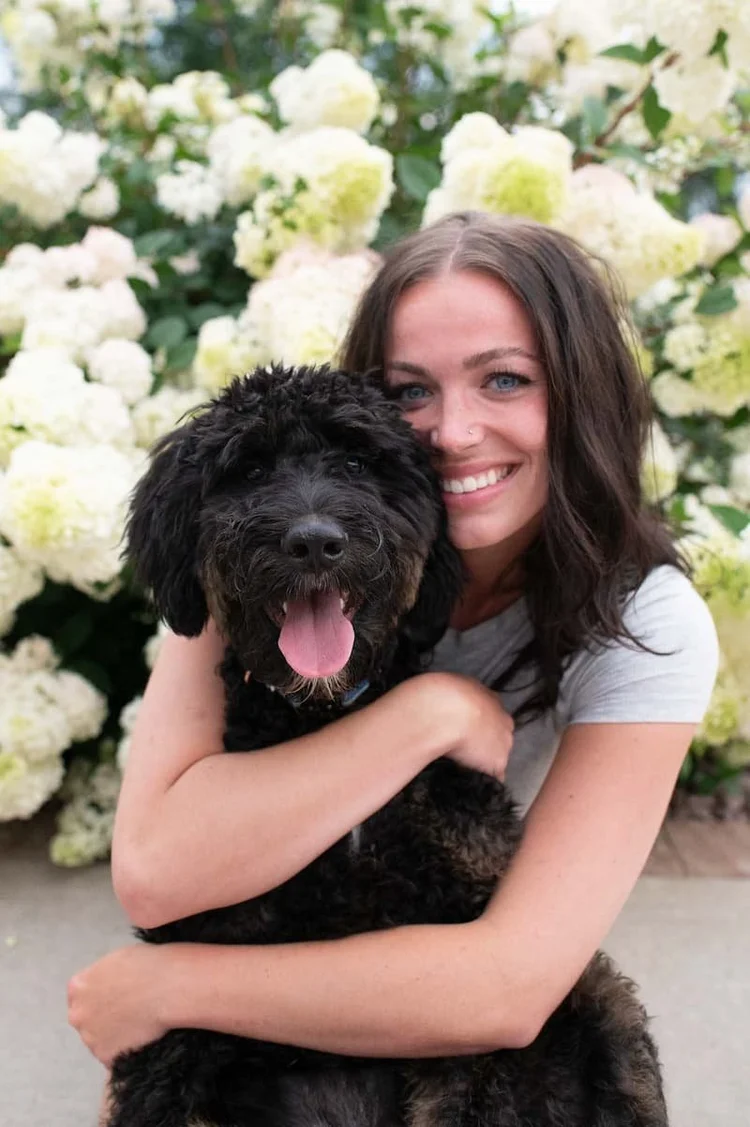
The Bernese Mountain Dog comes in one size: large. Adults typically weigh 70 to 115 pounds and stand 23 to 28 inches at the shoulder. There is no miniature Bernese. If you want the Bernese temperament in a smaller package, the purebred cannot deliver that.
Bernedoodles are available in multiple size ranges depending on the Poodle parent used in the cross. Standard Bernedoodles (Standard Poodle parent) typically reach 50 to 90 pounds. Medium Bernedoodles (Moyen Poodle parent) range from 35 to 55 pounds. Mini Bernedoodles (Miniature Poodle parent) range from 25 to 45 pounds.
Size flexibility is one of the primary reasons families choose a Bernedoodle over a purebred Bernese. Families in apartments, condos, or smaller homes who love the Bernese temperament but cannot accommodate a 100-pound dog have viable options in a Bernedoodle program.
Trainability: Both Learn, One Learns Faster
Both breeds are intelligent and willing. Both respond to positive reinforcement and do poorly with harsh corrections. The difference is speed and adaptability.
The Bernese Mountain Dog matures slowly, both physically and mentally. Many retain puppy-like behavior until age 2 or 3. Training requires patience, repetition, and acceptance of a longer timeline to behavioral maturity. They learn well but at their own pace.
The Bernedoodle, inheriting the Poodle's cognitive flexibility (ranked #2 in working intelligence among all breeds), typically learns faster, retains commands more reliably, and adapts to new contexts with less repetition. This makes Bernedoodles well-suited for families who want a dog that responds quickly to structure and can handle the complexity of a busy household.
Training support: Our 4-Week Doodle School ($5,600) and Bootcamp ($200/day) programs provide foundational training for Bernedoodle puppies before they go home. Puppies arrive with crate comfort, leash introduction, name recognition, recall foundation, and household manners already in progress.
Cost of Ownership: Upfront and Lifetime
| Category | Bernese Mountain Dog | Bernedoodle |
|---|---|---|
| Purchase Price | $2,000 - $4,000+ | $3,500 - $5,000+ |
| Annual Food | $1,200 - $2,000 | $800 - $1,500 (smaller sizes eat less) |
| Annual Vet | $800 - $2,000+ (cancer screening) | $500 - $1,200 (lower disease burden) |
| Annual Grooming | $500 - $1,200 | $800 - $1,500 (more frequent for curly coats) |
| Insurance | $600 - $1,500 (higher premiums) | $400 - $900 |
| Estimated Lifetime | $25,000 - $50,000+ (7 yrs) | $30,000 - $55,000+ (13 yrs) |
The Bernedoodle costs more upfront. The Bernese costs more per year in veterinary expenses and insurance due to elevated cancer and orthopedic risk. Over a lifetime, total costs are roughly comparable, but the Bernedoodle spreads that cost over nearly twice the years.
The harder cost to quantify is the emotional one. Cancer treatment for a Bernese often involves difficult decisions about quality of life, financial limits, and timing. Many Bernese families face those decisions before their dog turns seven.
Which Is Right for Your Family?
Choose a Bernese Mountain Dog If:
- You want a purebred with AKC recognition
- You are comfortable with heavy shedding
- You accept the 6 to 8-year average lifespan
- You live in a cool climate with space
- You value the breed's reserved, watchful quality
- You can absorb higher veterinary costs for cancer screening and treatment
- You want a large dog only (no smaller options exist)
Choose a Bernedoodle If:
- You want the Bernese temperament with a longer expected lifespan
- You need a low-shedding or allergy-considerate option
- You want size flexibility (mini, medium, or standard)
- You want a dog that matures and trains more quickly
- You live in a warmer climate
- You have young children and want more years together
- You value social confidence and adaptability
Neither choice is wrong. The right choice is the informed one. If you love what the Bernese represents but the health and lifespan realities give you pause, the Bernedoodle was designed to address exactly those concerns while preserving the heart of the breed.
Frequently Asked Questions
No. A Bernedoodle is an intentional cross between a Bernese Mountain Dog and a Poodle, produced by programs that health-test both parents and select for specific traits. The term "mutt" implies random, unplanned breeding. An intentional cross with documented health clearances, temperament selection, and generational planning is a fundamentally different process.
The core temperament carries through: calm, loyal, people-oriented, and gentle with children. The Poodle influence typically adds social confidence and faster learning. Bernedoodles tend to be slightly more outgoing with strangers and more adaptable to new environments than the purebred Bernese, which can be more reserved.
The primary reason is genetic diversity. The purebred Bernese gene pool is highly concentrated due to a small founder population and "popular sire" effects, which has elevated cancer rates to approximately 67% of all deaths. Crossing with a Poodle introduces genetic diversity that reduces the concentration of disease-associated alleles, resulting in lower cancer incidence and longer average lifespans.
On a population level, yes. F1 Bernedoodles from health-tested parents show significantly lower cancer rates and longer average lifespans than purebred Bernese. However, no cross is risk-free. Both parent breeds carry potential for hip dysplasia, and the Poodle side introduces its own risks including progressive retinal atrophy. Responsible health testing on both parents is what separates a healthier outcome from a gamble.
It depends on coat type. Furnished (wavy or curly) Bernedoodles carrying the RSPO2 gene from the Poodle shed minimally to not at all. Unfurnished Bernedoodles without the furnishings gene will shed more, closer to the Bernese parent. Coat type is DNA-testable, so a reputable breeder can tell you before placement what to expect from your puppy's coat.
No. The purebred Bernese Mountain Dog comes in one size: large, typically 70 to 115 pounds. There is no miniature or toy version of the purebred breed. If you want the Bernese temperament in a smaller size, a Mini or Medium Bernedoodle (bred with a Miniature or Moyen Poodle) is the closest option, ranging from 25 to 55 pounds depending on the cross.
Both are excellent with children. The Bernese is patient, gentle, and tolerant. The Bernedoodle shares those traits and often adds more playful energy and social engagement. For families with very young children, the Bernedoodle's longer expected lifespan means the dog is more likely to be present through the child's formative years.
Bernedoodle programs typically require health testing on both parent breeds (not just one), DNA coat and color testing, and in many cases structured early development and training programs that purebred breeders may not offer. The higher upfront cost reflects a broader testing protocol, intentional pairing for temperament and coat outcomes, and the investment in early socialization and training that programs like Doodle School provide.
Ready to Decide?
Whether you are set on one or still weighing both, we are happy to have an honest conversation about what will work best for your family.
Begin Your Journey View Available Litters