What Is an Unfurnished Doodle?
Also called: Improper Coat · Flat Coat · Smooth-Faced Doodle · Open-Faced Doodle
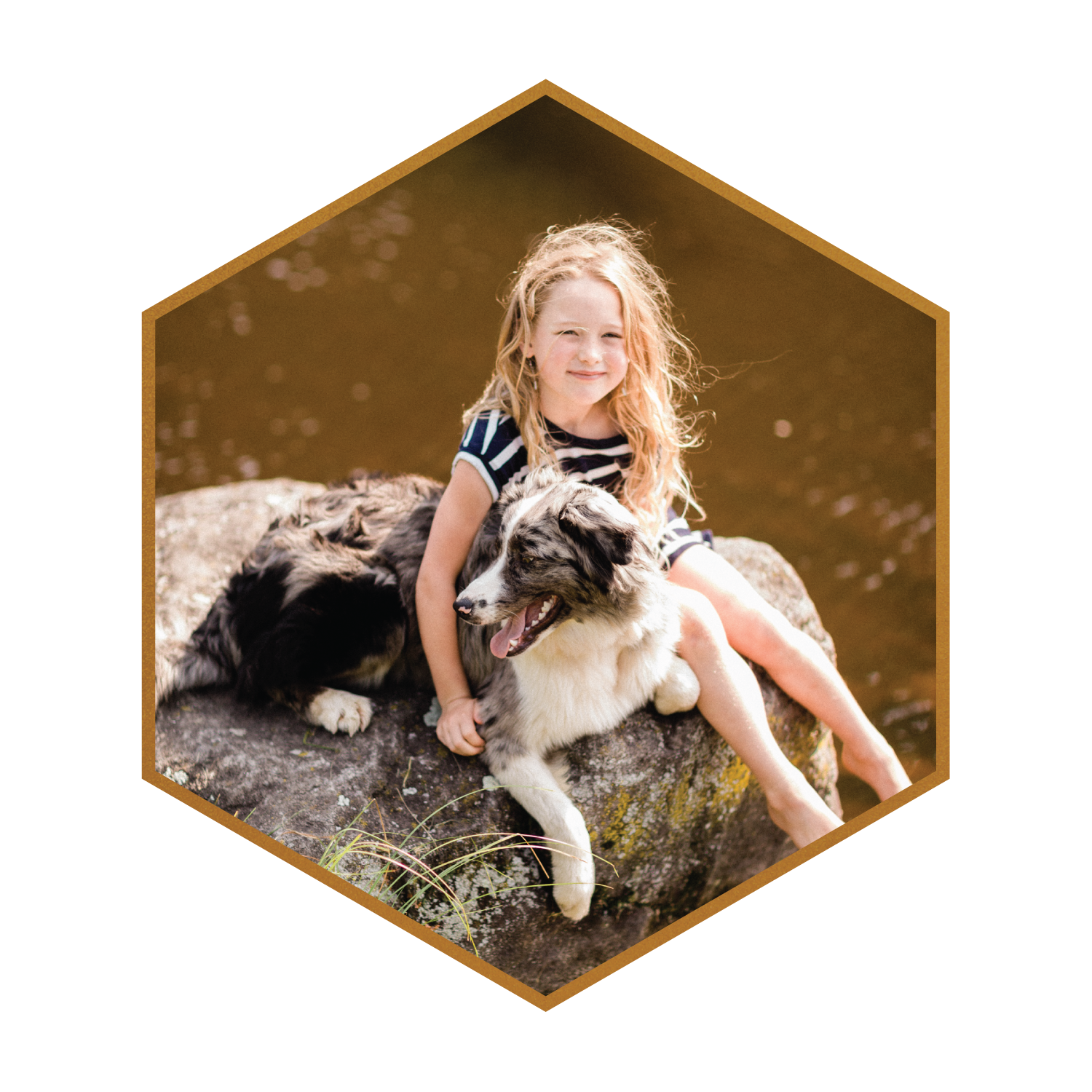
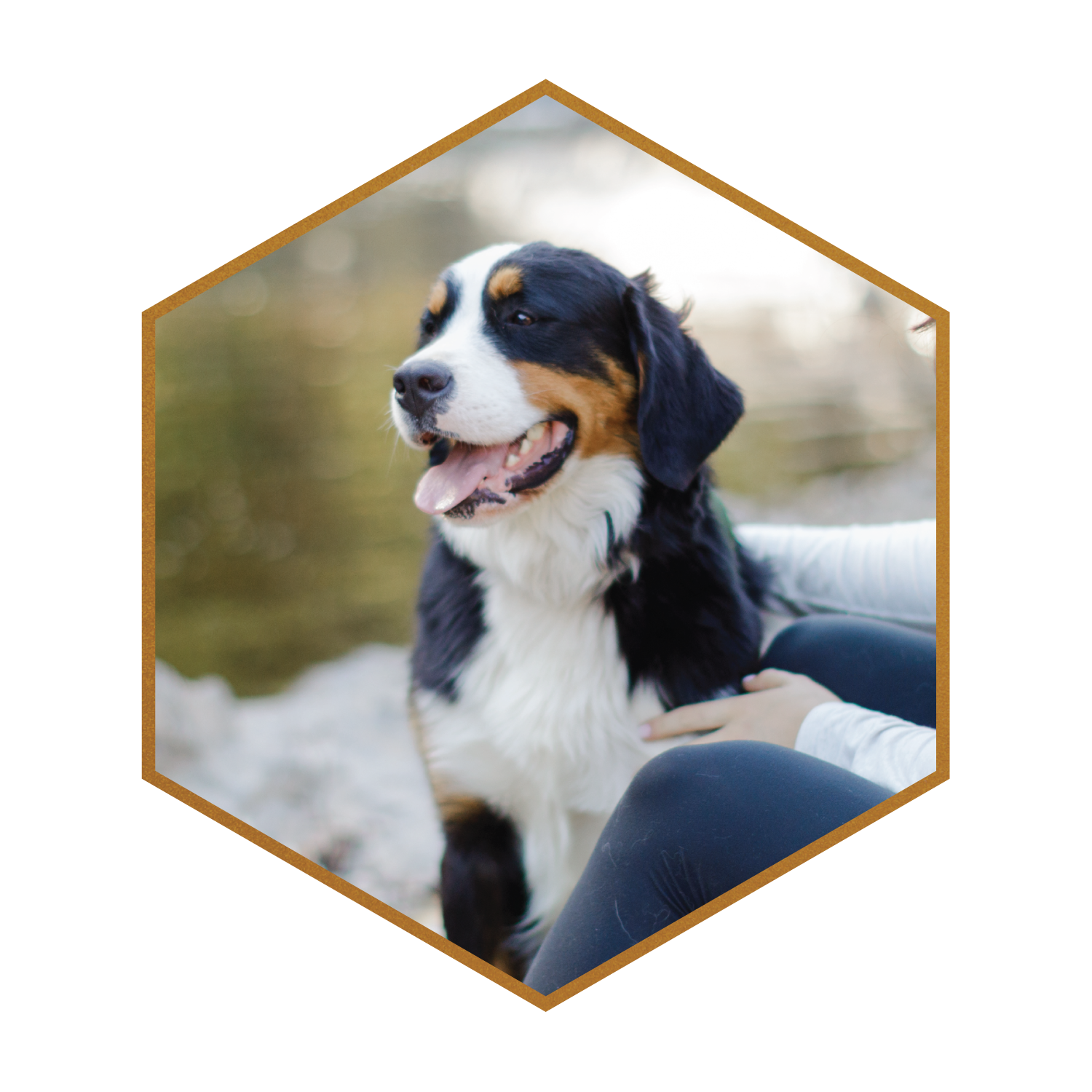
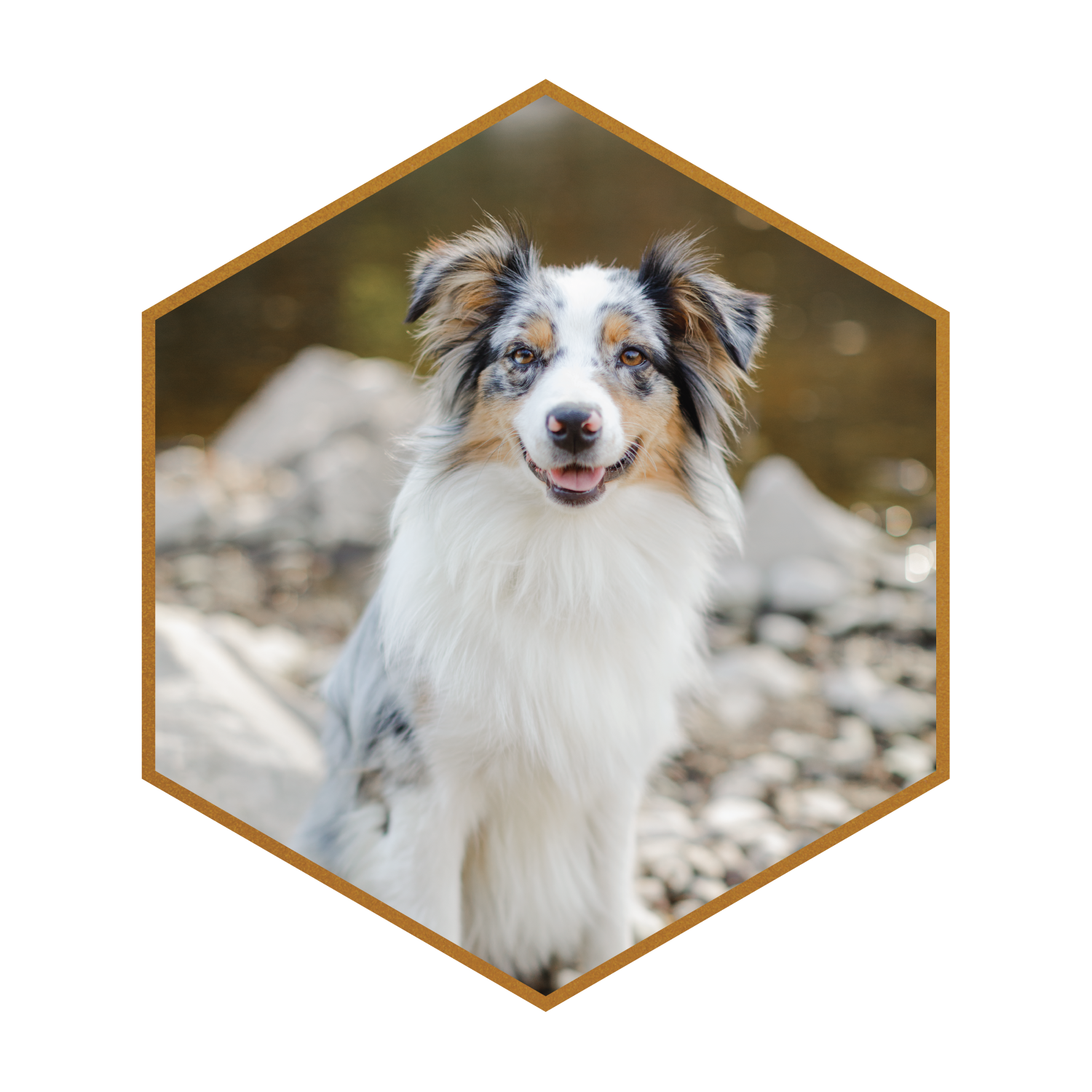
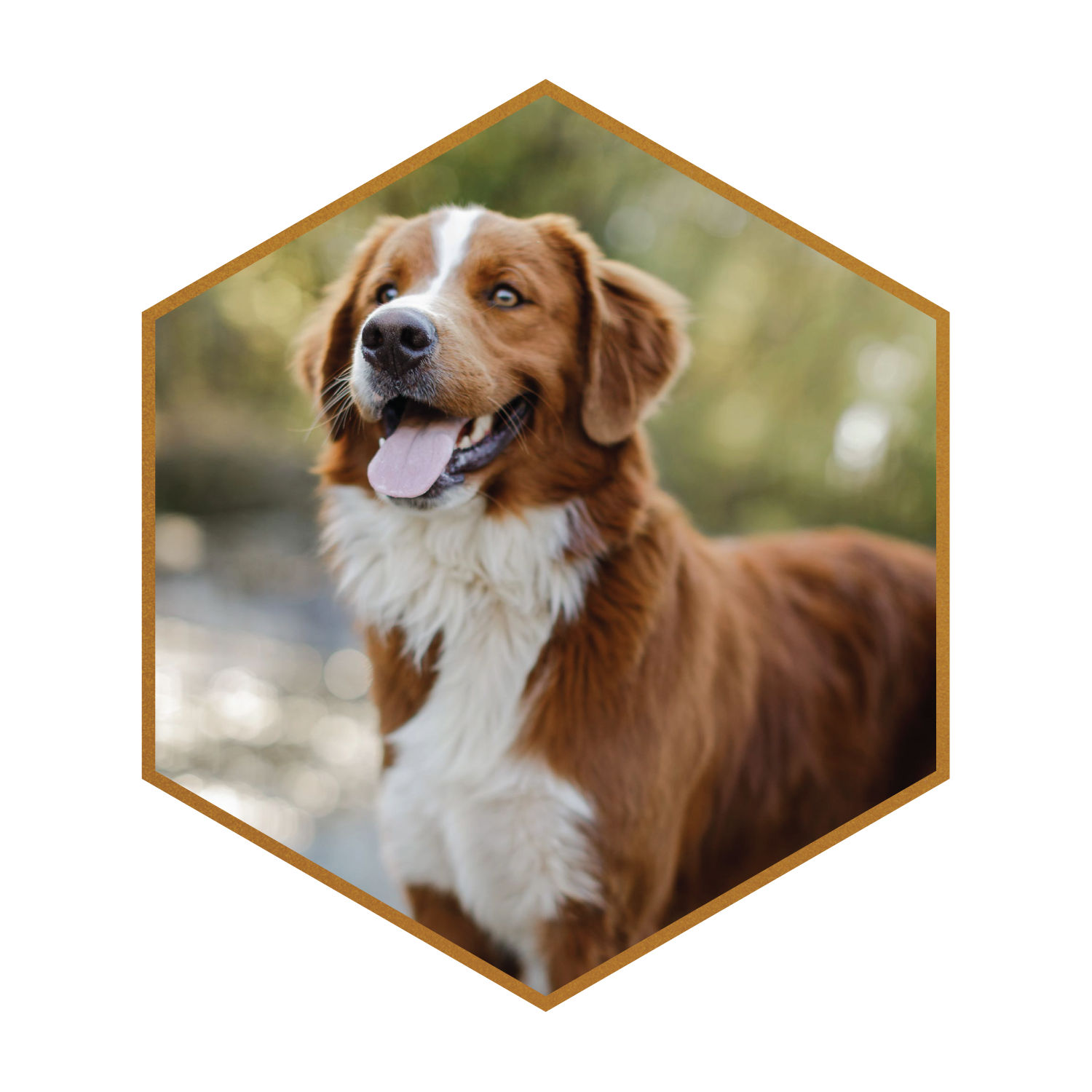
An unfurnished doodle is a doodle that lacks the RSPO2 furnishings gene, producing a smooth muzzle, a shedding coat, and a more retriever-like appearance than the traditional teddy bear silhouette. It is not a defect, a hybrid mistake, or a discounted version of a "real" doodle. It is a predictable genetic outcome with a specific set of trade-offs: lower grooming demand, a more natural aesthetic, and higher shedding. This guide explains the genetics, the visible signs at every age, the allergy realities, the grooming math, the pricing patterns to watch for, and how ethical breeders place these puppies.
Unfurnished Doodle, At a Glance
| What It Is | A doodle that inherited two copies of the recessive non-furnishings allele at the RSPO2 gene, producing a smooth muzzle and a shedding coat. |
| Other Names | Improper Coat (IC), Flat Coat, Smooth-Faced, Open-Faced |
| Visible Trait | Smooth muzzle without beard, mustache, or eyebrows. Sleek facial hair that follows the contour of the skull. |
| Shedding | Moderate to high. Higher than furnished doodles. Often comparable to a Golden Retriever or Labrador. |
| Grooming Demand | Low. Weekly brushing. Bath as needed. Usually no professional haircuts required. |
| Allergy-Friendly | No. Generally not suitable for moderate or severe allergy households. No dog is truly hypoallergenic. |
| Best Fit | Active outdoor families, low-maintenance households, owners who prefer a retriever-like aesthetic over the teddy bear look. |
| Wrong Fit | Allergy-sensitive households, families seeking a non-shedding companion, owners drawn to the doodle aesthetic specifically. |
| Stokeshire Pricing | Same as the rest of the litter. Coat phenotype does not affect price in our program. |
What Does "Unfurnished" Actually Mean?
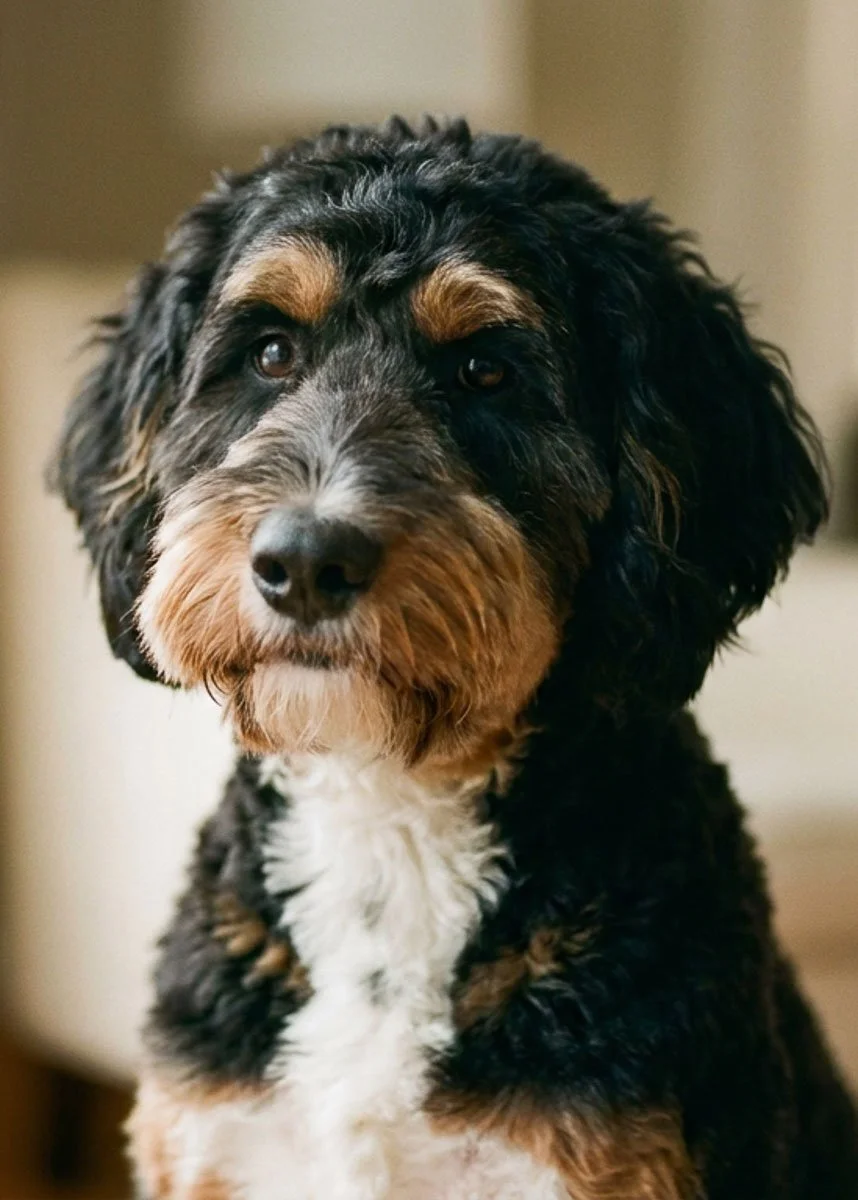
In doodle genetics, "furnishings" refers to the long facial hair that produces a beard, mustache, and pronounced eyebrows. This is the trait that gives doodles their signature teddy bear look. Furnishings are produced by a single gene called RSPO2, and the trait is dominant. A dog needs only one copy of the furnishings allele to display facial hair.
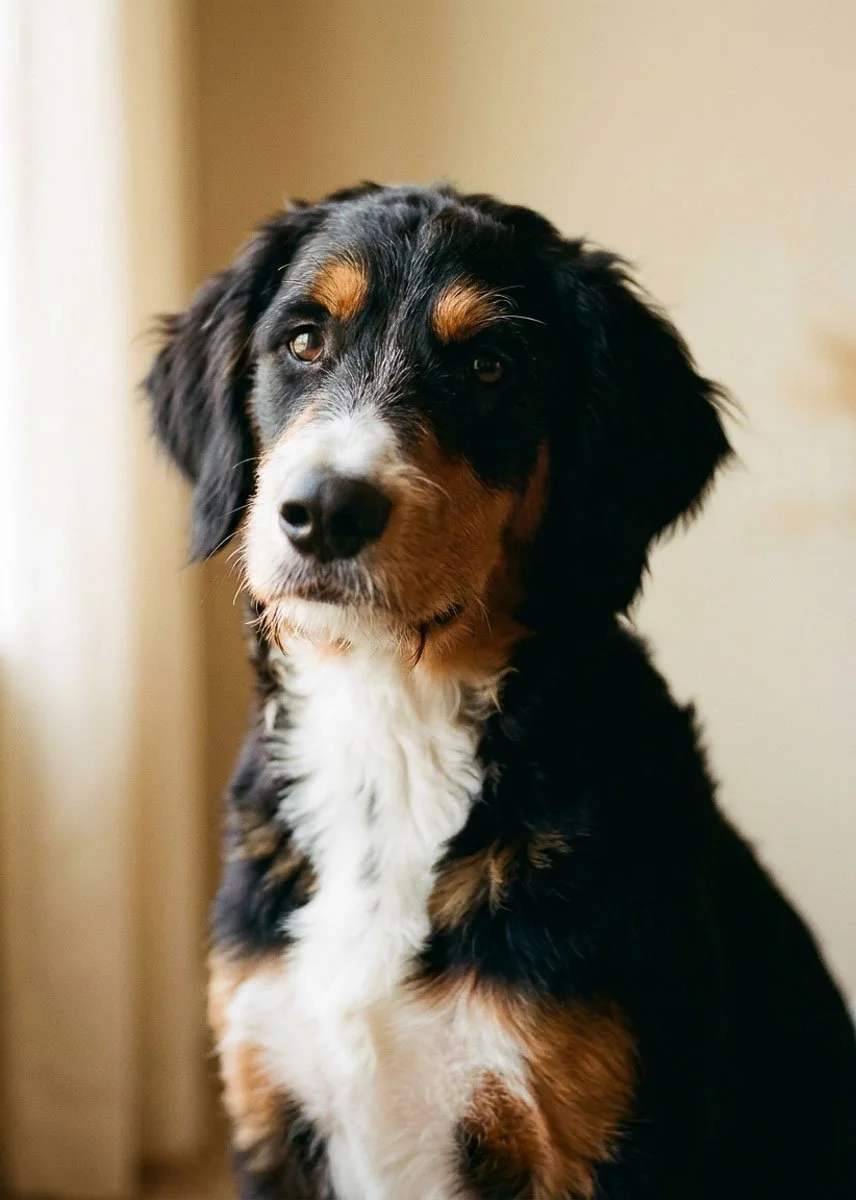
An unfurnished doodle is a dog that inherited two copies of the ancestral, non-furnishings version of that gene. The result is a smooth muzzle that resembles the face of a Golden Retriever, Labrador, or Australian Shepherd rather than a Poodle or a traditional doodle. The body coat may still be wavy or curly, but the face is clean.
Why So Many Different Names?
Several terms describe the same underlying trait, and they are not interchangeable. Some are scientific. Some are association standards. Some are marketing language designed to make the dog more appealing.
| Term | Type | What It Means |
|---|---|---|
| Unfurnished | Scientific | Lacks the dominant RSPO2 furnishings allele. The accurate genetic descriptor. |
| Improper Coat (IC) | Standard-based | The term used by the Goldendoodle Association of North America and other registries to describe a coat that fails the furnished breed standard. "Improper" is a normative judgment, not a quality assessment. |
| Flat Coat | Marketing | Typically describes an unfurnished doodle that also lacks the curl gene, producing a coat that lies flat against the body. |
| Smooth-Faced | Descriptive | Refers to the short, sleek hair on the muzzle. |
| Open-Faced | Marketing | Emphasizes the visibility of the dog's eyes and expression in the absence of furnishings. |
"Improper coat" is the most widely used term within breed associations. "Unfurnished" is the most accurate genetically. Stokeshire uses "unfurnished" because it describes the dog without implying defect.
The RSPO2 Gene, in Plain Language
Furnishings are controlled by a single gene called RSPO2 (R-spondin-2), located on canine chromosome 13. The trait was identified by Cadieu and colleagues in a landmark 2009 study published in Science, which mapped coat variation across 80 dog breeds and traced furnishings to a 167 base-pair insertion in the gene's regulatory region. The insertion increases RSPO2 expression in the hair follicles of the muzzle and legs, triggering the longer hair growth pattern that produces a beard and eyebrows.
Furnishings are inherited as a dominant trait. A dog needs only one copy of the furnishings allele (often written "F") to show facial hair. A dog with two copies of the non-furnishings allele (often written "IC" for improper coat, or "n" for non-furnished) will display the smooth, unfurnished face.
The Three Possible Genotypes
 Two Copies
F/F — Homozygous Furnished
The dog displays full facial furnishings and will pass the furnishings allele to 100% of offspring. Most Poodles fall into this category, which is why early-generation doodles almost always have furnished faces.
 Weak + Recessive
Fw/IC — Weak Furnished Carrier
The dog carries one copy of the weak furnishings variant (Fw) and one copy of the non-furnishings allele. The result is partial furnishings: a sparser beard, less pronounced eyebrows, and an intermediate look between fully furnished and fully unfurnished. This genotype is also a carrier and produces unfurnished puppies when paired with another carrier.
 No Copies
IC/IC — Homozygous Unfurnished
The dog lacks the furnishings gene entirely. Smooth muzzle. Will pass the non-furnishings allele to 100% of offspring. This is the genotype of all unfurnished doodles.
A note on weak furnishings: the RSPO2 gene actually has three relevant alleles in the doodle population — strong furnishings (F), weak furnishings (Fw), and non-furnishings (IC). F is fully dominant, which means F/F and F/IC dogs look visually identical to each other (both fully furnished). The visually distinct intermediate phenotype shown above only appears when one copy of the weak variant (Fw) pairs with a non-furnishings allele. Standard genetic panels test for both F and Fw separately, which is why thorough breeders screen for the full RSPO2 panel rather than the simplified version.
Why Unfurnished Puppies Show Up in Later Generations
The reason F1 doodle litters almost never produce unfurnished puppies is statistical. When a homozygous furnished Poodle (F/F) is crossed with a non-furnished Golden Retriever or Bernese Mountain Dog (IC/IC), every puppy in the litter inherits one F allele and one IC allele. They are all carriers, but they all display furnishings.
Unfurnished puppies emerge when two carriers (F/IC) are bred together. This becomes increasingly likely in F2 generations, F2B litters, and multigenerational lines, where carrier-to-carrier pairings are statistically common. The chart below shows the predictable outcomes.
| Parent Pairing | Furnished Offspring | Unfurnished Offspring |
|---|---|---|
| F/F × IC/IC (typical F1) | 100% | 0% |
| F/IC × F/F (F1B back to Poodle) | 100% | 0% |
| F/IC × F/IC (F2 or multigen carrier pairing) | 75% | 25% |
| F/IC × IC/IC (reverse F1B) | 50% | 50% |
| IC/IC × IC/IC | 0% | 100% |
The Shedding Connection: RSPO2 Plus MC5R
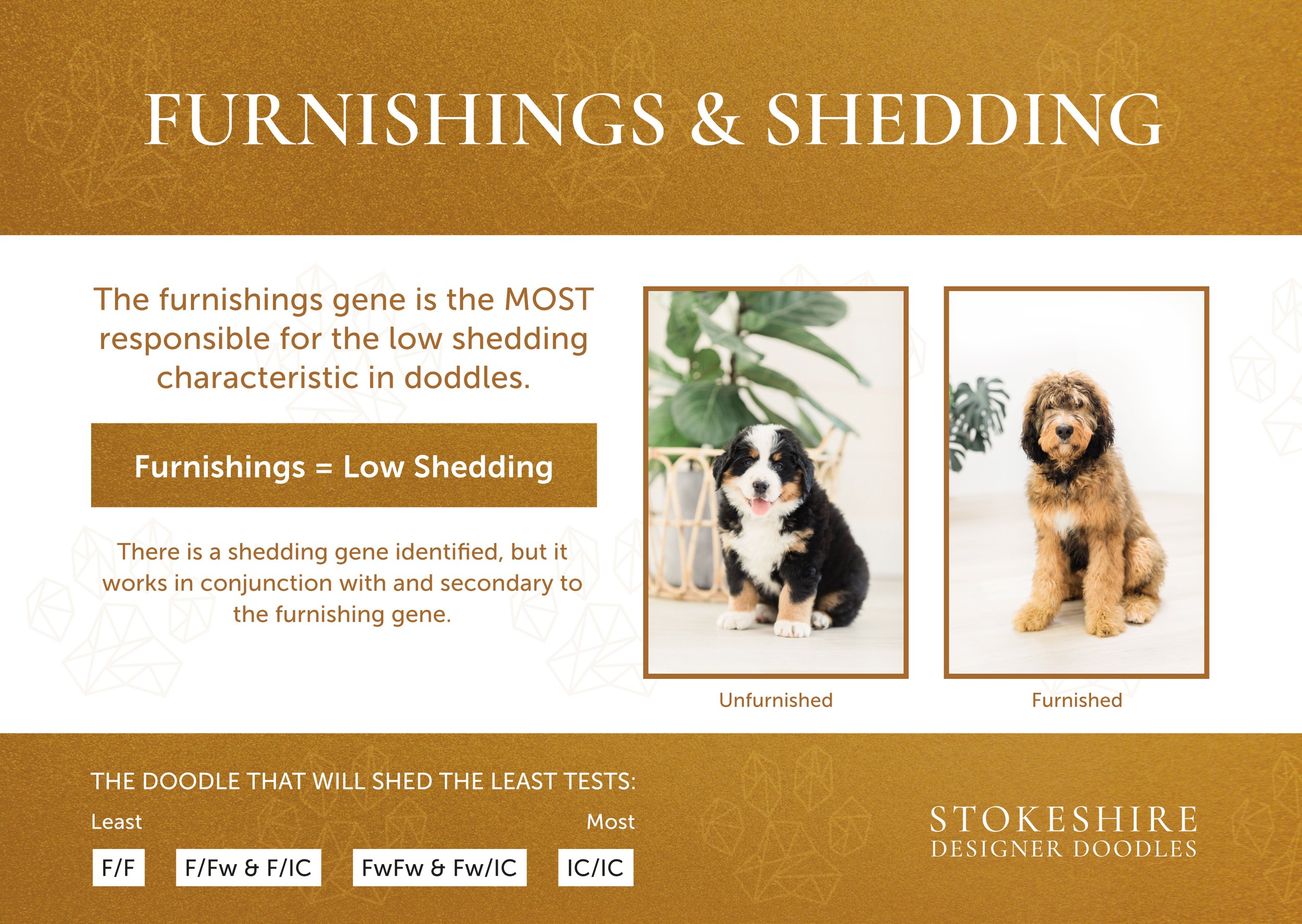
Furnishings and shedding are two separate genes that work together. RSPO2 controls facial hair. A second gene, MC5R, controls shedding intensity. The lowest-shedding doodles carry favorable variants at both loci. The highest-shedding doodles carry unfavorable variants at both. An unfurnished doodle that also lacks the low-shedding MC5R variant will shed at levels comparable to its retriever ancestors. An unfurnished doodle that does carry the low-shedding MC5R variant will shed somewhat less, but still noticeably more than a furnished littermate.
A responsible breeder tests both parents for both genes before any pairing. The combination of RSPO2 and MC5R results predicts a puppy's coat behavior with reasonable accuracy. Without that testing, predicting shedding becomes guesswork.
How to Identify an Unfurnished Doodle Across the Lifecycle
One of the most common buyer questions is when furnishings become visible in a litter. The answer follows a predictable developmental timeline tied to hair follicle maturation. Newborns offer no visual indication. By eight weeks, the difference is usually obvious. By sixteen weeks, it is unmistakable.
Indistinguishable. All puppies in a litter look the same regardless of coat genetics. Hair across the entire body is short, smooth, and lies close to the skin. No facial differentiation has begun.
Divergence window. Furnished puppies begin developing fine, wispy hair on the muzzle, chin, and above the eyes. Unfurnished puppies maintain a sleek, short-haired face. The difference becomes visible to an experienced eye around the four-to-six week mark.
Confirmation. By the time a puppy is ready for placement at eight weeks, an experienced breeder can confirm coat phenotype with high confidence. By sixteen weeks, the unfurnished puppy displays a clean retriever-like face while furnished littermates show clear beard development.
Adult expression. The adult coat establishes between six and nine months. Unfurnished doodles complete their first significant shedding cycles in this window. The body coat may still be wavy or curly depending on KRT71, but the face remains smooth for life.
What Ethical Breeders Document
A responsible breeding program documents furnishings status at multiple stages and discloses the result before any deposit becomes non-refundable. At Stokeshire, this includes weekly muzzle close-ups from week five forward, the parents' RSPO2 genotypes from a full genetic panel, and the puppy's predicted coat phenotype communicated in writing before final payment.
Allergies and Unfurnished Doodles: An Honest Look
The marketing of any doodle as hypoallergenic is misleading. A peer-reviewed study published in 2012 measured allergen levels in 190 homes and found no evidence that breeds marketed as hypoallergenic produced lower environmental allergen exposure. The unfurnished doodle, in particular, is not a low-allergen dog and should not be selected by households with moderate or severe canine allergies.
It Is Not the Hair. It Is the Proteins.
Human allergic reactions to dogs are triggered by a family of proteins, not by hair itself. The major canine allergens have been identified and named:
Can f 1
The dominant canine allergen. Detected in approximately 96% of dog-allergic individuals. Found in saliva and skin dander. Spreads through the home on shed hair coated with dried saliva.
Can f 2
A lipocalin protein associated with severe asthma and bronchial inflammation. Buyers with diagnosed asthma should consult a board-certified allergist before considering any dog.
Can f 3
A serum albumin found in blood and dander. Cross-reacts with cat, horse, and other mammal allergens, which is why some allergy sufferers react to multiple species.
Can f 4, 5, 6
Additional lipocalin and kallikrein proteins distributed across fur, dander, and male urine. Together with Can f 1, these proteins explain why no coat type is fully allergen-free.
Why Coat Type Matters Even Though No Dog Is Hypoallergenic
The furnished coat acts as a mechanical trap. Allergen-coated dander and saliva-laden hair stay close to the skin, contained within the dense facial and body coat, until released during grooming. The unfurnished coat does the opposite. By design, it sheds. Each shed hair carries Can f 1 and Can f 4 into the air, onto upholstery, and into bedding. The total allergen load in the home is therefore meaningfully higher with an unfurnished doodle than with a fully furnished one.
Some researchers have measured higher Can f 1 concentrations in the hair of breeds marketed as hypoallergenic, including Poodles. The contained nature of those coats appears to keep allergens close to the dog rather than circulating them through the household. When that containment is removed by an unfurnished, shedding coat, the allergen spreads.
If You Have Mild Sensitivity
Some households with mild sensitivities have managed unfurnished doodles successfully through environmental controls: HEPA-certified vacuums and air purifiers, weekly bedding laundering at high temperature, regular bathing, and bedroom exclusion. None of these measures eliminate exposure. They reduce it. Buyers with diagnosed allergies should consult a board-certified allergist and consider a component-resolved diagnostic panel before placing a deposit on any dog. A pillowcase test, where the buyer sleeps on fabric exposed to the specific puppy or its parents, is a useful screen but not a substitute for clinical testing.
Stokeshire does not guarantee allergy compatibility for any dog, furnished or unfurnished. The genetics of human allergic response are too individualized and the science too clear to make that promise responsibly.
Grooming an Unfurnished Doodle: Time, Tools, and Cost
The single largest practical advantage of the unfurnished doodle is dramatically lower grooming demand. The coat reaches a terminal length and stops growing. Professional haircuts, the dominant ongoing expense for furnished doodle owners, are largely unnecessary. The trade-off is more frequent vacuuming and a different at-home brushing routine focused on managing shed hair rather than preventing matting.
Weekly Time Commitment by Coat Type
| Maintenance Task | Furnished (Curly or Wavy) | Unfurnished (Flat or Smooth) |
|---|---|---|
| Line Brushing | 20–30 minutes most days | Not required |
| De-Shedding Brushing | Not required | 15–20 minutes weekly |
| Vacuuming Demand | Low | Moderate to high |
| Face and Beard Cleaning | Daily wipe after meals | Not required |
| Muzzle Trimming | Every 4–6 weeks | Never |
| Professional Grooming | Every 6–8 weeks | Bath and tidy as needed |
The Right Toolkit for an Unfurnished Coat
Furnished doodles require slicker brushes and metal combs designed to work through dense, mat-prone coats. Unfurnished doodles need a different setup oriented toward removing dead undercoat hair before it spreads through the home.
- Undercoat rake. Pulls dead hair from the dense undercoat before it sheds onto furniture and floors.
- Bristle brush or rubber curry. Stimulates the skin and lifts loose surface hair during weekly grooming.
- High-velocity dryer. Important after baths. Trapping moisture in the undercoat with towel-drying alone can lead to odor or hot spots.
- Conditioning spray. Maintains the natural water-shedding quality of the outer coat and reduces static.
Annual Grooming Cost Benchmarks
Professional doodle grooming typically costs 25–50% more than other breeds because the coats are denser and longer to dry. The cost gap between furnished and unfurnished doodles is substantial, and the savings compound year after year across the dog's lifespan.
| Metro Area | Full Groom (Furnished) | Bath & Brush (Unfurnished) | Annual Savings |
|---|---|---|---|
| New York City | $140–$200+ | $80–$120 | $800–$1,200 |
| Los Angeles | $130–$180+ | $75–$110 | $700–$1,100 |
| Chicago | $110–$160+ | $65–$95 | $600–$1,000 |
| Minneapolis | $100–$150 | $55–$85 | $550–$950 |
| Houston | $90–$140 | $50–$80 | $500–$900 |
Across a 12-year lifespan, the unfurnished doodle's lower grooming demand can translate to $7,000–$14,000 in lifetime savings depending on the metro and the owner's preferences. For families on a tight maintenance budget or those who simply prefer not to spend recurring time at the groomer, this is a meaningful consideration.
Should You Choose an Unfurnished Doodle?
The unfurnished doodle is a deliberate match for a specific household profile. It is not a discount option, not a consolation prize, and not a "second-best" doodle. For the right family, it is the better dog. For the wrong family, it produces predictable disappointment. The matrix below clarifies the alignment.
| Decision Factor | Best Fit: Furnished | Best Fit: Unfurnished |
|---|---|---|
| Allergy Sensitivity | Mild to moderate | None |
| Primary Lifestyle | Indoor, controlled environment | Active outdoor, hiking, swimming, beach |
| Grooming Budget | $1,200–$2,000 annually | $200–$500 annually |
| Tolerance for Shedding | Zero tolerance | Moderate tolerance |
| Aesthetic Preference | Teddy bear, classic doodle face | Retriever or shepherd appearance |
| At-Home Time Commitment | Daily brushing tolerated | Weekly brushing preferred |
| Vacuuming Habits | Once or twice weekly | Daily during shedding seasons |
Best-Fit Household Profiles
The Active Outdoor Family
Hiking, trail running, lake days, ski trips. The unfurnished coat sheds water and debris quickly, does not trap mud or snow in a dense beard, and recovers from outdoor activity in a fraction of the time required by a furnished doodle.
The Predictable Maintenance Household
Owners who want a dog that fits a routine without constant vigilance against matting. The unfurnished coat does not require daily intervention and tolerates a more relaxed grooming schedule without consequence.
The Retriever Aesthetic Buyer
Owners who want the temperament, intelligence, and longevity benefits of a doodle but prefer the visual presentation of a Golden, Lab, or Australian Shepherd. The unfurnished doodle delivers exactly that.
The Health-First Buyer
Owners who chose the doodle category specifically for the genetic diversity benefits over purebred lineages but care less about the specific doodle look. The hybrid vigor advantage is unaffected by coat phenotype.
Wrong-Fit Profiles
The unfurnished doodle is generally not the right choice for buyers with diagnosed dog allergies, families who chose the doodle category specifically for the teddy bear aesthetic, households where shed hair on furniture or clothing is a meaningful source of stress, or owners who expected a "Poodle in a different package" without understanding the shedding implications.
The Most Common Regret Pattern
Owner regret with unfurnished doodles is overwhelmingly traceable to a single point of failure: the puppy was sold without honest disclosure of shedding behavior, often marketed as low-shedding because "all doodles are low-shedding." When the dog reaches its adult coat transition between six and nine months, the family is surprised by the shedding volume and feels misled. Ethical disclosure at the point of sale eliminates this pattern almost entirely.
What Pricing Patterns Reveal About the Breeder
The price of an unfurnished doodle often says more about the breeder's program than about the puppy itself. Pricing structure is one of the clearest signals available to buyers evaluating whether a breeder operates a deliberate, tested program or is reacting to genetic outcomes they did not predict.
Why Some Breeders Discount Unfurnished Puppies
Many breeders price unfurnished puppies $500 to $1,500 below their furnished littermates. While this can read as a bargain, it usually signals one of two things. Either the breeder did not test their parent dogs for RSPO2 carrier status before pairing, in which case unfurnished puppies arrived as a surprise and are now priced down to move quickly. Or the breeder treats unfurnished puppies as undesirable inventory rather than appropriately matched companions for specific households. Both interpretations point to a reactive program rather than a deliberate one.
A breeder who is surprised by genetic outcomes that were predictable from a $150 panel is also more likely to be making compromises in other testing categories: orthopedic clearances, cardiac screening, eye certification, and breed-specific disease panels.
Why Premium Programs Price Consistently
The cost of producing a high-quality puppy is independent of its coat phenotype. Parent health testing, prenatal veterinary care, neonatal monitoring, structured early development, genetic disclosure, contractual guarantees, and lifetime support are identical regardless of whether a puppy is born furnished or unfurnished. Programs that price consistently across the litter signal that they are breeding for temperament, health, and structural soundness first, with coat phenotype treated as a lifestyle match rather than a quality grade.
Pricing Red Flags
- "Rare smooth doodle" priced at a premium.The trait is not rare. It is a basic recessive that appears in 25% of carrier-to-carrier litters. Charging more for "rarity" is a marketing tactic, not a genetic reality.
- Significant price drops on unfurnished puppies at 8 weeks.Suggests the breeder is struggling to place puppies that did not match buyer expectations rather than matching dogs to the right homes from the start.
- "Hypoallergenic flat coat" claims.A scientific impossibility. A flat, shedding coat distributes more allergen than a furnished one. The phrase indicates either ignorance of the underlying biology or a willingness to mislead.
- "Low-maintenance teddy bear" descriptions.A contradiction in terms. The teddy bear look requires furnishings, which require maintenance. The phrase typically appears in marketing that obscures what the buyer is actually purchasing.
What Ethical Breeders Disclose Before Placement
Coat phenotype is one of the most easily predictable traits in modern dog breeding. The genetic test is inexpensive, widely available, and produces unambiguous results. There is no reason for a buyer to learn after placement that their puppy is unfurnished. The only acceptable standard is full disclosure before any non-refundable deposit becomes binding.
The Stokeshire Disclosure Protocol
At Stokeshire, both parents are tested for RSPO2 status before any pairing. The expected coat distribution for the litter is documented before breeding. By week five, each puppy's individual phenotype is documented through high-resolution muzzle photography and confirmed against parent genotypes. Families are notified in writing of their matched puppy's phenotype before final payment is due. If the family's preferences and the puppy's phenotype are not aligned, the deposit transfers to a future litter at no penalty.
Five Questions Every Buyer Should Ask
- Are both parents tested for the RSPO2 furnishings gene, and what are their genotypes?
- What percentage of this litter is expected to be unfurnished based on the parent genetics?
- Can I see clear muzzle photographs of unfurnished adults from your previous litters?
- What is your disclosure timeline, and at what point can I see my matched puppy's coat phenotype before I commit?
- What is your rehoming policy if the shedding level exceeds what my household can manage?
A breeder who cannot answer these questions clearly is operating without the genetic data necessary to place puppies responsibly. A breeder who answers them confidently has built the foundation of a program a buyer can trust across the full lifespan of the dog.
Unfurnished Doodle vs. Other Smooth-Coated Companion Options
Many buyers considering an unfurnished doodle are comparing it against purebred retrievers, Labs, or Bernese Mountain Dogs. The comparison is worth making honestly. The unfurnished doodle's case is not that it is the right dog for everyone. The case is that it offers a specific combination of traits that none of those alternatives can match.
| Feature | Golden / Labrador Retriever | Unfurnished Doodle | Bernese Mountain Dog |
|---|---|---|---|
| Average Lifespan | 10–12 years | 12–15 years | 7–8 years |
| Shedding | Constant, heavy | Moderate, somewhat seasonal | Constant, very heavy |
| Cancer Risk Profile | Elevated (Goldens ~60% lifetime incidence) | Reduced through hybrid vigor | Highest among common breeds |
| Cognitive Profile | Eager, biddable | Higher complexity, problem-solving | Calm, deliberative |
| Energy Level | High to very high | Moderate | Low to moderate |
| Grooming Demand | Weekly brushing | Weekly brushing | Daily heavy brushing |
| Stranger Friendliness | Universally friendly | Friendly, balanced | Cautious, reserved |
Why Choose an Unfurnished Doodle Over a Purebred Retriever
The unfurnished doodle's case against the purebred Golden or Lab rests on two factors. First, longevity. Hybrid crosses typically extend lifespan by one to two years compared to their purebred parents, and the dilution of breed-specific cancer alleles is a meaningful health advantage given the Golden Retriever's elevated cancer incidence. Second, cognitive profile. The Poodle contribution adds problem-solving capacity and adaptability that purebred retrievers, bred primarily for biddability, do not consistently match.
Why Choose an Unfurnished Bernedoodle Over a Purebred Bernese
The unfurnished Bernedoodle is the most compelling option for families drawn to the Bernese aesthetic but unwilling to accept a 7-to-8-year lifespan. The classic tri-color appearance and steady temperament are preserved. The catastrophic cancer mortality rate of the purebred Bernese is meaningfully reduced. For many families, this is the single most important calculation in the breed decision.
How Stokeshire Handles Unfurnished Puppies
Stokeshire breeds Bernedoodles, Australian Mountain Doodles, Golden Mountain Doodles, and Aussiedoodles in furnished and unfurnished varieties. Unfurnished puppies are not afterthoughts in our program. They are matched to specific households who chose the unfurnished phenotype deliberately, often because they want the temperament and longevity benefits of a doodle in a more practical, retriever-styled package.
Every breeding pair is tested for RSPO2 status before pairing. We know the expected coat distribution for every litter before a single puppy is born. By week five, individual phenotypes are documented and shared with the matched families. Pricing is consistent across the litter. Coat phenotype does not determine value in our program because the cost of producing a healthy, well-developed puppy is identical regardless of coat type.
Families who arrive uncertain about furnished versus unfurnished work through our temperament and lifestyle matching process before placement. The goal is not to sell a coat type. The goal is to place the right dog with the right family for the next 12 to 15 years.
James Stokes
Stokeshire Designer Doodles is a therapy-grade breeding program based in Medford, Wisconsin, operated by James and Katie Stokes. The program has placed over 650 dogs with families across the United States and Mexico. Every breeding dog completes a full genetic panel and orthopedic evaluation before inclusion. Puppies are raised in a family home with Early Neurological Stimulation beginning at Day 3.
Licensed under Wisconsin DATCP #514401-DS. W4954 County Road O, Medford, WI 54451.
Meet George: An F2 Unfurnished Bernedoodle
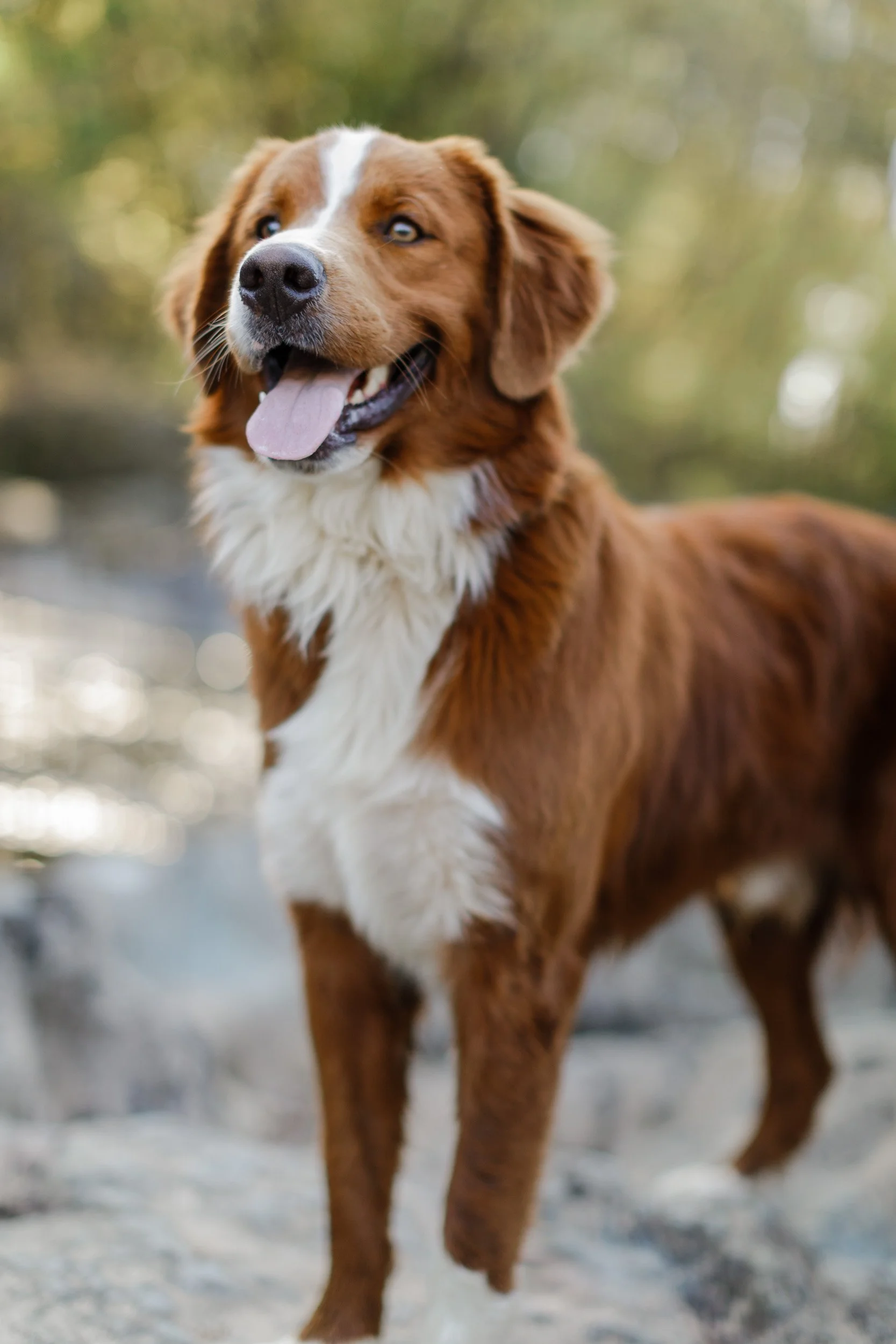
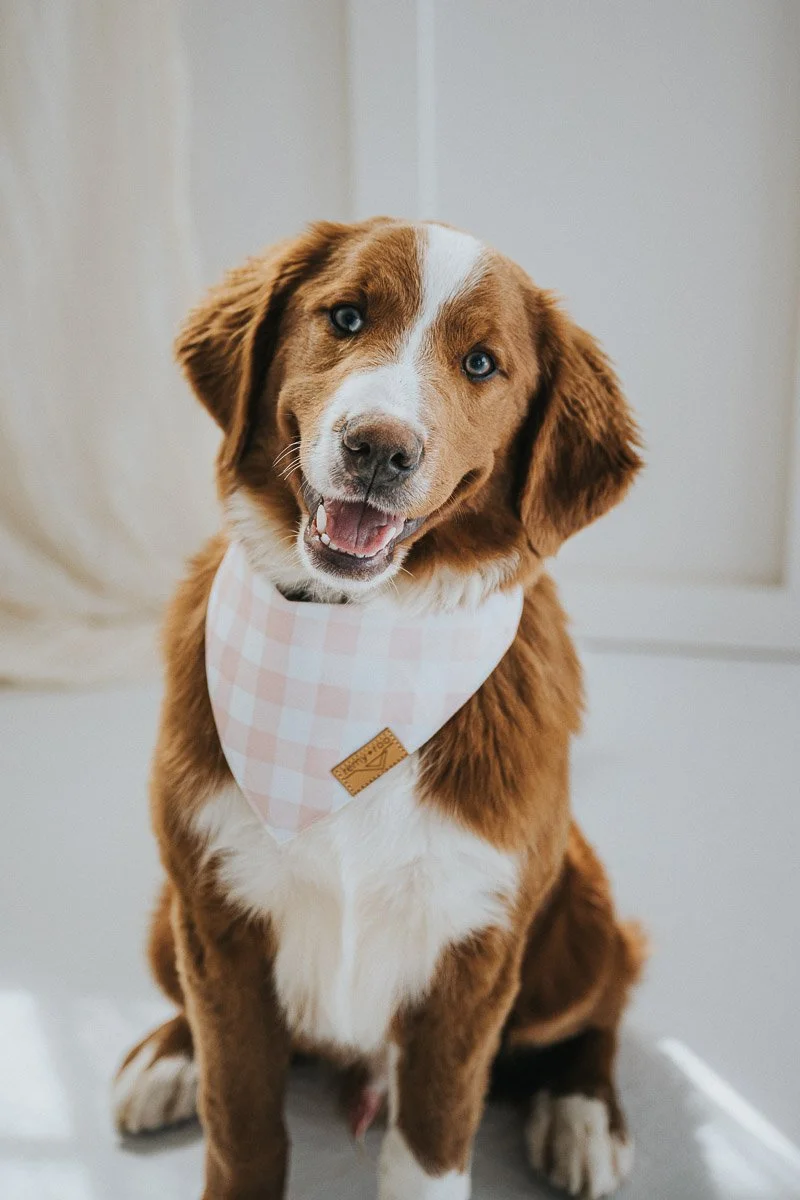
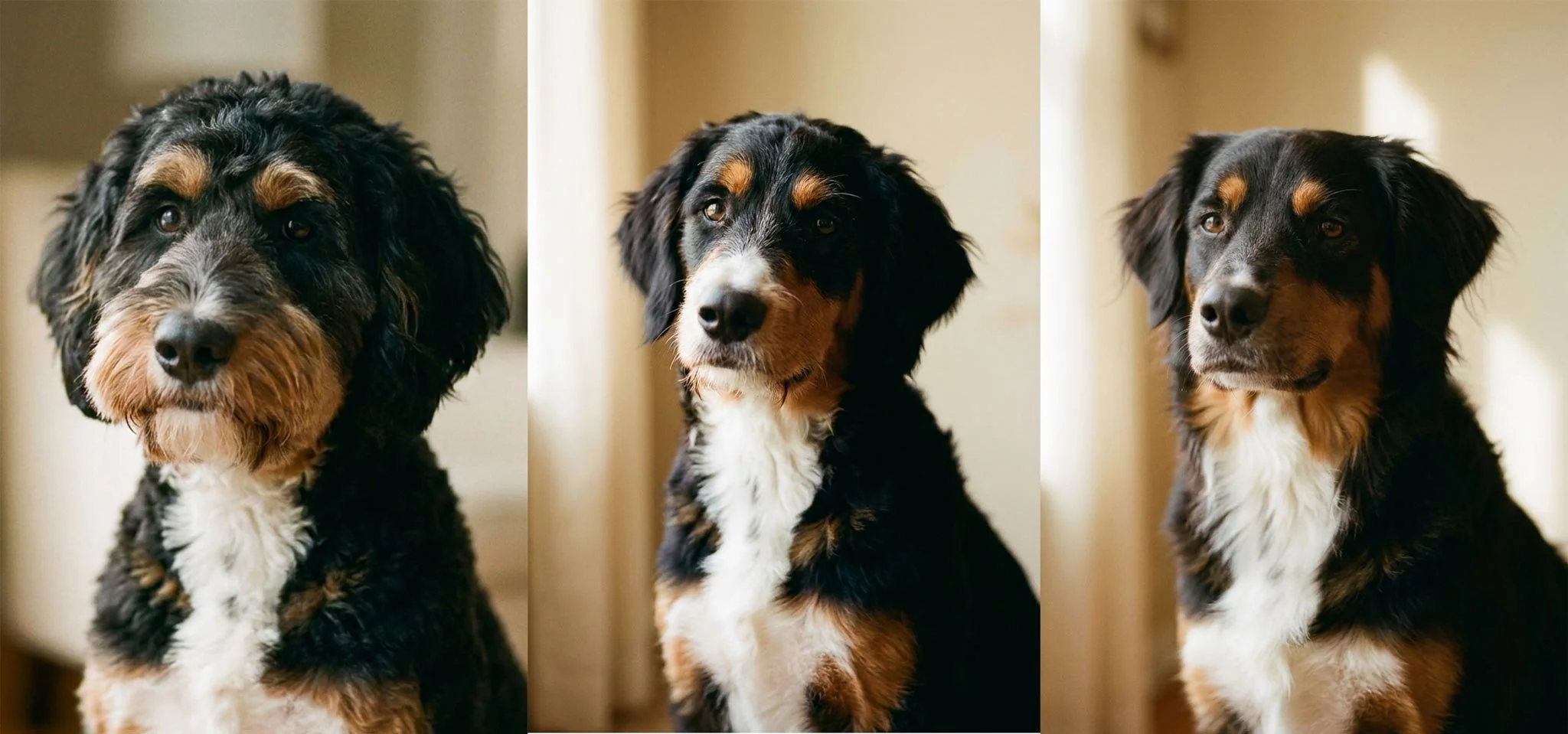
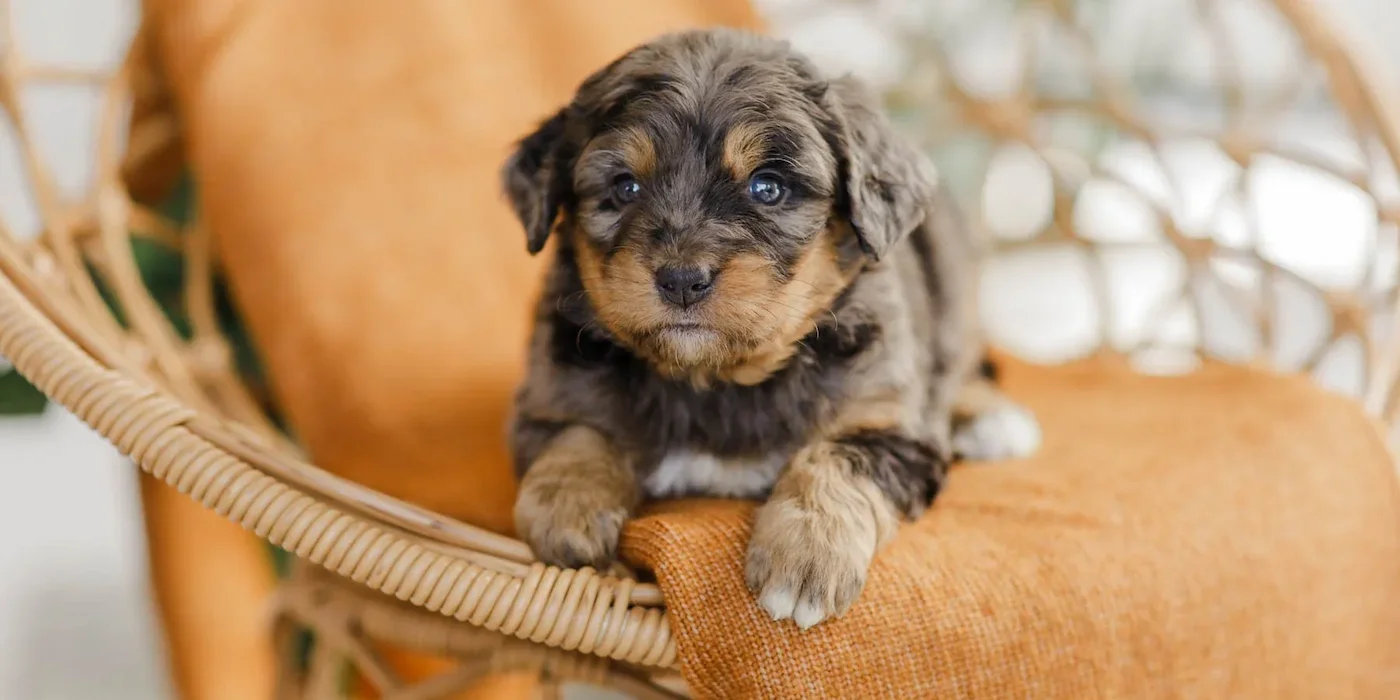
George is an F2 Bernedoodle from the Stokeshire program. He is unfurnished, red merle, and one of the clearest visual examples we have of what an IC/IC genotype looks like in an adult dog. His face is smooth from the eyes down. His expression is direct and uninterrupted by facial hair. The merle pattern across his coat is fully visible because there is no beard or mustache to break the lines of his head.
George is a textbook case for the kind of buyer who arrives at Stokeshire wanting a Bernedoodle but is open to the unfurnished phenotype once they understand what it offers: a striking, distinctive presentation that does not look like every other doodle on the trail, paired with the same temperament, intelligence, and longevity advantages of any well-bred Bernedoodle from a tested program. He is not a "discounted" Bernedoodle. He is a deliberately matched companion for a family that wanted exactly what he is.
Furnished and Unfurnished Doodles, Side by Side
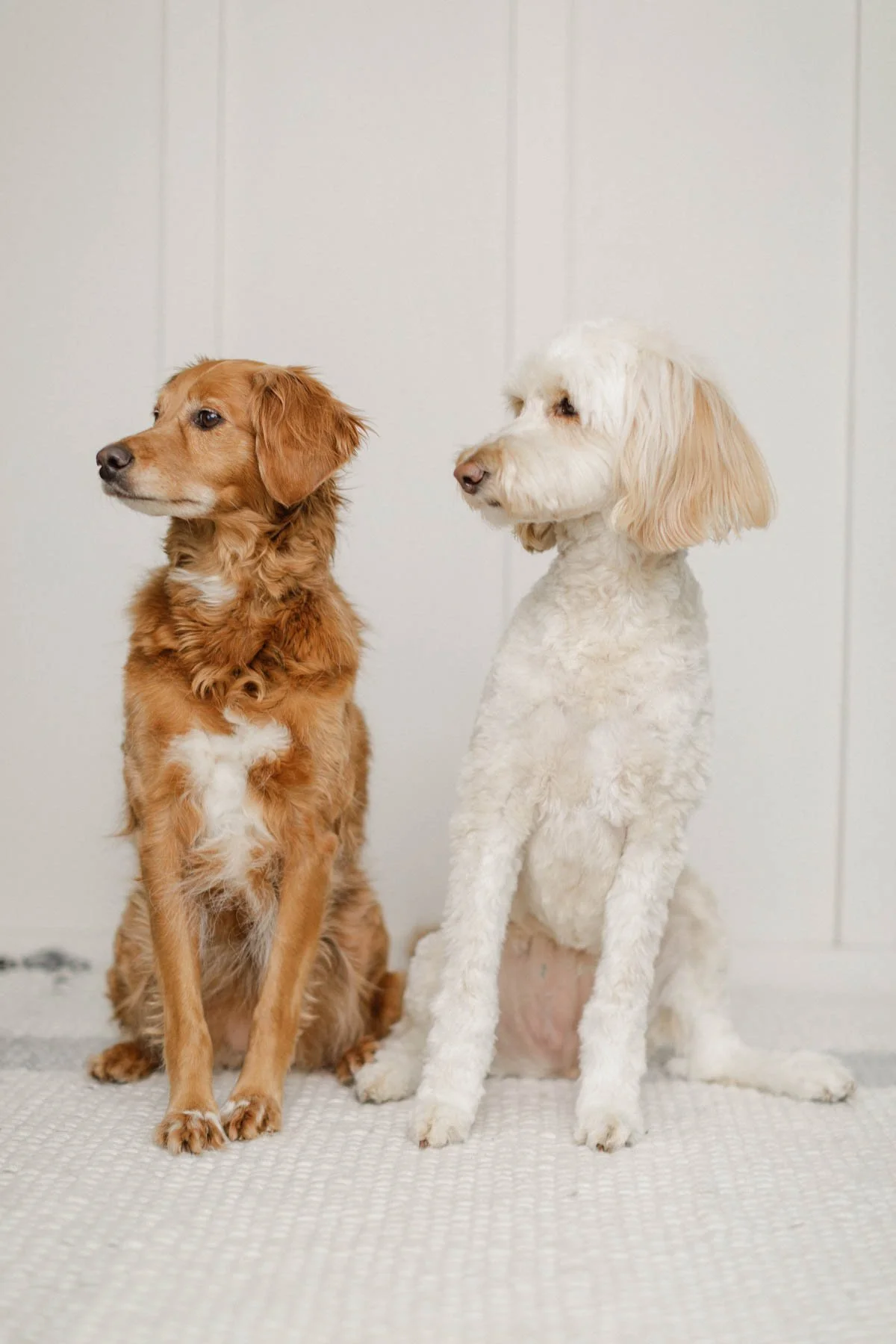
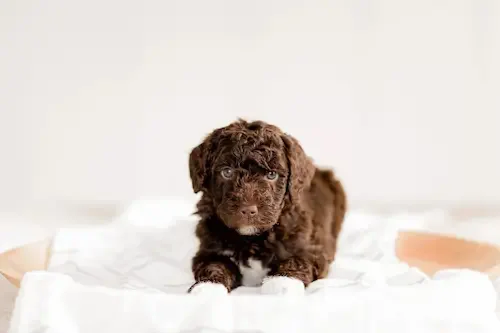
The visual difference between furnished and unfurnished doodles is immediately apparent in side-by-side photographs. The smooth muzzle, sleek facial planes, and absence of beard create a notably different presentation from the traditional doodle aesthetic.
Unfurnished Doodle FAQs
What is an unfurnished doodle?
Is an unfurnished doodle the same as an improper coat?
Will an unfurnished doodle shed?
Are unfurnished doodles hypoallergenic?
How can I tell if a doodle puppy is unfurnished?
Can two furnished parents produce unfurnished puppies?
Are unfurnished doodles cheaper than furnished doodles?
Do unfurnished doodles need professional grooming?
What is the difference between an unfurnished doodle and a flat coat doodle?
Does Stokeshire breed unfurnished doodles?
Are unfurnished doodles healthier than furnished doodles?
Should I be suspicious of a breeder marketing a "rare smooth doodle"?
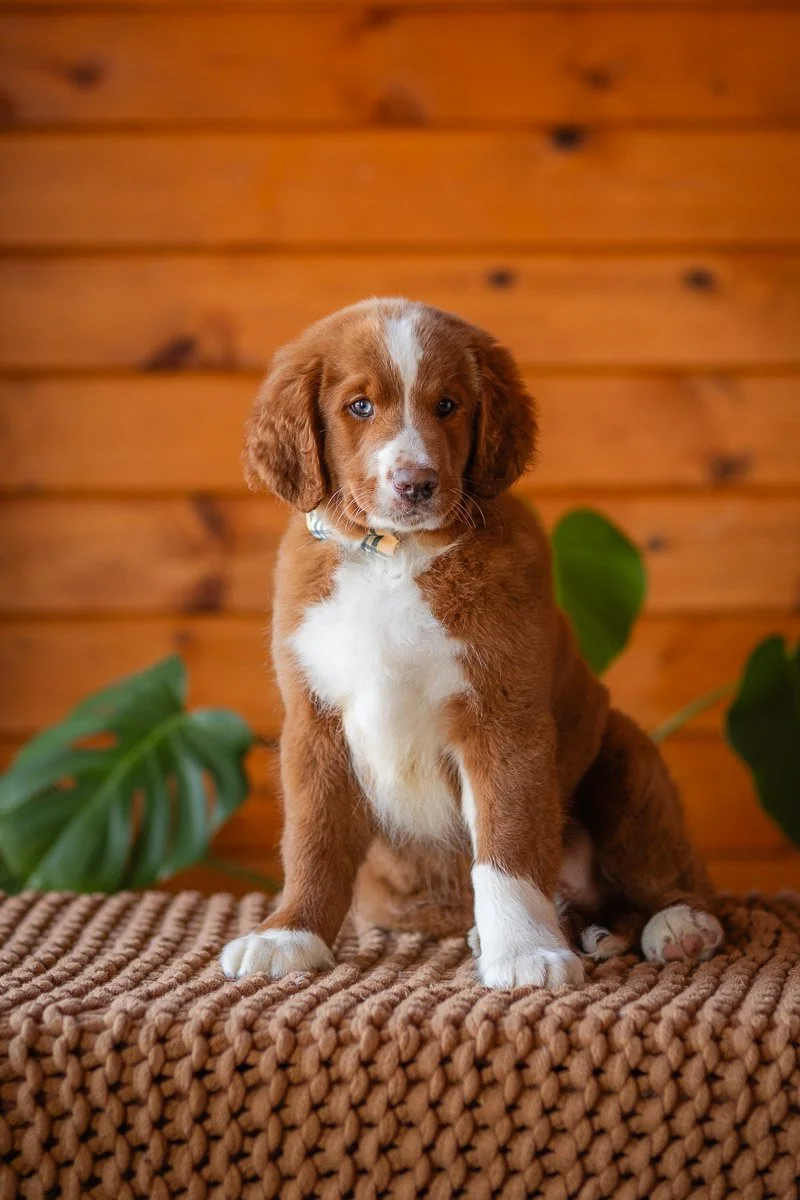
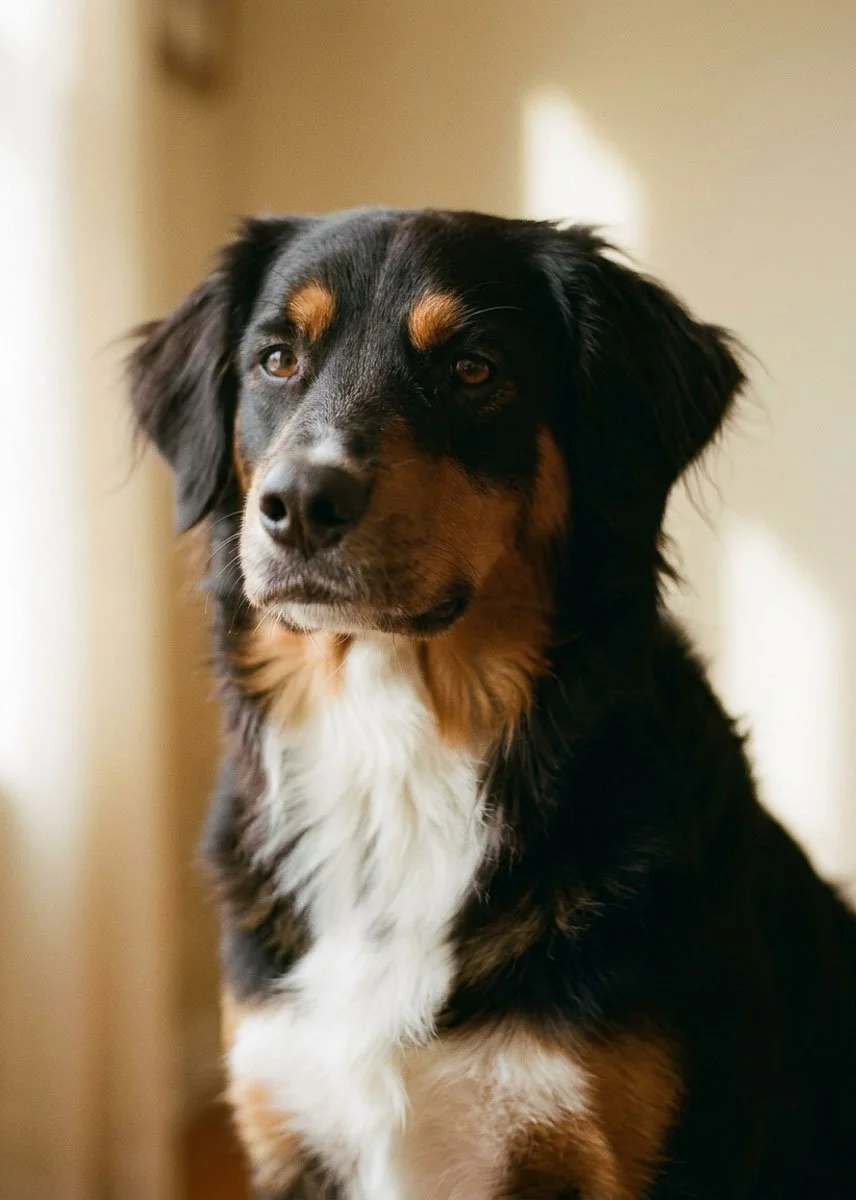
F2 Unfurnished Bernedoodle
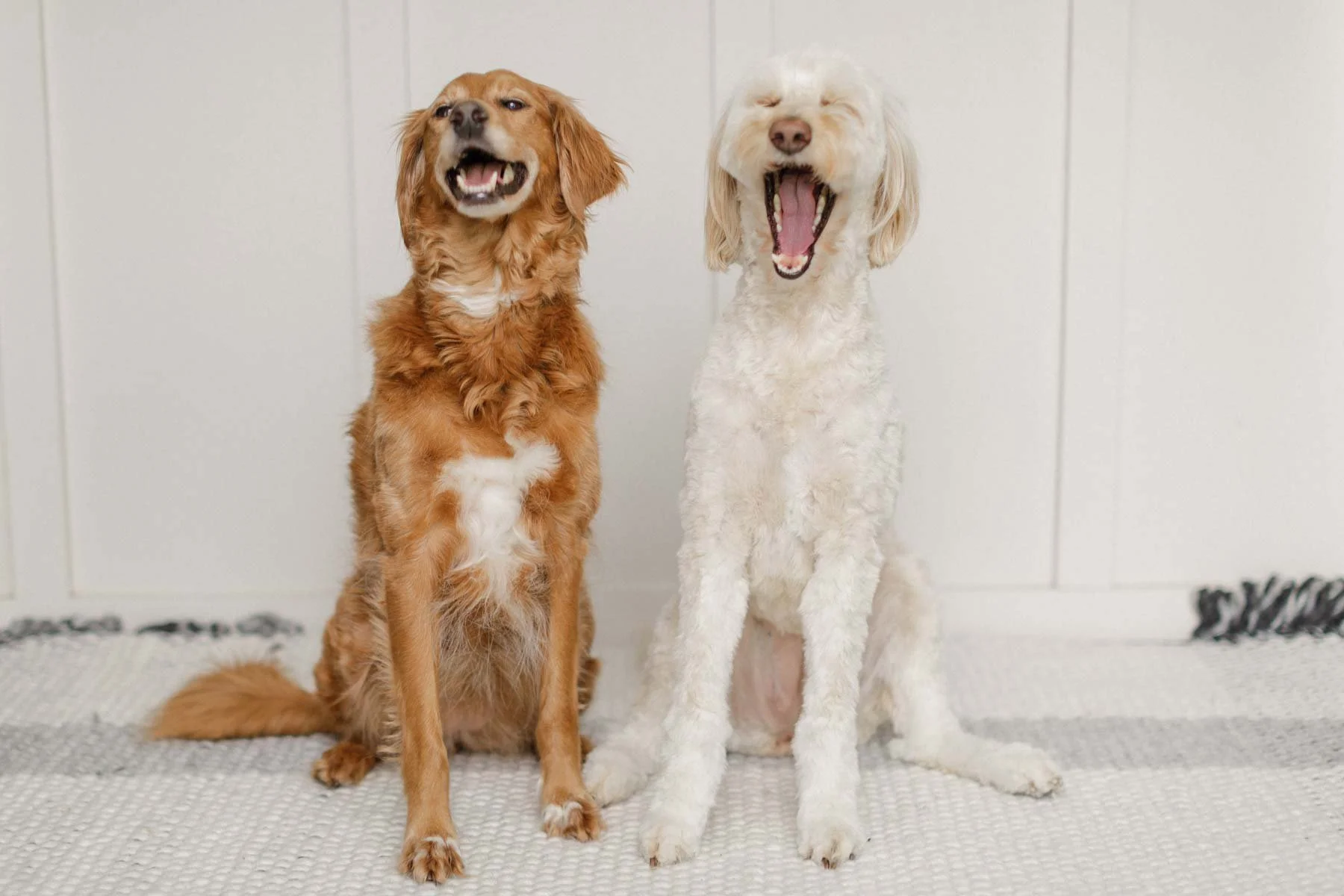
Unfurnished vs. Furnished Doodles
Two doodle dogs sitting side by side, one with a smooth face and flat coat and the other with a curly coat and facial furnishings.
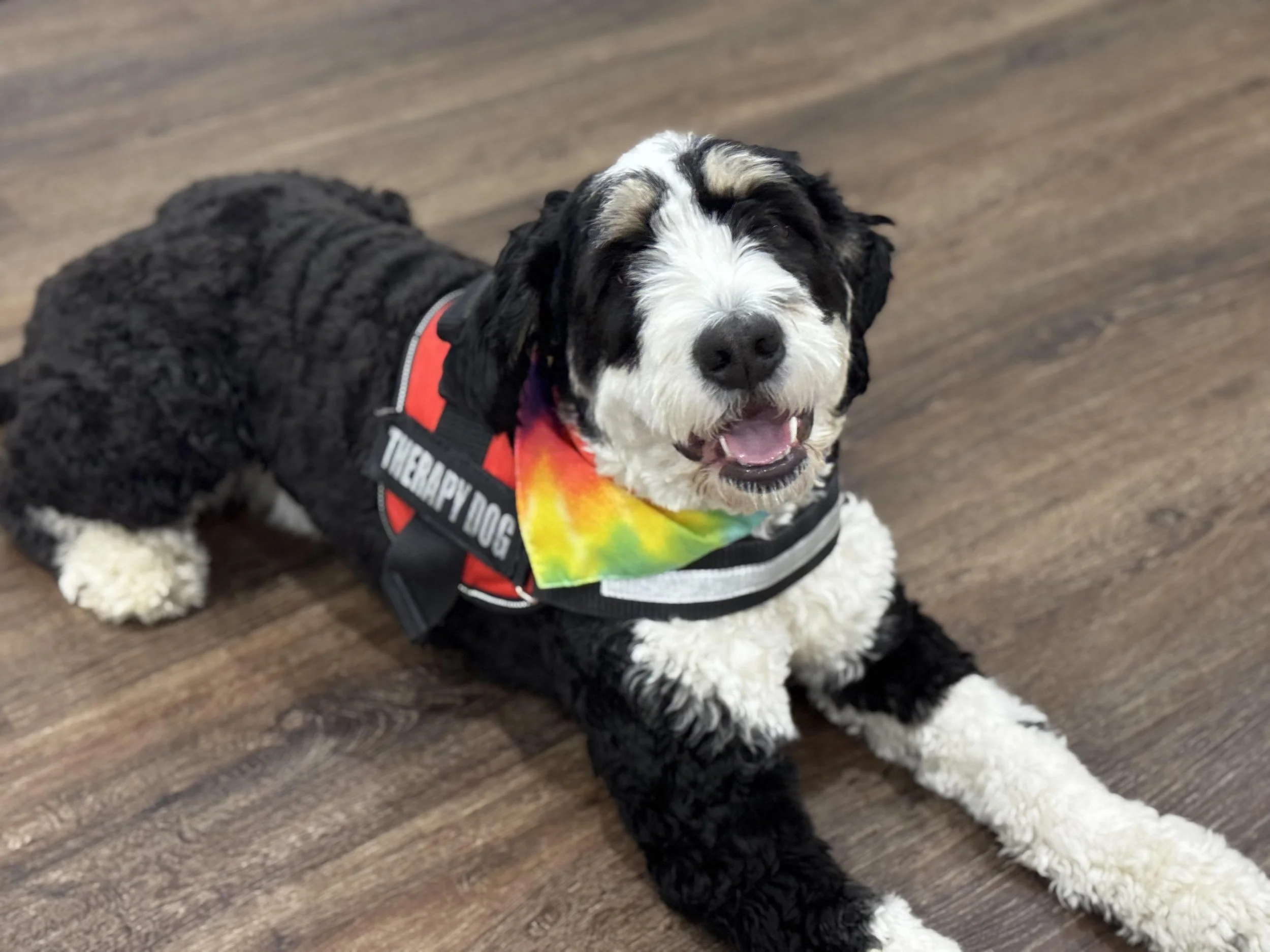
Furnished - low shedding - requires grooming
Unfurnished - shedding, lower allergy potential
-
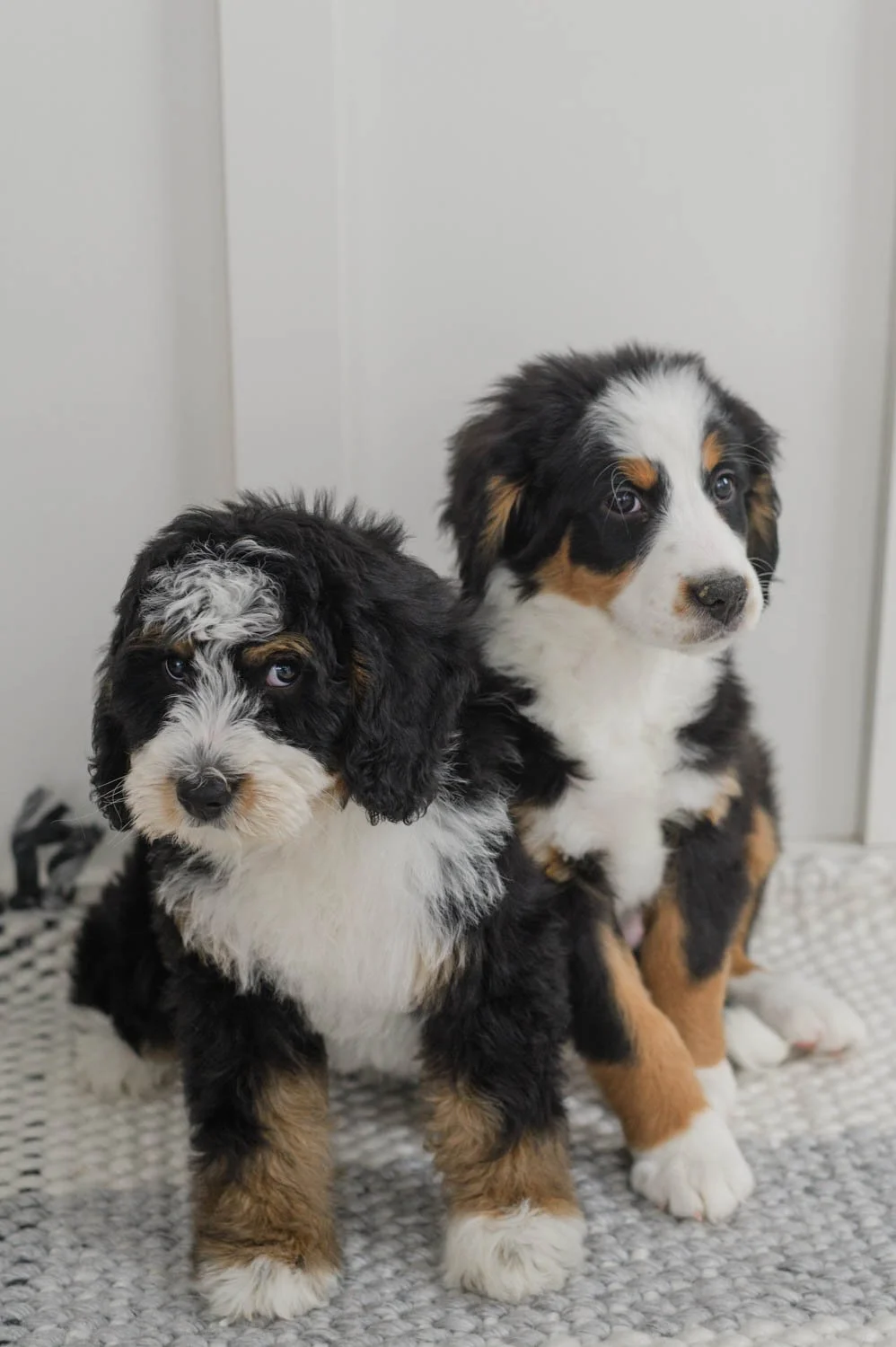
An unfurnished doodle lacks the typical facial hair—such as the mustache, beard, and eyebrows—found in most doodles. This results in a smoother-faced appearance, often resembling the non-Poodle parent breed, like the Bernese Mountain Dog or Golden Retriever. This coat type is also referred to as an "improper coat" or "flat coat."
-
Generally, yes. Unfurnished doodles tend to shed more than their furnished counterparts. However, they typically shed less than the non-Poodle parent breed. The shedding level can vary based on genetics and coat type.
-
Unfurnished doodles are less hypoallergenic compared to furnished doodles. The absence of furnishings means they may release more dander and hair, which can affect individuals with allergies.
-
Unfurnished doodles are lower maintenance in terms of grooming. Their coats don't require frequent professional grooming sessions, leading to significant cost savings—ranging from $400 to $1,000 annually.
-
Yes, an unfurnished doodle can have a curly coat. The presence or absence of furnishings is determined by the RSPO2 gene, which affects facial hair, not the curliness of the coat.
-
Unfurnished puppies typically have smooth faces without the fluffy facial hair seen in furnished doodles. Genetic testing can also determine the presence or absence of the furnishings gene.
-
Unfurnished doodles may not be the best choice for individuals with severe allergies due to their higher shedding and dander release. Furnished doodles are generally more suitable for allergy sufferers.