
Compact.
Capable.
Connected.
A working herding breed in a portable frame. Intelligent, athletic, and deeply bonded to its people. At Stokeshire, the Miniature American Shepherd is the foundation genetics behind some of our most responsive companion lines.
The Miniature American
Shepherd is a distinct breed,
not a downsized Aussie.
It is a common assumption that the Miniature American Shepherd is simply a smaller Australian Shepherd. It is not. While the two share a direct ancestral bond, the Miniature American Shepherd was developed by selecting naturally smaller, structurally sound individuals, not by introducing toy breeds or selecting for dwarfism.
The breed was formally recognized by the American Kennel Club in 2015 as a distinct member of the Herding Group, with its own standard and breed identity.
This guide explains the breed honestly: its intelligence, its work ethic, its shedding, its herding instinct, its health considerations, and the role it plays inside the Stokeshire program.
Breeders chose smaller, structurally correct Australian Shepherd lines that preserved herding drive, athletic stamina, and cognitive acuity in a more portable frame. The goal was never to simply make an Aussie smaller.
Recognized by the AKC in 2015 within the Herding Group. The breed standard places strict limits on height to preserve its distinct identity, and prioritizes structural correctness over rare eye colors or extreme size.
We use Miniature American Shepherd genetics within select hybrid programs. This page is breed education, not a purebred sales page. It exists to help families understand the breed behind several of our companion lines.
A compact working dog: intelligent, loyal, athletic, and deeply attached to its people, bred for around 12 to 15 years of active companionship in the right home.
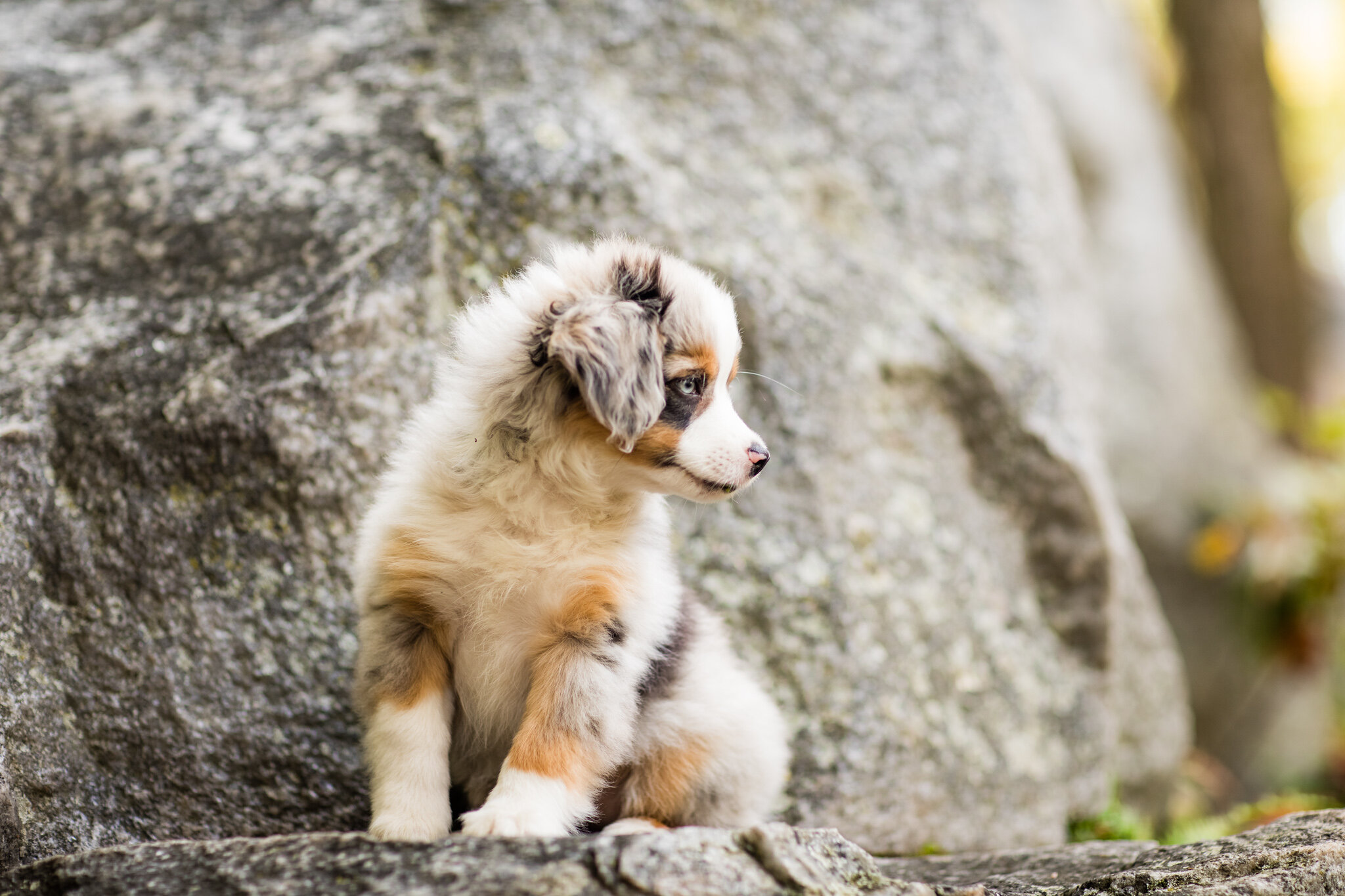
People come to Stokeshire for our doodles and our mountain dogs. Fewer ask why those dogs are as responsive, focused, and emotionally connected as they are. A meaningful part of that answer is the Miniature American Shepherd.
We do not chase the breed for novelty. We value it for what it brings to a pedigree: focus, trainability, athletic structure, handler connection, and a working resilience that is difficult to replace. When that foundation is paired thoughtfully with complementary breeds, the result is a steadier, more capable companion.
The pages below explain the breed honestly, the brilliance and the work it requires, and how its genetics shape several of our lines. If you love the intelligence and loyalty of this breed but need a different coat or a calmer temperament, we will tell you that plainly, and point you to the right Stokeshire option.
How a sensitive,
intelligent breed is raised right.
From day three through sixteen of life, puppies receive a structured five-exercise protocol of mild, controlled handling. Research associates this early work with improved stress tolerance and resilience.
Puppies are systematically exposed to varied surfaces and sounds, from metal grates and grass to thunder, vacuums, and household noise, building neutrality before they ever leave for home.
Because this breed can be naturally reserved, early, careful exposure to people, handling, car rides, and crate foundations is the single most important factor in preventing fear-based reactivity.
Each puppy is assessed using the Volhard Puppy Aptitude Test alongside Stokeshire-specific criteria, so families are matched to the puppy most likely to thrive in their actual home, not the flashiest one in the litter.
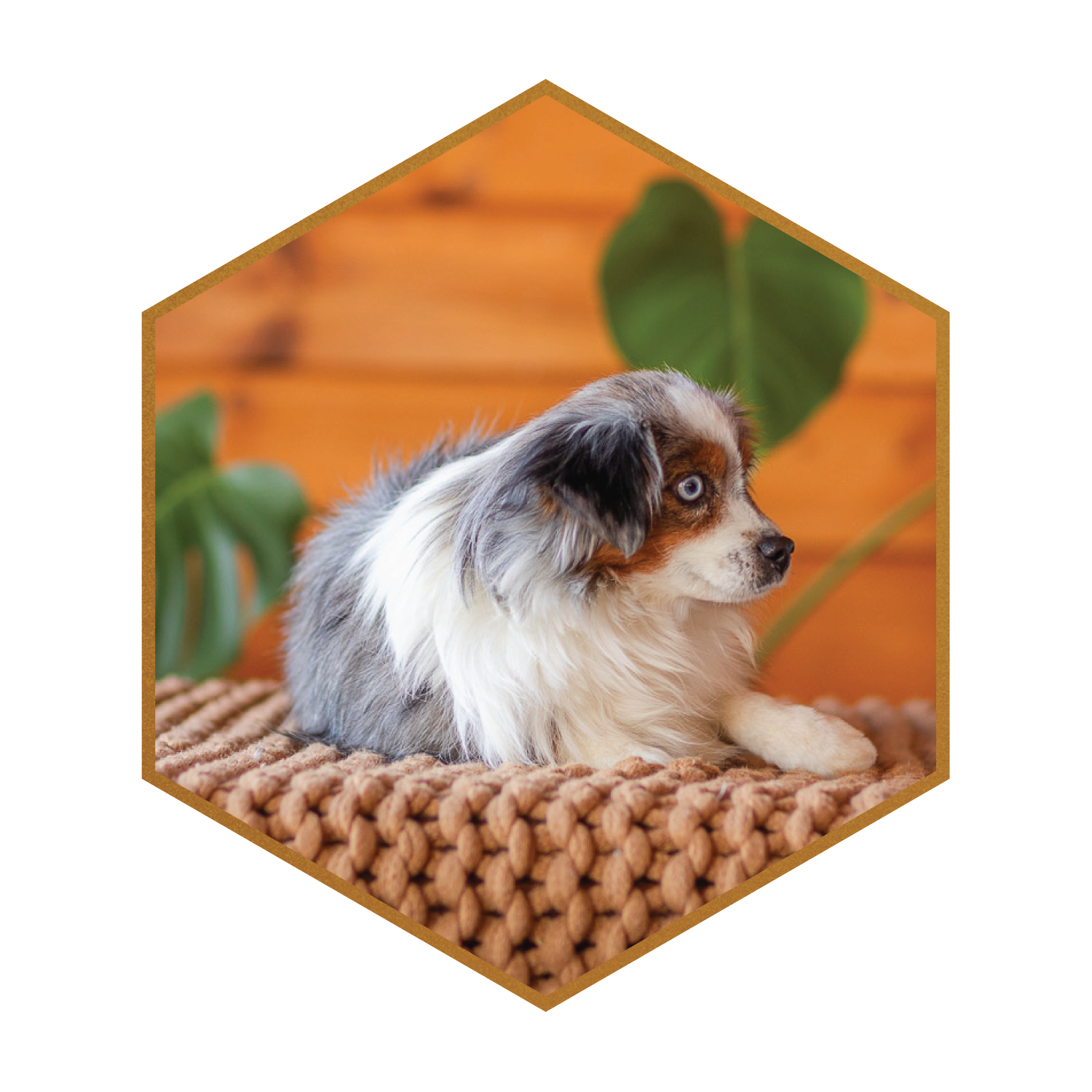
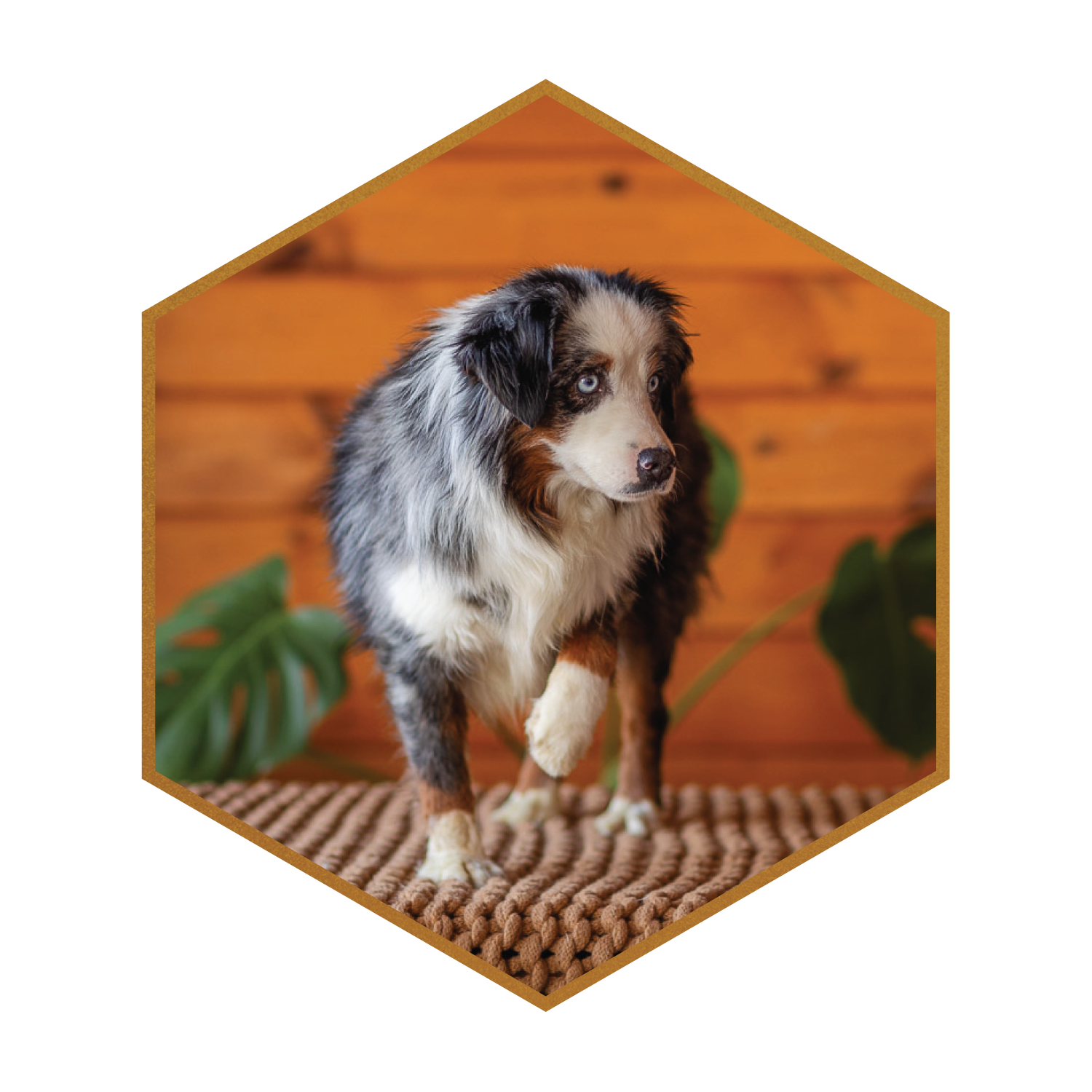
The dogs behind the lines.
Miniature American Shepherds in the Stokeshire program, selected for structure, temperament, and working heritage.
Where the Miniature American
Shepherd comes from.
The Miniature American Shepherd developed from smaller Australian Shepherds used in American ranch, rodeo, and equestrian environments. Horse and livestock handlers valued a compact herding dog that could work all day, travel easily, and live closely with people.
Originally known to many as the Miniature Australian Shepherd, the breed was renamed Miniature American Shepherd as it moved toward formal recognition, reflecting its development in the United States and distinguishing it from the standard Australian Shepherd.
At a
Glance
Its history matters because the breed was not created to be a passive lapdog. It was built from working stock, and that heritage still shapes its temperament, instincts, and daily needs today.
What the breed
looks like.
Males 14 to 18 inches, females 13 to 17 inches. Typically 20 to 40 pounds.
Medium-length, weather-resistant double coat. Sheds year-round with heavier seasonal coat changes.
Black, blue merle, red, and red merle, often with white markings and copper-tan points.
Slightly longer than tall. Strong, balanced, and athletic with moderate bone. Structure prioritized over novelty.
Brilliant, loyal,
and not for everyone.
The Miniature American Shepherd is often described as a shadow dog. It bonds deeply, follows its people from room to room, and reads household patterns closely. That connection is the breed's greatest strength, and the reason it needs thoughtful training and socialization.
The breed can be an excellent family dog for an active, involved home. The honest caution is that herding instincts are real. When children run, scream, or play fast-moving games, the dog may instinctively try to control that movement through circling, barking, or heel nipping. This is herding behavior, not aggression, but it must be redirected early.
For families who love the intelligence and loyalty of the breed but need a calmer temperament or a lower-shedding coat, a thoughtfully bred Australian Mountain Dog or Australian Mountain Doodle is often a better fit.
Rapid learner and problem solver. Excellent fit for structured training.
Forms deep attachments. Thrives when included in daily life rather than left isolated.
Needs 60 to 90 minutes of structured activity daily, paired with mental work.
Alert and observant. Early socialization is essential to prevent fear-based reactivity.
Bred responsibly,
screened thoroughly.
The Miniature American Shepherd is generally a healthy and resilient breed, often living around 12 to 15 years. To preserve that vitality, responsible breeders screen breeding stock with orthopedic, ophthalmologic, and genetic testing before any pairing. Buyers should always review the health clearances of both parents and consult their veterinarian on breed-specific care.
Hip dysplasia and patellar luxation. Screened with OFA or PennHIP evaluation.
Progressive retinal atrophy and hereditary cataracts. Screened with DNA testing and CAER exams.
Neuroaxonal dystrophy (NAD1). DNA testing ensures carriers are never paired together.
MDR1 mutation, common in herding breeds. Status should be known and shared with your veterinarian.
MDR1 is a genetic drug sensitivity affecting the ABCB1 gene, common in herding breeds. Dogs carrying the mutation may have impaired ability to clear certain medications from the brain and body, which can make some drugs dangerous at standard doses.
This does not mean affected dogs cannot live full, healthy lives. Many do. It means the dog's MDR1 status should be known and shared with your veterinarian so medications can be chosen appropriately. Responsible breeders test breeding dogs and pair carriers only with tested-clear individuals, preserving genetic diversity while avoiding affected puppies.
Where these genetics
go at Stokeshire.
We use Miniature American Shepherd genetics as part of select hybrid programs, contributing intelligence, athleticism, and handler connection. If you love this breed but want a lower-shedding coat or a steadier temperament, one of the lines below may be the better match.
Shepherd intelligence paired with Poodle coat genetics, often furnished and lower-shedding. A responsive, active companion for allergy-conscious homes.
Explore the breedShepherd focus and agility tempered by Bernese steadiness and structure. Calmer at rest, less motion-sensitive than the purebred breed.
Explore the breedShepherd connection with Bernese softness and Poodle coat potential. A companion-focused, lower-shedding option for therapy-minded families.
Explore the breedFind your
right match.
Not sure whether a shepherd-influenced line, a Mini Aussiedoodle, an Australian Mountain Dog, or an Australian Mountain Doodle is right for your family? Start with a placement request and tell us about your home, lifestyle, children, allergies, and temperament goals.
Begin Your Placement RequestIs a Miniature American Shepherd the same as a Mini Aussie?
Many people use the phrase Mini Aussie casually, but the Miniature American Shepherd is a formally recognized breed with its own breed identity. It developed from smaller Australian Shepherd lines but is now considered distinct.
Do Miniature American Shepherds shed?
Yes. Miniature American Shepherds have a double coat and shed year-round, with heavier seasonal shedding. They are not considered low-shedding dogs.
Are Miniature American Shepherds hypoallergenic?
No. No dog is truly hypoallergenic, and Miniature American Shepherds are not a good choice for families needing a low-shedding coat. A furnished Mini Aussiedoodle or Australian Mountain Doodle may be a better option for allergy-conscious homes.
Are Miniature American Shepherds good with kids?
They can be excellent with children when well-bred, well-socialized, and properly trained. However, their herding instinct can cause them to chase, circle, bark at, or nip running children, so families should supervise play and train early.
How much exercise does a Miniature American Shepherd need?
Most adult Miniature American Shepherds need at least 60 to 90 minutes of structured activity per day, plus mental enrichment. They need more than a quick potty walk or time alone in the yard.
Are Miniature American Shepherds easy to train?
They are highly trainable, but they need consistency. They learn quickly, including behaviors you may not intend to teach. Positive, structured training works best.
Do Miniature American Shepherds bark a lot?
They can be vocal, especially if under-socialized, bored, anxious, or allowed to rehearse alert barking. Early training and proper enrichment help reduce nuisance barking.
What is MDR1 in Miniature American Shepherds?
MDR1 is a genetic drug sensitivity found in many herding breeds. Dogs with MDR1 sensitivity may react dangerously to certain medications. Responsible breeders should know the MDR1 status of their dogs, and owners should share that information with their veterinarian.
What is the difference between a Miniature American Shepherd and a Mini Aussiedoodle?
A Miniature American Shepherd is a purebred herding dog with a shedding double coat. A Mini Aussiedoodle is a hybrid with Poodle influence, often bred for a lower-shedding furnished coat and companion temperament.
Which Stokeshire breed is best if I like the Miniature American Shepherd but want less shedding?
A Mini Aussiedoodle or Australian Mountain Doodle may be a better fit if you want shepherd intelligence with lower-shedding coat potential. The best match depends on your family, activity level, allergies, and temperament goals.
What ownership
actually looks like.
Grooming & Coat
- BrushingOne to two times weekly, more during seasonal shedding.
- BathingEvery 4 to 8 weeks, dried thoroughly to the skin.
- Routine CareNails every 2 to 3 weeks, weekly ear checks, regular dental care.
- No ClippingDoes not require professional clipping like a doodle coat.
Exercise & Enrichment
- Activity60 to 90 minutes of structured daily exercise.
- Mental WorkAgility, scent work, training games, and puzzle feeders.
- PuppiesAge-appropriate exercise to protect developing joints.
- Herding DriveRedirect chasing into appropriate, structured outlets.
Ideal Home
- Active HouseholdsHiking, training, sport, and outdoor families.
- Engaged OwnersPeople who want a dog involved in daily life.
- Not IsolationStruggles when left alone 8 to 10 hours daily.
- Shedding-TolerantComfortable with a year-round double coat.
If you would prefer to speak with someone before submitting a placement request, schedule a virtual call. We are happy to walk you through the process and answer your questions.
Schedule a CallIf you have not yet reviewed how placement works at Stokeshire, from application to Selection Day to go-home, the Process page is the best place to start.
How Placement WorksIf you would like to see what breeds and litter timelines are currently planned before submitting your request, our litter page is updated as pairings are confirmed.
Upcoming LittersIs a Toy Aussie the same as a
Mini American Shepherd?
Short answer: not officially. Toy Aussie and Toy Australian Shepherd are informal names people use for very small Aussie-type dogs. They are not recognized as a separate breed by major kennel clubs. The closest formally recognized breed is the Miniature American Shepherd, developed from smaller Australian Shepherd lines and recognized by the AKC in 2015.
So when a breeder advertises a Toy Aussie, they are usually describing a Miniature American Shepherd on the smaller end of the size range, or a small Aussie-type dog without formal breed standing. The dog itself is real. The label is marketing shorthand.
Informal term. Not a recognized breed or standard.
AKC-recognized in 2015. A distinct breed in the Herding Group.
The Toy Aussiedoodle is often the better fit.
The distinction matters because of how some breeders chase the word toy. Pushing size down aggressively to market a smaller dog can concentrate orthopedic and structural risk. At Stokeshire we prioritize joint health, sound structure, and stable temperament over extreme miniaturization. A correctly built small herding dog should still move soundly and live a full 12 to 15 years.
If you are drawn to a small, lower-shedding companion with shepherd intelligence, the Toy Aussiedoodle is usually the better match. It pairs Miniature American Shepherd intelligence with Poodle coat genetics for a compact, furnished, lower-shedding dog. For a slightly larger version, see the Mini Aussiedoodle. No dog is fully hypoallergenic, but furnished coats tend to suit allergy-conscious homes better than a double-coated shepherd.