Deposit for (Penelope + George) Furnished/Unfurnished Stokeshire
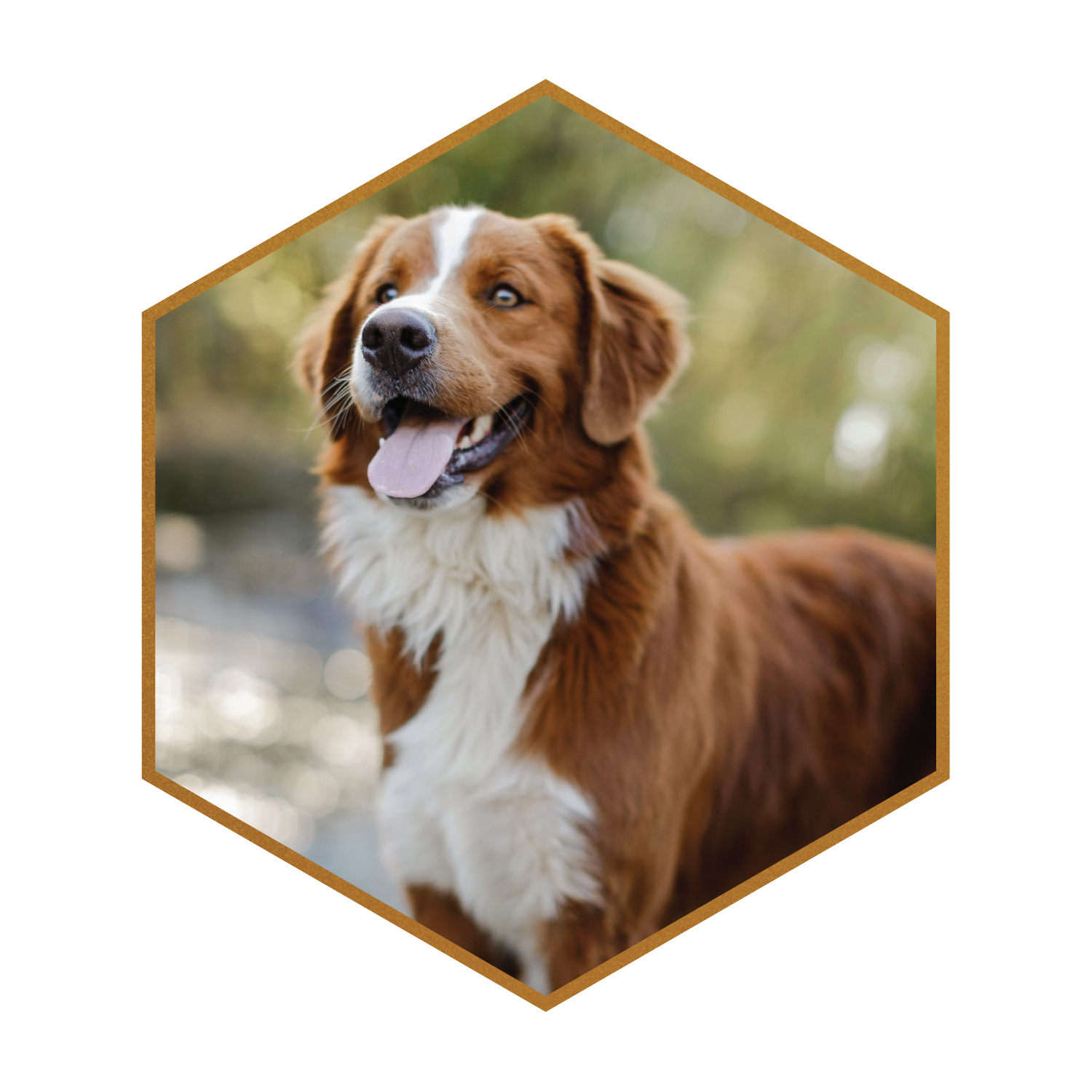

Deposit for (Penelope + George) Furnished/Unfurnished Stokeshire
This deposit ensures your spot on our official waitlist. First-pay, first-served basis.
WAITING ON PREGNANCY CONFIRMATION
21 August 2026 — Heat Start (Friday)
31 Aug – 01 September 2026 — Ovulation
01 & 03 September 2026 — Breeding (locks recorded)
04 November 2026 — Estimated Delivery
19 December 2026: Match Day » SCHEDULE
30–31 December 2026 — Estimated Take-Home Day
Estimated Adult Weight: 40–60 lbs
This cross yields Multigenerational Australian Mountain Doodles (AMD)
Balanced for temperament, structure, and coat manageability:
OFFICIAL WAITLIST
BREEDER’S CHOICE
OPEN (PICK OF LITTER 1)
OPEN (PICK OF LITTER 2)
OPEN
OPEN
OPEN
OPEN
Past Litter with Kodiak
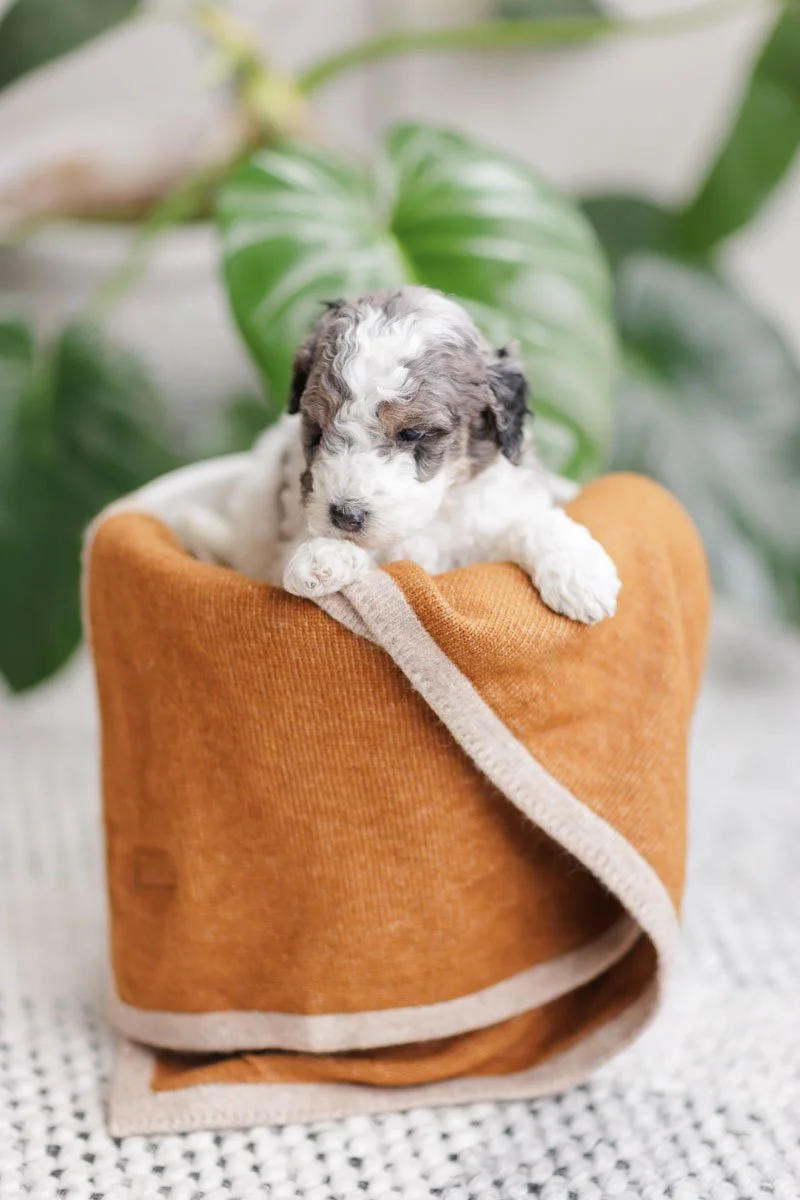
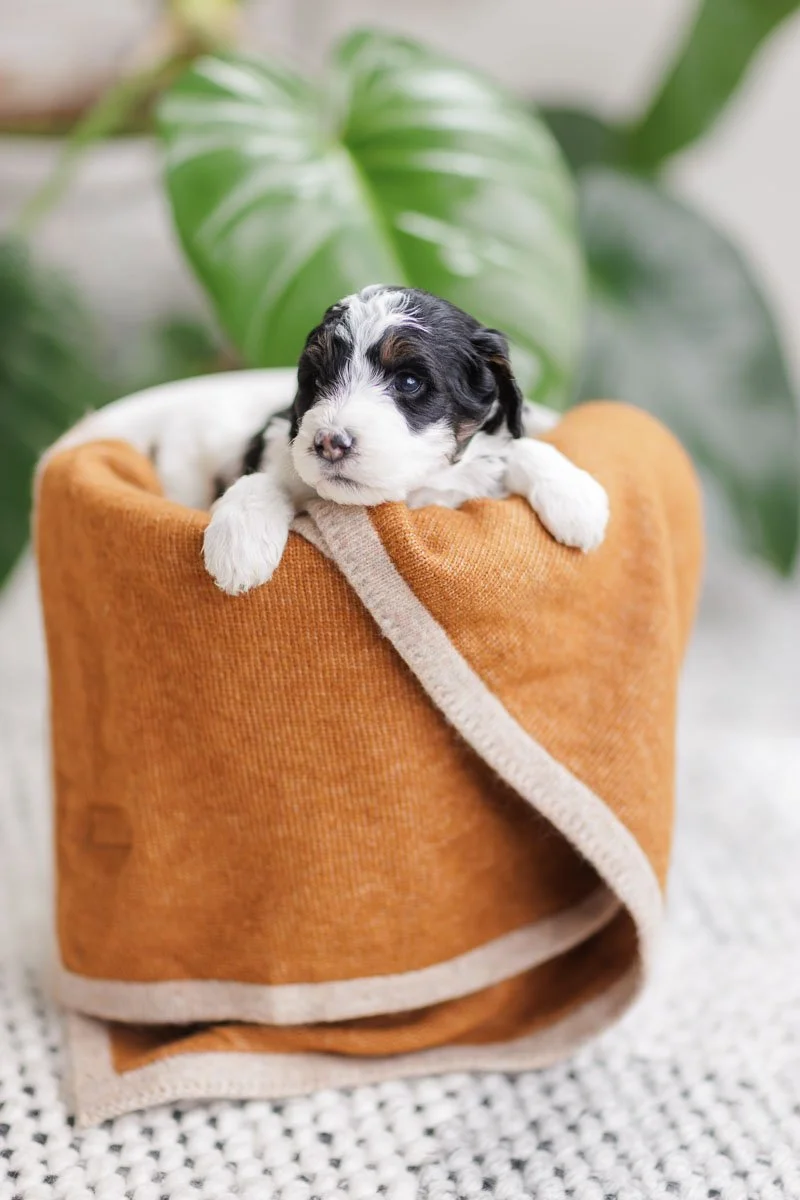
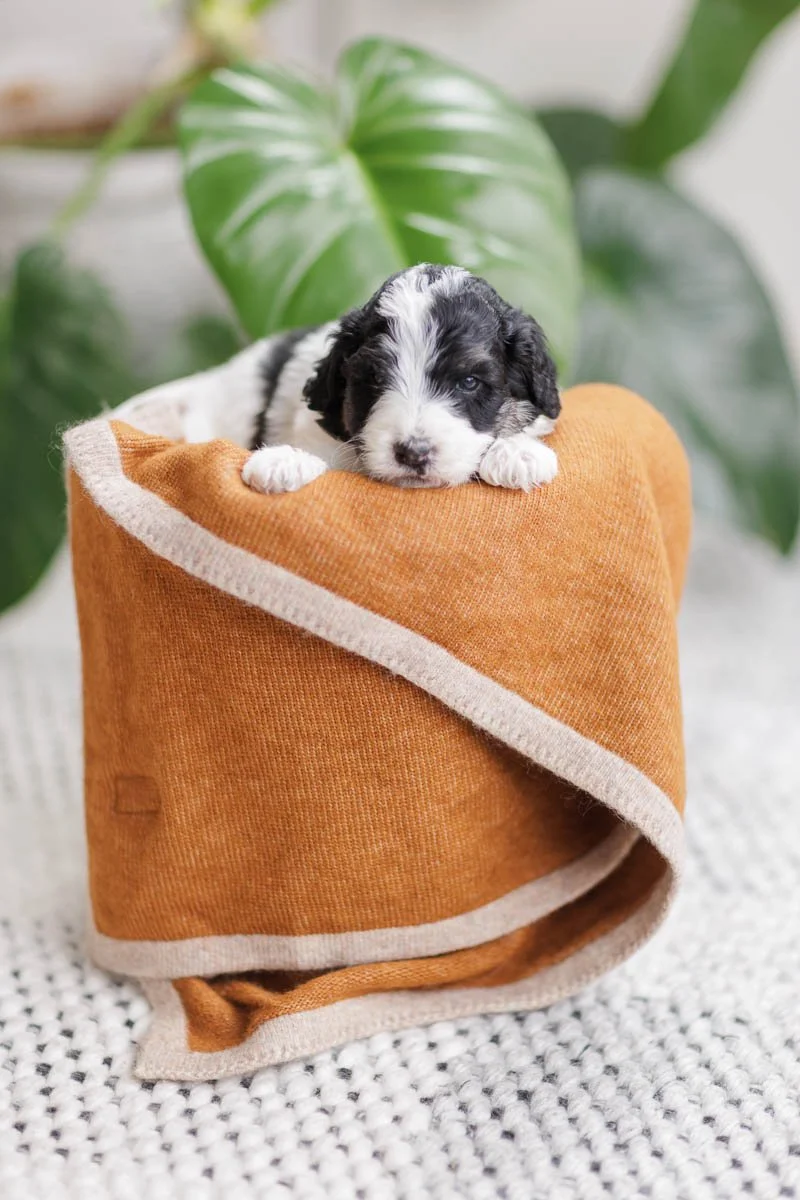
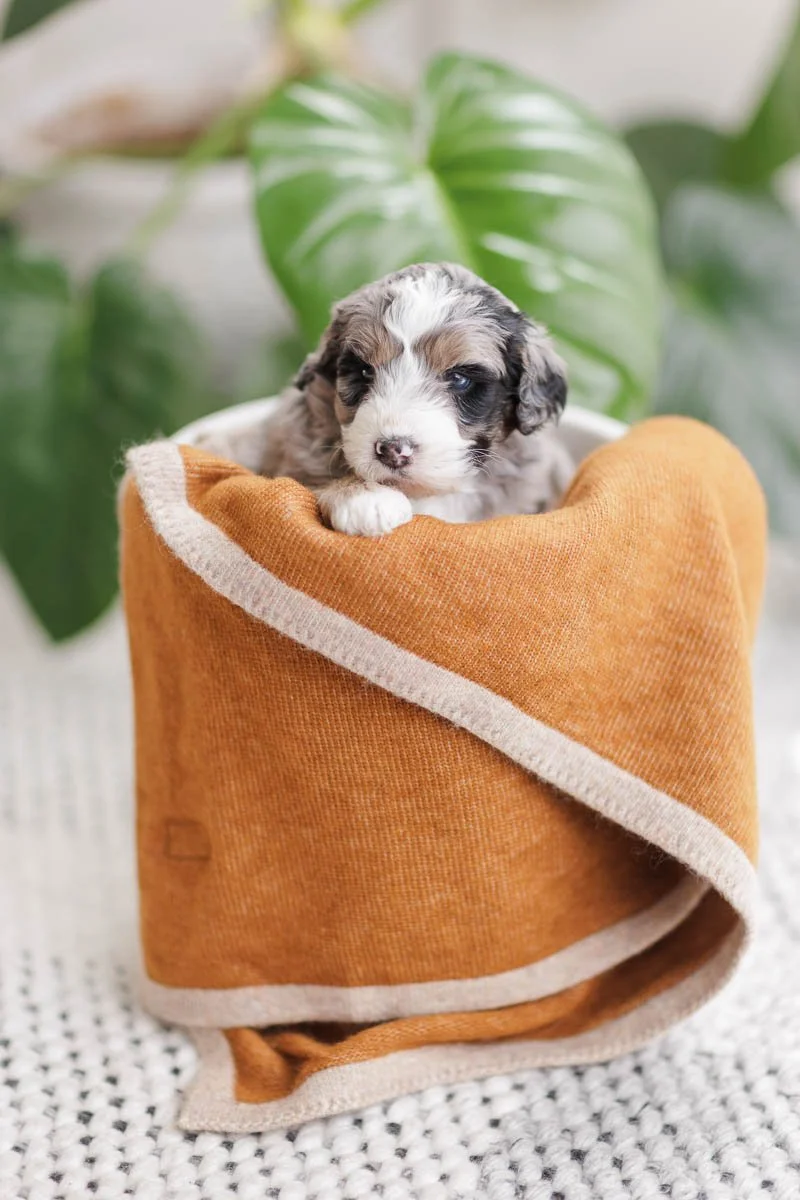
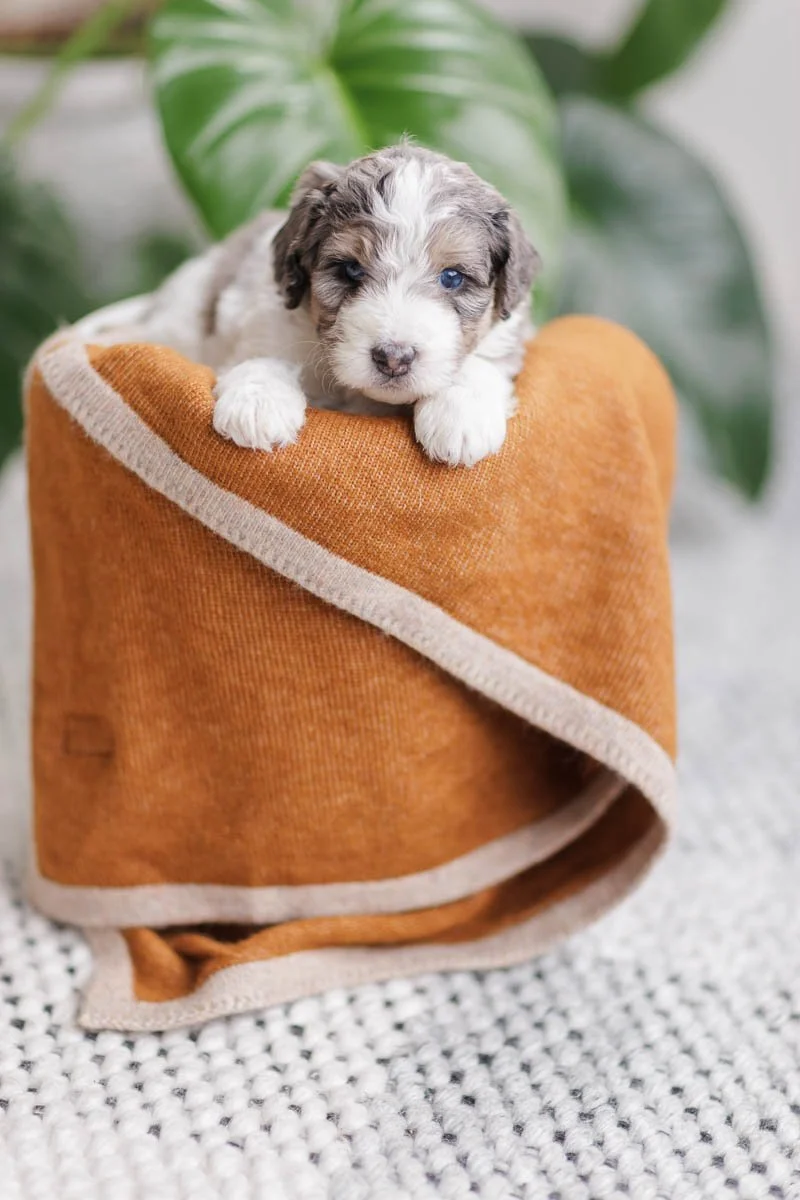
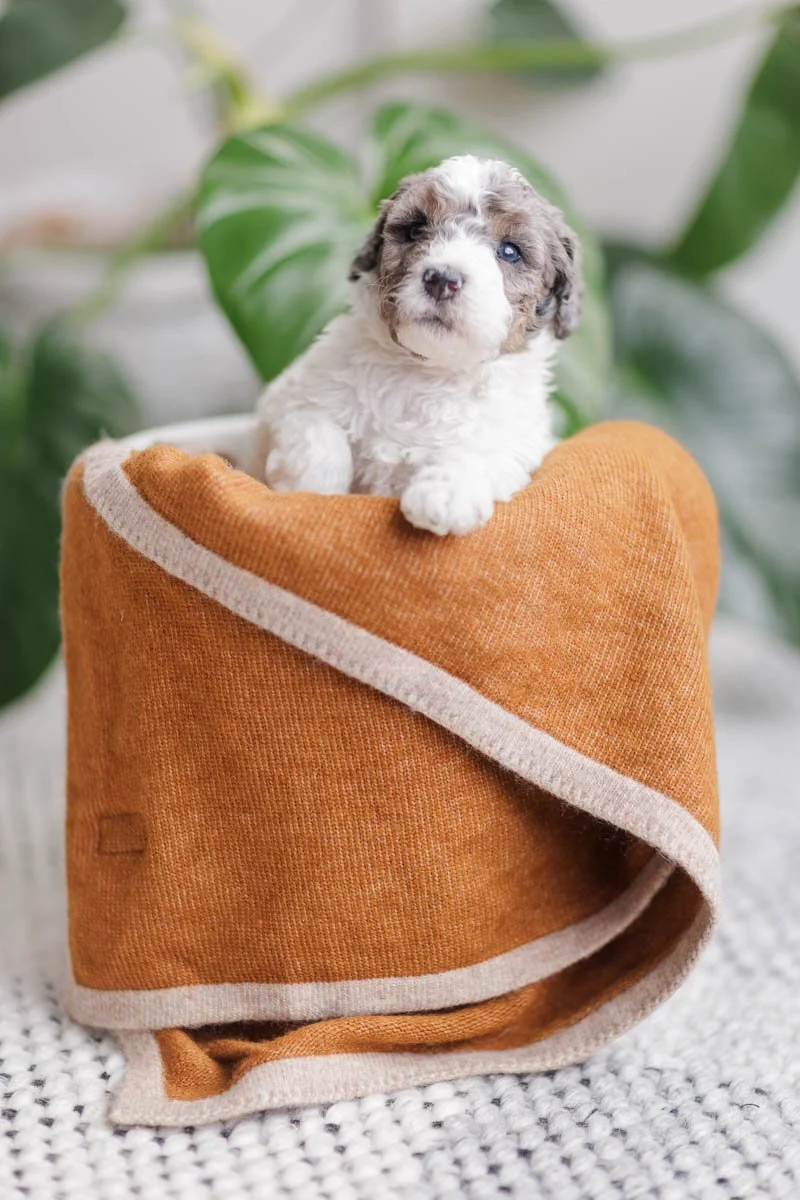
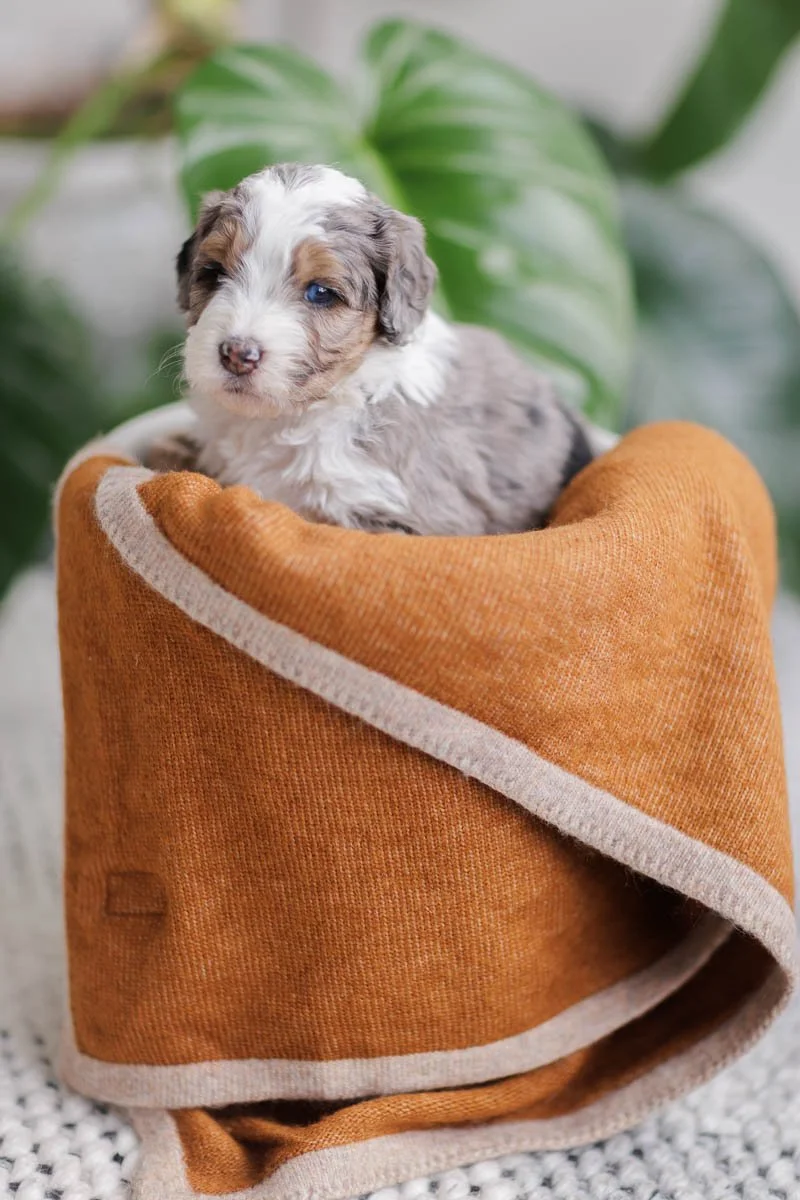
Stokeshire Pairing Profile
Penelope × George
We publish the whole panel, including the parts that cost us sales. Both parents' complete genetic results, the coat and color predictions this cross produces, and the two traits every family should understand before they apply. Read the coat section before anything else. This pairing does not produce a uniform litter.
- Cross
- F1Multigen Australian Mountain Doodle dam to Bernedoodle sire
- Expected Adult Weight
- 60 to 85 lbMid-parent 70 lb. A large dog, not a medium.
- Furnished Coat
- ~50%Roughly half this litter will be unfurnished
- Panel Results
- All ClearOne benign biomarker on the sire, detailed below
Health
Full genetic panels were run on both parents and are published here in full, before any puppy is placed.
Penelope
Dam
- Breed-relevant conditions
- 19 tested, 0 detected
- Additional conditions
- 251 tested, 0 detected
- Carrier status
- None
Clear across the board. No variant detected on any condition tested, including MDR1, which matters given her Australian Shepherd ancestry.
George
Sire
- Breed-relevant conditions
- 7 tested, 0 detected
- Additional conditions
- 263 tested, 0 detected
- ALT Activity (GPT)
- One copy
One copy of the ALT variant. This is not a disease and it is not a carrier status for one. Dogs with it run a lower baseline ALT, a liver enzyme measured on routine bloodwork. It matters only because a reading inside the normal range could still be elevated for that dog. Roughly half of this litter will inherit one copy. We disclose it so your veterinarian can read future bloodwork correctly.
Genetic testing does not diagnose disease and does not replace veterinary evaluation. Results reflect tested variants only. Discuss any result with a licensed veterinarian.
Inbreeding and Diversity
No Stokeshire pairing exceeds 15% estimated coefficient of inbreeding. We publish the figure on every pairing so it can be checked against the specific dogs being bred, not against a brochure average.
Parent COI
Genomic, measured
Pairing eCOI
Calculated on this cross
- Estimated litter eCOI
- [ PENDING ]
- Against the 15% ceiling
- [ PENDING ]
A litter eCOI is not the average of the parents' two figures. It is set by how much ancestry the two dogs share. Penelope and George are both about half Poodle and both carry Bernese, so the real number has to be calculated on the pair rather than inferred from the pieces.
Predicted Puppy Ancestry
Penelope is a multigen Australian Mountain Doodle. George is a first-generation Bernedoodle. Their puppies average out as follows.
The Litter
Expected composition
- Poodle 50.3%
- Bernese 36.3%
- Aussie 9.8%
- Mini Aussie 3.6%
Bernese content rises sharply against Penelope's own. She is 23.1% Bernese. George is 49.4%. Their puppies land near 36%, the highest Bernese fraction in any current Stokeshire pairing. That drives the size, the bone, and the coat result below.
The Parents
Measured composition
- Penelope: Poodle
- 50.0%
- Penelope: Bernese
- 23.1%
- Penelope: Australian Shepherd
- 19.6%
- Penelope: Mini American Shepherd
- 7.3%
- George: Poodle
- 50.6%
- George: Bernese
- 49.4%
Coat
Three separate genes decide what a doodle coat actually does. They are reported separately here because two of them use the same C and T letters and are routinely confused. Read all three.
Furnishings
RSPO2
Penelope is FI, furnished and carrying one unfurnished copy. George is II, unfurnished. He has no beard, no mustache and no eyebrows, and he cannot pass a furnishing allele to anyone.
| Sire ↓ Dam → | F | I |
|---|---|---|
| I | FI furnished | II unfurnished |
| I | FI furnished | II unfurnished |
This is the most important line on the page. About half of this litter will be unfurnished. An unfurnished puppy is not a fault and not a lesser dog, but it does not look like a doodle and it does not groom like one. If a doodle face is what you want, this is the pairing where you need to say so before you apply.
Curl
KRT71
Penelope is CT, wavy. George is CC, straight.
| Sire ↓ Dam → | C | T |
|---|---|---|
| C | CC straight | CT wavy |
| C | CC straight | CT wavy |
No puppy in this litter can be curly. Curl needs a T from each parent and George has none to give.
Shedding
MC5R
Both parents are CC, so every puppy is CC. That single genotype does not tell you what you need to know, and here is why it matters.
Penelope reads as a light shedder. George reads as a heavy, seasonal shedder. Same gene, same genotype, opposite result. The difference between them is not MC5R at all. It is furnishings.
Shedding in this litter will track the furnishings split, not the shedding gene. Expect the roughly half that are furnished to shed like Penelope, and the roughly half that are unfurnished to shed like George. A family buying a doodle specifically for low shedding has a coin-flip outcome here unless they wait for a furnished puppy.
What the Four Combinations Look Like
RSPO2 and KRT71 together
The two genes sort independently, so the litter divides roughly into quarters.
Color Genetics
One gene in this pairing overrides most of the others. Read the E locus first, because it changes how everything below it is expressed.
Red Masking
E locus, MC1R
Penelope is Ee. George is ee, which is why he is a red dog with no dark hair anywhere on him.
| Sire ↓ Dam → | E | e |
|---|---|---|
| e | Ee pigment shows | ee red |
| e | Ee pigment shows | ee red |
About half the litter will be ee: apricot or red, with no dark pigment visible anywhere. On those puppies the tan points, the black base and any merle are all still present in the DNA but invisible in the coat. The other half show their pigment normally.
Merle
M locus, PMEL
Penelope is mm, no merle. George is M*m, one merle allele that does not show in his coat because his red masks it. He is a cryptic merle.
Roughly a quarter of this litter will be red puppies secretly carrying merle. You cannot see it and neither can anyone else. Bred to another merle years from now, that is how double merle litters happen, with the deafness and eye defects that come with them. Every puppy from this pairing leaves here with its merle result in writing, and any puppy considered for breeding must be retested for allele length first.
Pattern and Base Color
K locus, A locus, B locus, D locus
- K locus kyky both parents
- 100% kyky
- A locus atat both parents
- 100% tan points
- B locus BB dam, Bb sire
- 50% BB, 50% Bb
- D locus DD both parents
- 0% dilute
Every puppy is genetically black based with tan points, and every puppy has a black nose. Half carry brown. None are dilute, so there is no blue, charcoal or silver in this litter. On the red puppies the tan point pattern is present but hidden.
White Spotting
S locus, MITF
Penelope is Ssp, a parti carrier. George is SS, with no parti allele to give.
| Sire ↓ Dam → | S | sp |
|---|---|---|
| S | SS solid | Ssp carrier |
| S | SS solid | Ssp carrier |
No parti puppies are possible in this litter. Parti needs sp from both parents. Expect solid coats with modest white on the chest, feet or muzzle. If you are waiting for a parti puppy, this is not your pairing.
The Honest Summary
What This Pairing Does Well
Strengths
- Two clear panels. No disease variant detected on either parent, on any condition tested.
- A dam at 0% COI, the lowest figure a dog can carry, bred to a sire at 8%.
- No dilute, no parti, no brown based puppies. Color outcomes are narrow and predictable.
- Substantial Bernese content at roughly 36%, for families who want the size and the settle.
- Two very different coat types from one litter, which means a genuine choice rather than one look.
What You Need to Weigh
Trade-offs, stated plainly
- About half will be unfurnished. Smooth faced, not doodle looking.
- About half will be straight coated, and none will be curly.
- Shedding follows the furnishings split. The unfurnished half sheds like George.
- About a quarter will be red puppies carrying hidden merle. Disclosed in writing, retest required before any future breeding.
- Half will carry the ALT variant. Benign, but your vet needs to know.
- These are large dogs, mid-parent 70 lb. Not a medium doodle.
Expected Adult Weight
Projection
From both parents' genomic weight predictions
- Penelope, dam
- 60 lb
- George, sire
- 80 lb
- Mid-parent
- 70 lb
- Expected range
- 60 to 85 lb
- Expected females
- Toward the lower half
- Expected males
- Toward the upper half
Read This If You Wanted a Medium
Size honesty
Both parents carry larger sizing markers at every body size locus tested, and both are intermediate at IGF1. There is no small allele in this pairing for a puppy to inherit.
A 70 lb adult is a different dog to live with than a 45 lb adult. Different vehicle, different furniture, different food budget, different physical handling as a puppy through adolescence. If you asked us for a medium, this pairing is not the answer and we would rather tell you now.
The Parents
Dam
Penelope
SDD Penelope Smola Stokes
- Composition
- Multigen Australian Mountain Doodle
- Predicted weight
- 60 lb
- Genomic COI
- 0%
- Coat
- Furnished, wavy, light shedding
- Genotype
- Ee kyky atat BB DD mm Ssp
- Coat genes
- RSPO2 FI · KRT71 CT · MC5R CC
Sire
George
Bernedoodle, first generation
- Composition
- 50.6% Poodle, 49.4% Bernese
- Predicted weight
- 80 lb
- Genomic COI
- 8%
- Coat
- Unfurnished, straight, heavy seasonal shedding
- Genotype
- ee kyky atat Bb DD M*m SS
- Coat genes
- RSPO2 II · KRT71 CC · MC5R CC
Full genetic panels were run on both parents through an accredited canine genomics laboratory and are published here in their entirety, including results that make this pairing a harder sell. Predictions describe probabilities across a litter, not guarantees for an individual puppy. Coat, color and adult size are confirmed as each puppy develops, and every result travels with the puppy in writing at go home.
Is This Your Pairing?
We do not sell puppies, we match families. If a large, sometimes smooth faced, sometimes shedding dog with an outstanding health panel is what you want, tell us. If it is not, tell us that too and we will point you at the litter that fits.
Start Your ApplicationSee current and upcoming litters, or read what an unfurnished doodle actually is.