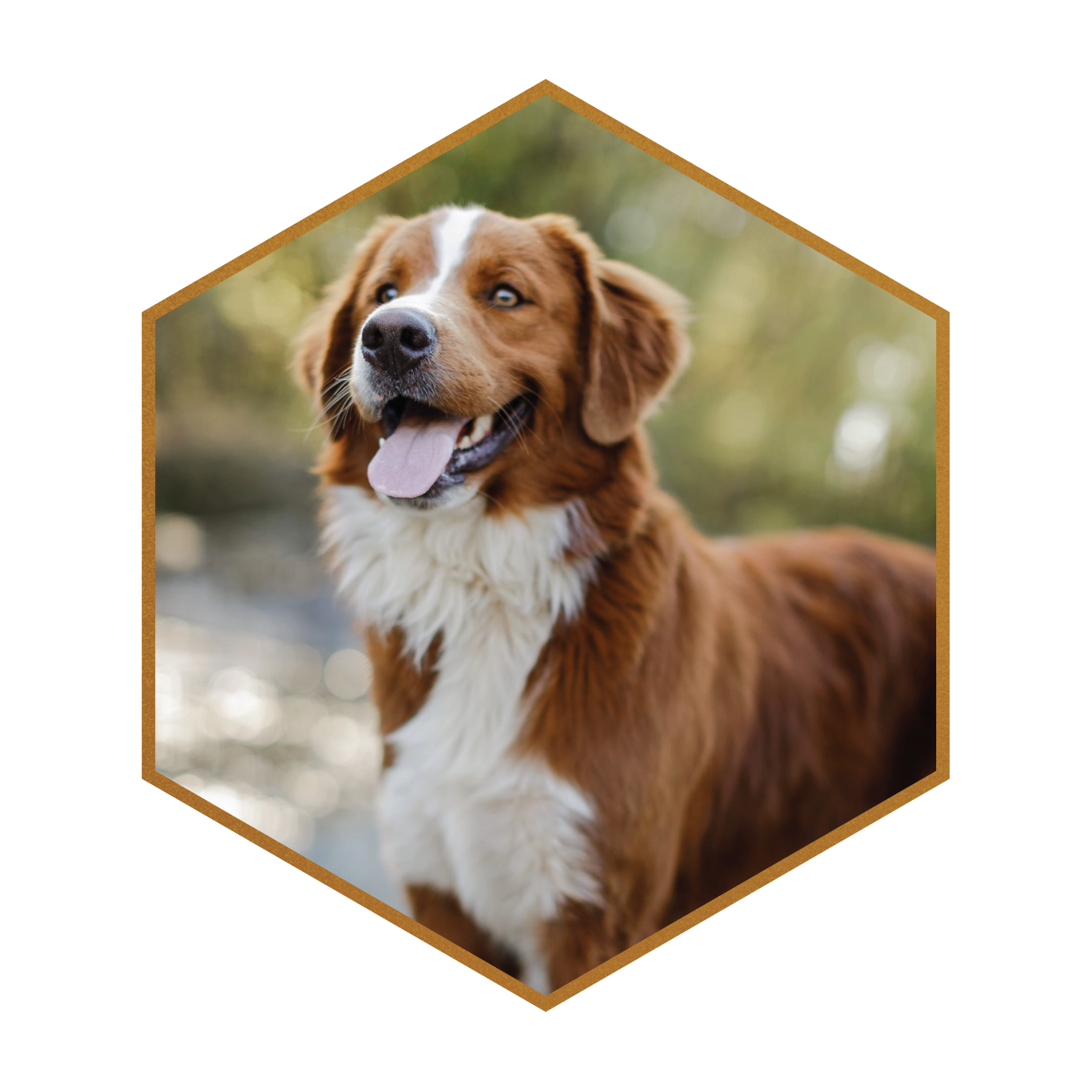
Deposit for (Emme x Kodiak) Standard Medium F1 Tri & Merle Bernedoodles

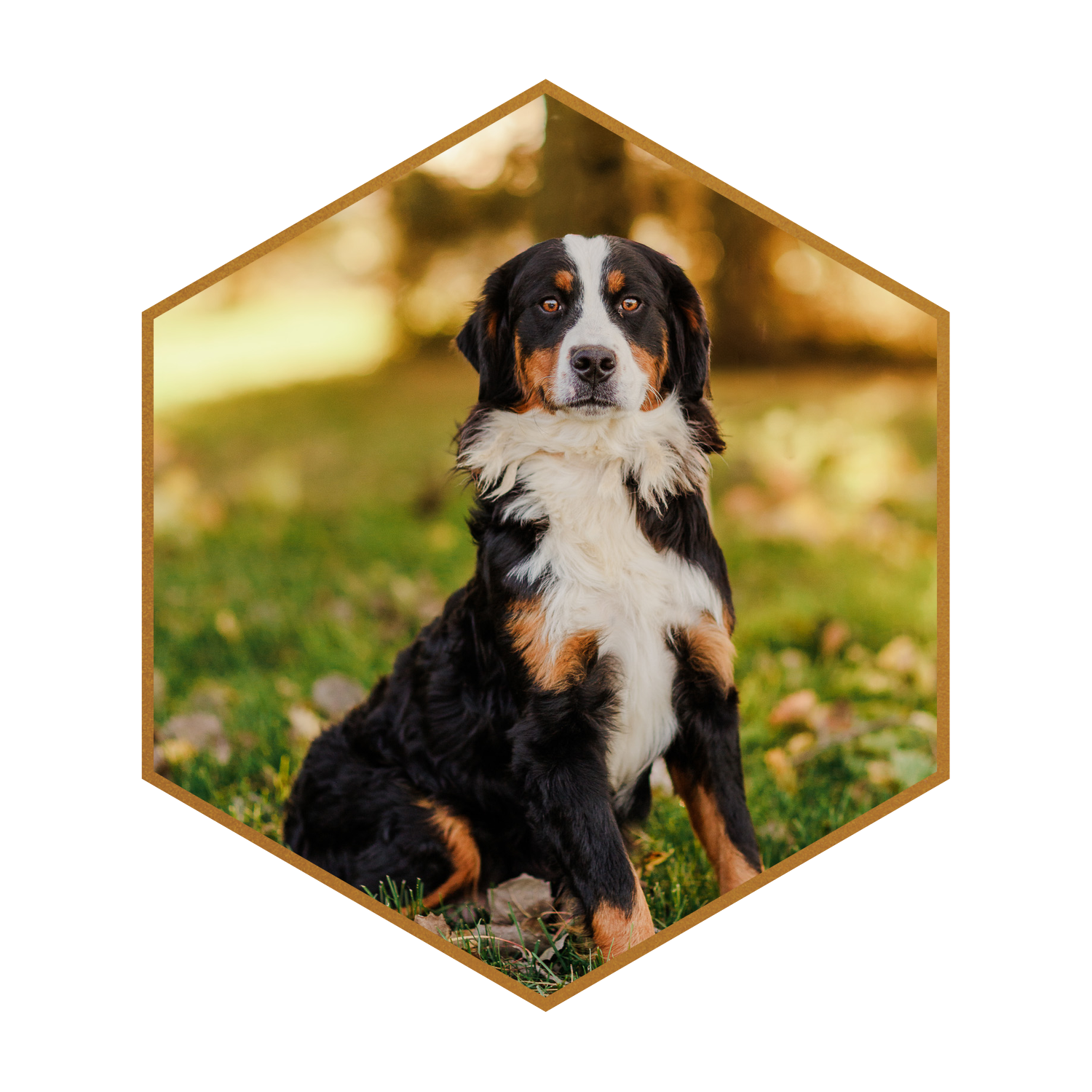
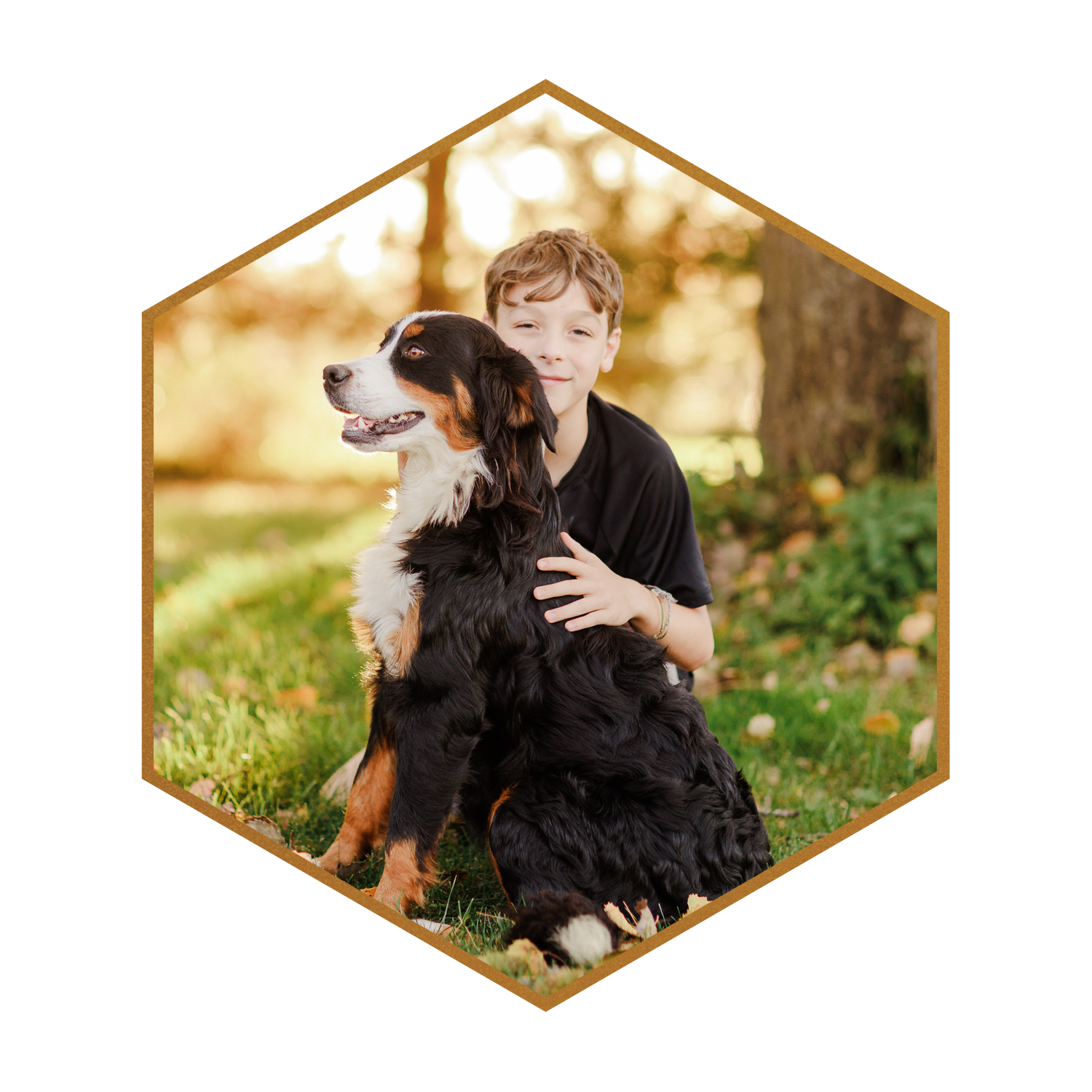
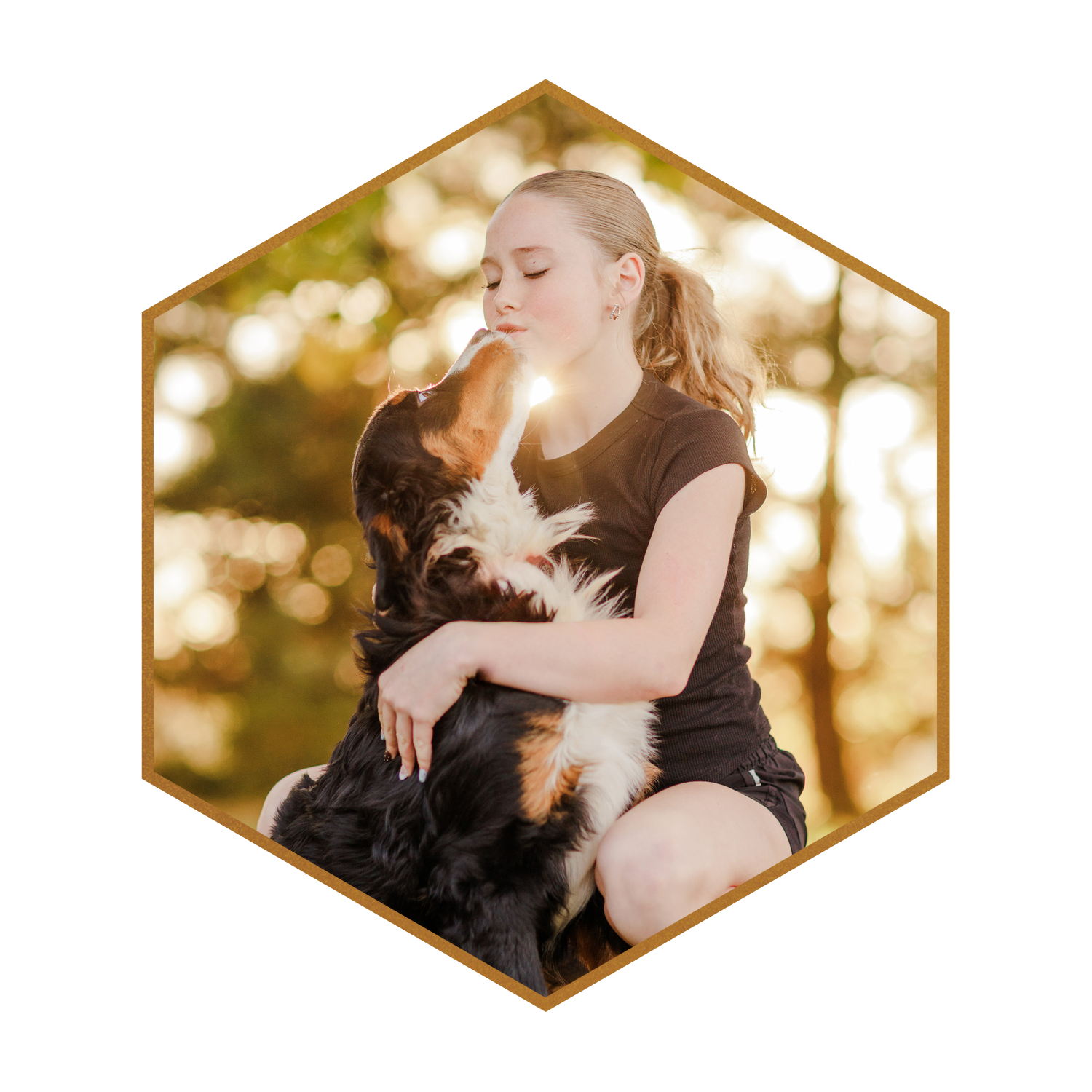

Deposit for (Emme x Kodiak) Standard Medium F1 Tri & Merle Bernedoodles
This deposit ensures your spot on our official waitlist. First-pay, first-serve basis.
26 February 2027 — Estimated Heat Start
08 – 09 March 2027 — Estimated Ovulation
12 May 2027 — Estimated Delivery
08 July 2027 — Estimated Take-Home Days
OFFICIAL WAITLIST
BREEDERS CHOICE
OPEN (PICK OF LITTER 1)
OPEN (PICK OF THE LITTER 2)
OPEN
OPEN
OPEN
OPEN
OPEN
OPEN
OPEN
Stokeshire Pairing Profile
We publish the whole panel, including the parts that cost us sales. Both parents' complete genetic results, the coat and color predictions this cross produces, and the trade-offs every family should understand before applying. This is a first-generation Standard Bernedoodle, and its litter is more uniform than most: every puppy is furnished, wavy and tricolor. Read the merle and size sections first. That is where puppies will differ.
- Cross
- F1Bernese Mountain Dog dam to Poodle sire
- Expected Adult Weight
- 50 to 75 lbStandard size class. Mid-parent about 62 lb.
- Furnished Coat
- 100%Every puppy furnished and wavy
- Litter Health Prediction
- ClearAll 7 breed-relevant conditions predicted clear for every puppy
- Pairing eCOI
- 0%Goal for every Stokeshire pairing: 15% or under
Health
Both parents' full genetic health panels, published here in full before any puppy is placed, with the prediction for the litter calculated on the pair.
Emme
Dam
- Conditions tested
- 273, no disease variant
- Carrier status
- None
- Copper Toxicosis, attenuating (ATP7A)
- One copy
One copy of a copper-modifier variant. This is not a disease and not a carrier status for one. It was identified in Labrador Retrievers, where it is associated with less copper building up in the liver. It causes nothing on its own. About half of this litter will inherit it. We list it because we list everything.
Kodiak
Sire
- Conditions tested
- 255, none detected
- Carrier status
- None
- Other notable results
- None
Clear on every condition tested. No variant detected, notable or otherwise.
The Litter
Predicted on the pair, breed-relevant conditions
Seven conditions are documented in Bernese Mountain Dogs, Poodles or both. Comparing both parents' genotypes, every puppy is predicted clear on all seven.
- Degenerative Myelopathy (DM, SOD1A)
- Predicted clear
- Von Willebrand Disease Type I
- Predicted clear
- Progressive Retinal Atrophy, prcd
- Predicted clear
- Chondrodystrophy and Type I IVDD (CDDY)
- Predicted clear
- GM2 Gangliosidosis
- Predicted clear
- Neonatal Encephalopathy with Seizures (NEWS)
- Predicted clear
- Osteochondrodysplasia (skeletal dwarfism)
- Predicted clear
A clear genetic prediction covers the variants tested. It does not cover conditions with no genetic test, and cancer is the one Bernese families ask about most. See Bernedoodle Health and Lifespan.
Genetic testing does not diagnose disease and does not replace veterinary evaluation. Results reflect tested variants only. Discuss any result with a licensed veterinarian.
Inbreeding and Diversity
Our goal is for every pairing to have a projected coefficient of inbreeding of 15% or under, and to publish that figure, if known, so it can be checked against the specific dogs being bred.
Parent COI
Genomic, measured
Pairing eCOI
Calculated on this cross
- Estimated litter eCOI
- 0%
- Against the parents
- Lower than either parent
- Against the 15% goal
- 15 points under
- Average for genetically tested Bernedoodles
- 4%
Two inbred parents, an outbred litter. A litter eCOI is not the average of the parents' figures. It is set by how much ancestry the two dogs share, and a Bernese Mountain Dog and a Poodle share almost none. Individual puppies will vary slightly.
Crossing distinct breed lines can increase genetic diversity and may reduce the likelihood that some recessive inherited conditions are expressed. It does not eliminate genetic disease or the health considerations present in the parent breeds.
Immune-Gene Diversity
DLA, two loci
- Emme: DRB1 / DQA1-DQB1
- High / High
- Kodiak: DRB1 / DQA1-DQB1
- None / None
Kodiak carries two identical copies at both immune-gene loci, so every puppy receives the same set from him. Emme carries two different sets at each, so each puppy also receives one of hers. Unless one of hers matches his, a puppy carries two different sets. Only testing a puppy confirms it.
Read more: what inbreeding means
Inbreeding is the mating of closely related dogs. Across many generations it makes more of a dog's genome identical on both sides, because the same ancestors appear on the sire's and the dam's lines. Nature describes the result as rising homozygosity and more recessive traits showing up.
Every domesticated breed was built with some inbreeding. That is how a breed's look and temperament were fixed. The cost is that recessive disease variants are more likely to meet, and over time a population can lose fitness. Geneticists call that inbreeding depression.
The coefficient of inbreeding (COI) measures it. A genomic COI is read directly from a dog's DNA: the share of its genome where both copies trace to the same ancestor. Lower is more diverse.
A litter's figure is estimated before breeding by comparing both parents' DNA. That is why two parents with high COIs from different breeds can produce a litter near 0%, as this one does. It is also why Stokeshire publishes the litter figure, not just the parents'.
Predicted Puppy Ancestry
Emme is a purebred Bernese Mountain Dog. Kodiak is a purebred Poodle. Their puppies are first-generation F1 Bernedoodles.
The Litter
Expected composition
- Bernese Mountain Dog 50%
- Poodle 50%
The original Bernedoodle. Half Bernese, half Poodle, with no third breed in the mix. The Bernese half brings the build and the settle. The Poodle half brings the coat.
The Parents
Measured composition
- Emme: Bernese Mountain Dog
- 100%
- Kodiak: Poodle
- 100%
Coat
Three separate genes decide what a doodle coat actually does. They are reported separately here because two of them use the same C and T letters and are routinely confused. Read all three.
Furnishings
RSPO2
Emme is II, unfurnished, as every Bernese is. Kodiak is FF, two furnishing copies, so he gives one to every puppy.
| Sire ↓ Dam → | I | I |
|---|---|---|
| F | FI furnished | FI furnished |
| F | FI furnished | FI furnished |
Every puppy in this litter will be furnished. Every puppy also carries one unfurnished copy from Emme. That changes nothing about the dog you live with. It matters only if the puppy is ever bred.
Curl
KRT71
Emme is CC, straight. Kodiak is TT, curly.
| Sire ↓ Dam → | C | C |
|---|---|---|
| T | CT wavy | CT wavy |
| T | CT wavy | CT wavy |
No puppy in this litter can be curly or straight. Curl needs a T from each parent, and Emme has none to give. Straight needs a C from each, and Kodiak has none.
Shedding
MC5R
Both parents are CT, so the litter splits three ways.
Furnishings decide shedding more than this gene does. MC5R moves shedding most in unfurnished dogs. Every puppy here is furnished, so expect a lower-shedding coat across the litter. Lower-shedding is not non-shedding, and a young coat can shed more as it changes over.
What Every Puppy Carries
Hidden in the DNA, not in the coat
- Unfurnished I, from Emme
- 100% carry
- Chocolate b, from Kodiak
- 100% carry
- Parti sp, from Kodiak
- 100% carry
- Merle M*, from Kodiak
- About 50%
None of these changes how your puppy looks or lives, except merle, which shows. They matter only if a puppy is ever bred, and we put them in writing for that reason.
Color Genetics
The color outcome here is narrow. Every puppy is black-based and tricolor. The one real split is merle, so read that panel first.
Merle
M locus, PMEL
Emme is mm, no merle. Kodiak is M*m, one merle allele.
| Sire ↓ Dam → | m | m |
|---|---|---|
| M* | M*m merle | M*m merle |
| m | mm no merle | mm no merle |
No puppy can be red, so merle has no red coat to hide behind. A standard genetic panel confirms that a merle allele is present but not its length, and length decides how strongly merle shows. Each puppy's pattern shows as it develops.
Only one parent is merle, so no puppy can be double merle. A merle puppy from this litter must never be bred to another merle. That is how double merle litters happen, with the hearing and eye defects that can come with them.
Pattern and Base Color
E locus, K locus, A locus, B locus, D locus
- E locus EE dam, EmEm sire
- 100% EmE
- K locus kyky both parents
- 100% kyky
- A locus atat both parents
- 100% tan points
- B locus BB dam, bb sire
- 100% Bb
- D locus DD both parents
- 0% dilute
Every puppy is black with tan points and a black nose. None can be red, apricot or cream, because neither parent carries recessive red. None can be chocolate, because Emme gives a black copy to every puppy. None are dilute. Every puppy carries one copy of the mask allele from Kodiak, which can darken the muzzle where tan points would sit, or may not show at all on a dark face.
White Spotting
S locus, MITF
Emme is SS. Kodiak is spsp, a parti.
| Sire ↓ Dam → | S | S |
|---|---|---|
| sp | Ssp carrier | Ssp carrier |
| sp | Ssp carrier | Ssp carrier |
No parti puppies are possible in this litter. Parti needs sp from both parents, and Emme has none. Every puppy carries parti. Expect white on the chest, feet and muzzle, often with a blaze. The amount varies from puppy to puppy and can be more generous than Emme's.
What the Litter Looks Like
All color genes together
Two outcomes, nothing else. If you want red, chocolate, sable or parti, this is not your pairing. See Bernedoodle colors and patterns.
The Honest Summary
What This Pairing Does Well
Strengths
- A 0% litter eCOI, below the 4% average for genetically tested Bernedoodles.
- All seven breed-relevant conditions predicted clear for every puppy, including degenerative myelopathy (SOD1A) and von Willebrand disease.
- Every puppy furnished and wavy. The doodle face and a lower-shedding coat across the whole litter.
- Narrow, predictable color: black tri or blue merle tri.
- A true half-and-half Bernedoodle, with no third breed in the mix.
What You Need to Weigh
Trade-offs, stated plainly
- Emme's own COI is 32%. Typical of a purebred Bernese, and the litter's is 0%. We publish both.
- Kodiak has no immune-gene diversity. Puppies inherit one set from each parent, so most should fare better.
- Half Bernese. Cancer is an important health consideration in Bernese Mountain Dog lines, and crossing does not remove it.
- About half will be merle. A merle puppy must never be bred to another merle.
- A wide size spread. The parents are 81 lb and 44 lb, so puppies will vary more than in most litters.
- Every puppy carries unfurnished, chocolate and parti. Invisible, but it matters if the puppy is ever bred.
Expected Adult Weight
Projection
From both parents' genomic weight predictions
- Emme, dam
- 81 lb
- Kodiak, sire
- 44 lb
- Mid-parent
- About 62 lb
- Expected range
- 50 to 75 lb
- Size class
- Standard, 51 lb and up
- Females
- Tend toward the lower half
- Males
- Tend toward the upper half
Read This If You Want a Large Standard
Size honesty
This pairing is planned for Standard adults, but it is not a giant Bernedoodle. Kodiak is a lighter Poodle, and first-generation litters from parents this far apart in size vary more than most. Adult weight is an estimate rather than a guarantee and may vary based on parentage, sex, generation, and individual development.
If you want an 80 lb dog, tell us before you apply. Most of this litter should finish well below Emme, and a smaller female could finish near the top of the Medium class.
The Parents
Dam
Emme
SDD Emmental Stokes Major-Jiggy
- Composition
- Bernese Mountain Dog
- Predicted weight
- 81 lb
- Genomic COI
- 32%
- Coat
- Unfurnished, straight
- Genotype
- EE kyky atat BB DD mm SS
- Coat genes
- RSPO2 II · KRT71 CC · MC5R CT
Sire
Kodiak
SDD Mohican's Kodiak of Pinewood Stokes
- Composition
- Poodle
- Predicted weight
- 44 lb
- Genomic COI
- 14%
- Coat
- Furnished, curly
- Genotype
- EmEm kyky atat bb DD M*m spsp
- Coat genes
- RSPO2 FF · KRT71 TT · MC5R CT
Full genetic panels were run on both parents, and every parent result on this page can be checked against their public genetic profiles above. OFA records, where completed, are provided to approved applicants alongside the applicable agreement and health guarantee. No health-testing program can eliminate every genetic or developmental risk. Predictions describe probabilities across a litter, not guarantees for an individual puppy. Coat, color and adult size become clear as each puppy develops. Stokeshire is a Good Dog Certified breeder, Wisconsin DATCP licensed #514401-DS.
Is This Your Pairing?
We don't sell puppies. We match families. If a furnished, wavy Standard Bernedoodle in black tri or blue merle, from a litter with a 0% eCOI, is what you want, tell us. If it isn't, tell us that too and we will point you to the litter that fits.
Start Your ApplicationSee current and upcoming litters, or read the complete Stokeshire Bernedoodle guide.
Standard Bernedoodle puppies,
reserved in order.
Our next Standard Bernedoodle litter is planned for 2027. This waitlist is the only path to a Stokeshire Standard class placement: positions are numbered, honored in order of deposit, and carried forward to the next Standard pairing if a litter fills. The Standard is the original Bernedoodle: the full presence of the Bernese Mountain Dog with the coat the cross was created for. The complete reference lives in the Stokeshire Bernedoodle guide.
Three steps between
this page and go-home day.
Every Stokeshire placement follows the same structured path. The full walkthrough, from application to Match Day, lives on the How Placement Works page.
Reserve your position
Your $500 deposit secures a numbered place on the official Standard Bernedoodle waitlist and applies toward your puppy's total investment. We also ask every family to complete a placement request so we can confirm fit before Match Day.
Match Day
Selection happens in position order, guided by temperament evaluations conducted by our team. We match puppies to households, not photos to preferences. Current starting prices by class are published on the Puppy Pricing page.
Go-home, or Doodle School
Puppies go home with our standard support and 3-year health guarantee. Families who want a trained start can extend their puppy's stay through 4-Week Doodle School.
Know exactly what
you are reserving.
The Standard is the Bernedoodle as originally conceived: substantial, steady, and built for families who want real presence. These guides answer every question we hear before families join the list.
The Standard Class
Compare & Fit
Health-screened parents
Every Stokeshire breeding dog is genetically tested through Embark before a pairing is planned, with COI analysis of planned pairings. OFA hip and elbow records, where completed, are shared with approved applicants. Details in the health and lifespan guide.
3-year health guarantee
Every Stokeshire placement is backed by our written health guarantee and lifetime breeder support. Terms are published, not promised verbally.
Genetic diversity
The Standard cross exists to pair Bernese character with improved genetic diversity. Our goal is for every pairing to have a projected COI of 15 percent or under, explained in the Generations guide.
Reservation logistics,
answered.
What does the $500 deposit secure?
A numbered position on the official Standard Bernedoodle waitlist, honored in order of deposit. Your deposit applies toward your puppy's total investment at Match Day.
When will puppies go home?
Our next Standard litter is planned for 2027. Waitlist families receive pairing announcements, whelping updates, and Match Day scheduling before anything is published publicly.
What if the litter fills before my number is reached?
Positions carry forward. If a litter is fully matched before your number comes up, your position rolls to the next Standard pairing at the same priority.
How is my puppy chosen?
Selection happens at Match Day in position order, guided by temperament evaluations. We present the puppies whose evaluations align with your household, then you choose among them. The full process is outlined on the How Placement Works page.
What will the total investment be?
Each puppy is priced individually by class, coat, and program tier. Current starting prices are published on the Puppy Pricing page, and the factors behind Bernedoodle pricing are explained in the Bernedoodle Cost guide.
Can I add training before go-home?
Yes. Waitlist families may enroll their puppy in 4-Week Doodle School, our structured training program completed before go-home day. Space is limited per litter and offered to waitlist families first.
Reserve your place,
then let us do the slow work.
Add the deposit above to secure your number, then complete a placement request so we can confirm alignment before Match Day. Questions first? We would rather you ask.
Complete Your Placement Request Or schedule a call with our team