
What Is a Turnkey Puppy Program?
Understanding the models, the investment, and what actually separates them
Turnkey programs promise a fully prepared companion. The details that matter are not how long the dog trains, but who it was developed for, how much of that work you can see, and what happens at handoff.
Turnkey Programs Defined
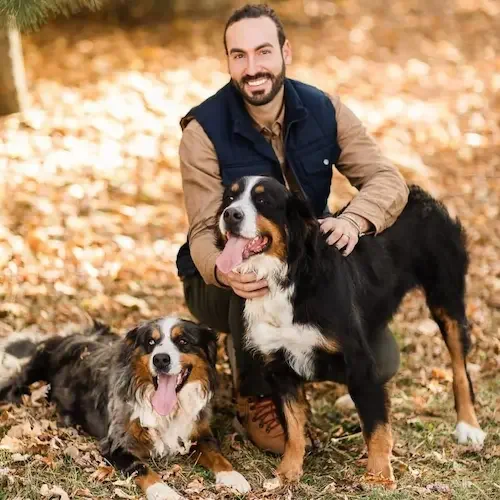
A turnkey puppy program delivers a fully prepared companion dog that arrives trained, socialized, and ready for family life. The breeder or training facility handles genetics, health screening, early development, and foundational training. The puppy arrives with established skills and behavioral foundation, reducing the learning curve for new owners.
Most turnkey programs share common elements: health-tested breeding stock, early neurological stimulation, comprehensive socialization, foundational obedience, and structured transition support. The meaningful differences lie elsewhere: in matching, visibility, and transition.
Two Approaches: Anonymous vs. Matched
Standardized Facility Programs
The dog is developed to a generic curriculum, often from eight weeks through six to eight months or longer. The family is identified late, sometimes after training is complete. Updates arrive on the program's schedule, chosen by the program. The dog is capable, but no specific household shaped the months that shaped the dog, and the handoff is often an afternoon.
Matched Developmental Programs
The family is matched early, before extended development begins, so the dog is developed for a specific household. Training follows a written, individualized plan. The family can see the daily work rather than taking the program's word for it, and go-home follows a deliberate transition rather than a handoff.
Anonymous Model
Polished obedience at arrival, developed to a stranger's standard. The family starts from a binder, discovering what the dog actually knows, which cues it was trained on, and which routines it expects.
Matched Model
Documented development at arrival. The family has watched the work daily, holds the milestone record, and follows a written transition plan. The first weeks execute a plan instead of reverse-engineering one.
 Matched early. Documented daily.
What the Development Science Supports
During roughly the first fourteen weeks of life, puppies are most open to new people, surfaces, sounds, and experiences. Exposure during this early window generally shapes how comfortably a dog accepts novelty for years afterward, which is why the quality and continuity of a program's early curriculum matters more than its marketing. Learn more about puppy developmental stages and the bonding period.
Attachment works differently. Dogs form and deepen bonds throughout life, built through consistent handling, shared routines, and trust earned across ordinary days. What puts a placement at risk is not the length of training. It is anonymity and opacity: a dog developed with no household in mind, a family that never saw the work, and a transfer with no plan behind it.
The other honest truth: adolescence, roughly six to eighteen months, is when flight instinct, fear periods, and impulse-control challenges surface, and it is when many family dogs struggle. Programs that end at twelve or sixteen weeks hand that phase to the owner. Extended matched programs can train straight through it.
Understanding the Investment
Turnkey programs represent significant investment. The ranges below reflect programs with documented health testing, as of 2026; individual programs vary, and these figures are market context rather than quotes.
What Affects Pricing
Genetic testing and health screening: Comprehensive hips, elbows, eyes, cardiac, and genetic panels generally add $2,000 to $5,000 per breeding dog. These costs compound across multi-generational breeding programs.
Developmental assessment: Individual puppy behavioral evaluation, temperament matching, and written match rationales require 20 to 30 hours of skilled observation per litter.
Training approach: A standardized curriculum costs less because every dog gets the same program. Extended matched development requires individualized planning, coordination, and daily documentation: more labor, and more accountability.
Ongoing support: Breeder access, training referrals, behavioral coaching, and health documentation require administrative infrastructure that bespoke programs factor into pricing.
 Doodle School: the shared foundation of every Stokeshire path
Where Stokeshire Sits
Stokeshire operates on both sides of the go-home decision, on one developmental spine. Every puppy follows the same curriculum from birth; families choose how far along it their dog travels before coming home.
The Shared Foundation (Birth to 12 Weeks)
- Stokeshire Method Nursery, birth to eight weeks: early neurological stimulation, graduated socialization to environments, surfaces, and sounds, and daily temperament observation through the Canine Recovery Index
- Doodle School foundation, eight to twelve weeks: crate and house-training foundations, leash introduction, handling and grooming exposure, bite inhibition, and basic obedience entry points
- Every training day documented in the Stokeshire Companion app: activity logs, weekly milestone scoring, photos, and video
Path One: Go-Home at 12 Weeks
- Standard Stokeshire placements and Doodle School graduates go home at twelve weeks with transition materials and breeder guidance
- The family continues training at home with the foundation already documented
Path Two: The Bespoke Companion (Extended Development)
- Development continues past the twelve-week mark with a Stokeshire trainer, working a written milestone plan built to the family's household
- Duration is set by the engagement: most run roughly five to seven months before go-home, and longer engagements, including through nine to twelve months of age, can be structured during consultation
- Training is carried through adolescence, with daily documentation, an in-home transition consultation, and twelve months of private support after go-home
Comparing Long-Term Outcomes
At Go-Home
Anonymous program: A capable dog with an unknown history. The family starts from a binder, and the first weeks are generally spent discovering what the dog knows, which cues it was trained on, and which routines it expects.
Matched, documented program: The family has watched development daily, holds the milestone record, and follows a scheduled transition. The first weeks execute a plan rather than reverse-engineering one.
At Year Two
Either model: Trained behavior generally holds when the household maintains consistent routines and expectations, and tends to regress when it does not. The difference is whether the family was ever taught the system the dog was trained in. Programs with documented plans, transition protocols, and ongoing support give owners that system. Programs that end at delivery leave the family to guess. What "fully trained" actually means should be defined in writing before any deposit, and outcomes vary with genetics, environment, training consistency, and owner commitment.
Common Questions
A turnkey puppy program delivers a fully prepared companion dog that arrives trained, socialized, and ready for family life. The breeder or training facility handles genetics, health screening, early development, and foundational training, so the puppy arrives with established skills and a behavioral foundation that reduces the learning curve for new owners. Most turnkey programs share common elements: health-tested breeding stock, early neurological stimulation, structured socialization, foundational obedience, and some form of transition support. The meaningful differences between programs lie in matching, visibility, and transition: whether the dog was developed for a specific household, how much of the training the family can actually see, and how deliberately the handoff is managed.
Yes, on one developmental spine with two go-home paths. Every Stokeshire puppy begins in the Stokeshire Method Nursery from birth to eight weeks, then completes Doodle School foundation training from eight to twelve weeks, documented daily in the Stokeshire Companion app. Standard placements go home at twelve weeks with transition materials and breeder guidance. The Bespoke Companion continues past the twelve-week mark into extended development with a Stokeshire trainer, working a written milestone plan built to the family's household. Most Bespoke engagements represent roughly five to seven months of development before go-home, and longer engagements can be structured during consultation, followed by an in-home transition and twelve months of private support.
As of 2026, among programs with documented health testing, standardized board-and-train placements generally range from $17,000 to $28,000, developmental programs with genetic matching and extended support from $25,000 to $35,000, and fully bespoke programs from $35,000 to $40,000 or more. Individual programs vary, and these figures are market context rather than quotes. Pricing generally reflects genetic testing and health screening, developmental assessment and matching, the training approach and its labor, transport logistics, and ongoing breeder access. Stokeshire's Bespoke Companion sits in the top band, beginning at $40,000 inclusive of training duration, transport, and twelve months of private support, with the exact total fixed in writing during consultation.
Ready to Explore the Bespoke Companion?
Learn how Stokeshire develops each dog on one continuous method, matched to your household, documented daily, and transitioned deliberately. Extended engagements are limited to four to six families per year.
Explore the Program