
Doodle Puppies for Families in Switzerland
Grüezi. Goldendoodles, Bernedoodles, and Mountain Doodles from an American programme, raised in a family home, built on Bernese Mountain Dog lines.
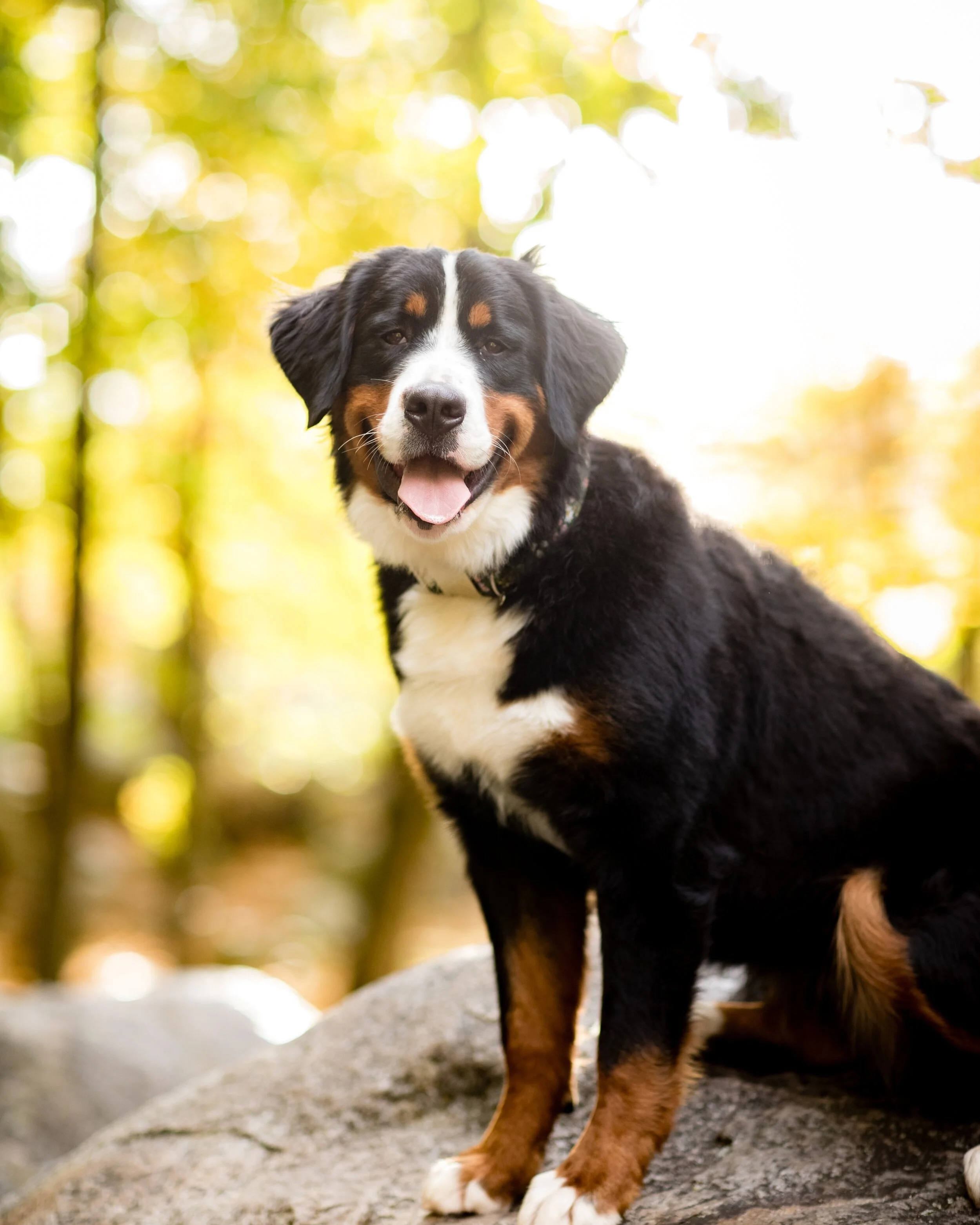
The Bernese Mountain Dog comes from the canton of Bern. It is one of the most beautiful dogs there is, and it carries one of the hardest health records of any breed. Anyone who grew up with the breed in Switzerland knows both things at once.
Stokeshire is a licensed breeding and development programme in Wisconsin. We breed Bernedoodles, Golden Mountain Doodles, and Australian Mountain Doodles from lines with the Bernese at their foundation, and we work deliberately against the problem that affects many pedigree populations: a closed gene pool and a high coefficient of inbreeding.
Every pairing is modelled genetically before it happens. The projected coefficient of inbreeding, the health findings for both parents, and the coat prediction all exist before a litter is planned. Families receive those records in full on request.
Why Switzerland is not just another market to us
The Stokes family has Swiss roots, and the breed that shaped our programme comes from the same country. That is not a coincidence and it is not marketing. It is the reason we began with Bernese lines at all.
We will be straightforward about where things stand. Stokeshire has placed dogs in the United States, Canada, and Mexico. Not yet in Switzerland. We would like to, and we would rather say so plainly than claim experience we do not have.
More about the family and the programme: Our Heritage and Our Story.
City, mountain, and everything between
A dog that lives well in a Zürich apartment needs different preparation from one out on the mountain in Graubünden every day. Both work. The difference lies in preparation rather than in character.
What we raise
Selected for temperament stability and coat predictability before appearance. Size ranges are estimates modelled from the pairing and refined as a puppy develops.
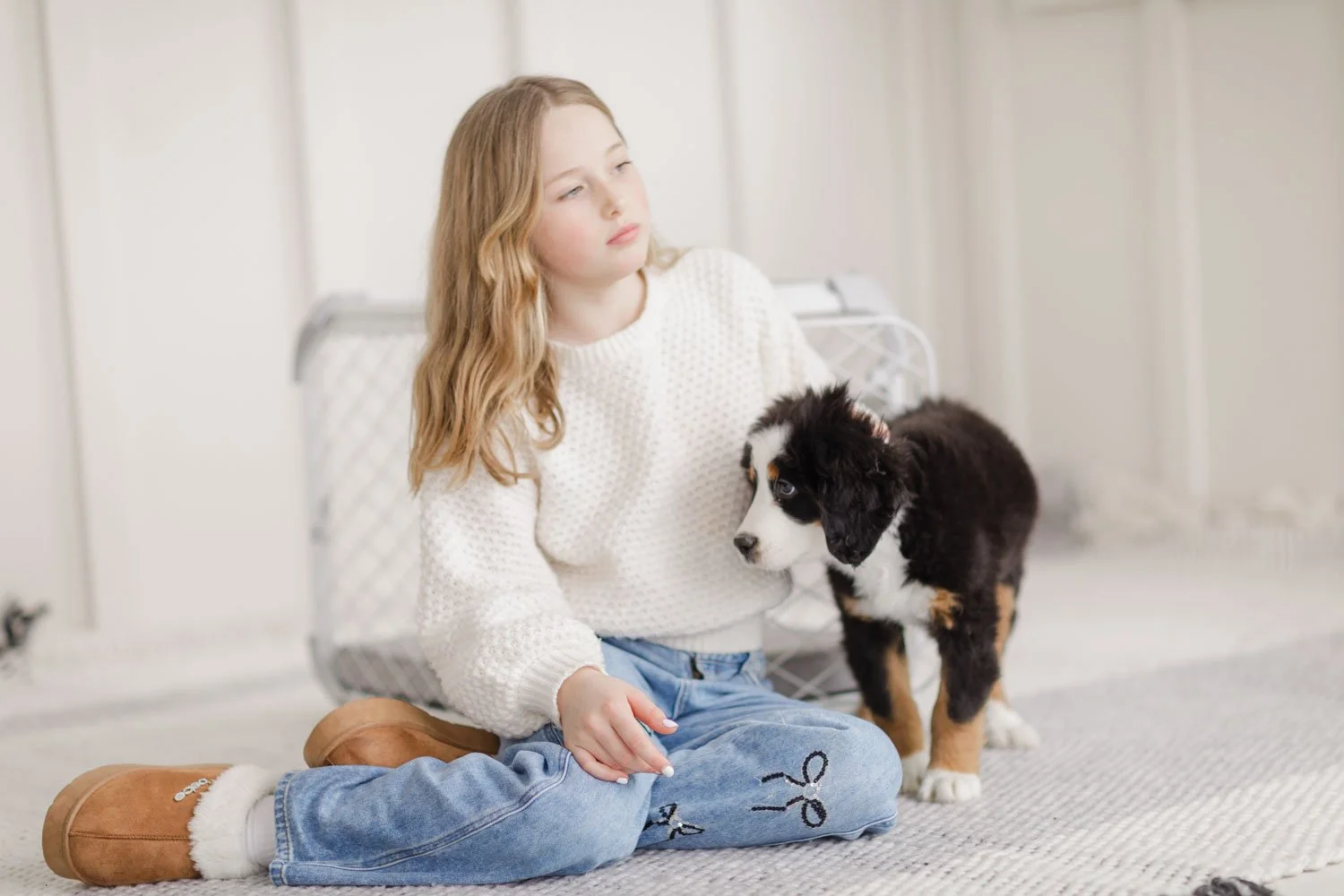

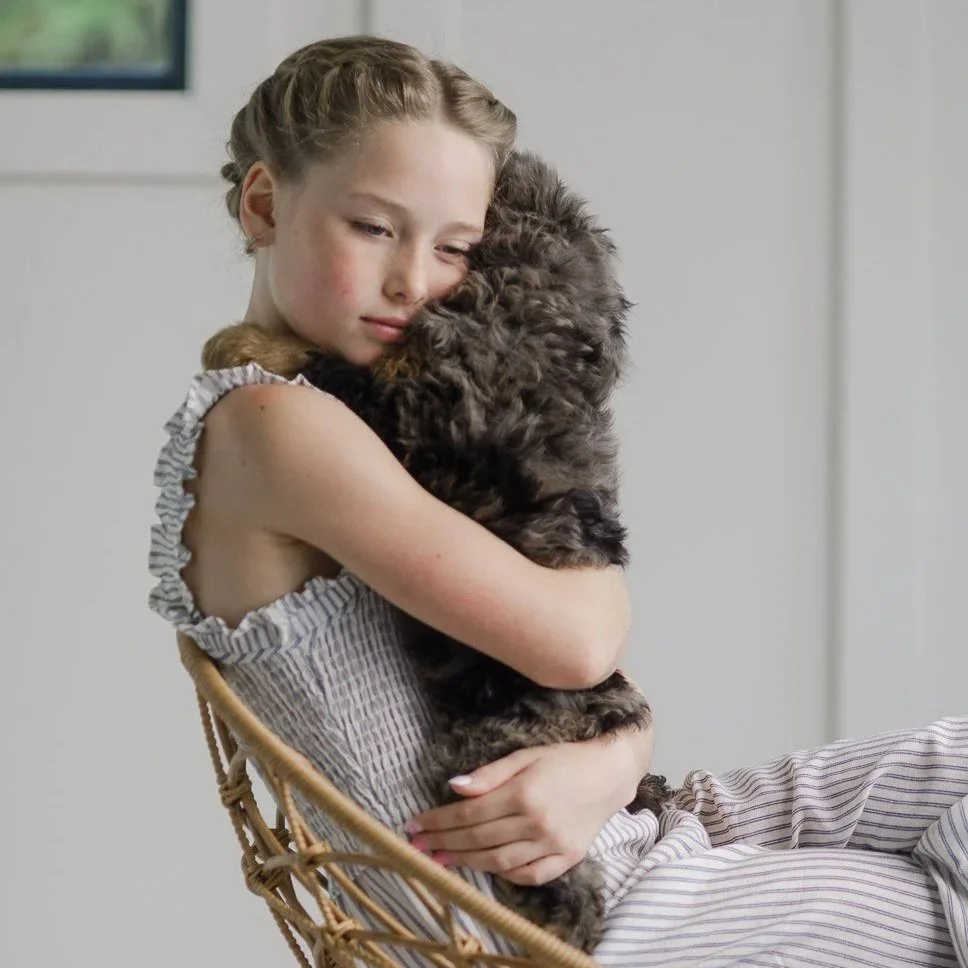

The coefficient of inbreeding is the real question
Average life expectancy in the Bernese Mountain Dog has been a subject for decades, and a closed gene pool is a substantial part of why. Outcrossing does not solve that on its own, but it changes the starting position measurably.
We publish the projected coefficient of inbreeding for every pairing and the complete health findings for both parents before a puppy is placed. That is not a promise of a long life. It is the information a family needs in order to judge for itself.
Coat, shedding, and allergies
We can model coat furnishings and shedding propensity genetically and share the prediction for a pairing before placement. We cannot predict how a particular person will react to a particular dog, and we do not claim to.
Furnished dogs carry the gene responsible for the classic doodle coat and tend to shed less. Unfurnished varieties do not carry it and shed like the non-Poodle parent breed. If someone in your household reacts to dogs, spend time with adult dogs of the same coat type first. What an unfurnished doodle is.
A doodle coat needs regular brushing and a groomer on a set rhythm. If you are out in snow and wet ground often, a shorter coat is simply easier to keep comfortable.
The time the journey requires anyway becomes time invested in the dog.
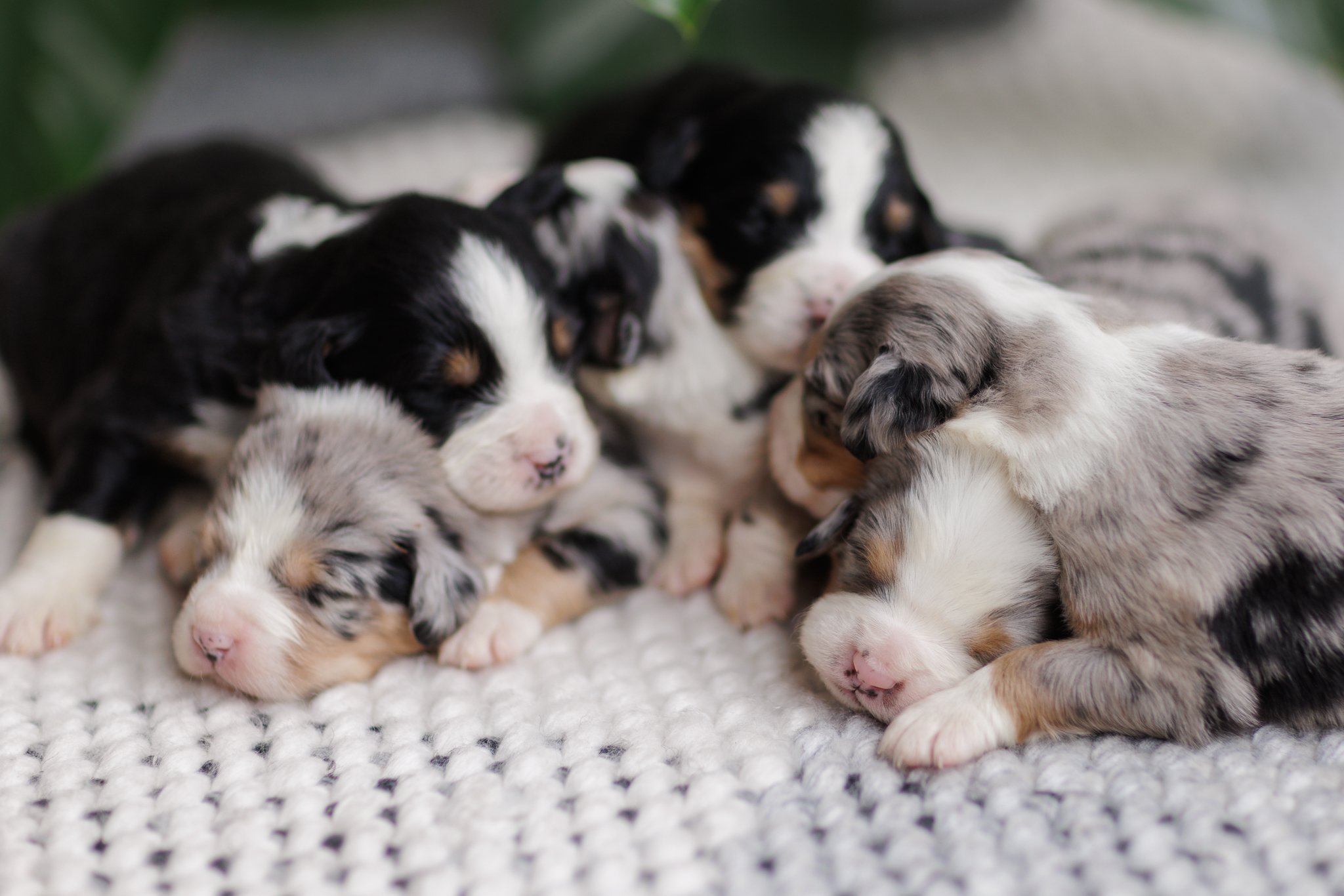
Why it takes longer than eight weeks
A puppy staying near us goes home at eight weeks. For a placement abroad that is generally not possible. The requirements are set by the relevant authorities, they involve a sequence of veterinary steps with waiting periods built into them, and that sequence takes months.
Rather than leave a puppy waiting through it, we use the time: crate confidence, house-training, lead handling, foundational obedience, handling for grooming and the vet, settling and switching off, and exposure to the environment the dog will actually live in.
What applies specifically to a placement into Switzerland is confirmed for each family against what the relevant authorities currently publish. We say early and clearly when something is not workable.
Import requirements are set by the relevant authorities, are subject to change, and are confirmed individually for each placement. Final acceptance rests with the relevant authorities and the carrier. Stokeshire guarantees neither an import authorisation nor a fixed arrival date.
Raised in a home, not a kennel
Every Stokeshire puppy is raised in our family home through The Stokeshire Method: intentional genetics, early development, temperament matching, and foundational training. Parent health findings, the projected coefficient of inbreeding, and the veterinary records of the individual dog are open before any commitment. Development is documented throughout the programme in the Stokeshire Companion app.
Stokeshire is licensed and inspected by the State of Wisconsin, licence number 514401-DS.
Commonly asked
Can a family in Switzerland buy a puppy from a breeder in the United States?
In principle yes, and the route is considerably more involved than buying domestically. Importing a dog that is passing to a new owner is treated differently in Switzerland from travelling with a dog you already own, and it is the relevant cantonal and federal bodies that set the framework. On top of that sits a sequence of veterinary steps with waiting periods that cannot be shortened. Stokeshire checks for each family individually what the relevant bodies currently require before any specific dog is discussed. If a route is not workable, we say so at the beginning rather than at the end.
Which doodle size suits a city apartment in Zürich or Bern?
Usually mini to medium, and from our programmes most often the mini Bernedoodle or a smaller Goldendoodle. What matters is less the weight than the ability to switch off indoors. A dog that settles lives more easily in a small space than a small dog that is permanently wound up. The practical considerations are lifts and stairwells, hard and slippery flooring, trams and traffic, narrow pavements, and the fact that every trip outside happens on a lead. A young dog can be prepared for all of it, and that preparation is a substantial part of our work before handover.
What about health and inbreeding in the Bernese Mountain Dog?
The Bernese Mountain Dog is among the breeds with a comparatively short average life expectancy, and a closed gene pool with a high coefficient of inbreeding is regarded as one of the factors. Outcrossing is neither a guarantee nor a free pass, but it changes the genetic starting position measurably. Stokeshire models every pairing beforehand, publishes the projected coefficient of inbreeding, and discloses the complete health findings for both parents, including hips, elbows, eyes, cardiac, and genetic panels. We do not promise a long life. We provide the records with which a family can judge for itself.
Is a doodle suited to hiking, biking, and winters in the mountains?
Lines with Bernese Mountain Dog and Australian Shepherd behind them are well set up for cold and for movement over terrain, and many of our dogs live exactly that way. Two things matter. First, young dogs need controlled loading: long tours, jumping, and running alongside a bike belong to an age at which the growth plates have closed, usually towards the end of the first year and later depending on size. Second, a doodle coat needs care after snow, wet, and rough ground, or it mats. Clipped shorter is usually the more practical answer in winter.
How does a family in Switzerland see the puppy before it arrives?
Development is documented throughout the programme in the Stokeshire Companion app: activity records, milestone scoring, and photo and video from sessions. Temperament assessment runs across weeks rather than as a single test, so a family follows the development rather than receiving a summary at the end. Before any commitment, the complete health findings for both parents, the projected coefficient of inbreeding for the pairing, and the veterinary records of the individual dog are available. At handover the family receives the full documentation.
What does a puppy cost, and what does a placement abroad add?
Stokeshire puppies generally range from 4,000 to 6,500 US dollars depending on size, coat, and pairing, with optional training programmes in addition. A placement abroad adds the extended development period plus third-party costs: veterinary certification, laboratory work, official authorisations, transport, and any duties or taxes on import. Those amounts depend on the destination and on the adult size of the dog, and they are quoted only once reliable figures are in hand. A wrong estimate is worse than none. For a fully managed placement, see Stokeshire Private Client.
Let us start with a conversation
Tell us about your household and where in Switzerland you live. We will tell you honestly whether a Stokeshire dog fits before anything else is discussed. Conversations are held in English.
Request a Conversation → Or read about Stokeshire Private Client