
Dogs in Schools: The Science Behind Therapy-Informed Training, Mental Health, and Emotional Regulation
Why Schools Are Reconsidering Dogs—And Why Training Matters
Schools across the country are facing rising levels of anxiety, emotional dysregulation, and social withdrawal among students. Educators and families are increasingly seeking solutions that support mental well-being without overstimulation, stigma, or excessive intervention.
Emerging research now supports what many teachers, counselors, and parents have observed for years: well-trained dogs can positively influence student well-being—not only emotionally, but biologically.
This growing body of evidence is changing how we think about dogs in educational settings. They are not entertainment, novelty, or passive comfort tools. When thoughtfully trained and ethically placed, dogs can function as biological co-regulators, helping support calm, focus, and emotional resilience.
At Stokeshire, we translate this science into therapy-informed training pathways developed specifically for school and educational environments.
What the Science Now Shows
A 2025 peer-reviewed study published in Science examined adolescents who lived with dogs and identified measurable changes in gut microbiota associated with improved mental health outcomes.

The findings extended beyond simple association. When researchers transferred microbiota from dog-exposed adolescents into animal models, behavioral changes followed, suggesting a biological pathway that may contribute to the observed mental health benefits.
What this means in plain terms:
Dogs influence stress regulation at the gut–brain level
Calm, consistent canine presence may help shape emotional resilience
Mental health support can occur without verbal intervention
This research highlights an important distinction:
Dogs do not simply comfort students—they may help support the emotional environments students experience every day.
Why Not Every Dog Belongs in a School
While the benefits are promising, not every dog is appropriate for a school setting.
Poorly trained, over-stimulated, or temperamentally mismatched dogs can:
increase stress for students
compromise safety
undermine school trust
harm the dog's welfare
jeopardize future programs district-wide
This is why training approach matters more than breed or intention.
Schools benefit most from dogs that demonstrate emotional stability, predictable behavior, and the ability to recover calmly from stimulation.
What Is Therapy-Informed Training?
Therapy-informed training prioritizes emotional neutrality, predictability, and recovery, not tricks or performance.
At Stokeshire, therapy-informed dogs are developed with emphasis on:
Calm engagement rather than excitement
Neutral response to noise, movement, and unpredictability
Ability to disengage and rest when not working
Emotional steadiness under handling and proximity
Handler awareness, consent, and advocacy
This approach aligns closely with:
trauma-informed education models
special education classrooms
counseling and SEL environments
reading intervention programs
The objective is not to create a dog that constantly interacts. The objective is to develop a dog capable of remaining emotionally steady within complex human environments.
The Pathway From Puppy to School Environment
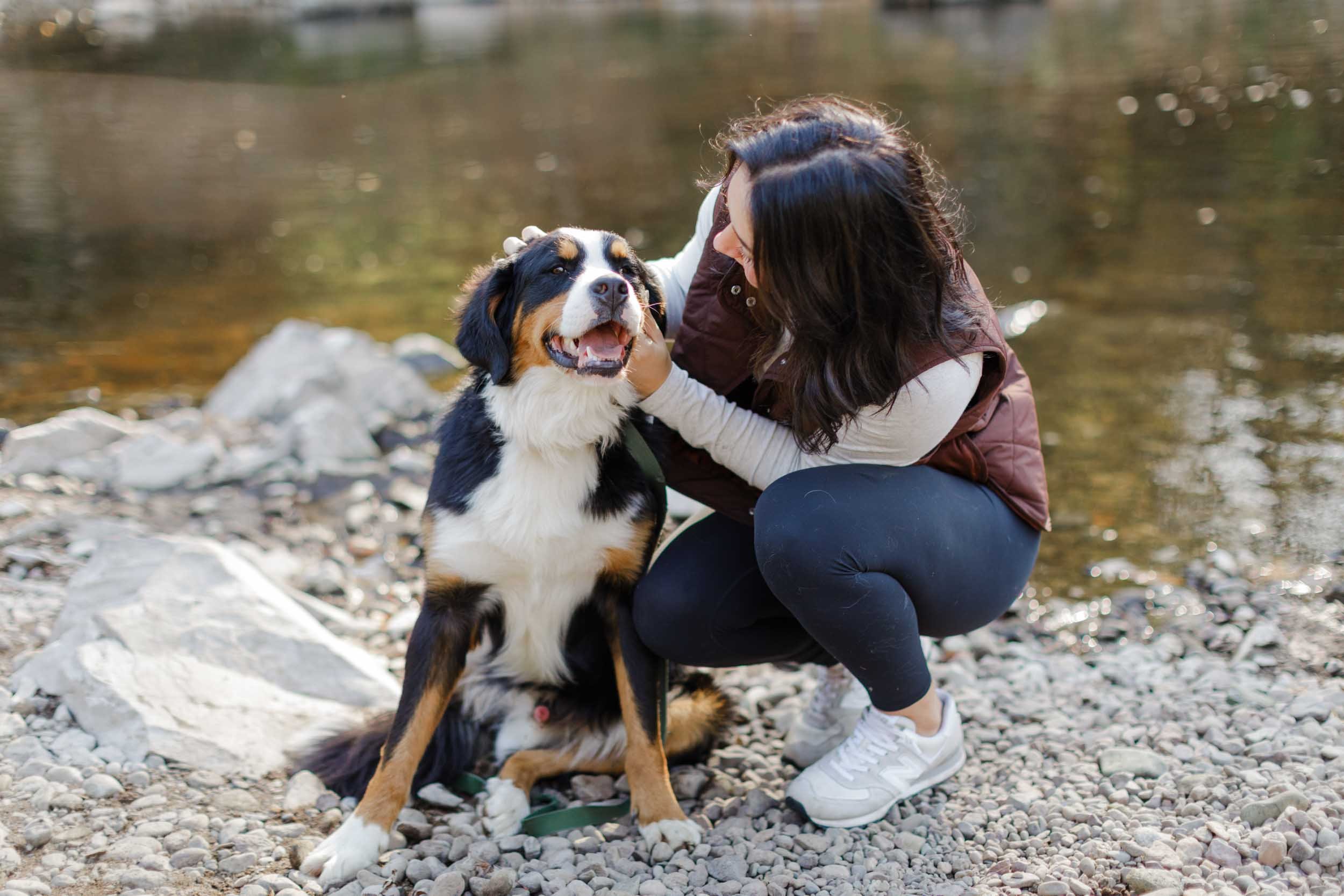
Stokeshire uses a stepwise readiness model, ensuring dogs are developed slowly, ethically, and intentionally.
Phase 1: Early Neurological & Emotional Foundations
Structured early handling
Controlled novelty exposure
Calm-state imprinting
Stress recovery conditioning
Phase 2: Adolescent Regulation & Public Readiness
Leash neutrality
Environmental resilience
Noise and movement tolerance
Emotional recovery after stimulation
Phase 3: Public Trust & Certification
Most families and schools pursue:
Canine Good Citizen (CGC) certification
Advanced or urban CGC equivalents
Therapy dog organization evaluations as required by district policy
Certification is not the goal — emotional suitability is.
Certification simply verifies readiness.
How Dogs Are Successfully Used in Schools
Proven, Low-Risk Applications
Reading programs (non-judgmental presence)
Counseling and social work offices
SEL classrooms
Special education environments
Staff wellness and regulation support
Common Missteps to Avoid
Treating the dog as entertainment
Allowing excessive or unstructured handling
Using high-energy or novelty-seeking dogs
Inconsistent schedules with inadequate recovery time
Stokeshire actively discourages placements where dogs are overworked, overstimulated, or used as classroom rewards rather than therapeutic partners.
Advocacy Rooted in Ethics, Not Trends

Advocating for dogs in schools means advocating for standards.
Stokeshire supports school-based canine programs only when:
the dog is temperamentally suited
the handler is trained and accountable
school policies are clear and enforced
student consent and boundaries are respected
Poor placements don’t just fail. They close doors for future programs.
Ethical advocacy protects:
students
educators
administrators
families
and the dogs themselves
A Responsible Path Forward
Dogs can be extraordinary partners in education when science, training, and ethics align.
Stokeshire exists to:
educate families and schools
raise the standard for therapy-grade dogs
support evidence-based implementation
protect dogs from misuse under the banner of “support”
This is not about access.
It is about responsibility.
References (APA 7)
Miyauchi, E., Yamaoka, M., Kamimura, I., Mizuta, M., Takenaka, M., Akiyama, U., Kawasumi, M., Sasaki, N., Ohno, H., Ando, S., Yamasaki, S., Nishida, A., Mogi, K., Nagasawa, M., & Kikusui, T. (2025). Dog ownership during adolescence alters the microbiome and improves mental health. Science, 378(113948). https://doi.org/10.1016/j.isci.2025.113948
This research identified associations between adolescent dog ownership, microbiome composition, and mental health outcomes. Implementation of dogs in school environments should follow established training, safety, ethical, and welfare guidelines.