
The Myths & Science of Doodles: Allergies, Health, and Responsible Breeding
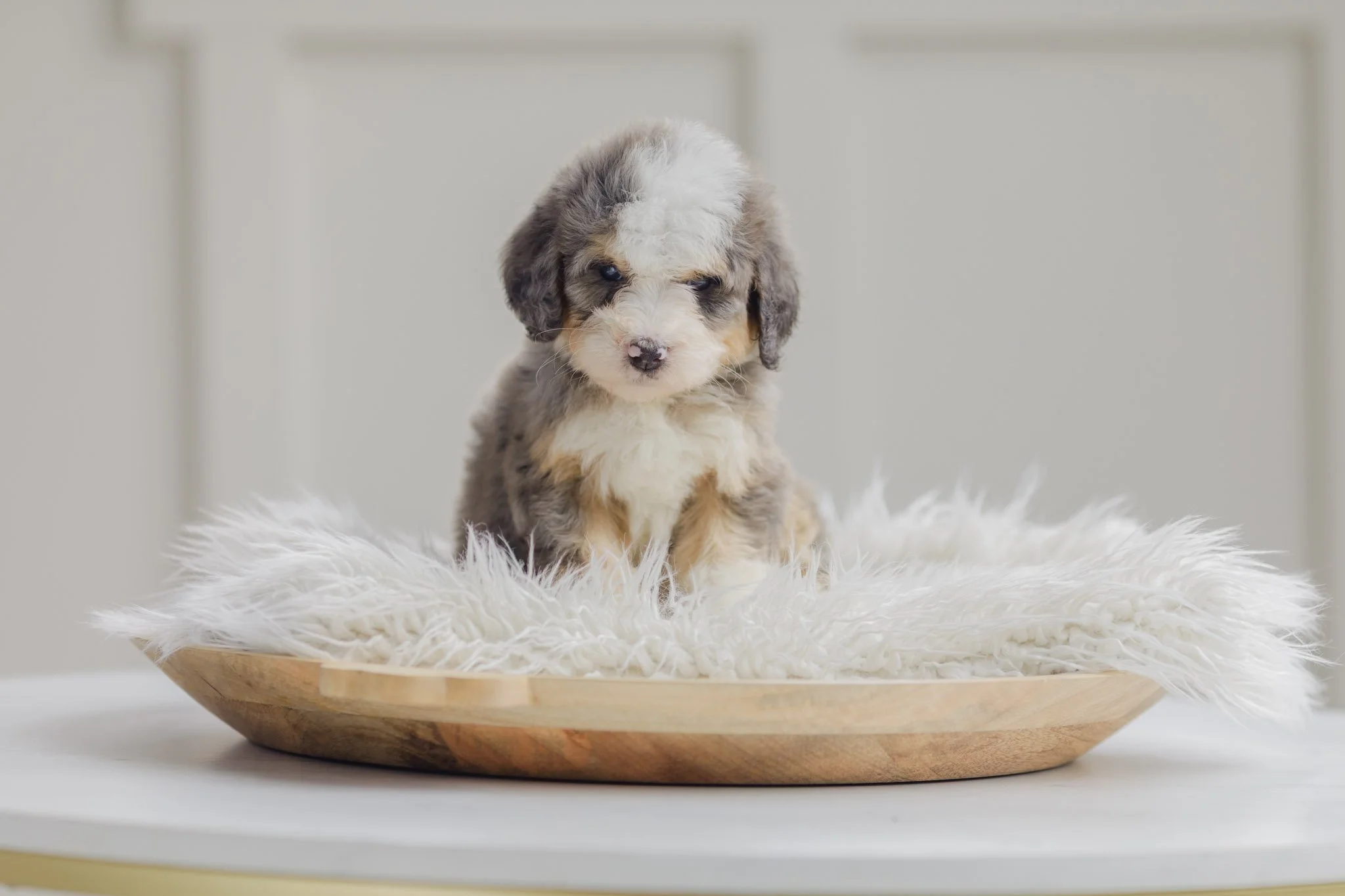
The "myth of the hypoallergenic doodle" challenges a common misconception: that doodles, such as fully furnished Golden Mountain Doodles, are inherently suitable for allergy sufferers because of a "hypoallergenic" label. These breeds are often marketed as low-shedding and allergy-friendly, but the science behind pet allergens is more nuanced. Being honest about that is the only way to actually help your family.
The Science Behind Allergens
Dog allergens are proteins, not fur. The main ones, Can f 1 and Can f 2, live in a dog's saliva, dander (dead skin flakes), and skin oils. That means even a dog who sheds very little still produces allergens that can trigger a reaction. Coat length and shedding level have little bearing on how much allergen protein a dog produces.
There is a detail most families are never told: allergen levels vary widely from dog to dog, even within the same breed and the same litter. Two dogs of the same type can differ significantly in how much Can f 1 they produce. That is why one dog may bother you while another does not.
The Hypoallergenic Misconception
Studies have found that homes with so-called hypoallergenic breeds, including doodles, often carry allergen levels comparable to, or higher than, homes with other breeds. No breed is truly hypoallergenic. What actually differs is the individual: your specific triggers, and the specific dog. Some people tolerate certain dogs well and react to others, regardless of breed or coat.
Here is where honesty becomes useful. A curlier, lower-shedding coat holds dander close to the skin. That means less loose fur around your home and easier cleaning. It does not lower the amount of allergen protein in the air. So a low-shedding doodle can make daily life easier for an allergy-sensitive family without being allergen-free. Both things are true at the same time.
The Male-Dog Factor
One of the most useful and least-known facts in dog allergy science: a major allergen called Can f 5 is produced almost entirely by male dogs. Some research links it to a majority of dog-allergic people. Because of this, some allergy-sensitive individuals react to male dogs and tolerate females far better, occasionally with little reaction at all. This is not a guarantee and it does not apply to everyone, but for many families it is the difference between a dog that works and one that does not. If your reactions have been unpredictable, this is worth testing before you commit. For families where it fits, we can prioritize a female puppy.
Stokeshire's Approach: The Allergy Fit Process
We answer the hypoallergenic question with honesty and hands-on testing instead of blanket promises, because every family's allergy profile is different. That is why we built the Stokeshire Allergy Fit Process:
Understand your sensitivity. We help you map who is affected, how strongly, and what fits your home.
Get clinically clear. We recommend seeing an allergist for skin-prick or component (Can f) IgE testing so you know your exact triggers, including whether the male-specific allergen is one of them. This is the allergist's own gold standard.
Test the actual dander. Our Allergy Sensitivity Pillowcase Test sends a 100% cotton pillowcase rubbed on your chosen puppy or the full litter, sealed and mailed to your home, so you can gauge your family's real reaction in your own space.
Meet in person. For families who can travel, an on-site allergy sensitivity visit lets you experience a specific dog's coat, dander, and temperament firsthand.
Match and confirm fit. We prioritize a female if that suits your sensitivity, guide honest coat and grooming expectations, and help you set up an allergen-aware home before any deposit.
Real exposure to the specific dog, before commitment, tells you more than any label ever will. That is how we protect both your family and our puppies, and how we build bonds that last.
Hypoallergenic Disclaimer
No dog is truly hypoallergenic. No breed, generation, or coat type is allergen-free, and we never claim otherwise. Low-shedding coats can reduce loose fur and hold dander closer to the skin, which often means less mess and easier cleaning in the home, but they do not eliminate the allergen proteins found in a dog's saliva, dander, and skin oils, and they do not remove those allergens from the air.
Allergic reactions are individual. Sensitivity varies from person to person and from dog to dog, even within the same breed or litter. A dog that is comfortable for one allergy-sensitive person may cause a reaction in another.
Any information we provide about coats, shedding, or allergy management is educational and is not medical advice. Before bringing a dog into an allergy-sensitive home, we strongly recommend consulting a licensed allergist and, where possible, testing your reaction to the specific dog before you commit. Stokeshire Designer Doodles makes no guarantee of allergy compatibility and is not responsible for any allergic reactions that may occur.

Allergy Sensitivity Visit for “Hypoallergenic” Puppies
Our On-Site Allergy Sensitivity Visit provides families with an opportunity to determine if a Stokeshire puppy is a good fit, especially for those with known or suspected allergies. This experience ensures you can make an informed decision before bringing a puppy home.
What’s Included
30-Minute Guided Visit: Spend time with our puppies in a clean, controlled environment.
Puppy Interaction: Safely handle and interact with our puppies under the guidance of our team.
Personalized Guidance:Our team will help you identify hypoallergenic coat types and recommend puppies best suited for families with mild allergies.
How It Works
Schedule Your Visit: Once your puppy application is approved and you’ve placed a $500 reservation deposit, contact us to book your Allergy Sensitivity Visit.
Prepare for Your Visit:
Avoid contact with other dogs, dog parks, pet stores, or shelters for at least 72 hours before your visit.
Make sure all visitors are healthy and free from illness.
Follow Health and Safety Protocols:
Upon arrival, sanitize your hands and step onto a bleach mat to disinfect shoes.
Our team will guide you in safely handling the puppies.
Monitor for any allergic reactions during and after your visit.
Puppy Selection: Puppies shown during the Allergy Sensitivity Visit are selected at the sole discretion of Stokeshire Designer Doodles. This is NOT part of the official Pick of the Litter (POL) or Puppy Selection Day process. The purpose of this visit is solely to assess for potential allergic reactions.
Important Precautions
Health First: All visitors must be free of illness to protect the health of our puppies.
Supervision Required: Children are welcome but must be closely supervised at all times.
Hygiene Measures: Visitors must wash hands and use hand sanitizer before interacting with puppies.
Footwear Protocol: All visitors must step on a bleach mat to disinfect shoes before entering.
Allergic Reaction Policy
If you or a family member experiences an allergic reaction during your visit, here’s what happens next:
Non-Refundable Deposit: The $500 reservation deposit is non-refundable. This secures your place on our waitlist and limits availability for other families.
Deposit Transfer Option: You may transfer your deposit to a friend or family member or keep it on file for up to 12 months.
Pillowcase Test Discount: If you have not already tried the Allergy Sensitivity Pillowcase Test, you may purchase it for 50% off ($25) for further testing.
Health Claims & Hybrid Vigor
Many believe that crossbreed doodles are inherently healthier due to hybrid vigor. However, research shows otherwise:
A UK study comparing Labradoodles, Cockapoos, and Cavapoos with their purebred parent breeds found no significant difference in overall health in about 86% of assessed disorders
Some designer crossbreeds showed higher odds of skin issues, such as pruritus and otitis externa, largely due to traits like curly coats and pendulous ears that trap moisture
Crossbreeds may carry unpredictable genetic combinations—which could dilute some recessive risks but also risk introducing new or dominant hereditary issues

A simple way to see if you're a match—before bringing a puppy home.
At Stokeshire Designer Doodles, we care deeply about making sure every puppy is placed in the right home. For families with known or suspected pet allergies, our Allergy Sensitivity Pillowcase Test offers an easy and thoughtful way to test for potential reactions before committing to a puppy.
We take a freshly washed, 100% cotton pillowcase and gently rub it all over one of our puppies—or the entire litter if you prefer. This transfers natural dander, saliva, and coat oils to the fabric, which are the most common allergy triggers. The pillowcase is then sealed and mailed directly to your home, allowing your family to evaluate comfort and compatibility in a safe environment.
What’s Included:
One dander-infused pillowcase from your selected puppy or litter
A $25 coupon toward a future puppy (valid for 6 months)
Cost: $50 (includes materials & shipping)
Processing time: 3–5 business days
⚠️ Disclaimer
This test is designed as an informal tool to help assess possible allergic reactions to our puppies. It is not a medically certified diagnostic and should not replace the advice of a licensed allergist or medical provider. Allergic responses can vary based on the individual dog, level of exposure, and the environment. Stokeshire Designer Doodles makes no guarantee of allergy compatibility and is not responsible for any allergic reactions that may occur. Please use this service with discretion and consult a healthcare professional if needed.
Stokeshire’s Approach:
We prioritize rigorous health screening, including OFA and DNA panels, and select parent dogs with complementary health and temperament profiles. This helps reduce inherited risk while ensuring that traits like coat type don’t compromise welfare (e.g., risk of ear infections).
Reducing Criticisms, Strengthening Trust
Here’s how Stokeshire counters the most common concerns with practical, ethical solutions:
Common ConcernStokeshire’s Ethical ApproachHypoallergenic claims are misleadingFocus on individual allergen testing and informed decisionsHybrid vigor often exaggeratedUse health-tested, temperament-qualified parentsCoat types increase dermatological riskDesign care protocols for grooming, ear hygiene, and monitoringUnpredictable geneticsImplement ongoing health tracking and lifetime support
Final Thoughts
Doodles are beloved for their looks and personalities—but the assumptions about them must be tempered with research and ethical breeding. Through health testing, temperament assessments, and responsible breeding practices, breeders like Stokeshire respond to the science, rather than merely ride the hype.
Learn More About Hypoallergenic Doodle Dogs
If allergies are a concern for you or your family, explore our complete guide to hypoallergenic doodle coats, shedding, and how to choose the best allergy-friendly puppy.
Read the Hypoallergenic Doodle Guide →Want more allergy-friendly tips?
View All Hypoallergenic Articles →References
American Academy of Allergy, Asthma & Immunology. (n.d.). Dog allergen facts. AAAAI. https://www.aaaai.org/tools-for-the-public/conditions-library/allergies/dog-myths
American Kennel Club. (n.d.). Do hypoallergenic dogs really exist?. AKC. https://www.akc.org/expert-advice/dog-breeds/do-hypoallergenic-dog-exist/
Hart, B. L., Hart, L. A., Thigpen, A. P., Willits, N. H., & Lyons, L. A. (2024). Health of designer crossbreed dogs in relation to purebreds in the UK: A VetCompass study. PLOS ONE, 19(2), e0306350. https://doi.org/10.1371/journal.pone.0306350
University of Melbourne. (2024, February 28). New research busts the myth that crossbred ‘designer dogs’ are healthier than pedigrees. Find an Expert. https://findanexpert.unimelb.edu.au/news/91383-new-research-busts-the-myth-that-crossbred-%E2%80%98designer-dogs%E2%80%99-are-healthier-than-pedigrees
Wikipedia contributors. (2025, January 8). Hypoallergenic dog breed. In Wikipedia. https://en.wikipedia.org/wiki/Hypoallergenic_dog_breed