Goldendoodle Pros and Cons: An Honest Look Before You Choose
Goldendoodle Pros and Cons: An Honest Look Before You Choose
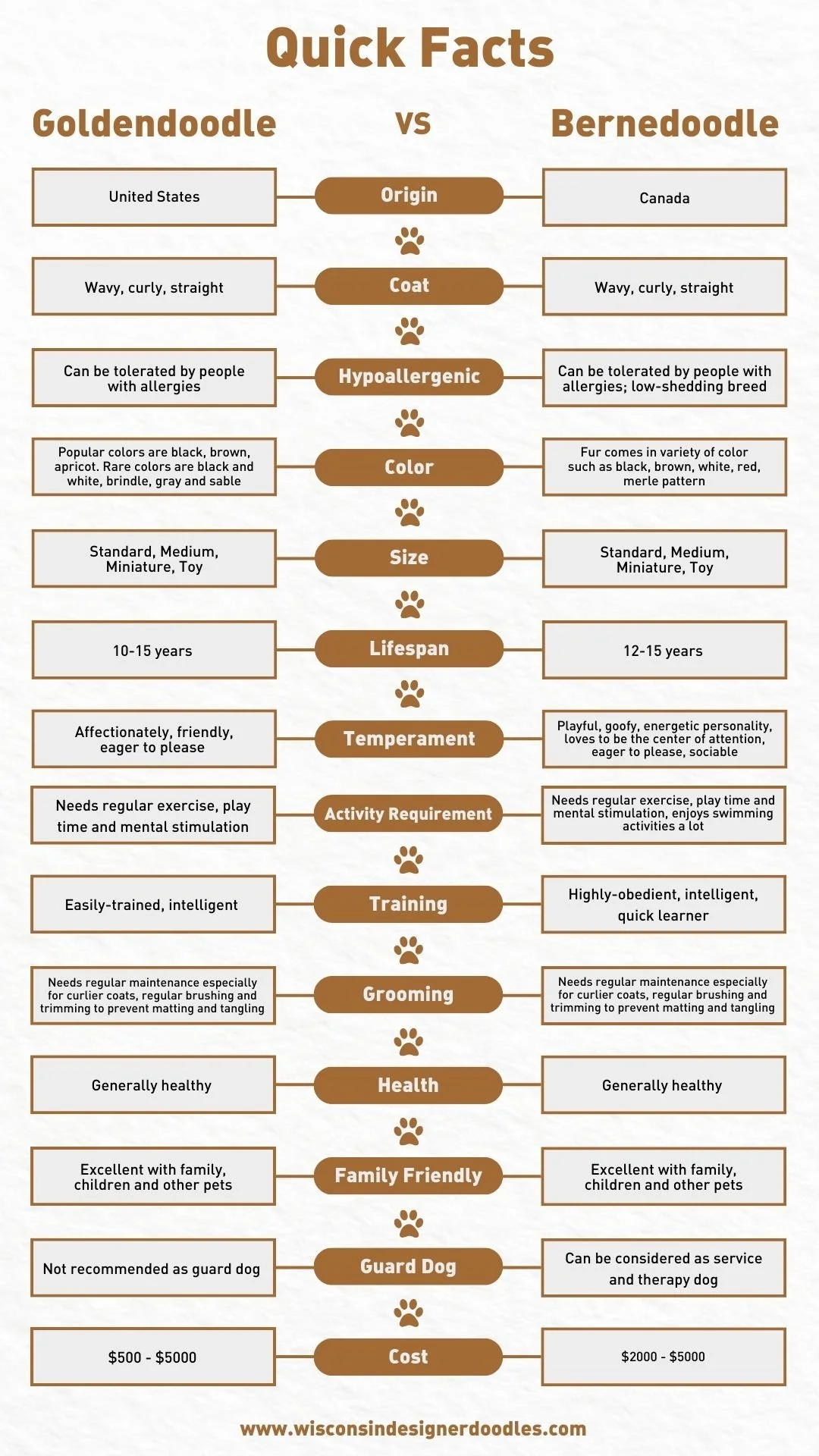
Thinking about a Goldendoodle and want the trade-offs, not the sales pitch? This post lays out the pros and cons of owning a Goldendoodle, compares it with a Bernedoodle on the points that matter day to day, and explains where the Golden Mountain Doodle, a cross of the two, fits for families who are torn. For a full side-by-side, see our Bernedoodle vs. Goldendoodle comparison.
Jump to the pros and cons · How a Bernedoodle compares · The Golden Mountain Doodle
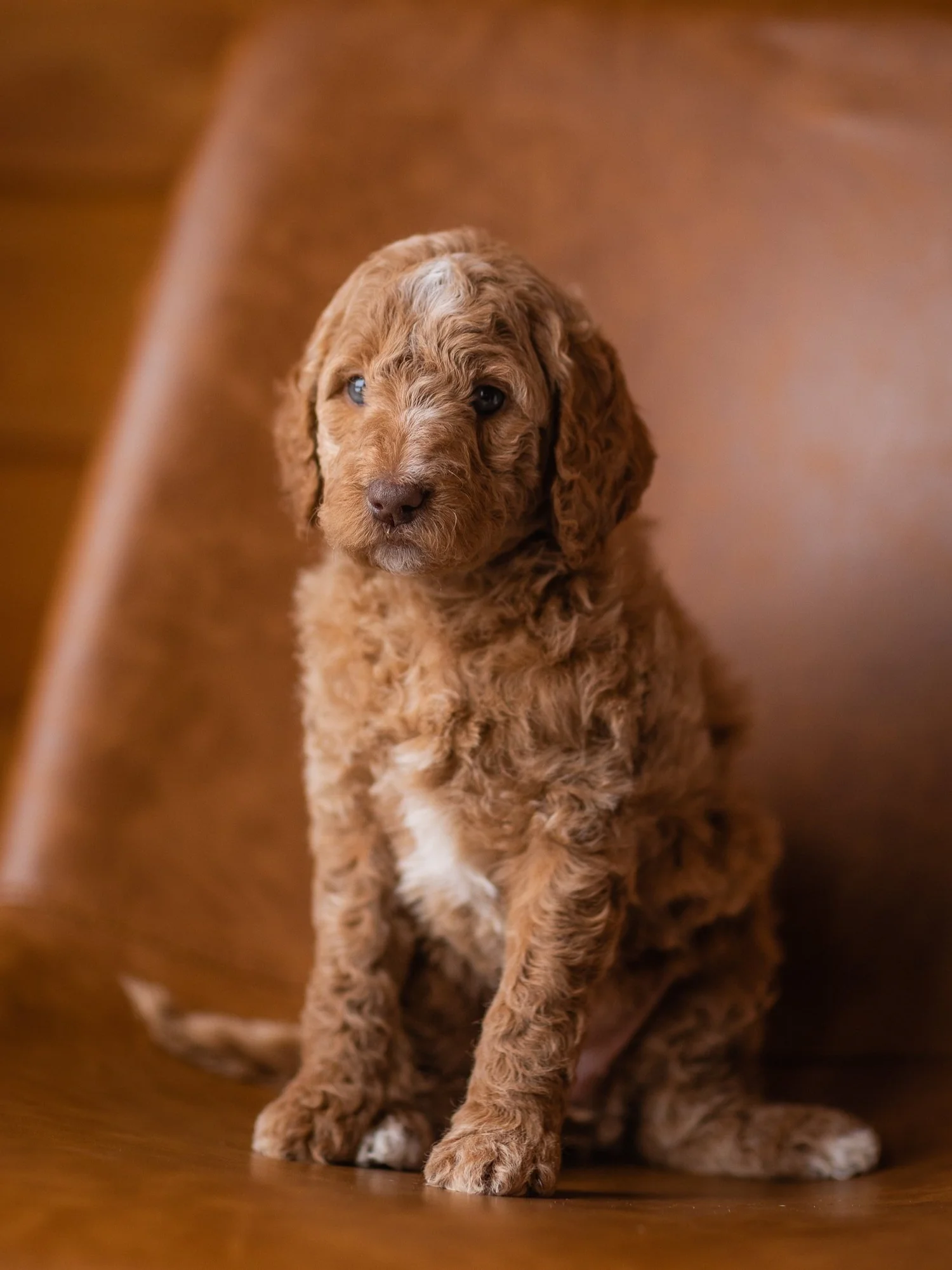
The Goldendoodle in Four Numbers
Petite 14 to 25 · Mini 26 to 35 · Medium 36 to 50 · Standard 51+ (Stokeshire size categories). Adult weight is an estimate, not a guarantee.
Furnished or flat
Wavy to curly with a beard and brow, or an unfurnished flat coat that looks like a retriever and sheds like one.
Walks, fetch, swimming, plus some mental work. More as a young adult, less and lower-impact during growth.
Smaller dogs tend to live longer. No lifespan is guaranteed.
What a Goldendoodle Is, and What a Bernedoodle Is
A Goldendoodle is a cross of a Golden Retriever and a Poodle. A Bernedoodle is a cross of a Bernese Mountain Dog and a Poodle. Both share the Poodle's coat genetics, which is why furnished puppies of either cross can be low-shedding, and both take size from the Poodle used, from Petite through Standard.
The differences come from the other parent. The Golden Retriever brings a lighter retriever build, a cream-to-red palette, and a dog bred to work closely with people all day. The Bernese Mountain Dog brings a heavier frame, the tri-color pattern, and a dog bred to work near home. Those origins shape the pros and cons below more than any generation label does.

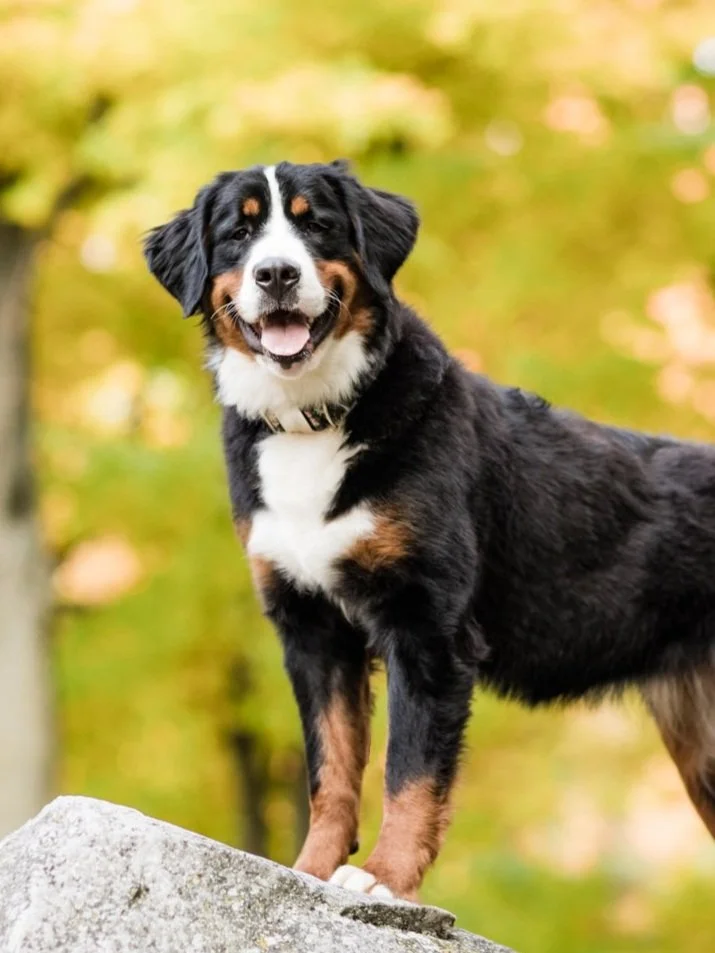
The parent breeds behind each cross: a Golden Retriever sire (Huck) and a Bernese Mountain Dog (Feta). The Poodle is the shared third parent.
Pros and Cons of Owning a Goldendoodle
Every point below is general to the cross. Individual dogs vary more than crosses do, and nothing here is a guarantee about a specific puppy.
Pros
- Temperament. Goldendoodles are known for being friendly and eager to please, which makes training easier for first-time owners. Temperament varies by individual dog.
- Fit with children and other pets, with the usual supervision around toddlers.
- Coat options. Furnished coats shed less into the house; unfurnished and flat coats give the retriever look. See unfurnished Goldendoodles.
- Size range. Petite through Standard under the Stokeshire size categories, so the cross fits apartments and acreage.
- Trainability. Golden Retriever and Poodle are both working-bred breeds that take to structured training, which is why the cross is common in therapy and service work.
Cons
- Grooming. A furnished coat needs brushing several times a week and a professional groom every six to eight weeks. Budget for it before you buy.
- Energy. Most need about an hour of activity a day, more as a young adult. A bored Goldendoodle finds its own job.
- Health. The Golden Retriever line carries hip dysplasia and cancer considerations; the Poodle line carries its own. Screening reduces avoidable risk but does not remove it.
- Separation. A dog bred for people does poorly left alone all day.
- No dog is hypoallergenic*. Furnished coats put less hair and dander into the house; that is not the same as allergen-free.
* What "hypoallergenic" means for a doodle, and what it does not

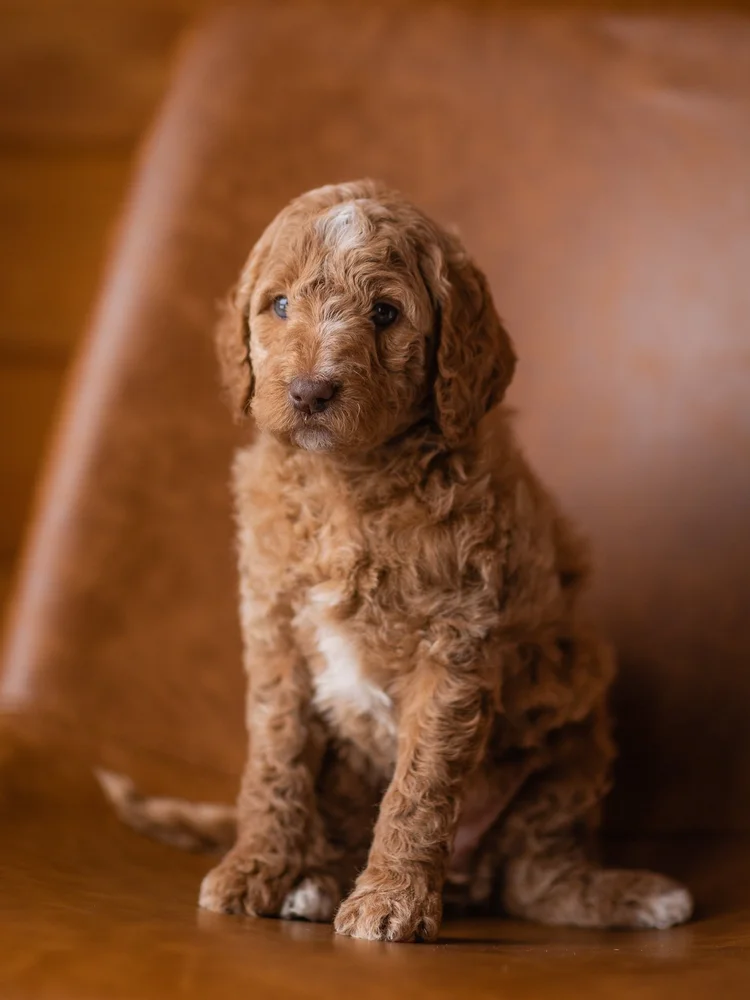
F1B Goldendoodle puppies raised at Stokeshire. Furnished coats like these hold shed hair until it is brushed out.
How a Bernedoodle Compares
Most families reading this are deciding between the two. The table covers the points that change daily life; the full Bernedoodle vs. Goldendoodle comparison goes deeper on each.
| Feature | Goldendoodle | Bernedoodle |
|---|---|---|
| Parent cross | Golden Retriever × Poodle | Bernese Mountain Dog × Poodle |
| Build | Lighter retriever frame | Heavier frame in the larger sizes, from the Bernese line |
| Sizes | Petite, Mini, Medium, Standard | Mini, Medium, Standard (Bernedoodle sizes) |
| Colors | Cream, apricot, gold, red, parti | Tri-color, bi-color, sable, phantom; black is common |
| Coat | Furnished (wavy to curly) or unfurnished flat coat. Same genes: RSPO2, KRT71, MC5R | Same coat genetics and the same furnished or unfurnished outcomes |
| Temperament | Family-oriented, people-focused, trainable | Family-oriented, tends calm and bonded to its household. Individual dogs vary more than the crosses do |
| Exercise | About an hour a day | Moderate; Standards often settle sooner than Goldendoodles of the same age |
| Grooming | The same for a furnished coat in either cross: brushing several times a week and a groom every six to eight weeks | |
| Health considerations | Golden and Poodle lines, including hip dysplasia and cancer in the Golden line | Bernese and Poodle lines, including elbow dysplasia and cancer from the Bernese line. Screening reduces avoidable risk; it does not remove it |
| Lifespan | Not yet measured; smaller dogs tend to live longer | Not yet measured; smaller dogs tend to live longer |
| Stokeshire litters | None planned. Mini Goldendoodle line in development | Bernedoodle litters and Golden Mountain Doodle litters planned |
Pros and Cons of Owning a Bernedoodle
Pros
- Steadiness. Many Bernedoodles tend calm and bonded to their household, which suits families who want a companion more than a sport dog. Temperament varies by individual.
- The tri-color look. Bernese markings in a lower-shedding coat are the reason most families choose the cross.
- Trainable and reward patient, consistent handlers.
- Cold-weather dog. The Bernese line handles Wisconsin winters without complaint.
Cons
- Size and weight. A Standard Bernedoodle is a big dog, with the food, vet, and grooming costs that go with it.
- Bernese health considerations, including elbow dysplasia and cancer. Parent screening and family health history matter in every pairing.
- Lifespan not yet measured. Smaller dogs tend to live longer, and the Bernese Mountain Dog averages about 7 to 10 years.
- Can be reserved with strangers. Early socialization matters more than it does with the typical Goldendoodle.
- Same grooming bill as a furnished Goldendoodle. The tri-color coat is not lower maintenance.
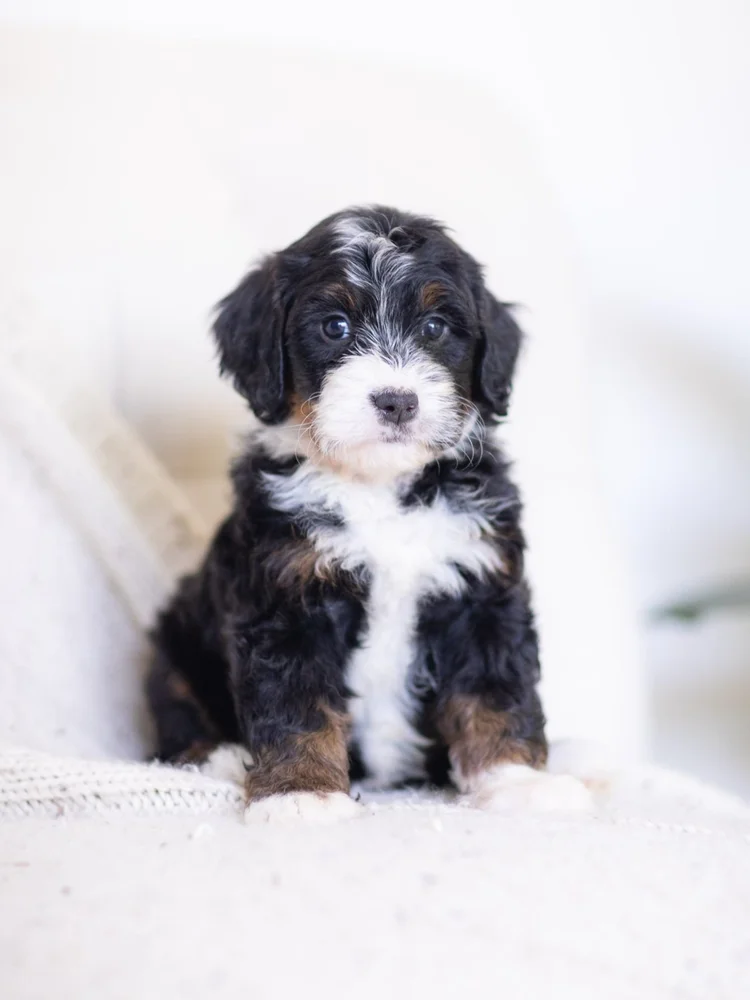
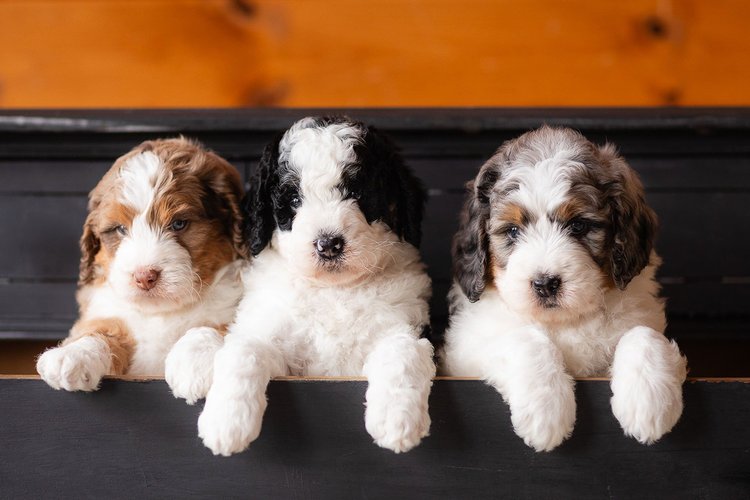
Bernedoodles raised at Stokeshire. The tri-color pattern comes from the Bernese Mountain Dog line.
Which Doodle Is Right for You?
Choose a Goldendoodle for the classic two-breed cross, a lighter build, and the cream-to-red palette. Choose a Bernedoodle for the Bernese tri-color look and a dog that tends calm and bonded. Both carry the health considerations of their parent breeds, and both need real grooming when furnished.
How much dog can your home and budget carry at adult weight? Do you want a dog that goes everywhere with you, or one that is content at home while you are out for the afternoon? And is the tri-color coat a must, or a nice-to-have? Answer those three and the choice usually makes itself. If it does not, read on.
Torn Between the Two? The Golden Mountain Doodle Is Bred From Both.
A Golden Mountain Doodle is a Goldendoodle crossed with a Bernedoodle, so it carries Golden Retriever, Bernese Mountain Dog, and Poodle lines. It is a different cross, not a Goldendoodle, and we do not claim it is calmer, friendlier, or healthier than either parent cross. What you can compare is the parents, their Embark results, the expected adult size, the coat possibilities, and our planned pairings.
Stokeshire is not planning Goldendoodle litters at this time. Our Goldendoodle mothers are the dams of our Golden Mountain Doodle litters, with two planned for early 2027.
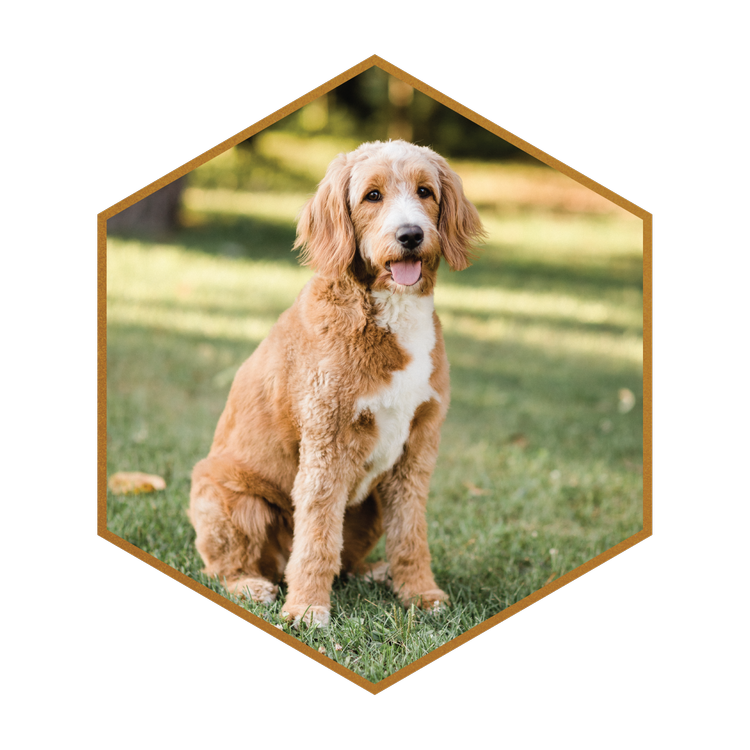
Mozzi · F1 Cream Goldendoodle
The same mother a Goldendoodle family would look for. Her planned litter with George is expected in early 2027.

George · Red and White Bernedoodle
Our Embark-tested sire with public results. Meet George.