GPS Dog Fences for Escape-Prone Dogs: What the 2026 Testing Actually Shows
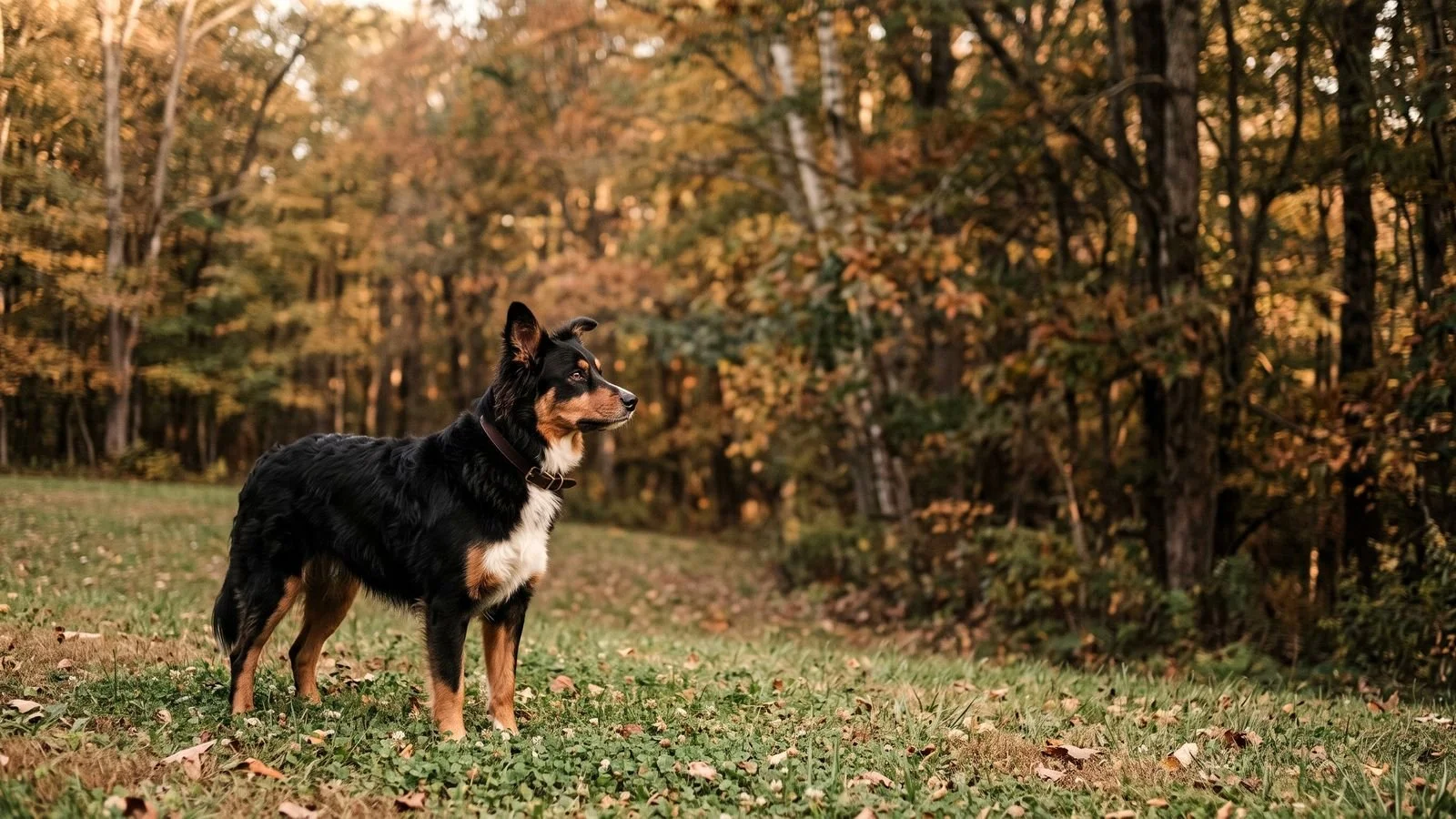
Containment, the Stokeshire way
Quick answer: A fast dog does not expose a GPS fence's weaknesses gradually. One missed warning is enough for a determined Doodle to cross the line before the collar responds. In 2026 tape-measured boundary testing by Pampered Pup, the SpotOn Nova delivered every alert, warning, and correction in all five trials with the lowest drift. Halo Collar 5 corrected reliably but skipped the intermediate warning twice. PetSafe Guardian GPS 2.0 gave no feedback at all in two of five passes. Under an acre, a wired fence is usually the more precise boundary. And no fence, of any kind, replaces boundary training. That is the work we do in Doodle School.
A strolling dog has time to process a tone and change direction. A dog already sprinting at the line covers more ground between feedback stages, so a skipped warning means the correction arrives after the dog has committed. In that narrow window, a few inches of GPS drift can decide whether the dog stays home.
That is why we do not think a GPS fence should be ranked by feature count or price. It should be ranked by whether every warning stage fires, every time.
Where Stokeshire Stands on Containment
A fence, wired or virtual, is a backstop. It is not the containment plan. The containment plan is a dog who understands the boundary, has a reliable recall, and gets enough structured activity that the yard is a place to rest rather than a place to escape from.
Static correction should be the last layer the dog ever reaches, not the first thing it notices.
The Stokeshire Method
That is the work we do in Doodle School and Bootcamp, and it is why our therapy-informed approach leads with tone, vibration, and clear marking before anything aversive. If you choose a GPS system, train your dog to respond to the first cue. With that said, families on acreage do ask us about these systems, and the honest answer is that some of them fail in ways that matter. Here is what the testing showed.
How These Fences Were Ranked
This ranking uses boundary accuracy data from Pampered Pup tester Zach Lovatt, updated in 2026. Lovatt ran five tape-measured boundary trials per collar under partial tree cover, recording GPS drift and whether each tone, vibration, and static-correction stage activated in sequence. Testing under a canopy matters because research shows that nearby trees affect satellite positional accuracy.
This list is for owners with at least half an acre. For fast dogs, warning timing, minimum weight, multi-dog support, correction levels, and collar fit matter alongside accuracy. If your yard is small, skip ahead to the wired section. A GPS fence is probably the wrong tool for you.
SpotOn Nova GPS Dog Fence
Pampered Pup's tape-measured comparison of GPS dog fences put the SpotOn Nova on top, with an average correction drift of 8 inches across five trials and a standard deviation of 16.6 inches. That is much tighter trial-to-trial performance than anything else tested.
The ranking is not based on drift alone. The Nova delivered every alert, warning, and correction in all five passes. It never missed a stage. For a running dog, that consistency is the whole point. It gives a trained dog more chances to turn around before reaching correction.
What the trials showed
A virtual boundary works as a sequence, not a single event. The first tone and vibration tell a trained dog to change direction. Later feedback reinforces the line if the dog keeps going. Correction is the final layer.
Because SpotOn fired the complete sequence every time, the dog received a consistent cue both before and at the boundary. That distinction matters most for a fast dog. When an intermediate warning disappears, the collar may still log a successful final correction even though the dog was given less time to respond. Lower drift also lets you place virtual lines with more confidence. GPS boundaries still need a buffer from roads, neighbors, and water, but consistent activation makes that buffer easier to plan.
Fit and cost
Pampered Pup listed the SpotOn at about $919 at time of writing, with an available discount. No subscription is required for containment, and the fence keeps running off-grid without cell service. Cellular only matters for real-time tracking. Battery life is roughly 24 hours, and the system supports properties from about a third of an acre to more than 100,000 acres. That makes it well suited to farms, wooded lots, and irregular parcels where burying wire is impractical.
The trade-off is simple. It has the highest upfront price and needs charging daily. For a genuine bolter on acreage, it delivered the most consistent boundary in this test, and there is no ongoing plan to keep paying.
Halo Collar 5
The Halo Collar 5 finished second. It delivered final correction more reliably than the lower-ranked systems but did not match SpotOn's warning consistency. It ships with a broader feature set: Bluetooth beacons, real-time tracking, longer battery life, and built-in training content associated with Cesar Millan.
We will note, for families who follow our approach, that Halo's bundled training material is not something we use or recommend. The collar itself is a separate question from the coaching it comes with.
What the trials showed
Pampered Pup measured Halo's average correction drift at 25 inches across five trials, with a standard deviation of 79.8 inches. Individual passes varied far more than SpotOn's. Halo produced the final correction in all five trials, but it missed the intermediate warning stage in two of them. In practice, the dog sometimes went from an early alert straight to correction without the full tone-and-vibration sequence. For a slow, cautious dog that is a minor gap. For a dog moving at speed, it is the gap that matters.
Fit and cost
Halo listed at about $549 at time of writing, plus a mandatory monthly subscription. Containment depends on keeping that plan active. Battery life is about 48 hours, the longest of the three ranked collars, which reduces the chance the fence goes dark because someone forgot to charge it. Beacons let you carve out avoidance or permission zones in the yard.
Halo is a reasonable choice for an owner who wants longer battery life and whose dog approaches boundaries carefully. It is not our pick for a dog that repeatedly tests the line at speed.
PetSafe Guardian GPS 2.0: Skip It
The PetSafe Guardian GPS 2.0 belongs in a different category. Its results showed failures at the exact point where a containment collar has to be dependable.
What the trials showed
The Guardian produced no feedback at all in two of five passes. The test collar crossed the marked boundary without a warning or a correction. When it did activate, the correction landed an average of 40 inches past the line. A fast dog is already gone at that point. Worse, an intermittent boundary teaches a line-tester that crossing does not always have a consequence. That is the opposite of what training is supposed to build.
Pampered Pup also tested the SATELLAI collar, which delivered no feedback in all five trials. That puts it outside consideration.
Fit and cost
There is no defensible case for the Guardian over the two higher-ranked collars. A lower price or a longer feature list cannot make up for silent crossings. The same verdict applies, more strongly, to SATELLAI.
SpotOn vs Halo: What Three Years Actually Costs
On the shelf, Halo looks about $370 cheaper. That gap is almost entirely the subscription, paid later instead of now. Pampered Pup's three-year comparison used a $499 Halo purchase price plus roughly $360 in plan fees, about $859 in total, against SpotOn's one-time $919. At Halo's $549 list price the two systems land within a few dollars of each other over three years. From year four on, Halo keeps billing and SpotOn does not.
| Comparison point | SpotOn Nova | Halo Collar 5 |
|---|---|---|
| Upfront price, per Pampered Pup | About $919 | About $549 |
| Three-year containment cost, per Pampered Pup | $919 | About $859 |
| Cost after year three | Nothing further | Subscription continues |
| Average correction drift | 8 inches | 25 inches |
| Full warning sequence delivered | 5 of 5 trials | 3 of 5 trials |
| Battery life, per Pampered Pup | About 24 hours | About 48 hours |
| Containment without cell service | Yes | Requires active plan |
| Bundled training content | None | Included, not our approach |
Where the money goes. You are not choosing between a cheap collar and an expensive one. You are choosing between paying once and paying monthly for roughly the same three-year total. If Halo's plan lapses, containment is affected. SpotOn keeps the saved fence running with no plan and no cell coverage.
Where the performance goes. Halo wins on battery and beacons. SpotOn wins on measured drift and on firing every warning stage, every time. For a dog that bolts, that second column is the one that keeps her in the yard.
When a Wired or Radio Fence Beats GPS
GPS is not automatically the right answer. Under roughly an acre, a wired in-ground fence usually gives a better-defined boundary because buried wire does not drift. That fixed line matters most when a small yard borders a road. A radio-wireless dog fence is another option for a compact, roughly circular yard. It costs less and avoids trenching, but you give up the ability to trace irregular property lines or exclude specific areas.
GPS earns its price on acreage, uneven boundaries, wooded lots, and off-grid land where long wire runs are impractical. Whichever system you choose, containment still comes down to training. Supervised practice with visible markers, real enrichment, and safer backyard routines give a dog reasons to stay inside the line.
Choosing for Your Dog
Match the tool to how your dog approaches a boundary. A genuine bolter needs the strongest accuracy and a collar that fires every warning stage, which makes SpotOn the clear choice from the 2026 testing. A milder tester may do fine with Halo's longer battery life. For a small yard beside a road, a fixed wired boundary usually makes more sense than accepting GPS drift.
No fence, of any kind, replaces the work of teaching a dog where home ends. Do that work first. The collar is there for the day the training is not enough.
The Stokeshire Method
Frequently Asked Questions
Which GPS dog fence tested most reliably for escape-prone dogs?
In Pampered Pup's 2026 boundary testing, the SpotOn Nova. It combined the lowest average correction drift, 8 inches across five tape-measured trials, with a complete alert, warning, and correction sequence in every pass. That full sequence gives a trained dog the most opportunity to turn before reaching static correction. Halo Collar 5 corrected reliably but skipped the intermediate warning in two of five trials, and PetSafe Guardian GPS 2.0 gave no feedback at all in two of five.
Are GPS dog fences worth it for escape-prone dogs?
Only when the system delivers every feedback stage consistently and the owner completes proper boundary training. Two of the four collars tested failed that reliability standard. For a committed escape artist, accurate activation, a generous buffer from roads and water, secure collar fit, and supervised training matter more than app features or a lower purchase price. A GPS fence is a backstop for training, not a replacement for it.
Do GPS dog fences work without cell service?
It depends on the system. SpotOn's containment keeps running off-grid once the fence is saved to the collar, and cellular is only needed for real-time tracking. Halo's containment depends on an active paid subscription, so a lapsed plan affects the fence itself. If your property has weak coverage, or you want the boundary to hold regardless of a monthly bill, that difference matters more than any feature on the spec sheet.
How much land do you need for a GPS dog fence?
At least half an acre, and the case gets stronger as the property grows. Under an acre, normal GPS drift of a foot or more makes a wired in-ground fence the more precise boundary, especially when the yard borders a road. GPS earns its price on acreage, wooded lots, irregular property lines, and off-grid land where burying long runs of wire is impractical.
Can a puppy wear a GPS fence collar?
Not before boundary training is solid. Every system has a minimum weight and neck size, and a young puppy usually falls below it. More importantly, a puppy needs to learn the boundary with visible markers, a long line, and supervised practice before any electronic cue means anything. Train to the tone and vibration first. Static correction should be the last layer a dog ever reaches, and ideally one a well-trained dog never meets.
What is GPS drift and why does it matter for a fast dog?
GPS drift is the gap between where the collar thinks the boundary is and where you actually set it. Tree cover, weather, and satellite position all move that line by inches or feet from pass to pass. A walking dog absorbs that variation. A sprinting dog covers the drift distance in a fraction of a second, so a collar that fires late or skips a warning stage can correct after the dog has already crossed. Consistency across trials matters more than any single accurate reading.
Is a GPS fence better than a wired fence?
Neither is better in every yard. A wired fence gives a fixed, precise line and costs less, which suits small lots and yards near a road. A GPS fence needs no trenching, follows irregular property lines, and covers acreage that wire cannot practically reach. Choose by property size, hazards at the boundary, and how your dog approaches the line. Whichever you pick, the fence only works on a dog who has been taught where it is.
Boundaries Are Taught, Not Installed
Every Stokeshire puppy starts recall and boundary foundations before go-home, and families who choose Doodle School receive four additional weeks of positive-reinforcement work. If a well-started companion is what your family is looking for, we would love to meet you.
Meet Our Available PuppiesKeep reading
This article draws on independent boundary testing published by Pampered Pup. Stokeshire has no commercial relationship with the products named. It is educational and does not replace professional training or veterinary advice.