
Why Your Puppy Should Come Home Before Training Ends
The conventional wisdom in professional dog training is that longer is better. Board a puppy at a facility for 12 weeks, 16 weeks, or even six months. More time with a trainer means more training. More training means a better-behaved dog.
The science says something different.
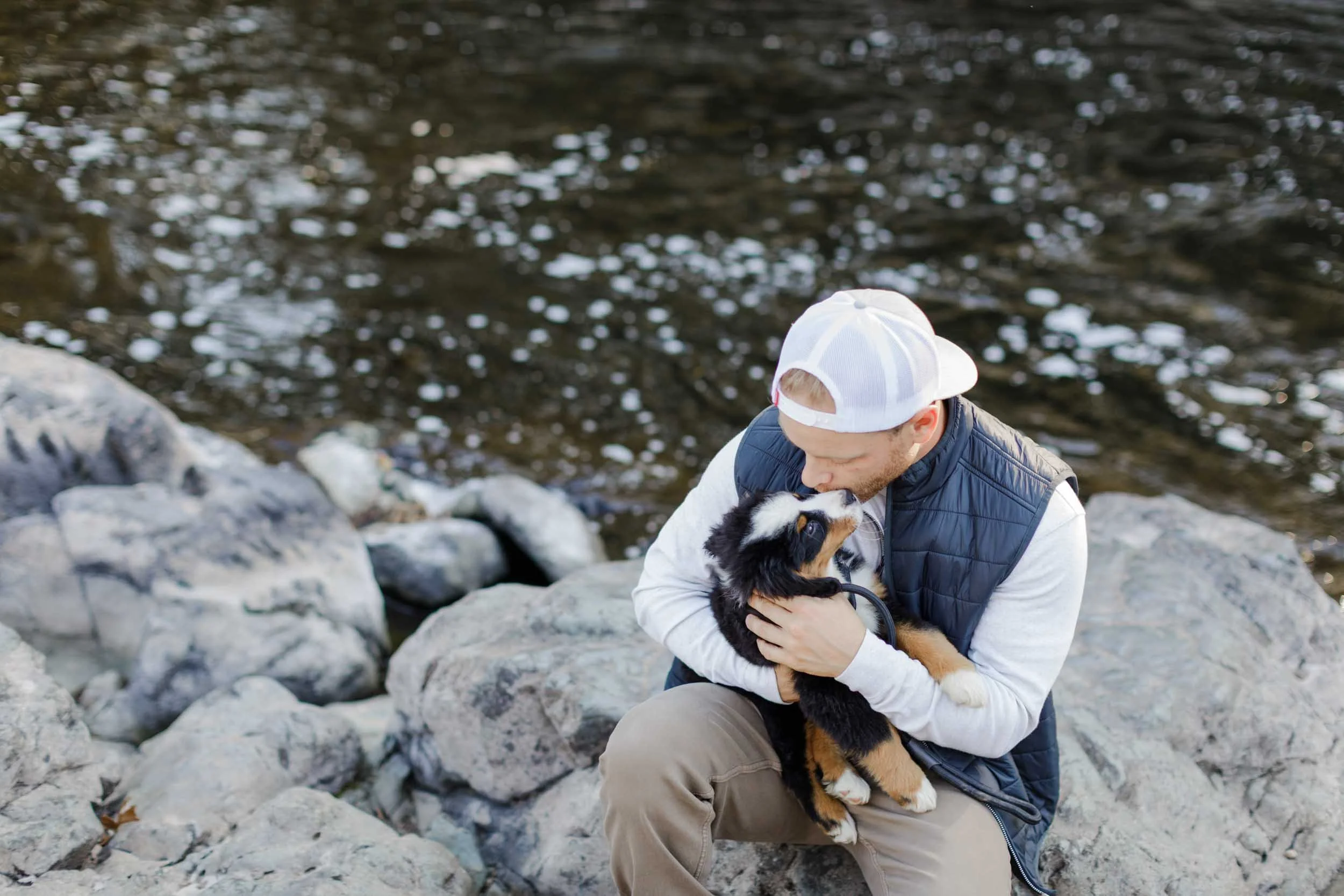
There is a narrow, critical window, approximately 12 to 16 weeks of age, during which a puppy forms its primary emotional attachment. This is not the same as training or socialization. This is the neurological bonding that shapes how a dog relates to people, manages stress, and develops trust for the rest of its life. And this window cannot be extended. It cannot be made up later. It happens or it doesn't.
Extended board-and-train programs, no matter how excellent the training, miss this window. A puppy that stays in a facility through this period and comes home at 20 weeks or later has already completed the critical bonding phase but with staff, not with family. The attachment that should have been forming with you was forming with someone else.
This is why Stokeshire's approach is different. Puppies go home mid-program, during the bonding window, and continue training in the family environment where attachment is actually developing.
The Bonding Window: What It Is and Why It Matters
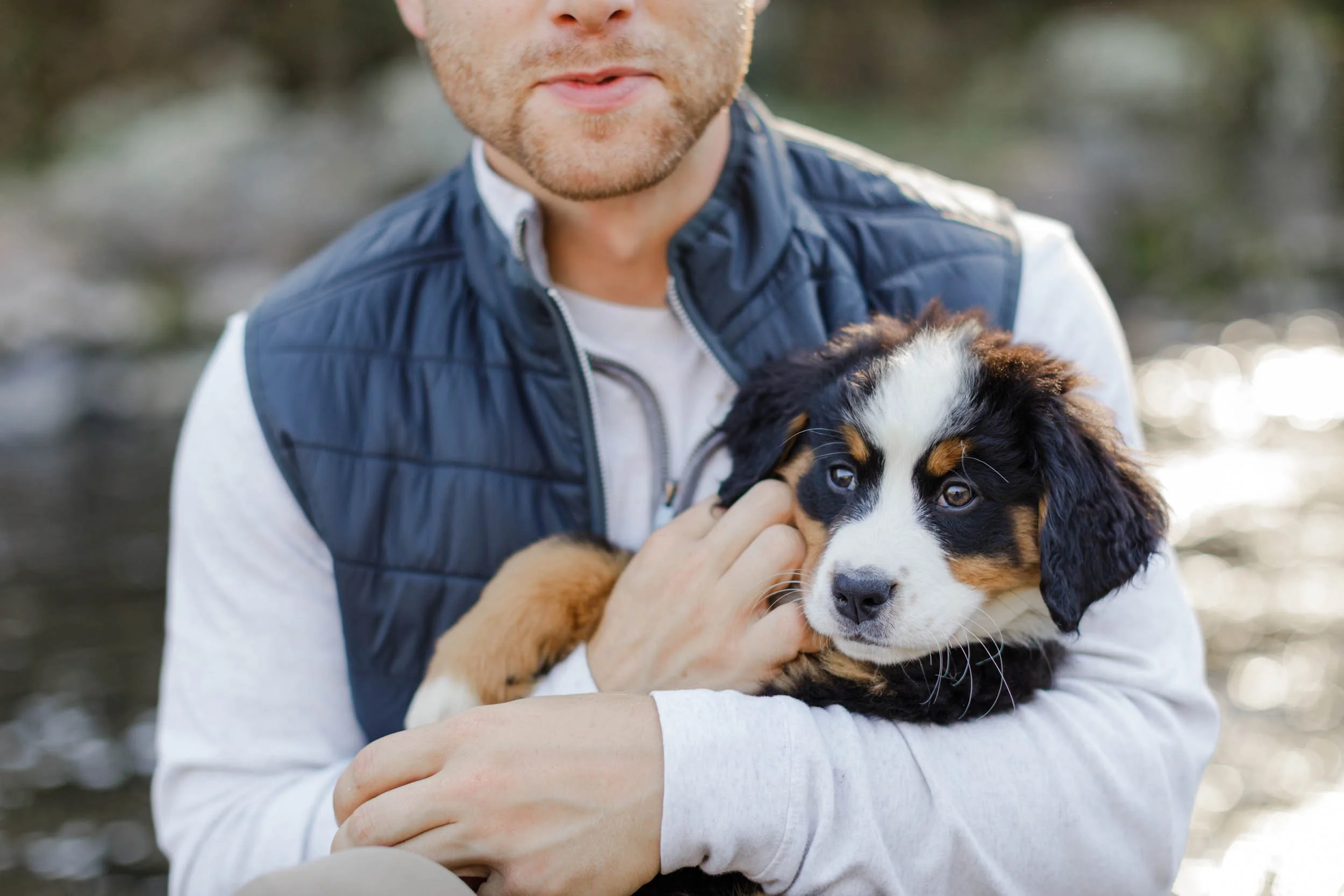
Between 12 and 16 weeks of age, a puppy's brain undergoes a rapid reorganization. The amygdala, the brain's threat-detection center, is still developing. The prefrontal cortex the rational, decision-making part of the brain is emerging. During this period, the puppy forms what researchers call its "primary attachment," a deep, emotional bond with a specific person or group of people.
This is not a preference. It's a neurological rewiring. When a puppy forms attachment to a caregiver, oxytocin levels increase in both the puppy and the person. Oxytocin is the bonding hormone. It creates the physiological substrate for trust. It reduces cortisol (stress hormone) in response to novel or threatening stimuli. It makes the presence of the attached person actually soothing to the puppy's nervous system.
A secure attachment during this window has measurable, lifetime effects on the dog's behavior:
Secure base behavior: The puppy learns that it can explore the world from a position of safety. When something is scary or novel, the puppy looks back to the attached person. The person becomes an emotional anchor. This is what creates a confident, well-socialized dog not because it was exposed to many stimuli, but because it learned to use a trusted person as a reference point.
Stress regulation: A puppy with a secure attachment learns to regulate its own nervous system using the caregiver as a model. This is called "social referencing." It's how the puppy's brain learns to modulate its fear response. A puppy without this secure attachment during the critical window has a harder time self-regulating stress throughout its life.
Trainability: A dog with a secure attachment works harder for its person because the relationship itself is motivating. This is not about treats. It's about the dopamine released when the dog is near someone it's bonded to. A puppy that missed the bonding window can still be trained, but the work is more effortful and less intrinsically rewarding.
The research on this is clear. Ainsworth's attachment theory, developed for human-infant relationships, has been applied to dog-human attachment by researchers including John Archer and others. The findings are consistent: the early bonding period shapes lifelong attachment style.
What Happens When the Bonding Window is Missed
A puppy kept in a facility from 8 weeks through 16 weeks or longer experiences something different from family life. Even in the best facility with caring staff, excellent care, structured training, and gentle handling the puppy does not form a primary attachment. It may form secondary attachments to individual staff members. It experiences socialization to other dogs and to many different people. But there is no one consistent caregiver present throughout the day, day after day, in intimate daily routines.
A puppy in institutional care often develops what researchers call "indiscriminate sociability." It is friendly and confident with strangers. It does not have stranger fear. This sounds like a good outcome, but neurologically, it reflects something different: the puppy did not form a secure primary attachment, so it approaches all people with a similar level of relationship.
When this puppy transitions home at 16, 20, or 24 weeks, the family must build the primary attachment from scratch. This is possible. Dogs can form attachments at any age. But the efficiency is different. The critical window is closed. The neurological pathways designed to form attachment most readily during 12-16 weeks have already developed around a different context the facility, not the family.
Some puppies transition smoothly despite missing this window. Others show anxiety, insecurity, or difficulty bonding to their new family. Some become overly people-focused, seeking connection indiscriminately rather than building a deep relationship with their specific family. These are not behavioral problems they are the natural outcome of a neurological process that happened on a different timeline than nature designed.
Why Extended Board-and-Train Misses the Mark
Board-and-train programs are excellent for what they deliver: professional training in controlled conditions. A puppy can learn sit, down, recall, leash manners, and impulse control in a facility. The training is real. The handler is skilled. The puppy's behavior measurably improves.
But training and bonding are not the same thing. A puppy that leaves a facility at 20 weeks with six months of training and no family attachment is not the same as a puppy that left at 12 weeks with less training but a secure family bond. The second puppy's family can build the training during the adolescent phase (which is another critical training window, from 4.5 to 7 months). The first puppy's family has a dog that can execute commands but may struggle with the emotional foundation that makes those commands work reliably in stressful, real-world situations.
This is especially true for companion dogs rather than working dogs. A service dog or sport dog might benefit from extended institutional training because the work itself becomes the focus. But a family puppy needs to bond first, train second.
The Bespoke Companion Model: Bonding First, Training Second
Stokeshire's approach inverts the conventional wisdom. Puppies go home during the critical bonding window typically around 12 weeks of age and begin their primary attachment with their family. They already have a foundation of training from the 4-Week Doodle School: they can settle on a mat, walk on a leash, respond to basic cues, and have experienced dozens of novel environments and stimuli.
Then, the puppy comes home and bonds.
At 4-5 months of age, when the puppy enters the adolescent regression period (another critical developmental window), the Bespoke Companion program resumes. The puppy returns to Stokeshire for intensive training that addresses the specific behavioral challenges of adolescence: increased independence, testing boundaries, fear periods, selective hearing. But by then, the puppy has a secure family bond. The trainer is not the primary attachment figure. The family is. This makes the adolescent training more effective because it's building on a foundation of family attachment rather than trying to transfer an institutional attachment to a family that wasn't there during the bonding window.
The result is a dog that is deeply bonded to its family and also trained. The training sticks because the family is the context in which it matters. The bonding is deep because it began during the neurological window designed for it to happen.
What to Look for When Choosing a Puppy Program
If a program keeps puppies past 12 weeks before going home, ask why. The answer matters.
If the program is designed to develop the puppy during the critical bonding period and then send it home to bond with family, that's aligned with developmental science. You're receiving a puppy with training and a prepared family. The developmental stages are being honored.
If the program is designed to keep the puppy as long as possible to maximize training before handoff, the program is not aligned with attachment science. The puppy will arrive at your home fully trained but less securely bonded to you. You'll have a well-behaved dog to integrate into a family, rather than a dog that has been integrated into your family.
Ask these questions before committing:
At what age does the puppy go home? (The answer should be 10-14 weeks for bonding to occur with your family.)
What training is completed before the puppy comes home? (This is what you're receiving upfront.)
What happens after the puppy goes home? (Is there continued training support during the adolescent phase?)
How is the family prepared to build on the training during the critical bonding period? (Does the program provide guidance on how to maintain training while prioritizing attachment?)
The program that bonds first and trains second and trains again during adolescence when the next critical window opens is the program aligned with how puppies actually develop.
Stokeshire Designer Doodles structures both the 4-Week Doodle School and Bespoke Companion program around the puppy's developmental timeline. Puppies go home during the critical bonding period with your family, and training continues through the developmental stages as the puppy matures. Learn more about how we structure puppy training to honor both attachment and behavior development.