
Bernedoodle Sizes: Toy, Petite, Mini, Medium, Standard & Ultra
How big does a Bernedoodle get? Adult size depends mostly on the Poodle parent. The Stokeshire Doodle Size Standard defines six Bernedoodle classes, from Toy (up to 15 lb) through Ultra (90 lb and above). Stokeshire’s Petite-range Bernedoodles come through our Munchkin Bernedoodle program, which adds Cavalier King Charles Spaniel heritage. This guide covers each class, growth from eight weeks to maturity, how to estimate adult size, and the lifestyle fit for each tier.
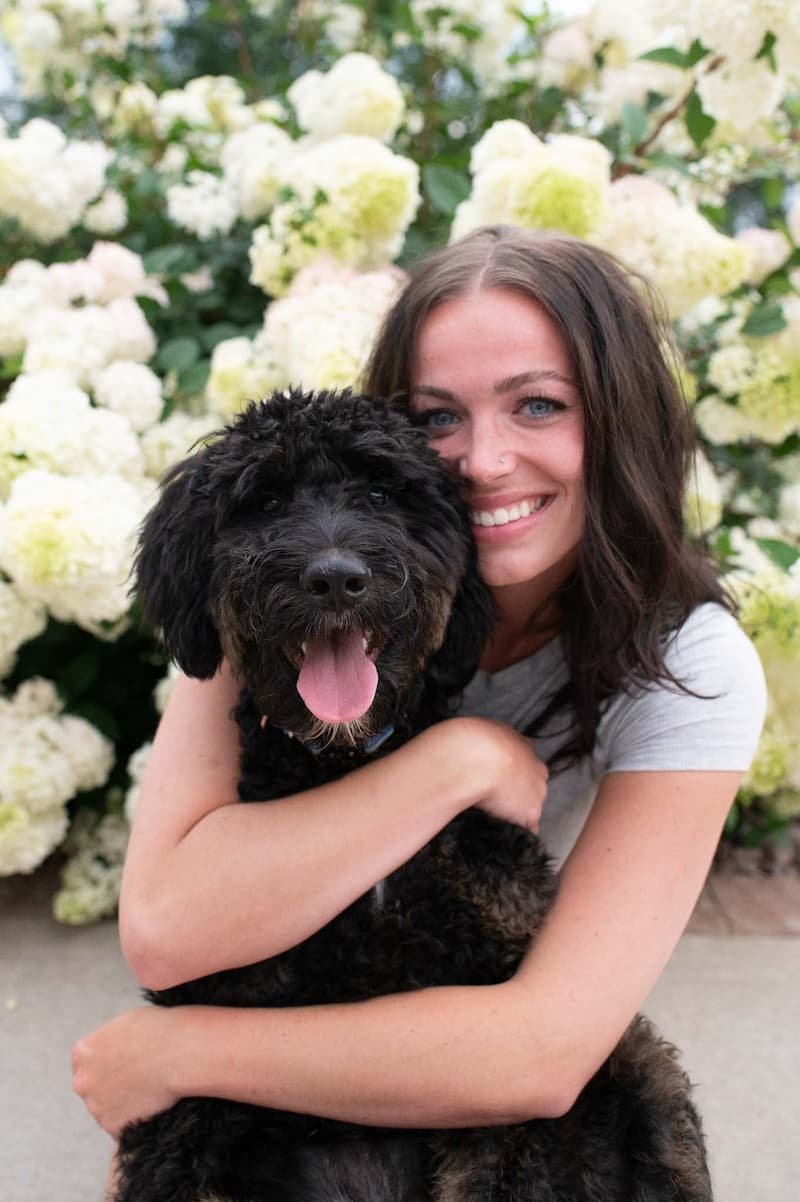
Bernedoodle Size Classifications
Bernedoodle size is driven mainly by the Poodle parent. The Bernese Mountain Dog parent is always a large dog (typically 70 to 115 lb), so the Poodle parent and the generation of the cross are the main levers that set adult size. Standard Poodle crosses produce Standard Bernedoodles and, occasionally, Ultra-range adults. Moyen Poodle and Mini multigenerational Bernedoodle lines produce Medium and Mini dogs. The Toy class comes from multigenerational lines bred down in size over several generations, and Stokeshire’s Petite-range Bernedoodles come through the Munchkin program. Most Stokeshire Bernedoodle pairings target the Mini or Standard class; class availability depends on the pairings planned each year.
Toy
Multigenerational lines bred down in size. Growth typically complete by 8 to 12 months. Suits apartments and frequent travel, and often fits an airline cabin carrier. Suited to households without rough play.
Petite
The lap-and-couch tier. Petite is the size class; Munchkin is the program and line. Stokeshire’s Petite-range Bernedoodles come through the Munchkin Bernedoodle program.
Mini
Miniature Poodle or Mini multigenerational cross. Growth typically complete by 10 to 14 months. The most requested Stokeshire tier across all breeds. Active families, urban professionals, suburban homes.
Medium
Moyen or small Standard Poodle cross. Growth typically complete by 12 to 16 months. Families with children, larger homes, and outdoor lifestyles. Comfortable on a trail and on the couch.
Standard
Standard Poodle cross. Typical adult range 70 to 90 lb. Skeletal maturity at 18 to 24 months. Deep-chested, so bloat awareness applies. Suits families with space and a vehicle that fits a Standard crate.
Ultra
Reverse F1B cross (F1 Bernedoodle × Bernese Mountain Dog) with stronger Bernese influence. Stokeshire does not specifically breed for Ultra outcomes. For families experienced with very large dogs and the space to support them well.
Adult size is typical, not guaranteed. Adult weight is an estimate that may vary based on parentage, sex, generation, and individual development, and the Poodle parent has the largest influence. Individual puppies may finish 15 to 20 percent above or below the band. Females tend toward the lower end of each range, males toward the upper.
Bernedoodle Size, Weight, Height & Lifespan Reference
| Class | Adult Weight | Height at Withers | Growth Complete | Typical Lifespan | Typical Cross |
|---|---|---|---|---|---|
| Toy | up to 15 lb | under 13 in | 8 to 12 months | 12 to 15 years | Multigen lines bred down in size |
| Petite | 16 to 25 lb | 12 to 15 in | 10 to 12 months | 12 to 15 years | Munchkin program (+CKCS) |
| Mini | 26 to 35 lb | 14 to 17 in | 10 to 14 months | 12 to 15 years | Miniature Poodle or Mini multigen |
| Medium | 36 to 50 lb | 17 to 21 in | 12 to 16 months | 12 to 15 years | Moyen or small Standard Poodle |
| Standard | 51 lb and up (typ. 70 to 90) | over 21 in | 18 to 24 months | 12 to 15 years | Standard Poodle |
| Ultra | 90 to 115+ lb | over 23 in | 20 to 24 months | 10 to 13 years | Reverse F1B (about 75% Bernese) |
Lifespans are typical ranges drawn from parent-breed longevity research, not guarantees. Smaller dogs tend toward the longer end and larger dogs toward the shorter end. Parent health screening, body weight, diet, and consistent veterinary care all influence how long an individual dog lives.
Petite Bernedoodles: The Munchkin Program
Petite is a size class under the Stokeshire Doodle Size Standard: 16 to 25 lb and 12 to 15 in at the withers. Munchkin is the program and line. Stokeshire’s Petite-range Bernedoodles come through our Munchkin Bernedoodle program, which adds Cavalier King Charles Spaniel heritage to help stabilize a smaller adult size and bring an affiliative, family-oriented temperament to the line.
That Cavalier contribution is part of why Petite Bernedoodles often suit homes with children, mobility considerations, or buildings with weight ceilings. A typical Petite Bernedoodle matures under the 25-pound limit many condos and co-ops enforce. We hedge that intentionally. Adult size is not guaranteed, and we do not recommend selecting a Petite puppy to meet a strict weight threshold without talking with your veterinarian and your building first.
The Toy class (up to 15 lb) sits below Petite on the ladder and comes from Bernese and Poodle multigenerational lines bred down in size. The Munchkin program is a distinct three-breed cross that includes Cavalier King Charles Spaniel heritage. Both deliver a smaller Bernedoodle, but they come from different breeding programs and tend toward different temperament profiles.
What Is an Ultra Bernedoodle?
An Ultra Bernedoodle is a Bernedoodle that exceeds the Standard class, typically weighing 90 to 115 lb or more with a frame that leans heavily toward the Bernese Mountain Dog parent. Ultra outcomes usually come from Reverse F1B crosses (F1 Bernedoodle × Bernese Mountain Dog, about 75 percent Bernese and 25 percent Poodle) or from Standard crosses where both parents carry genetics for larger frames.
Stokeshire’s Position on Ultra Outcomes
Stokeshire does not specifically breed for Ultra outcomes. Selecting for maximum size compromises structural soundness. Ultra-range puppies do occur in our Reverse F1B litters, but the program is not built around maximum size, and we do not promise an Ultra outcome in any pairing. Families specifically seeking a giant-frame dog should plan for the variability that comes with hybrid genetics: a puppy from a Reverse F1B litter may finish at Standard size rather than Ultra, and that variation is not a defect.
What to Plan For with an Ultra
Ultra Bernedoodles need more space, more food, and more veterinary attention than smaller variants. Their deep-chested, heavy-boned frame tends to carry more risk of bloat (GDV), hip and elbow dysplasia, and orthopedic stress during a growth phase that lasts 20 to 24 months. Growing puppies still need regular movement, play, and exploration. During growth, favor self-paced, low-impact activity and avoid forced distance running, repeated high-impact jumping, and other strenuous repetitive exercise. Skeletal maturity varies by dog and size, so work with your veterinarian before beginning sustained running or other high-impact activities. Grooming costs are higher because of the larger coat, and insurance premiums are typically higher for giant-frame dogs.
The coat in Ultra Bernedoodles varies. Reverse F1B Ultras tend to have straighter, more Bernese-like coats that shed more, and these are not a fit for allergy-sensitive households. Standard-cross Ultras that carry stronger Poodle coat genetics may keep wavy or furnished coats with lower shedding, though this is less predictable at the Ultra size.
Typical lifespan estimates for Ultra Bernedoodles are 10 to 13 years, shorter than smaller variants, consistent with the general pattern that larger dogs tend to live shorter lives than smaller dogs of the same breed or cross.
Toy Bernedoodles
Toy Bernedoodles come from multigenerational Bernedoodle lines that have already been bred down in size over several generations, sometimes with a Toy Poodle in the pairing. Adults typically mature at up to 15 lb and stand under 13 in at the withers, finishing primary growth by 8 to 12 months. Whether a Toy-range Bernedoodle is available in a given year depends on the pairings we have planned; see planned litters.
Toy Bernedoodles carry the Bernedoodle temperament, typically gentle, people-oriented, intelligent, and playful, in the most portable frame. They generally suit apartment living, urban homes, and families who travel often and want a dog that can ride in an airline-approved cabin carrier. Their size also makes them manageable for older owners or anyone who needs a dog they can lift and carry.
Considerations Specific to the Toy Class
Smaller dogs are more physically fragile. A Toy Bernedoodle may not suit a household with very young children who play roughly or might drop the dog. Dental health matters more at Toy size, because smaller jaws are more prone to crowding, retained baby teeth, and periodontal disease. Low blood sugar can be a concern in very small puppies, particularly in the first weeks in a new home when stress may reduce appetite.
Toy Bernedoodles need less total exercise than Standards but still need daily structured activity and mental stimulation. Small size does not mean low maintenance; their intelligence and need for engagement match larger Bernedoodles.
“Micro Bernedoodle” and “Teacup Bernedoodle” are marketing terms without standardized definitions. There is no distinct Micro class. Dogs marketed as Micro are typically Toy Bernedoodles at the smaller end of the range, or Petite Bernedoodles labeled inaccurately. Stokeshire uses the six-class Stokeshire Doodle Size Standard. Extremely small dogs (under 10 lb) may face added health challenges related to fragile bones, dental issues, and difficulty regulating body temperature. Stokeshire does not endorse extreme miniaturization, and we recommend veterinary consultation before choosing any puppy targeted at the very low end of the band.
Bernedoodle Growth Stages by Class
Smaller classes reach skeletal maturity faster than larger ones. Standard and Ultra Bernedoodles may keep adding muscle and bone density until 18 to 24 months, while Toy Bernedoodles often finish primary growth by 8 to 12 months. Knowing the timeline for your puppy’s class helps you plan exercise, feeding, and veterinary care during development.
| Class | 8 Weeks | 4 Months | 6 Months | 12 Months | Full Maturity |
|---|---|---|---|---|---|
| Toy | 2 to 4 lb | 5 to 9 lb | 7 to 12 lb | up to 15 lb | up to 15 lb (8 to 12 mo) |
| Petite | 3 to 5 lb | 7 to 12 lb | 10 to 18 lb | 16 to 25 lb | 16 to 25 lb (10 to 12 mo) |
| Mini | 5 to 8 lb | 12 to 18 lb | 18 to 26 lb | 22 to 32 lb | 26 to 35 lb (10 to 14 mo) |
| Medium | 7 to 12 lb | 16 to 25 lb | 22 to 35 lb | 32 to 45 lb | 36 to 50 lb (12 to 16 mo) |
| Standard | 10 to 20 lb | 25 to 40 lb | 40 to 60 lb | 60 to 80 lb | 51 lb+, typ. 70 to 90 (18 to 24 mo) |
Weight ranges are approximate, drawn from parent-breed data and Stokeshire breeding observations. Individual variation is normal, and puppies from the same litter may finish at different adult sizes depending on which parent’s genetics are more expressed.
Estimating Adult Size: The 16-Week Doubling Rule of Thumb
A rough rule of thumb many breeders use: take the puppy’s weight at 16 to 18 weeks and multiply by two. A 20 lb puppy at 16 weeks would land near 40 lb as an adult. Treat the result as an estimate, not a forecast. Adult weight may vary based on parentage, sex, generation, and individual development, and F1 puppies in particular may favor the larger Bernese or the smaller Poodle parent late in growth. Plan for variation of 15 to 20 percent above or below the estimate. The Stokeshire Growth Calculator gives a class-specific estimate.
Exercise During Growth
Growing puppies need regular movement, play, exploration, and age-appropriate exercise. During growth, favor self-paced, low-impact activity and avoid forced distance running, repeated high-impact jumping, and other strenuous repetitive exercise. Skeletal maturity varies by dog and size, so work with your veterinarian before beginning sustained running or other high-impact activities. This matters most for Standard and Ultra Bernedoodles, whose larger frames place more mechanical stress on developing joints.
Every Stokeshire puppy goes home on the food we feed across our program, Diamond Naturals Skin & Coat Real Salmon & Potato Formula. Its AAFCO statement covers all life stages including growth of large size dogs (70 lb or more as an adult), which means it meets the calcium limits set for large growing puppies. We recommend staying on it through the growth window.
If you change foods, choose one whose AAFCO statement includes growth of large size dogs, and talk with us and your veterinarian first. Feed to body condition rather than the bag chart, keep your puppy lean, and do not add calcium or bone-health supplements. Panosteitis, often called growing pains, occasionally appears in our larger, fast-growing lines. It is usually self-limiting. If your puppy is diagnosed, please tell us so we can track it across our program.
Which Bernedoodle Class Fits Your Household?
Class affects more than physical dimensions. It shapes exercise needs, grooming costs, veterinary expenses, living space, travel logistics, and lifespan. The right class depends on your household, your living situation, your activity level, and your long-term capacity. The right tier is rarely the one a family arrives wanting. It is the one their household actually accommodates.
| Factor | Toy | Petite | Mini / Medium | Standard / Ultra |
|---|---|---|---|---|
| Living Space | Apartments, small spaces | Apartments, condos with a 25 lb ceiling | Houses or larger apartments | Larger home, yard preferred |
| Exercise Need | 30 to 45 min/day | 30 to 45 min/day | 45 to 75 min/day | 60 to 90 min/day |
| Children | Older children; fragile frame | All ages with supervision | All ages | All ages; handles active play |
| Travel | Often airline cabin eligible | Most vehicles; small cabin carriers at the low end | Most vehicles | SUV or larger vehicle |
| Annual Food Cost (estimate) | ~$250 to $500 | ~$300 to $600 | ~$500 to $900 | ~$900 to $1,500 |
| Grooming Cost | Lower; smaller coat area | Lower to moderate | Moderate | Higher; larger coat area |
| Bloat (GDV) Risk | Minimal | Minimal | Low | Elevated; deep-chested |
| Joint Considerations | Patellar luxation possible | Patellar luxation possible | Moderate weight-bearing stress | Higher weight-bearing stress |
| Typical Lifespan | 12 to 15 years | 12 to 15 years | 12 to 15 years | 12 to 15 years (Standard); 10 to 13 (Ultra) |
| Roles Sometimes Pursued | Emotional support, therapy visits | Therapy, medical alert | Therapy, psychiatric service | Therapy, mobility assistance |
Food cost figures are rough annual estimates and vary by food, region, and the individual dog. Therapy and service roles require specialized training and independent evaluation; suitability is individual and never guaranteed.
The temperament, intelligence, and people-oriented nature of the Bernedoodle do not change meaningfully between classes. What changes is the physical management: space, food, grooming, veterinary cost, and exercise logistics. Choose the class that fits your household’s reality, not the one that photographs well.
Bernedoodle Classes at Stokeshire Designer Doodles
Stokeshire’s Bernedoodle size ladder follows the Stokeshire Doodle Size Standard. Most of our Bernedoodle pairings target the Mini or Standard class, and the Petite tier comes through our Munchkin Bernedoodle program. Which classes are available in a given year depends on the pairings we have planned; see planned litters.
Each dog considered for the Stokeshire breeding program undergoes comprehensive, breed-appropriate health screening, including OFA-recorded evaluations, PennHIP hip evaluations where completed, genetic health testing through Embark, and cardiac and ophthalmologic examinations as appropriate. Embark screening includes the coat genes (RSPO2, KRT71, MC5R, FGF5) that shape furnishings, curl, and shedding, so likely coat outcomes can be estimated before a pairing is planned. No planned Stokeshire pairing exceeds 15 percent estimated coefficient of inbreeding (COI). Public Embark profiles on Our Dogs let families review genetic testing independently.
Crossing distinct breed lines can increase genetic diversity and may reduce the likelihood that some recessive inherited conditions are expressed. It does not eliminate genetic disease or the health considerations present in the parent breeds. That is why every dog considered for the program is screened before a pairing is planned. Stokeshire is a Good Dog Certified breeder.
Ultra-range puppies occur occasionally in Reverse F1B litters, where an F1 Bernedoodle is bred back to a Bernese Mountain Dog. Stokeshire does not specifically breed for Ultra outcomes, and we do not promise Ultra results in any litter.
Size is one of the first questions families ask during matching. We use the 16-week doubling rule as a starting point and prepare every family for typical variation of 15 to 20 percent. Adult size is typical, not guaranteed. Being plain about that is part of the Stokeshire approach: clarity over hype, structure over persuasion.
Bernedoodle Size FAQs
How big do Standard Bernedoodles get when fully grown?
How big do Mini Bernedoodles get?
What is a Petite Bernedoodle and is it the same as a Mini?
What is a Micro Bernedoodle?
What is an Ultra Bernedoodle?
How can I predict my Bernedoodle puppy’s adult size?
When do Bernedoodles stop growing?
Do smaller Bernedoodles live longer than larger ones?
How much exercise does each Bernedoodle class need?
Which Bernedoodle class is best for apartment living?