
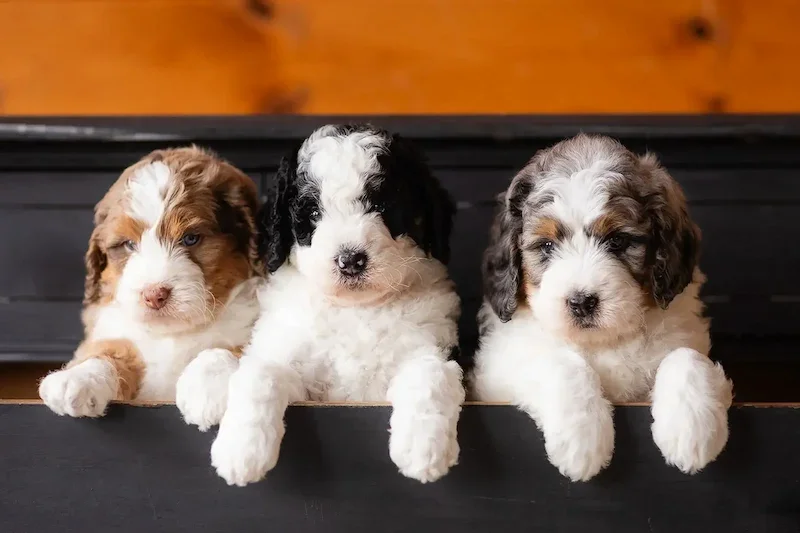
Pillar Guide
Doodle Puppies: Finding Your Perfect Family Companion
Doodle puppies win hearts fast — but choosing the right one is about more than a cute face. This guide explains what to look for in a well-bred doodle puppy — from temperament and coat types to size, training foundations, and ethical breeding standards — so you can confidently choose a companion built for a joyful 15-year friendship.
What Makes a Doodle Puppy Well Bred?
In a world filled with online listings for doodle puppies for sale, it can be hard to distinguish a responsibly bred dog from a high-volume kennel. The difference, however, is profound.
A well-bred doodle isn’t an accident. It’s the result of intentional genetics, thorough health testing, and a home-raised developmental plan that builds confidence and stability.
1) Health testing that goes beyond a “vet check”
- DNA panels to reduce hereditary risk (breed-appropriate screening)
- Orthopedic evaluations (OFA / PennHIP where applicable) for hips & elbows
- Transparent documentation you can verify — not just claims
2) Developmental raising environment
Well-bred puppies are raised to thrive in real family life — with structured handling, household exposure, and guided social development. Calm, resilient “family-ready” puppies don’t happen by luck — they’re built.
3) A breeder who acts like a steward
Ethical programs limit volume, prioritize each dog’s wellbeing, and support families long after pickup. If the breeder can’t clearly explain their standards, it’s a signal — not a mystery.
Want an even deeper breakdown? Use our Ethical Breeder Checklist.
Temperament Predictability: More Than a Guess
One of the most common myths about mixed breeds is that temperament is a toss-up. While genetics can be complex, temperament is highly heritable — and knowledgeable breeding stacks the odds in favor of stable, family-friendly behavior.
What families are actually searching for
- Gentle, kid-safe confidence
- Adaptability (not anxiety)
- Playful energy with an “off switch”
- Social stability in public
How predictability is built
- Stable parent temperaments
- Intentional pairing goals
- Early handling + resilience work
- Objective observations (not vibes)
When you search for “doodle puppies near me,” you’re not only looking for a dog that looks a certain way — you’re looking for a dog that lives a certain way. You shouldn’t have to guess who your dog will become.
A Coat for Every Lifestyle
The doodle coat is part of the magic — but it’s also practical. Coat type affects shedding, allergies, grooming time, and long-term maintenance costs. Not all doodle coats are created equal, and clarity here prevents disappointment later.
The three main coat types
Curly (Wool)
Tight curls similar to a Poodle. Often lowest shedding, commonly preferred by allergy-sensitive homes.
Tradeoff: higher grooming needs.
Wavy (Fleece)
Loose, shaggy waves with a “teddy bear” look. Often low shedding and soft, with moderate grooming needs.
Tradeoff: can mat if coat care is inconsistent.
Straight (Hair)
Closer to the retriever/berner parent coat. Usually easier home maintenance, but can shed more.
Tradeoff: less “hypoallergenic-friendly.”
Choosing the right coat is about lifestyle, grooming expectations, and allergy sensitivity. A reputable breeder should walk you through these differences before selection.
Size & Family Fit: From Micro to Standard
Doodles come in a wide range of sizes — which means there’s a great fit for nearly every home. The right size isn’t about aesthetics alone; it’s about lifestyle, energy outlet, and how the dog will physically move through your daily routines.
| Size | Best For | Considerations |
|---|---|---|
| Micro / Toy | Lap snuggles, easy travel, smaller spaces | Fragility around very young kids; needs careful handling |
| Mini | Active homes wanting a compact adventure buddy | Still needs training + structure; may have “big dog” confidence |
| Medium | Many families’ “Goldilocks” size | Often the best balance of sturdiness + manageability |
| Standard | Big adventures, outdoors, larger homes | More space, bigger food costs; best with daily exercise routine |
Your breeder should help match size to your lifestyle (kids’ ages, activity level, travel, and home setup), not just preference or aesthetics.
Training Foundations: The Stokeshire Difference
Puppies are built in the first weeks — not “fixed” later. The earliest learning windows shape confidence, adaptability, and household manners for years to come. That’s why we focus on training foundations before puppies ever go home.
Early foundations we prioritize
- Crate familiarity + calm settling
- Potty routine shaping
- Polite “asking” (manding)
- Novel sounds + household exposure
- Confidence-building micro-challenges
What this means for your family
- Less transition stress
- Faster routine adoption at home
- More stable behavior in new environments
- A puppy that arrives curious — not overwhelmed
We often say we aren’t just raising dogs — we’re raising family members. A puppy introduced to real life (vacuum cleaners, doorbells, visitors, structured rest) arrives with a “Midwest welcome”: happy, adaptable, and ready to learn.
Want a puppy with a stronger foundation?
Explore our training pathway and available puppies.
Ethical Breeder Checklist
Use this checklist to confirm you’re working with an ethical program that prioritizes the wellbeing of dogs and the long-term success of families.
Transparency
Can you verify parent health testing (OFA / PennHIP + DNA), not just hear about it?
Raising Environment
Are puppies raised with structured handling and clean, developmentally supportive care?
Socialization Curriculum
Does the breeder follow a plan (ENS / Puppy Culture-style structure) — or “we love them a lot”?
Lifetime Support
Will the breeder take the dog back at any time, for any reason?
Restraint
Is volume limited so each dog gets individual attention and oversight?
If a breeder can’t confidently answer “yes” to these questions, keep looking. Your future family member is worth the extra effort.
FAQ: Doodle Puppies
Are doodle puppies actually hypoallergenic?
“Hypoallergenic” is a spectrum, not a guarantee. Many doodles are low-shedding and work well for allergy-sensitive families, but coat type, dander, and individual sensitivity matter. Start with realistic expectations — then choose coat type intentionally.
What’s the difference between furnished and unfurnished doodles?
Furnished doodles typically have the classic doodle facial hair (beard/eyebrows) and often shed less. Unfurnished doodles have a more “retriever-like” face and can shed more — but many families love the look.
How do I choose the right doodle size for my family?
Match size to lifestyle: activity level, space, travel plans, and the ages of children. Many families love Medium for balance; Standard can be incredible for active homes; Mini can be perfect with structure.
Do coat colors matter in temperament?
Coat color is not a reliable predictor of temperament. Ethical breeding prioritizes health, stability, and development first. Color should be a “bonus,” not the deciding factor.
How early should training start?
Immediately — in age-appropriate ways. The first weeks shape confidence, routine, and resilience. Great programs introduce gentle foundations before puppies ever go home.
Ready to Find Your Perfect Match?
Finding the right puppy is a journey — and we’re honored to be part of it. At Stokeshire, we don’t just place puppies; we steward lives. We focus on intentional breeding, clear documentation, early development, and thoughtful matching so your puppy arrives healthy, stable, and ready for family life.
Take the next step
Apply to be matched with a Stokeshire doodle puppy — and we’ll guide you through the process.
Prefer to browse first? See Available Puppies • Learn about our Doodle School.