

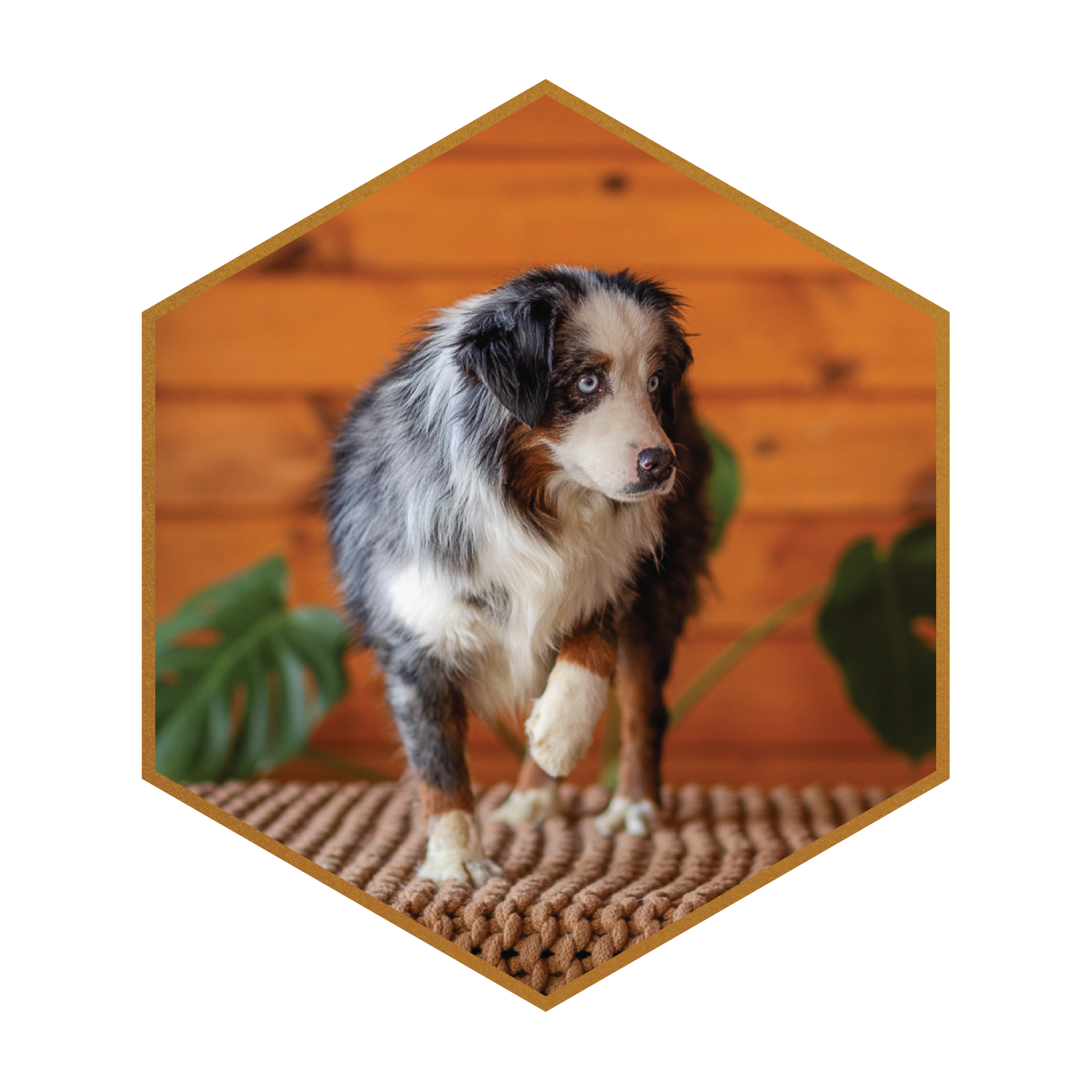
Parti Doodles: Merle Parti,
Black & White Patterns
Parti doodles display distinctive coat patterns with 50% or more white combined with any base color - from classic black and white to complex merle parti variations. This guide explains the genetics that govern parti patterns, what each expression means for your family, and how responsible breeding prevents pattern-related health concerns.
Part of Stokeshire's complete Australian Mountain Doodle breed guide.
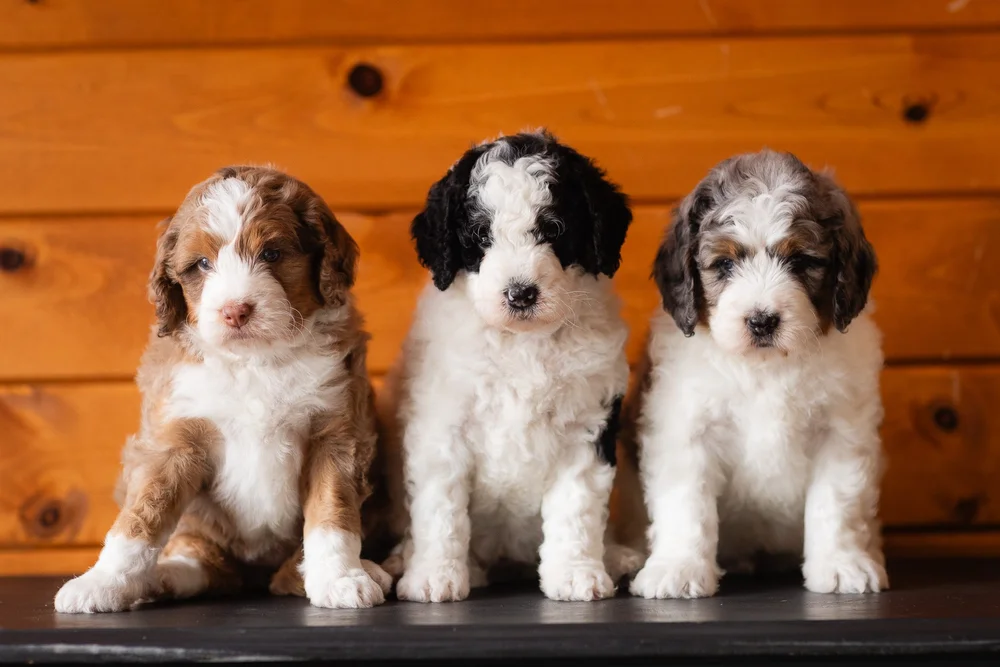
What Makes a Doodle "Parti"?
The parti pattern results from the MITF (Microphthalmia-associated Transcription Factor) gene, which controls white spotting patterns in dogs. Unlike simple recessive traits, parti expression involves complex interactions between multiple genes that determine both the extent and distribution of white markings.
Dogs carrying two copies of the parti allele (sp/sp) typically express 50% or more white coloring, while those with one copy (S/sp) may show abstract patterns with less extensive white markings. The progression from abstract to parti to extreme parti reflects varying expression levels of this genetic mechanism.
Under 50% white, typically limited to chest splash, feet markings, and tail tip. Often called "mismarks" or "flashy." The most common outcome when only one parent carries parti genetics. May include small facial blaze or collar marking.
50% or more white with colored patches distributed across the body. Classic parti expression with clear pattern boundaries. White typically appears symmetrically on chest, legs, face, and collar area. The pattern most families seek.
Predominantly white with minimal colored patches, usually limited to head and base of tail. Modifier genes influence the extent of white expression beyond the base MITF genotype. Striking appearance but less common.
Merle Parti Doodles
Merle parti doodles represent one of the most visually striking pattern combinations, featuring both the dilution effects of the merle gene (M locus) and the white spotting patterns of the parti gene. This combination creates dogs with mottled color patches interspersed with white areas.
Blue Merle Parti
Black base diluted to grey/blue mottled pattern, combined with parti white distribution. Often includes striking blue or heterochromatic eyes. The most dramatic merle parti expression.
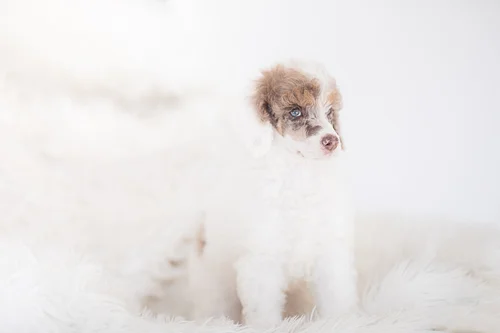
Red Merle Parti
Red/brown base diluted to copper/cream mottled pattern with parti white. Warmer tones than blue merle. May include amber or green eyes alongside traditional brown.
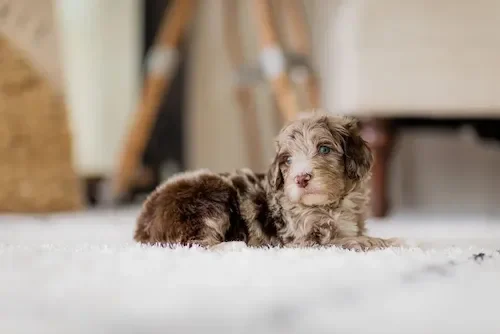
Chocolate Merle Parti
Brown base diluted to varied brown tones with parti white. Less common than blue or red merle. Rich, warm coloration that photographs distinctively.
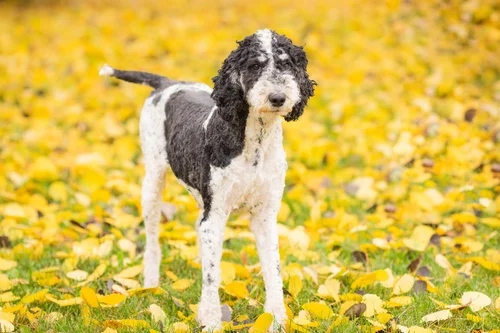
Parti Tricolor
Classic tricolor (black, white, tan) with extended parti white distribution. Bernese Mountain Dog influence creates tan points above eyes, on legs, and under tail. High contrast, timeless appearance.
Merle Pattern Development
Merle patterns typically become more defined during the first 8-12 weeks of life. Puppies born with subtle merle markings may develop more pronounced patterns as their adult coat emerges, while others may experience some fading of the merle intensity over time.
The interaction between merle and parti genes creates variable expression patterns. Some puppies display merle markings only in colored areas, while others show merle effects that extend into transitional zones between colored and white regions.
Families interested in merle parti puppies should understand that these patterns may fade or intensify with age, particularly in first-generation crosses. We maintain detailed records of merle and parti inheritance patterns across multiple generations to help predict pattern outcomes.
Black and White Parti Doodles
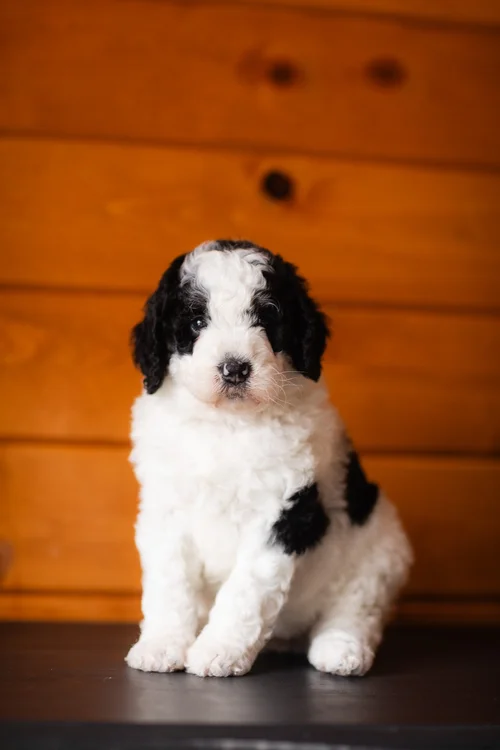
Black and white parti represents the most traditional parti color combination, offering high contrast that clearly defines pattern boundaries. These combinations appear across all our doodle breeds, with each breed contributing unique characteristics to the final appearance.
In Australian Mountain Doodles, black and white parti patterns often include the tricolor gene influence from the Bernese Mountain Dog parent, potentially adding tan markings above the eyes, on the legs, and under the tail. This creates what we term "parti tricolor" - a combination of white, black, and tan markings.
Bernedoodles displaying black and white parti patterns typically show more defined boundaries between colored and white areas, reflecting the Bernese Mountain Dog's natural tricolor precision. The Poodle contribution often influences the texture and curl pattern within both the colored and white sections.
Parti Pattern Inheritance
The table below shows expected offspring outcomes based on parent parti genotypes. These ratios represent statistical averages - individual litters may vary significantly from these predictions due to genetic complexity and modifier gene influences.
| Parent 1 | Parent 2 | Expected Offspring | Parti Probability |
|---|---|---|---|
| Parti (sp/sp) | Parti (sp/sp) | 100% parti or extreme parti | 100% |
| Parti (sp/sp) | Abstract (S/sp) | ~50% parti, ~50% abstract | 50% |
| Parti (sp/sp) | Solid (S/S) | 100% abstract carriers | 0% |
| Abstract (S/sp) | Abstract (S/sp) | ~25% parti, ~50% abstract, ~25% solid | 25% |
Merle Breeding Safety
When breeding merle parti dogs, we ensure that only one parent carries the merle gene to help prevent double merle puppies. Double merle (MM) occurs when both parents contribute merle genes, resulting in offspring with excessive white coloring that may include vision and hearing deficits.
Parti Patterns Across All Sizes
Parti patterns appear across all size variations of our doodle breeds. The parti genetics do not influence adult size, which remains determined by the size genes inherited from parent breeds. All sizes display parti patterns with the same genetic complexity.
Size selection should be based on family lifestyle and housing considerations, with parti pattern preference as a secondary consideration. All our parti varieties receive the same genetic quality standards and breeding program protocols regardless of size.
Grooming Parti Doodles
Parti doodles require specialized grooming attention to maintain the visual contrast that makes their patterns appealing. White areas show dirt, staining, and tear marks more readily than colored sections, necessitating more frequent cleaning and maintenance.
Grooming Schedule
- Professional grooming: Every 6-8 weeks to maintain coat health and pattern definition
- Home brushing: 3-4 times weekly, with daily attention to mat-prone areas (behind ears, under legs, collar zone)
- White area cleaning: Daily wipe-down of facial areas to prevent tear staining
- Seasonal adjustment: Longer coats for winter warmth; shorter summer cuts emphasize pattern definition
White facial areas may develop tear staining, particularly in puppies under one year of age. Daily cleaning with appropriate products and attention to diet can minimize this cosmetic concern. Some families find that switching to filtered water reduces mineral-related staining.
Parti Doodle Health Considerations
Parti doodles typically enjoy the same 12-15 year lifespan expectancy as their solid-colored counterparts, with longevity influenced by breed size rather than color genetics. Smaller parti varieties often live 13-16 years, while standard-sized parti doodles average 11-14 years.
The health advantages associated with hybrid vigor - reduced incidence of breed-specific genetic disorders - apply equally to parti and solid-colored doodles. Color genetics do not influence immune system benefits, genetic diversity, or disease resistance.
Parti patterns themselves do not create health concerns. Our health guarantee covers parti doodles with the same comprehensive terms as solid-colored puppies.
Parti Pattern FAQ
What is the difference between parti and merle patterns?
Parti refers to 50% or more white coloring combined with any base color, controlled by the MITF gene. Merle creates a mottled dilution effect on base colors, controlled by the M locus gene. Merle parti dogs may express both patterns simultaneously, creating white areas alongside mottled colored sections. These are independent genetic mechanisms that can combine in the same dog.
Do parti patterns change as puppies mature?
Parti white markings generally remain stable throughout the dog's life, though colored sections may lighten or intensify with age. Merle parti patterns may show some fading of the merle intensity over time. The overall pattern distribution established at birth typically remains consistent into adulthood - what you see at 8 weeks is largely what you will see at 8 years.
Can two parti parents produce non-parti puppies?
No - if both parents are true parti (sp/sp genotype), all offspring will express parti or extreme parti patterns. However, if one or both parents are abstract carriers (S/sp) rather than true parti, non-parti puppies are possible. This is why knowing the specific genotype - not just the visual appearance - matters when predicting litter outcomes.
Are parti doodles suitable for allergy sufferers?
Parti patterns do not influence shedding characteristics, which depend on furnishing genes (RSPO2) inherited from parent breeds. Furnished parti doodles are often described as lower-shedding, though no dog is truly hypoallergenic. Families with allergies should spend time with the specific puppy they are considering to assess individual tolerance. See our coat genetics guide for detailed shedding information.
Are parti doodles more expensive than solid colors?
Parti patterns may command premium pricing at some breeding programs due to visual appeal and the genetic planning required to produce them consistently. At Stokeshire, we price based on comprehensive breeding program value - health testing, early development, training options, and lifetime support - rather than color alone. Pattern preference should be secondary to temperament matching and lifestyle fit.
What is a double merle and why is it a concern?
Double merle (MM) occurs when a dog inherits the merle gene from both parents. These dogs are predominantly white and carry significant risk of auditory and ophthalmologic developmental defects, including deafness and blindness. Double merle is entirely preventable through genetic testing and responsible breeding practices. At Stokeshire, merle status is confirmed via Embark testing and no merle-to-merle pairing is made under any circumstances.
Reviewed by the Stokeshire Breeding Team · Updated April 2026
View Available Parti Puppies
Our current available puppies include parti variations across multiple breeds and sizes. Each puppy comes with comprehensive health testing, early socialization, and lifetime breeder support.
View Available Puppies Apply for a Puppy
This deposit ensures your spot on our official waitlist on a first—pay, first-serve basis.
WAITING ON HEAT —Skipped Summer Heat
26 June 2026 — Estimated Heat Start
04 July 2026 — Estimated Conception
05 September 2026 — Estimated Delivery Date
31 October 2026 — Estimated Go-Home Date (8 weeks)
Estimated Adult Size Prediction: 20-30lbs
OFFICIAL WAITLIST
Tavernier — Burke, VA Brown Tri Merle AMD Male((PICK OF LITTER 1)
OPEN (PICK OF LITTER 2)
Sippel Family – Saint Cloud, WI – Blue Merle Tri ‘26
Shackelford Family - Willits, CA – Breeding
Trots – Arlington, IL – Tri Merle, Furnished (BACKUP)
FUTURE LITTER
Johnston Family – The Hills, TX – Blue Merle Female Blue Eyes (Doodle School) 12-20 lbs Aussiedoodle
Stephens Family - Katonah, NY - Merle (Doodle School) 2027
Marcano Family – San Juan, PR – Unfurnished