
Why Stokeshire Designer Doodles Recommends PennHIP Over OFA: A Clearer Path to Healthier Hips in Bernese, Aussies, Poodles & Goldens
Hip health is one of the most misunderstood topics in the doodle world—especially when you're combining breeds with very different hip histories like the Bernese Mountain Dog, Australian Shepherd, Standard Poodle, and Golden Retriever. At Stokeshire Designer Doodles here in Wisconsin, we spend an enormous amount of time educating families and improving our bloodlines. One of the biggest conversations we have is the difference between OFA and PennHIP.
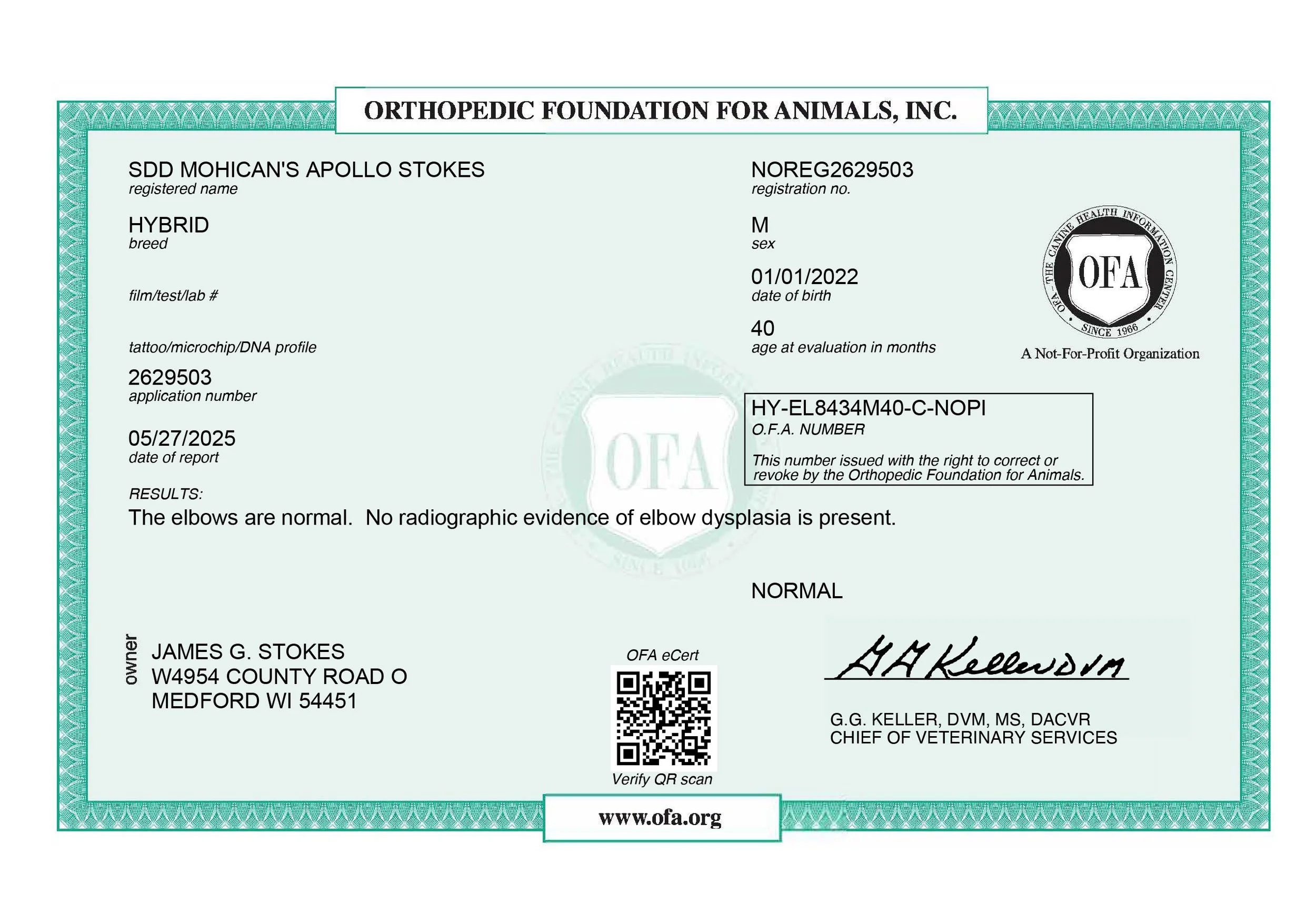
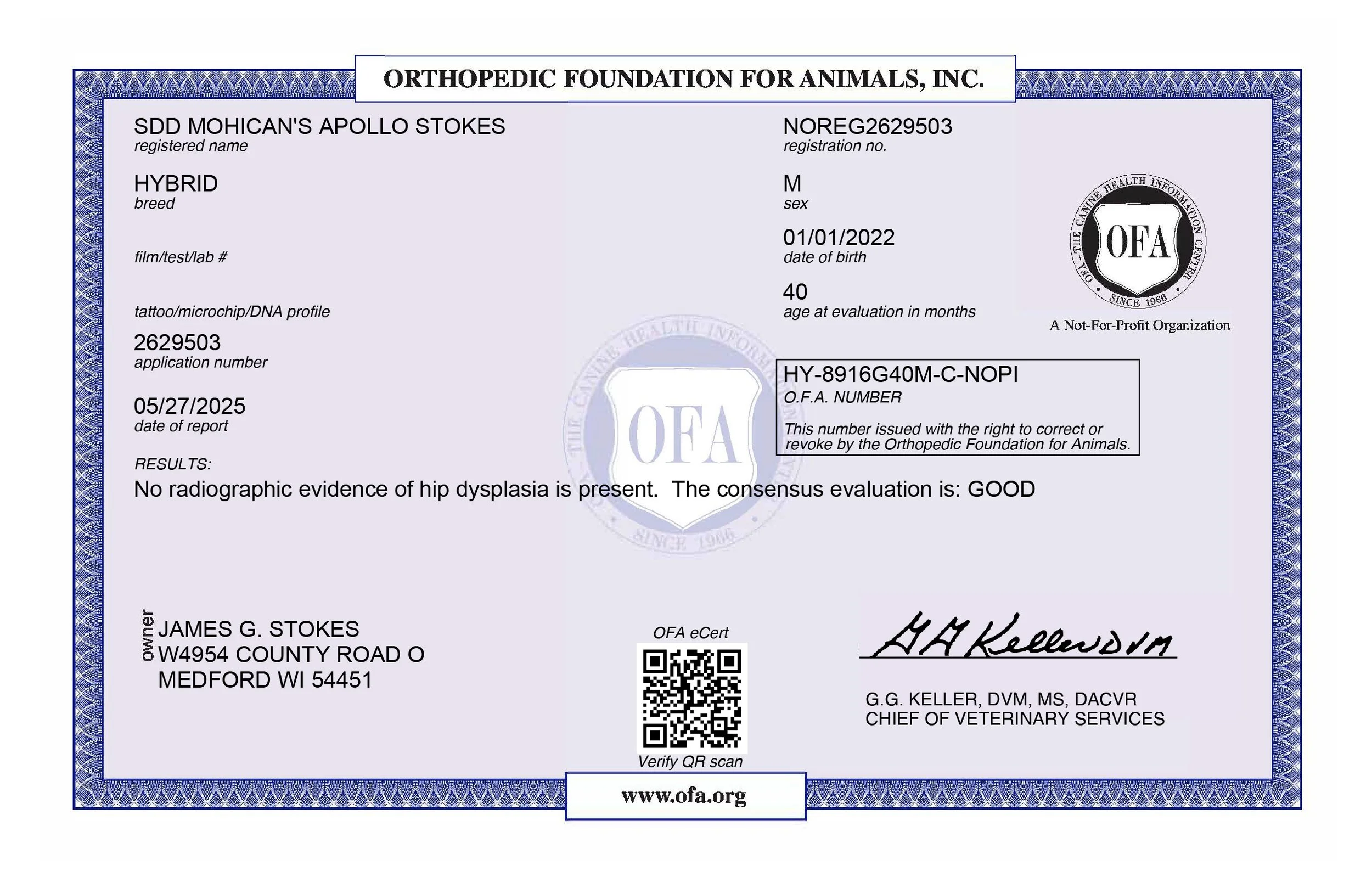
And here’s our stance:
PennHIP is the gold standard for evaluating hip laxity and predicting future hip dysplasia risk. OFA is not.
Let’s break down why—clearly, simply, and backed by science.
What’s the Difference Between PennHIP and OFA?
1. PennHIP = Objective, Measurable, Scientific
PennHIP measures hip laxity using a Distraction Index (DI) on a scale from 0.00 to 1.00.
0.00 = perfectly tight hip
1.00 = extremely loose hip
A DI of ≤0.30 is associated with a significantly lower risk of developing osteoarthritis (OA).
A DI of ≥0.30 indicates higher susceptibility to hip dysplasia and OA—even if the hip looks normal on a standard radiograph.

PennHIP Deep Dive
Smarter diagnostics. Better care. Explore how PennHIP helps us protect long–term hip health in our breeding program. Use the mini–menu below to jump into any section and expand the details.
What Is PennHIP?
PennHIP (Pennsylvania Hip Improvement Program) is a scientifically validated radiographic method used to evaluate the quality of a dog’s hip joints and accurately measure hip laxity—the strongest predictor of future hip dysplasia and osteoarthritis (OA).
Unlike traditional hip evaluations that rely on a single extended view and a subjective letter grade, PennHIP provides quantitative data that can be tracked over generations. This makes it a powerful, long-term tool for breeders who want to actively reduce the risk of hereditary hip disease.
At Stokeshire, we lean on PennHIP because our goal isn’t just “passing hips”—it’s preserving mobility, comfort, and working soundness in Australian Mountain Doodles, Golden Mountain Doodles, Bernedoodles, and Aussiedoodles.
How PennHIP Works
PennHIP is more than “getting hip x-rays.” It is a complete methodology built around:
- Certified veterinarians trained specifically in PennHIP positioning and technique.
- A global scientific database where every study is submitted and analyzed.
- Objective scoring using the Distraction Index (DI), a number between 0.00 and 1.00 that describes how tight or loose the hip joint is.
Every PennHIP study is reviewed at a central analysis center. As the database grows, it gives the veterinary and breeding community clearer answers about the cause, prediction, and genetic basis of hip dysplasia.
PennHIP vs. OFA
Most conventional hip screening systems, including OFA, use a single hip-extended radiographic view and then assign a subjective grade such as Excellent, Good, or Fair. While common and familiar, this approach does not measure joint laxity directly.
PennHIP is different. Instead of asking, “Do these hips look okay?”, it asks, “How loose are these hips, numerically?” That shift—from opinion to measurement— makes PennHIP a stronger predictor of whether a hip is likely to develop osteoarthritis later in life.
For a program focused on long-term soundness and therapy-grade potential, this extra clarity matters.
The Three PennHIP Views
The PennHIP study uses three separate radiographic views, each showing something different about the hip:
- Distraction view – Hips in a neutral, weight-bearing orientation with a special distractor device. This view reveals true hip joint laxity and is used to calculate the Distraction Index (DI).
- Compression view – Hips gently compressed to show how well the femoral heads fit into the acetabula. This view highlights joint congruity or the “goodness of fit” between ball and socket.
- Hip-extended view – Similar to the traditional OFA view. It is useful for spotting existing osteoarthritis, but it tends to mask laxity because the joint capsule is stretched tight when the legs are extended.
The very same dog can look snug and tight on the hip-extended view and much looser on the distraction view. In some breeds, distraction laxity can be measured as up to 11 times greater than what appears on the extended view—one reason PennHIP is a better predictor of future OA.
What PennHIP Really Tells Us
When we put all three views together, the PennHIP method gives a layered picture of hip health:
- The hip-extended view shows whether osteoarthritis (OA) is already present.
- The compression view shows how well the femoral heads sit in the sockets under load.
- The distraction view provides a numeric Distraction Index that tells us how loose or tight those joints really are.
For responsible, data-driven breeding, this level of detail lets us move beyond “Do these hips pass?” to “Are these hips truly low-risk for future disease, and are they moving our lines in the right direction?”
Smarter Diagnostics. Better Care.
At Stokeshire, PennHIP isn’t a marketing line item—it’s one of the tools we use to quietly protect the future comfort and mobility of each dog we place. Our focus is on:
- Honest, science-based evaluation of hip health.
- Thoughtful pairing of Bernese, Aussies, Poodles, and Goldens to balance structure and temperament.
- Multi-layered health screening that looks beyond a single snapshot.
Smarter diagnostics allow us to make more intentional breeding decisions—which is at the heart of what we mean by responsible, modern family dogs raised with purpose.
PennHIP requires:
Full sedation or anesthesia
Three specific radiographic views
Standardized measuring equipment
Submission to a mandatory database
The result?
A accurate, repeatable, scientific measurement of hip laxity.
2. OFA = Subjective, Inconsistent, and Often Misleading
OFA assigns hips to one of seven categories:
Excellent
Good
Fair
Borderline
Mild
Moderate
Severe
But here’s the problem:
It’s one radiograph.
It’s judged subjectively by three radiologists.
There is no measurement of laxity, only appearance.
There is no standardized sedation requirement.
The OFA database is voluntary—people often only submit “good” results.
This creates what scientists call positive selection bias, meaning the public database does not reflect the real incidence of poor hips in the breed.
What the Research Actually Shows
A major University of Pennsylvania study compared:
OFA grades
PennHIP distraction index
…across 439 dogs, and the findings were shocking:
80% of dogs with OFA Fair–Excellent hips actually had high PennHIP DI values, meaning they were at increased risk for osteoarthritis.
Even worse:
Many dogs with OFA Excellent hips still showed significant laxity on PennHIP.
Translation?
A dog can look perfect on OFA but still be genetically predisposed to hip dysplasia.
This is especially true in Bernese Mountain Dogs, Goldens, and other large-bodied breeds.
In the words of orthopedic specialist Milan Hess, DACVS:
OFA is familiar and cheaper, but
PennHIP is more accurate, more predictive, and more scientifically defensible.
Why This Matters for Bernese, Aussies, Poodles & Goldens
Each foundational breed that contributes to Stokeshire’s Australian Mountain Doodles and Golden Mountain Doodles comes with its own orthopedic profile.
Bernese Mountain Dogs
Heavy, fast-growing
Naturally more hip laxity
High hip dysplasia rates
“Fair” hips can still be functionally sound
Australian Shepherds
Tight hips, deep sockets
Sedation often reveals hidden laxity
OFA can over-score or under-score, depending onthe position
Poodles
Biomechanically efficient
Typically have tighter hips
Excellent OFA ratings, but PennHIP still valuable
Golden Retrievers
Moderate laxity common
Genetics predispose to OA
OFA often fails to detect risk early
When you blend these breeds into Bernedoodles, Australian Mountain Doodles, Golden Mountain Doodles, and Aussiedoodles, responsible breeders must use a system that actually measures laxity, not just appearance.
Why Stokeshire Recommends PennHIP (and Why We Encourage It Industry-Wide)
✔ PennHIP identifies risk at just 16 weeks
OFA cannot be done officially before 24 months.
✔ PennHIP offers real numbers, not opinions
A DI difference between 0.25 and 0.50 can be the difference between a dog that develops OA and one that doesn’t.
✔ PennHIP is a mandatory submission
No selective reporting, no hiding poor results.
✔ PennHIP drives long-term improvement
Breeders can track DI values generation over generation.
✔ PennHIP is proven to predict osteoarthritis
OFA does not correlate directly with OA risk—this has been documented in peer-reviewed veterinary literature.
Yes, PennHIP costs more ($600–$900) and requires anesthesia.
But the trade-off is clear:
Accuracy → better breeding → healthier dogs → fewer hereditary issues.
This aligns with Stokeshire’s mission:
Raise genetically predictable, therapy-grade hybrid dogs with integrity and transparency.
What About DNA Testing?
Stokeshire pairs PennHIP with Embark DNA testing, screening for:
MDR1
DM
vWD1
PRA variants
Over 200+ additional diseases
Because hip health is polygenic, we don’t rely on just radiographs.
We build health on:
Genetic screening
PennHIP
Functional structure
Real-life movement
Multi-generation evaluation
This is the Stokeshire “Responsible Luxury” standard.
Why This Matters for Families in Wisconsin, the Midwest & Nationwide
Whether you're adopting an Australian Mountain Doodle in Chicago, a Golden Mountain Doodle in Minneapolis, or a Bernedoodle right here in Wisconsin:
Hip integrity determines quality of life.
Mobility
Comfort
Longevity
Activity level
Training success
Therapy-dog potential
PennHIP allows us to make data-driven decisions that protect the long-term health of your future puppy.
What Impacts Hip Health?
Genetics matter, but they are only part of the story. Explore how flooring, growth, exercise, nutrition, and daily life shape the long-term health of your dog’s hips.
Flooring & Traction
For growing puppies, especially large-breed mixes like Australian Mountain Doodles and Bernedoodles, slippery flooring is the #1 environmental risk factor for hip stress.
When a puppy’s feet slide out from under them, the hip joint can partially slip in the socket (subluxate), stretching the soft tissues that are supposed to hold the joint tight while it develops. Repeated slips can increase laxity even in dogs with excellent genetics.
Floors to avoid in high-traffic puppy areas:
- Tile
- Hardwood
- Laminate
- Vinyl plank
- Polished concrete
Better choices:
- Rugs and carpet (secured with pads or grips)
- Rubber-backed runners in hallways
- Yoga mats in play and feeding zones
- Foam matting in puppy pens
Simple rule of thumb: if the puppy slips once, add traction. If the puppy slips daily, their environment is actively working against their hip development.
Weight & Nutrition
Overfeeding large-breed puppies is one of the quietest ways to damage healthy hips. Extra body weight places more load on joints that are still developing, while rapid growth can outpace the ability of muscles, tendons, and ligaments to support those joints.
Balanced large-breed puppy nutrition, appropriate calories, and correct calcium-to-phosphorus ratios all help slow growth to a healthy, steady pace.
A good general guideline: you should feel ribs easily under a thin layer of flesh, but not see them sharply sticking out. Lean growing puppies almost always have healthier joints than “chunky” ones.
Growth Rate
Breeds with Bernese Mountain Dog or Golden Retriever heritage can grow shockingly fast in the first 8–10 months. The faster a puppy grows, the more strain is placed on the joints and growth plates.
Slow, steady growth—supported by appropriate calories and balanced nutrition—gives bones and soft tissues time to adapt together, creating stronger, more stable hips over the long term.
Exercise & Activity
Both too much and too little exercise can negatively affect a puppy’s hips.
High-impact activities to limit while growing:
- Repeated long-distance running
- Hard-surface fetch (especially with sudden stops)
- Jumping off beds, couches, trucks, or decks
- Frequent stair sprints
- Early agility or intense sport work
Hip-friendly foundation exercises:
- Short, frequent walks on stable surfaces
- Gentle uphill walking to build rear-end strength
- Swimming or controlled water play
- Slow step-over “cavaletti” poles for coordination
The goal is thoughtful movement—not exhausting marathons, and not a sedentary puppy. Strong muscles are one of the best protectors of vulnerable joints.
Injury & Early Trauma
A single poorly timed jump or fall can alter hip development—especially before growth plates close. Twists, slips, and high-impact landings can stretch or damage the soft tissues that stabilize the joint.
Common risk scenarios:
- Jumping off couches or beds repeatedly
- Running on ice or slick decks
- Rough play with much larger or older dogs
- Falling down stairs
Protecting young joints from preventable trauma is one of the easiest ways families can support what the breeder started genetically.
Muscle & Conditioning
Muscles act like “guy wires” for the hip joint. Well-developed gluteal and core muscles help hold the femoral head securely in the socket and support healthy movement patterns.
Under-conditioned dogs often show more laxity, poorer gait mechanics, and faster wear on their joints. Thoughtful, age-appropriate conditioning—built over months, not days—creates a stronger, more stable framework around the hips.
Spay/Neuter Timing
Multiple studies have shown that early spay/neuter—before growth plates close—can change limb length, alter angulation, and increase the risk of hip dysplasia and cruciate ligament tears.
Delaying sterilization to a more mature age (often 12–24 months, depending on sex, size, and breed mix) allows the skeleton to finish growing under normal hormone influence, which can support healthier hip structure over the long term.
Genetics & Inheritance
Hip health is polygenic—shaped by many genes—and influenced by breed-specific structure. Tools like PennHIP and multi-generation orthopedic records give breeders a clearer picture of risk across lines.
Genetics set the potential, but environment determines how fully that potential is expressed. A puppy from excellent hips can still struggle if raised on slick floors with extra weight and high-impact play, while a puppy from “fair” hips can thrive with ideal management.
Adult Body Condition
Once a dog is mature, day-to-day body condition becomes one of the biggest drivers of hip comfort. Extra weight means extra force across the hip joint with every step, jump, and turn.
Maintaining a lean, athletic body through adulthood slows the progression of osteoarthritis, reduces pain, and extends a dog’s active, joyful years—even in dogs with some underlying hip changes.
Repetitive Stress & Impact
Activities that repeatedly stress the same joint angles or impact patterns can wear down hip structures over time, especially on hard surfaces.
Examples to be thoughtful about:
- Daily high-speed fetch on pavement
- Frequent stair sprinting as a main form of exercise
- Frisbee with sharp twists and mid-air catches
- Repeated launching and landing from elevated surfaces
Rotating activities, choosing softer ground, and building in recovery days all help protect the hips from unnecessary wear.
The Big Picture
A simple way to think about hip health is this: genetics loads the gun; environment pulls the trigger.
Thoughtful breeding gives a puppy a strong starting point. Daily choices—flooring, nutrition, growth rate, movement, injury prevention, body condition, and timing of spay/neuter—shape how that potential is expressed over a lifetime.
When breeders and families work together, most dogs can enjoy many years of easy, comfortable movement—chasing kids, hiking trails, doing therapy work, and living the modern family-dog life they were designed for.
PennHIP Radiographs — Pros & Cons
✔ Pros
- Can be performed on puppies as young as 16 weeks.
- Provides a consistent Distraction Index over time.
- Objective evaluation vs subjective OFA scoring.
- More sensitive in detecting early hip dysplasia.
✖ Cons
- Requires vets trained in the PennHIP certification program.
- Must be performed under full anesthesia.
- Needs three radiographic views, increasing complexity.
- Overall higher cost due to anesthesia and multiple images.
OFA Hip Radiographs — Pros & Cons
OFA hip radiographs use a standard ventrodorsal (VD) view of the pelvis and assign a subjective grade such as Excellent, Good, Fair, Borderline, or Dysplastic. It is a familiar system for many breeders and veterinarians, but it does not directly measure hip laxity.
✔ Pros
- No anesthesia required in many routine cases.
- Does not demand specialized PennHIP-style training or devices.
- Only a single hip-extended radiographic view is needed.
- Generally a lower-cost screening option compared to PennHIP.
✖ Cons
- Limited value for formal assessments before 24 months of age.
- Sedation may still be needed to obtain correct positioning in some dogs.
- Less sensitive than PennHIP for detecting early hip laxity.
- Relies on subjective grading, which can vary between reviewers and over time.
- Not ideal for pregnant or estrus females because hormones can affect joint laxity.
PennHIP & OFA — Quick FAQ
Clear, breeder-focused answers about PennHIP scores and how they compare to OFA in doodles and their parent breeds.
Q: Is PennHIP better than OFA for doodles?
A: Yes. PennHIP is more accurate because it measures hip laxity using a Distraction Index (DI), which gives a numeric value for how loose or tight the hips are. OFA relies on a single, subjective view and often underestimates dysplasia risk—especially in breeds like Bernese Mountain Dogs, Golden Retrievers, Australian Shepherds, Poodles, and the doodles created from them.
Q: What is a good PennHIP score for Bernedoodles & Australian Mountain Doodles?
A: For Bernedoodles and Australian Mountain Doodles, a PennHIP DI ≤ 0.30 is considered ideal and is associated with a low risk of developing osteoarthritis. The lower the Distraction Index number, the tighter and more stable the hips are—which is what we aim for in responsible breeding programs.
Q: Should breeders use PennHIP or OFA?
A: Responsible breeders should prioritize PennHIP because it provides measurable, predictive, science-based results about hip laxity and future dysplasia risk. OFA cannot accurately detect laxity—only how the hips look in one extended position—so it is less reliable as a stand-alone tool for long-term hip improvement in doodle lines.