
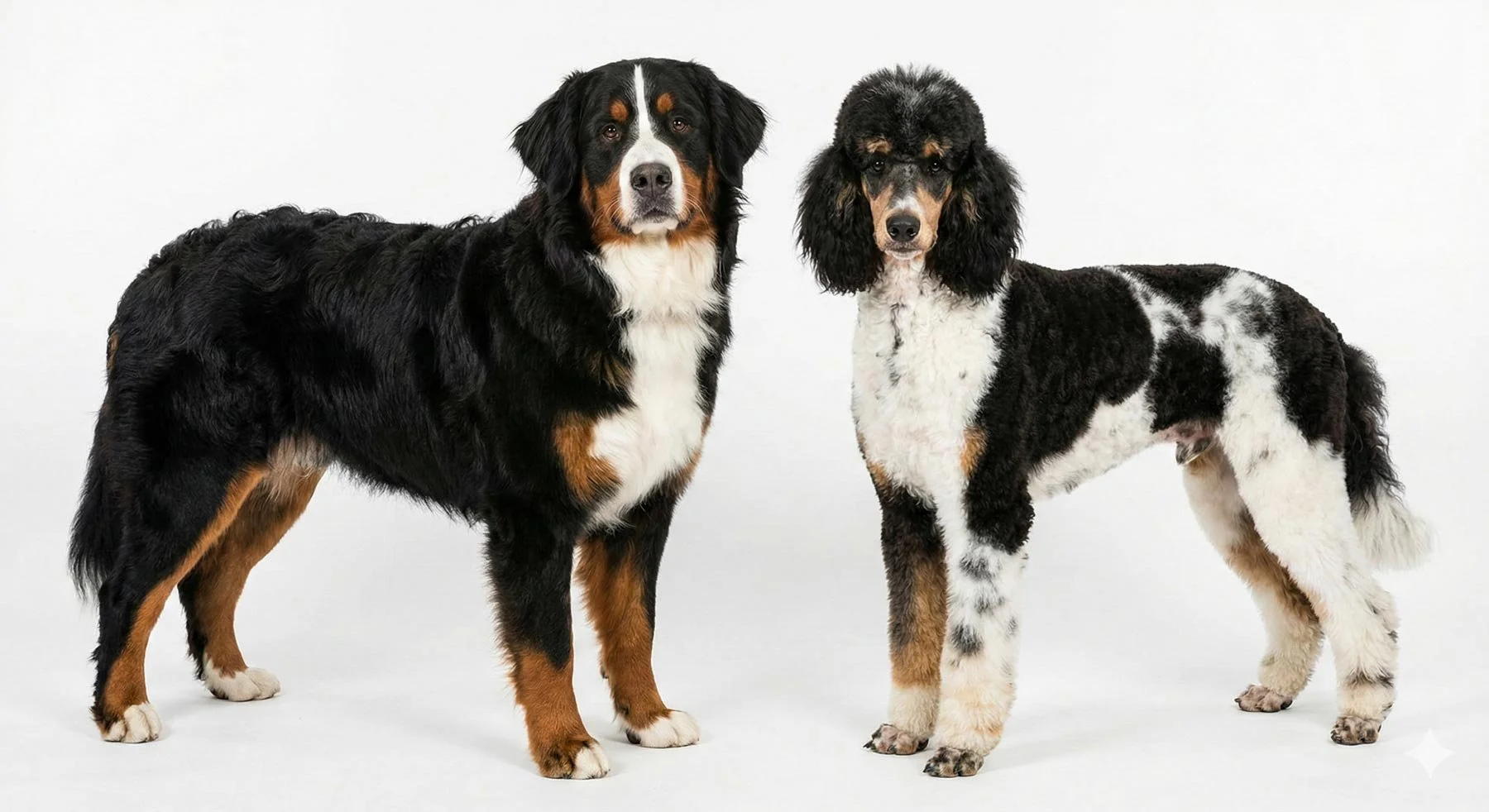
Bernedoodle: The Complete Breed Guide
Also called: Bernese Mountain Doodle · Bernese Doodle · Bernepoo
The Bernedoodle is an intentional cross between the Bernese Mountain Dog and the Poodle — developed to preserve the Bernese's gentle, loyal temperament while extending its tragically short lifespan and introducing lower-shedding coat genetics. This guide covers everything: temperament, size classifications, F1 through Multigen generations, RSPO2 coat science, grooming by coat type, health testing, and what it takes to raise one well.
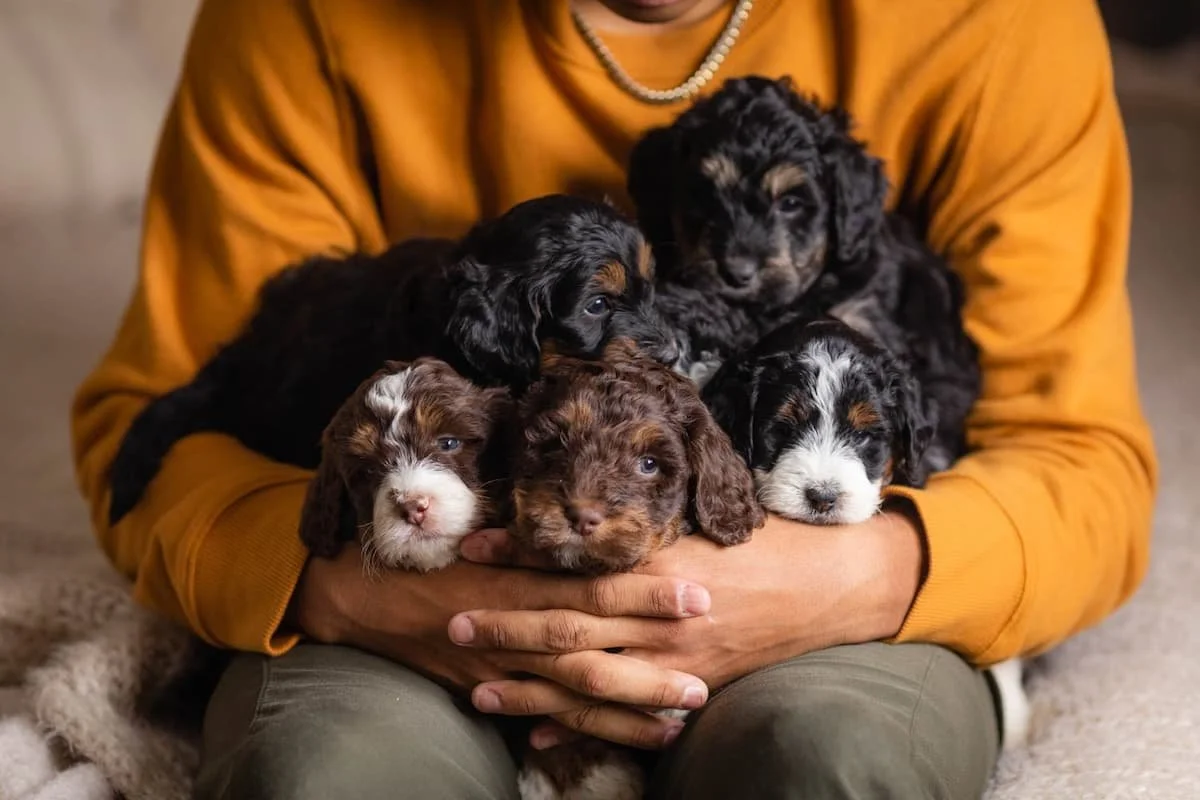
Bernedoodle — Quick Facts
| Breed Type | Designer hybrid — intentional two-breed cross. Not AKC recognized. |
| Parent Breeds | Bernese Mountain Dog × Poodle |
| Also Called | Bernese Mountain Doodle, Bernese Doodle, Bernepoo |
| Origin | First intentionally bred by Sherry Rupke of SwissRidge Kennels (Ontario, Canada) in 2003 |
| Size Range | Standard (70–90+ lbs) · Mini (25–50 lbs) · Toy (10–24 lbs) |
| Coat Types | Wavy, curly, or straight — determined by RSPO2 (furnishings), KRT71 (curl), and MC5R (shedding) genetics |
| Shedding | Low to moderate in furnished dogs; higher in unfurnished or straight-coated individuals. No dog is completely non-shedding. |
| Temperament | Gentle, affectionate, intelligent, playful, people-oriented, emotionally sensitive. May exhibit stubborn streak from Bernese lineage. |
| Exercise Need | 45–90 minutes daily depending on size — combination of physical activity and mental stimulation |
| Trainability | High — responds well to positive reinforcement. Sensitive to harsh corrections. Adolescent boundary-testing is common. |
| Lifespan | Standard: 12–15 years · Mini: 14–17 years · Toy: 15–18 years — significantly longer than purebred Bernese (6–8 years) |
| Best For | Families with children, therapy work candidates, first-time and experienced dog owners committed to grooming and training |
| Pricing | See Stokeshire puppy pricing — varies by size, generation, and coat. |
What Is a Bernedoodle?
A Bernedoodle is an intentional hybrid cross between a Bernese Mountain Dog and a Poodle. The cross was first formally developed in 2003 by Sherry Rupke of SwissRidge Kennels in Ontario, Canada, with a specific objective: to create a companion that preserved the Bernese Mountain Dog's gentle, family-oriented temperament while introducing the Poodle's intelligence, lower-shedding coat genetics, and — critically — the genetic diversity needed to address the Bernese breed's devastating health profile.
The Bernese Mountain Dog, while among the most gentle and loyal large breeds available, suffers from one of the highest cancer-related mortality rates in the domestic canine world. Published research indicates that approximately 50–67% of Bernese die from neoplastic disease, with an average lifespan of only 6–8 years. This is a direct consequence of a genetic bottleneck that has produced dangerously low diversity within the breed — the Bernese COI (coefficient of inbreeding) has been measured near 0.395, significantly higher than breeds with healthier gene pools.
The Poodle introduces a meaningfully different genome: longer lifespan (12–15 years in Standards, longer in Minis and Toys), the RSPO2 furnishings gene that produces lower-shedding coats, and the trainability and cognitive flexibility that make Poodle crosses among the most adaptable companion dogs available. The cross does not produce a standardized breed — no kennel club recognizes it — but when bred from health-tested parents with intentional generational planning, it produces remarkably consistent, healthy, and temperamentally stable companions.
The Bernedoodle exists because the Bernese Mountain Dog's temperament deserves a longer life and a healthier body. The Poodle provides both — along with a coat that opens this temperament to families who couldn't otherwise live with a heavy-shedding breed.
The Two Parent Breeds
Every Bernedoodle inherits traits from both parents. Understanding what each breed contributes — and what health risks each carries — is the most accurate way to predict what a Bernedoodle will need from its home.
Bernese Mountain Dog
A member of the Swiss Sennenhunde group, the Bernese was a versatile farm dog — drafting, herding, and guarding livestock in alpine environments. It contributes the calm, deeply loyal, "velcro" temperament that makes Bernedoodles so well-suited to family life. It also contributes the breed's most challenging inheritance: an extremely high cancer mortality rate (50–67%), a COI near 0.395, predisposition to hip and elbow dysplasia, bloat risk in deep-chested individuals, and von Willebrand's disease Type 1. The Bernese also contributes the "soft" temperament — emotionally sensitive dogs that may shut down under harsh correction.
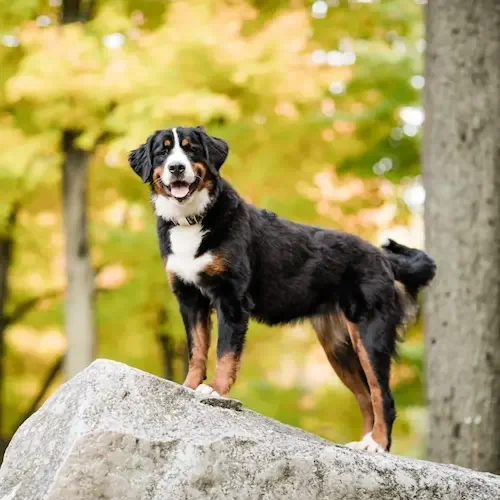
Feta — Bernese Mountain Dog, Stokeshire breeding program
Poodle
Available in Standard, Miniature, and Toy sizes — the Poodle parent determines the Bernedoodle's adult size. The Poodle contributes the RSPO2 furnishings gene (the "doodle look"), the KRT71 curl gene, and the MC5R shedding variant responsible for lower environmental shedding. It also contributes the cognitive flexibility, trainability, and emotional attunement that make Poodle crosses responsive to positive-reinforcement training. Poodle health considerations include hip dysplasia (Standards), patellar luxation (Minis/Toys), progressive retinal atrophy (prcd-PRA), von Willebrand's disease, sebaceous adenitis, and idiopathic epilepsy.
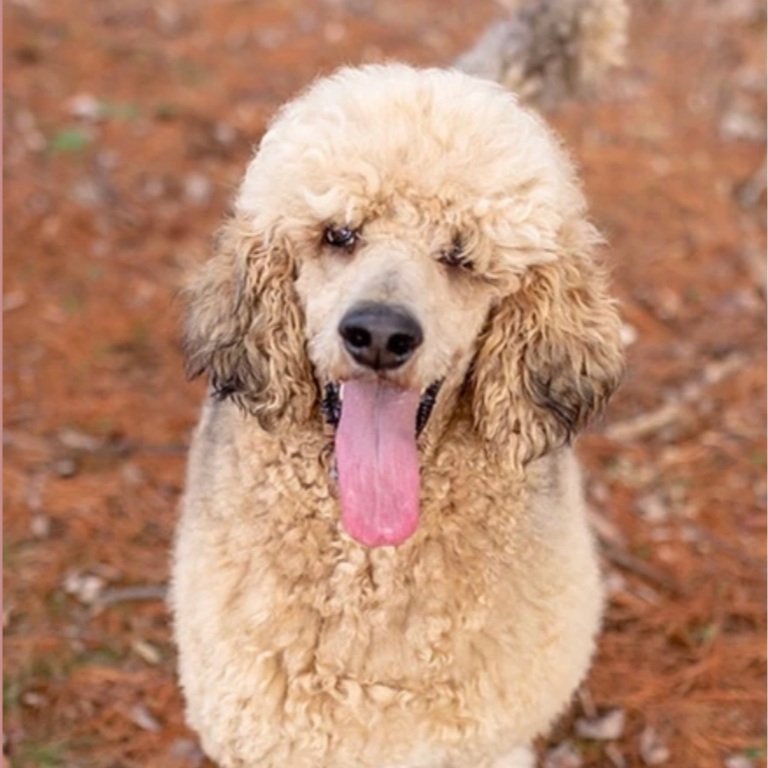
Foxy — Merle Tri Poodle, Stokeshire breeding program
The Healthier Bernese: Why the Bernedoodle Was Created
The Bernese Mountain Dog is in a health crisis. Approximately 50–67% of the breed dies from cancer. Histiocytic sarcoma — an aggressive immune-cell cancer that is often multi-focal and fatal within weeks — affects roughly 25% of the population. The breed's average lifespan of 6–8 years is among the shortest of any large breed, driven by a genetic bottleneck that has produced a COI near 0.395.
The Bernedoodle addresses this crisis by introducing the Poodle's significantly more diverse genome. The resulting hybrid vigor — heterosis — dilutes deleterious recessive alleles and broadens the dog's genetic resilience. The lifespan extension is substantial:
| Breed / Size | Average Lifespan | Primary Longevity Factor |
|---|---|---|
| Bernese Mountain Dog | 6–8 years | High cancer mortality (50–67%), genetic bottleneck |
| Standard Poodle | 12–15 years | Broader gene pool, lower cancer incidence |
| Standard Bernedoodle | 12–15 years | Hybrid vigor, weight management, cardiac health |
| Mini Bernedoodle | 14–17 years | Reduced orthopedic stress, manageable size |
| Toy Bernedoodle | 15–18 years | Lowest systemic physical stress |
A 2024 Royal Veterinary College study on designer crossbreeds found that for the majority of health conditions (86.6%), there was no significant difference in risk between hybrids and purebred parents. The benefit of the Bernedoodle is not universal disease immunity — it is a targeted extension of lifespan, a reduction in the incidence of the specific cancers that devastate the Bernese population, and the introduction of coat genetics that open this temperament to allergy-sensitive families.
The Bernedoodle nearly doubles the Bernese Mountain Dog's expected lifespan. For families who have lost a Bernese at six or seven years old, that distinction changes everything.
F1, F1B, F2 & Multigen Bernedoodles
Generation describes the breeding structure behind a Bernedoodle and directly influences coat predictability, shedding level, and allergy suitability. These labels describe the ratio of Bernese to Poodle genetics and the distance from purebred ancestors.
| Generation | Genetic Structure | Coat Expectation | Shedding | Allergy Suitability |
|---|---|---|---|---|
| F1 | 50% Bernese / 50% Poodle | Wavy to slightly curly; variable | Low to moderate | Mild allergies — not severe |
| F1B | ~25% Bernese / 75% Poodle | Curlier, more consistent furnishings | Very low to non-shedding | Moderate to severe allergies |
| Reverse F1B | ~75% Bernese / 25% Poodle | Straight to wavy; more Bernese look | Moderate to high | Not suitable for allergy-sensitive homes |
| F2 | ~50% Bernese / 50% Poodle (F1 × F1) | High variability; unfurnished possible | Variable — depends on RSPO2 status | Unpredictable for allergies |
| Multigen | Multiple generations — selectively bred | Most consistent wavy or curly | Very low | Most suitable for allergies |
The "unfurnished" trait — where a Bernedoodle lacks the characteristic facial hair and sheds more like a Bernese — can appear in F2 litters when both parents carry recessive RSPO2 genes. This is why generation and genetic testing matter: coat predictability is not about marketing labels, it is about understanding which genes each parent carries.
Stokeshire generation note: We focus on F1B and Multigen lines for their coat consistency and allergy suitability, while maintaining F1 crosses for families who prioritize maximum hybrid vigor and are comfortable with coat variability. All breeding dogs are Embark-tested for coat genetics (RSPO2, KRT71, MC5R, FGF5) before any pairing is made.
Bernedoodle Temperament
The Bernedoodle's temperament is a blend of the Bernese Mountain Dog's calm, deeply loyal nature and the Poodle's cognitive complexity and playful energy. The result is a dog that breeders and owners commonly describe as "goofy" — affectionate, often humorous in its interactions, and deeply bonded to its family. Both parent breeds are emotionally sensitive, which produces a companion that reads human moods with unusual accuracy and responds well to positive reinforcement while being vulnerable to stress from harsh or inconsistent training methods.
The Bernese contribution creates what trainers call a "velcro dog" — a companion that wants to be physically near its people at all times. This deep attachment is the breed's greatest strength and its primary management challenge: without early independence training, it can develop into separation anxiety, a condition that multiple behavior studies and owner surveys consistently flag as the Bernedoodle's most common behavioral issue.

Who the Bernedoodle Is Best For
Families with children of all ages — the Bernese temperament produces an unusually gentle, patient companion. Therapy and emotional support work candidates — their emotional sensitivity and calm demeanor make them natural fits for structured therapy environments. First-time and experienced dog owners who are committed to consistent positive-reinforcement training, regular grooming, and daily companionship. People who work from home or can provide consistent human interaction — this breed does not thrive in isolation.
Who Should Consider a Different Breed
Families who are away from home for extended periods daily without prior separation conditioning. Those unwilling to commit to regular brushing (2–7 times per week depending on coat) and professional grooming every 6–8 weeks — coat maintenance is non-negotiable with this breed. Households seeking a low-maintenance, independent dog. Those expecting a fully hypoallergenic dog — no dog is completely allergen-free, and individual responses vary regardless of coat type.
"We've had our sweet boy, Winston (a Mini Bernedoodle), home for eight weeks now. We met him as a 6 lb fluffball and brought him home at 12 weeks — and he's already 24 lbs of love! James and Katie were so helpful throughout the entire process. His early training made a huge difference — he sleeps through the night, goes to his crate without a bribe, and has adjusted so well to our home."— Winston's Mom
Bernedoodle Sizes: Standard Through Toy
Bernedoodle size is determined primarily by the Poodle parent. Standard Poodle crosses produce Standard Bernedoodles; Miniature Poodle crosses produce Minis; Toy Poodle crosses produce Toys. Growth rate is inversely correlated with adult size — smaller variants reach maturity faster.
| Size | Adult Weight | Adult Height | Growth Complete | Lifespan Est. |
|---|---|---|---|---|
| Standard | 70–90+ lbs | 23–29 in | 18–24 months | 12–15 years |
| Medium | 25–49 lbs | 18–22 in | 12–16 months | 13–16 years |
| Mini | 20–45 lbs | 14–18 in | 10–14 months | 14–17 years |
| Toy | 10–24 lbs | 12–17 in | 8–12 months | 15–18 years |
No specific adult size is guaranteed in any hybrid breeding program. The common 16-week "doubling formula" (multiply the puppy's weight at 16–18 weeks by two) provides a useful baseline estimate, but genetic variability — particularly in F1 generations — can produce outcomes 15–20% above or below predictions. Females tend toward the lower end of each range, males toward the upper.
Growth management note: Standard Bernedoodles carry the same large-breed developmental risks as their Bernese parent. Rapid weight gain during puppyhood places excessive strain on developing bone and cartilage. The standard veterinary guideline is 5 minutes of structured leash exercise per month of age, twice daily, until growth plates are confirmed closed. Large-breed puppy food formulations support steady, moderate growth rates.
Bernedoodle Coat Types, Color Patterns & Genetics
The Bernedoodle's coat is its most complex and most demanding feature. Whether a Bernedoodle sheds, how curly the coat is, and whether it is appropriate for allergy-sensitive homes are determined by testable gene variants — not by generation label, color, or marketing language.
The Genetics Behind the Coat
Controls facial furnishings — beard, eyebrows, moustache. Furnished dogs (FF or Ff) have the classic "doodle look" and shed less from the face. Unfurnished dogs (ff) shed comparably to a Bernese and are not appropriate for allergy-sensitive households.
Determines coat curl tightness. Two copies = curly; one copy = wavy; zero = straight. Curlier coats shed least but mat most quickly without consistent brushing.
Influences hair growth cycle turnover rate. Poodles typically carry the low-shedding variant. Shedding is multigenic — no single gene guarantees a non-shedding outcome.
Controls overall coat length. Most furnished Bernedoodles carry the long-coat variant through Poodle lineage.
Coat Texture Types
Curly (Wool) Coat: Closest to the Poodle. Tight curls or ringlets. Lowest shedding. Highest grooming demand — daily brushing and professional grooming every 4–6 weeks. Most common in F1B and Multigen lines. Most suitable for allergy-sensitive households.
Wavy (Fleece) Coat: The hallmark Bernedoodle appearance. Soft, flowing waves. Low to moderate shedding. Moderate grooming — brushing every other day, professional grooming every 6–8 weeks. Most common in F1 lines. Suitable for mild to moderate allergies.
Straight Coat: Most resembles the Bernese parent. Softer texture than purebred Bernese. Moderate to higher shedding. Least grooming demand but least allergy protection. Requires brushing 2–3 times weekly to manage undercoat.
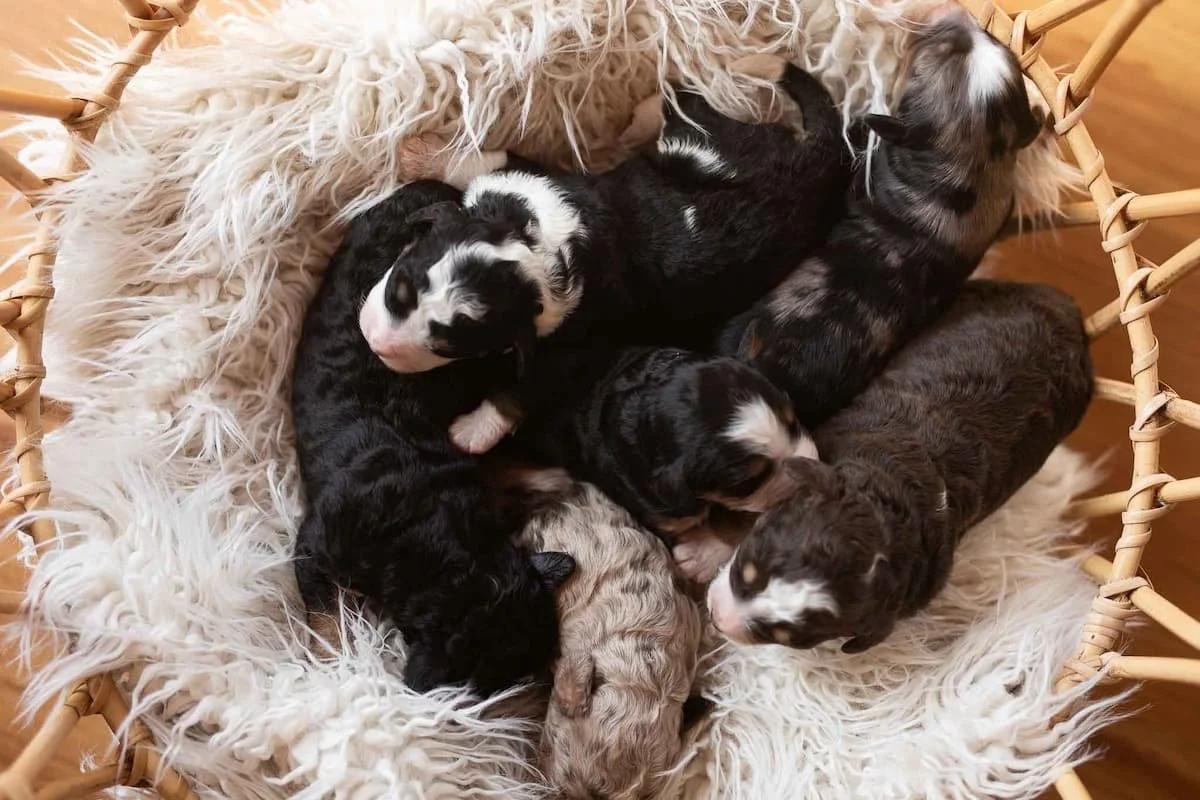
Color Patterns
The Bernedoodle's color diversity comes from both parent breeds. The Bernese contributes the traditional tri-color pattern; the Poodle introduces additional color possibilities and modifying genes.
Black, white, and rust — the iconic Bernese pattern. Most sought-after.
Mottled/marbled pattern from Poodle or Aussie lineage. Blue merle, chocolate merle, red merle. Requires DNA testing for safe pairings.
Solid dark base with distinct lighter markings on legs, chest, face, and eyebrows.
Hair is one color at base, tipped with black. Often "clears" to lighter color as the dog matures.
At least 50% white with large patches of another color.
Black, chocolate, cream, apricot, or silver. Less common in Bernedoodle programs.
The Fading Gene: Why Colors Change
Many Bernedoodle owners are surprised when their puppy's coat color changes as it matures. The Poodle carries a "progressive graying" gene that can cause deep blacks to fade to silver or "blue," and vibrant reds or chocolates to lighten to apricot or cream over the first two years. This is a normal genetic process — not a health concern — but breeders should prepare families for the possibility that the puppy's adult color may differ significantly from its puppy coat.
Merle Safety
Two merle-carrying dogs must never be bred together. Double-merle offspring (M/M) face significant risk of bilateral deafness (up to 56% in published studies) and visual impairments including microphthalmia and cataracts. Cryptic merles — dogs that appear solid but carry a short merle insertion — require DNA testing to identify. Stokeshire confirms merle status on all breeding dogs via Embark before any pairing.
→ Full coat genetics guide: RSPO2/KRT71/MC5R explained, genotype outcome tables, merle safety
Bernedoodle Grooming Requirements
The Bernedoodle's coat is high-maintenance. The same coat structure that retains hair within the curl rather than releasing it into your home also accumulates tangles and mats without consistent brushing. Lower shedding does not mean lower grooming — it means different grooming. This is the single most underestimated aspect of Bernedoodle ownership.
Curly / Wool Coat
Highest grooming demand. Mats rapidly in high-friction zones (behind ears, under legs, collar area). Line brushing technique essential — start at hair tips, work toward skin. Daily metal comb check for hidden mats near the dermis.
Wavy / Fleece Coat
Most common Bernedoodle coat. Moderate maintenance but still mat-prone at friction zones. Slicker brush for surface detangling, metal comb for deep checks. Common styles: Teddy Bear Cut, Puppy Cut.
Straight Coat
Lowest mat risk but highest shedding. Regular brushing manages loose undercoat and prevents seasonal buildup. Not appropriate for allergy-sensitive homes.
Ear care: Floppy ears trap moisture and debris, creating bacterial and yeast infection risk. Weekly cleaning with veterinary-approved solutions, and trimming hair inside the ear canals, is essential — especially after swimming or bathing.
Grooming budget reality: Professional grooming every 6–8 weeks typically runs $75–$150+ per session depending on location, size, and coat condition. Annual grooming costs for a Bernedoodle often range from $600–$1,500. Families should budget for this before committing to the breed.
→ Full grooming guide: mat zone breakdown, tool list, bathing protocol, puppy introduction program
Bernedoodle Health Considerations
While hybrid vigor reduces the impact of some breed-specific conditions, Bernedoodles inherit health predispositions from both parent breeds. Responsible programs perform comprehensive screening on all breeding dogs before any litter is planned.
From the Bernese Lineage
Hip and elbow dysplasia (heritability 24–43% for elbows in Bernese). Cancer risk — reduced but not eliminated by outcross. Gastric dilatation-volvulus (bloat) in deep-chested Standards. Von Willebrand's disease Type 1. Degenerative myelopathy (SOD1). Bernese-specific emotional sensitivity affecting training approach.
From the Poodle Lineage
Hip dysplasia (Standards) or patellar luxation (Minis/Toys). Progressive retinal atrophy (prcd-PRA). Von Willebrand's disease. Sebaceous adenitis. Idiopathic epilepsy. Addison's disease. Heart conditions including dilated cardiomyopathy in some lines.
Bloat Prevention (GDV)
Standard Bernedoodles carry bloat risk due to deep chest structure. Feed multiple smaller meals rather than one large meal. Use slow-feed bowls. Avoid vigorous activity immediately after eating. Many owners of large Bernedoodles opt for prophylactic gastropexy during spay/neuter.
Skin Allergies
Estimated to affect 30–40% of Bernedoodles. Presents as persistent itching, hot spots, ear infections, and hair loss. Can be environmental or food-related. Food elimination trials may require 2–3 months to identify triggers. Early veterinary consultation recommended.
PennHIP vs. OFA: Two Approaches to Hip Evaluation
Two primary methods evaluate hip health in breeding dogs. The OFA (Orthopedic Foundation for Animals) uses a subjective grading system (Excellent, Good, Fair) based on a single extended-view radiograph. PennHIP (Pennsylvania Hip Improvement Program) provides an objective, quantitative Distraction Index (DI) measurement using three different radiographic views under sedation, measuring actual joint laxity — the primary predictor of future arthritis. A DI ≤ 0.30 indicates minimal risk; ≥ 0.30 indicates increasing susceptibility. Stokeshire recommends PennHIP for its more precise, objective measurement and uses it in our own breeding evaluations.
Stokeshire's Health Testing Protocol
Every breeding dog at Stokeshire completes a full Embark genetic panel before inclusion in the program — screening for over 230 health conditions including DM, PRA, vWD, coat genetics, and merle status. No pairing is made without confirmed genetic status on both parents, and no two carriers of the same recessive condition are ever mated. Families receive their puppy's genetic results at placement.
Training a Bernedoodle
Bernedoodles are highly intelligent — their Poodle heritage places them among the fastest-learning companion breeds available. They acquire new commands quickly, retain training well, and are motivated by engagement with their handler. The complication is the Bernese "stubborn streak": not a lack of intelligence, but a tendency to test boundaries, negotiate compliance, and selectively ignore commands when unmotivated. This is especially pronounced during the adolescent phase (6–18 months), when energy peaks and every boundary gets tested.
Training Approach: What Works
Positive reinforcement with consistent cues and short, engaging sessions (10–15 minutes, two to three times daily). The "jackpot method" — multiple small treats given in rapid succession for excellent compliance — is particularly effective for difficult commands or high-distraction environments. Impulse control exercises (waiting at doors, waiting for food, "leave it") develop self-regulation that pays dividends through adolescence and adulthood. All household members must use identical commands and reinforce the same rules — inconsistency from different family members is the fastest way to create confusion and escalate the stubborn streak.
The Adolescent Phase: 6–18 Months
Between six months and two years, Bernedoodles often enter a challenging developmental phase where previously reliable commands seem forgotten, leash manners deteriorate, and creative boundary-testing begins. This is normal developmental behavior, not disobedience. Consistency without frustration is the key — the soft Bernese temperament means that harsh correction during this phase can create lasting behavioral damage. Owners who maintain patience and structure through adolescence typically emerge with a remarkably well-adjusted adult dog.
Preventing Separation Anxiety
Given the Bernedoodle's deep attachment to humans, preventing separation anxiety is more effective than treating it. Gradual desensitization — starting with departures of just seconds and slowly increasing duration — builds tolerance for alone time. Creating a "safe space" (a crate or specific room) with comforting items carrying the owner's scent, combined with long-lasting enrichment like frozen Kongs, helps the dog associate being alone with positive experiences. Independence training should begin from Day 1 in the new home — not after anxiety symptoms appear.
Mental Stimulation: As Important as Exercise
Physical exercise alone is not sufficient for a breed with this level of intelligence. Training sessions, puzzle feeders, scent games (hiding treats around the house), and structured play provide the cognitive engagement that prevents boredom-driven behaviors. Behavior research suggests that 20 minutes of intensive sniffing can be mentally equivalent to an hour-long walk — making scent work a critical tool for busy families. Bernedoodles that are physically exercised but mentally under-stimulated show higher rates of destructive behavior, excessive vocalization, and anxiety regardless of how much they've walked.
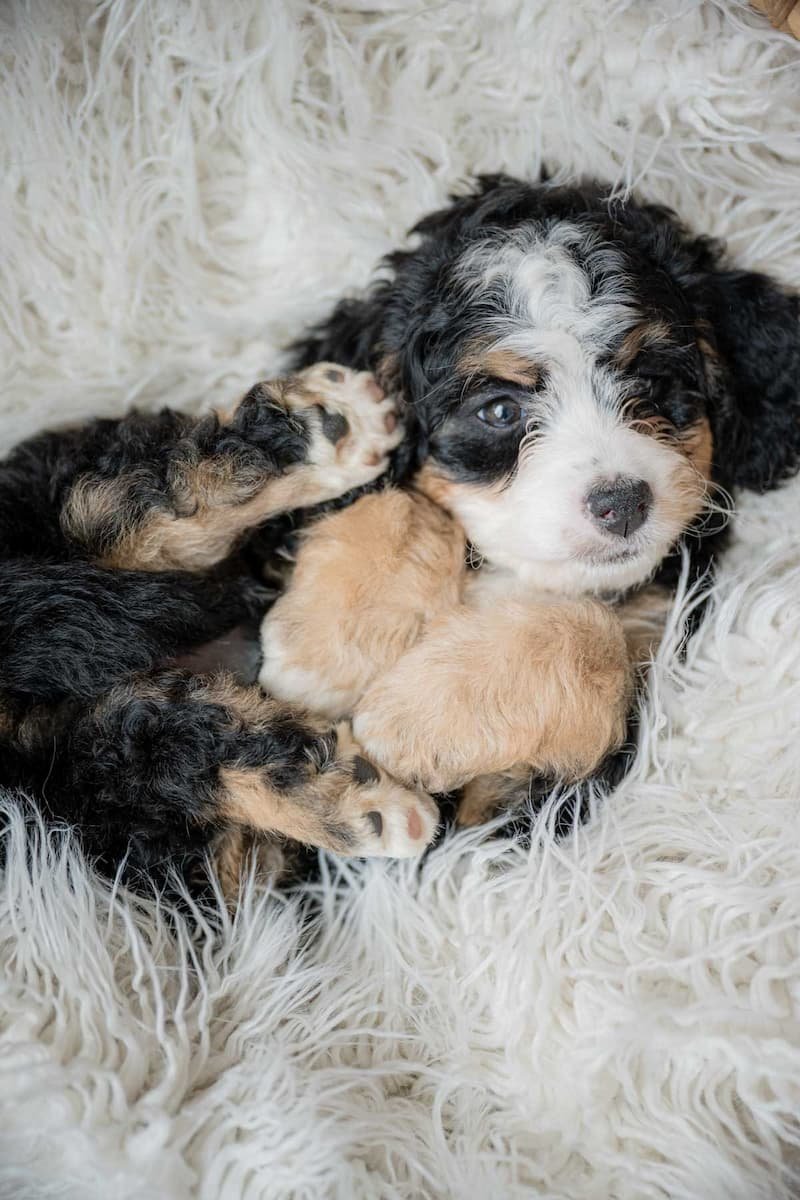
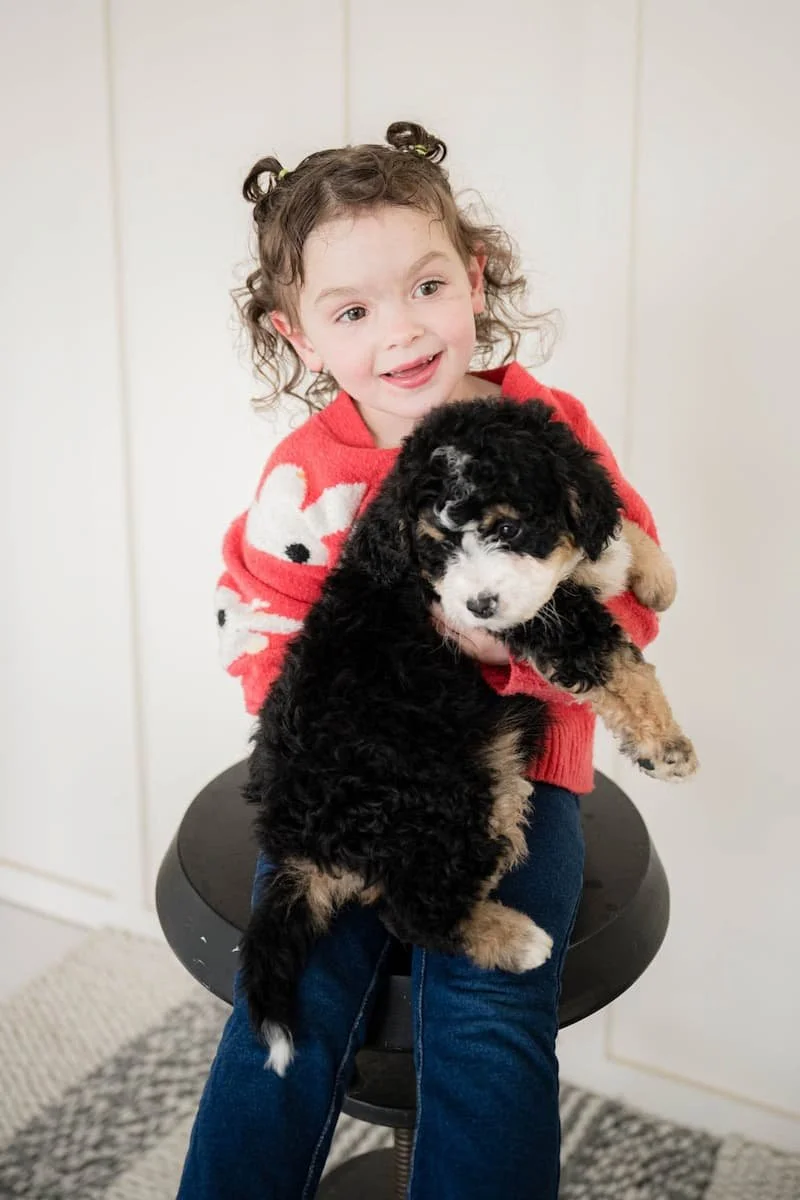
Bernedoodle Puppies at Stokeshire
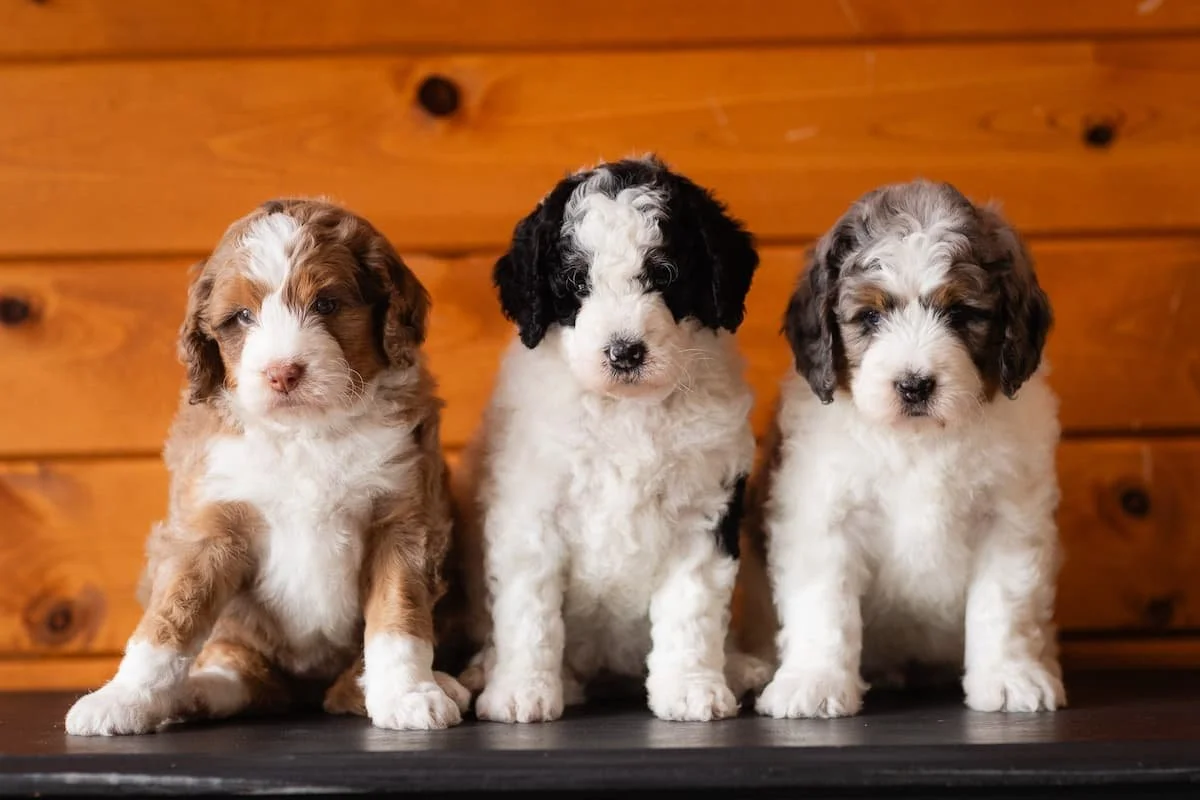
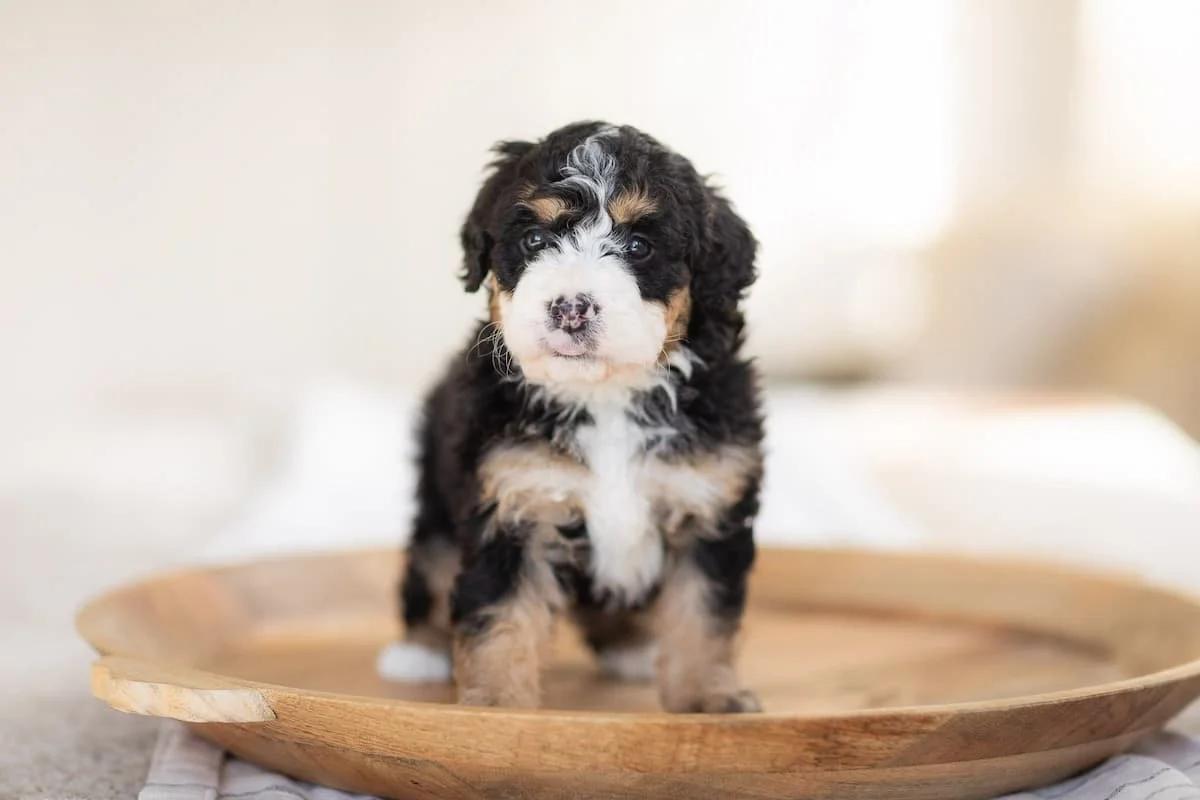
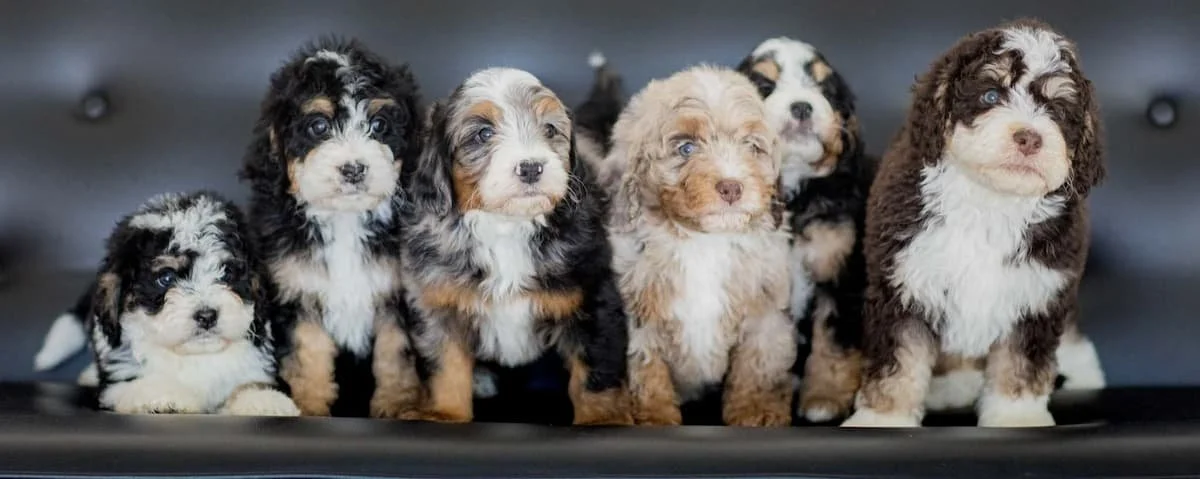


Bernedoodles at Stokeshire Designer Doodles
Stokeshire's Bernedoodle program is built on the same health-first, temperament-driven foundation that underlies our entire breeding operation. Our Bernese Mountain Dog dams — anchored by Feta — are paired with Embark-tested Poodle studs selected for coat genetics, temperament, and structural soundness. We produce F1, F1B, and Multigen Bernedoodle litters in Standard, Medium, Mini, and Toy sizes, with every pairing informed by full genetic panels and hip evaluation results.
The Bernedoodle is where many families first encounter Stokeshire. The breed's combination of gentle temperament, trainability, and coat diversity makes it one of the most versatile companion dogs in our program. Families who want the Bernedoodle's temperament with the addition of Australian Shepherd athleticism often explore our Australian Mountain Doodle program — and those who want the Bernese × Aussie cross without Poodle influence explore our Australian Mountain Dog line.
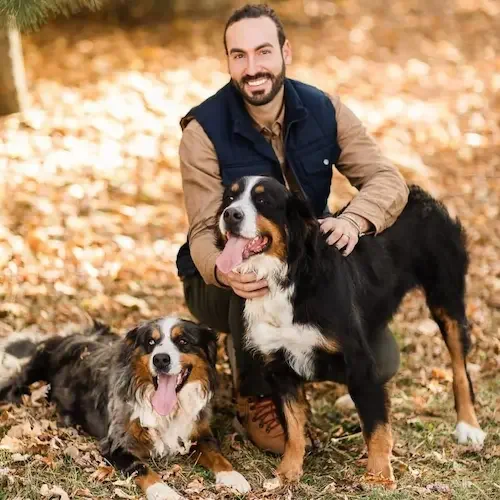
James Stokes
Stokeshire Designer Doodles is a therapy-grade breeding program based in Medford, Wisconsin, operated by James Stokes. The program has placed over 650 dogs with families across the United States and Mexico. Every breeding dog is Embark-tested and hip-evaluated before inclusion. Puppies are raised in a family home with Early Neurological Stimulation beginning at Day 3 and progressive socialization through all eight weeks before placement.
Licensed under Wisconsin DATCP #514401-DS. W4954 County Road O, Medford, WI 54451.
Bernedoodle Planned Litters
Current and upcoming Stokeshire Bernedoodle litters are displayed below. All breeding pairs are Embark-tested and hip-evaluated. Nationwide transport available.
Bernedoodle FAQs
Are Bernedoodles hypoallergenic?
How big do Bernedoodles get?
How long do Bernedoodles live?
Are Bernedoodles good with kids and families?
Do Bernedoodles have separation anxiety?
How much grooming does a Bernedoodle need?
What is the difference between F1, F1B, and Multigen Bernedoodles?
Are Bernedoodles easy to train?
What health problems do Bernedoodles have?
Why do Bernedoodle coat colors change as they grow?
Explore the Complete Bernedoodle Guide
Each guide below covers a specific aspect of Bernedoodle ownership in depth — sizes, generations, coat genetics, health testing, and how the Bernedoodle compares to related breeds in the Stokeshire program.