How to Socialize a Doodle Puppy Before Daycare: A Breeder’s Guide
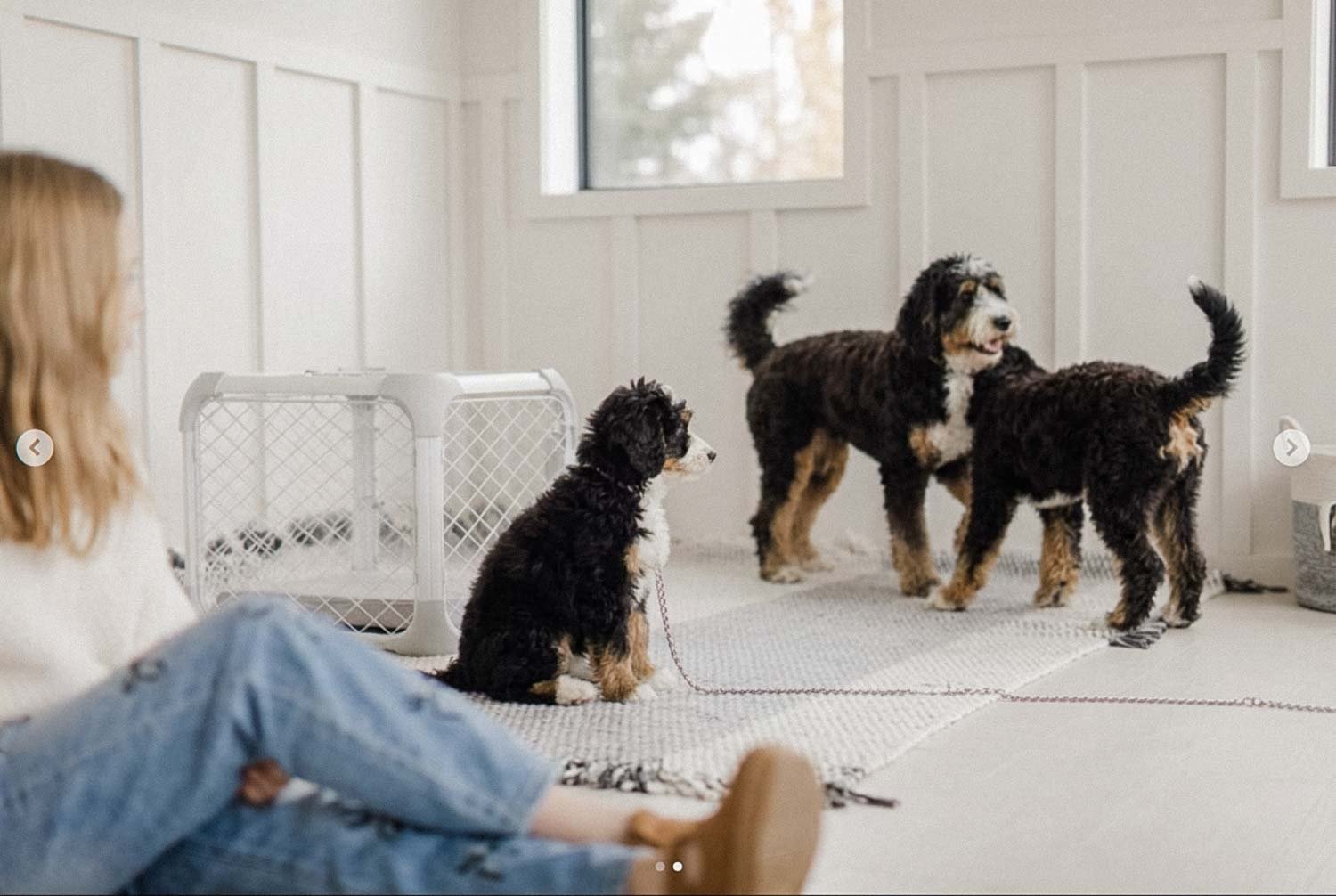
Quick answer: Before attending daycare, a doodle puppy needs more than experience playing with other dogs. They should also be comfortable with gentle handling, short separations, unfamiliar sounds and surfaces, calm transitions, and supervised interactions with well-matched dogs. Start small and choose a short evaluation visit before committing to full-day daycare.
Daycare can give a young doodle supervised play, enrichment, exercise, and experience around other dogs. It can also overwhelm a puppy who has not learned how to manage noise, separation, unfamiliar people, or energetic group play.
Before booking that first full day, build the foundation at home. A daycare-ready puppy should be developing the ability to settle independently, recover from mild surprises, communicate appropriately with other dogs, and take breaks without becoming distressed.
At Stokeshire Designer Doodles, this is the standard we work toward through the Stokeshire Method’s focus on puppy socialization, confidence, and impulse control: emotional regulation first, intensity second.
Why Daycare Preparation Matters for Doodle Puppies
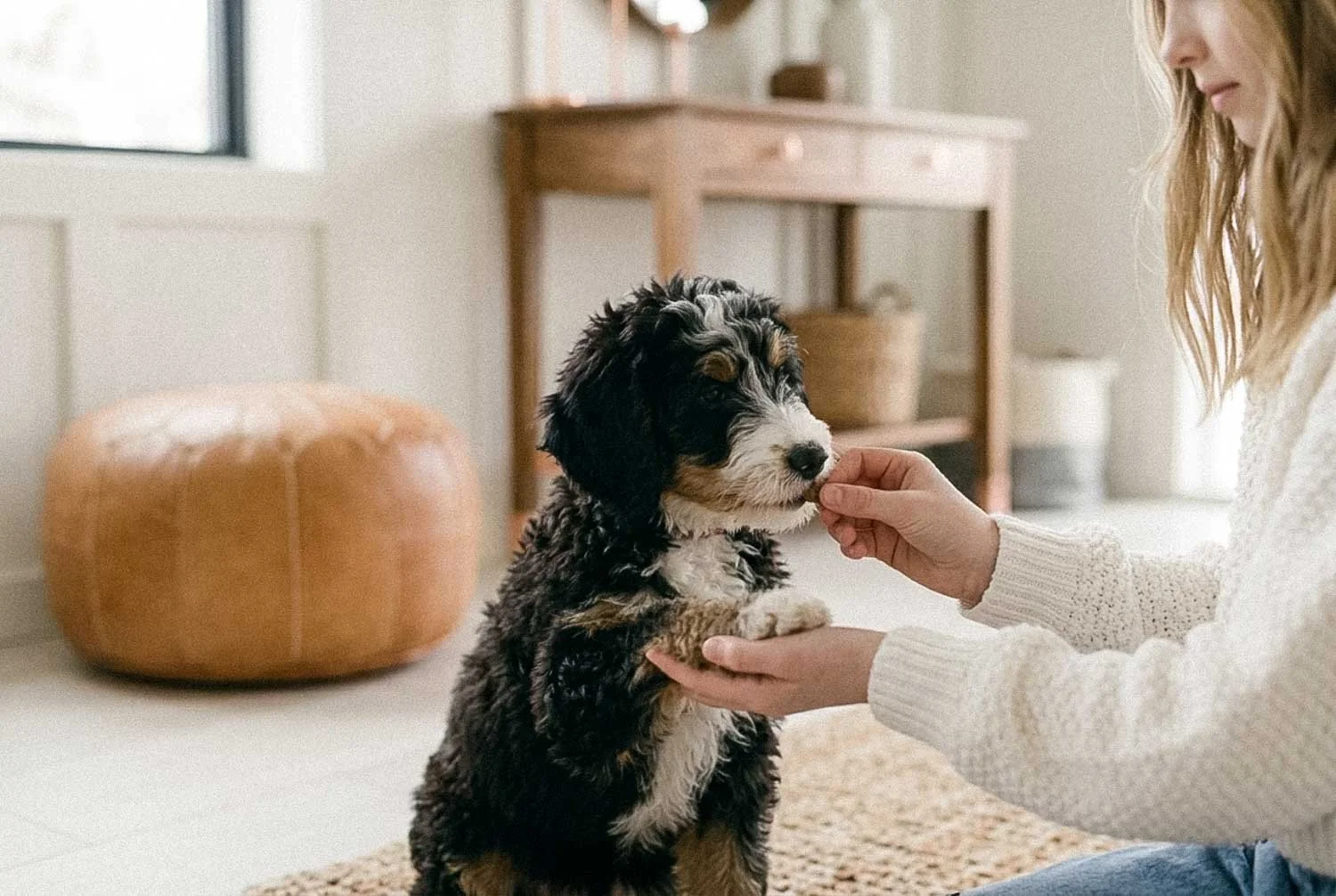
Doodles vary considerably by genetics, breed combination, temperament, age, and early experience. Many are highly intelligent, socially motivated, and enthusiastic about new people and activities. Those strengths can make them engaging family companions, but they do not automatically make every doodle comfortable in a busy group environment.
Even a well-managed daycare cannot provide the same individual attention a puppy receives at home or in a carefully structured playgroup. Staff must supervise multiple dogs, manage frequent transitions, and balance active play with rest.
Preparation is not about producing a perfectly obedient puppy. It is about giving your puppy enough confidence and self-control to feel safe when the environment becomes busy or unpredictable.
Socialization Is More Than Meeting Other Dogs
Many families think puppy socialization means arranging as much dog-to-dog play as possible. Good socialization is much broader and more deliberate.
A puppy needs positive exposure to different:
- People
- Surfaces
- Sounds
- Locations
- Objects
- Handling experiences
- Household routines
- Animals and play styles

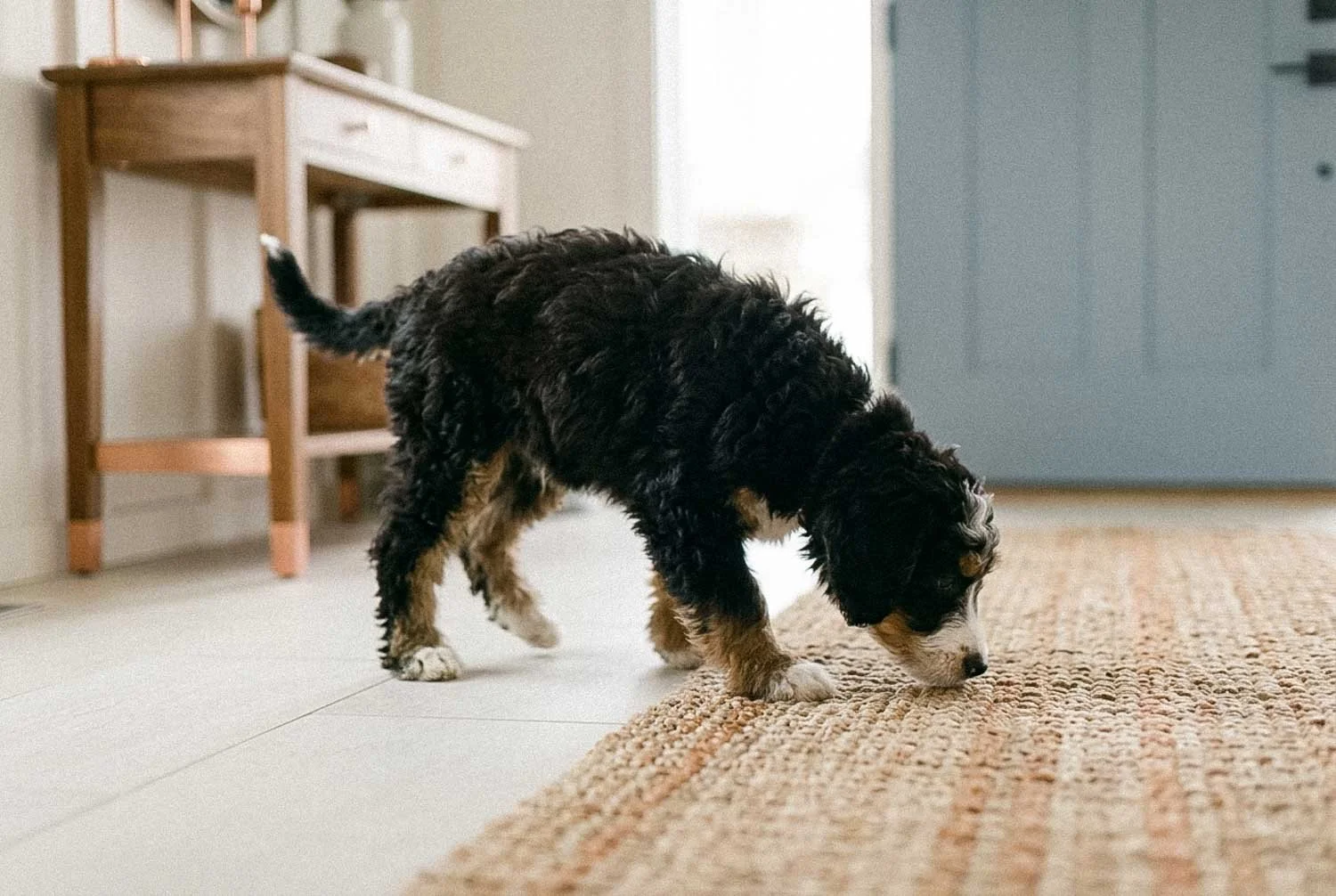
For a doodle puppy, this might include walking on grass, tile, concrete, gravel, and rubber flooring; hearing a vacuum cleaner or metal gate; meeting someone wearing a hat; riding in the car; and having their paws, ears, and collar gently handled.
The goal is not to make your puppy interact with everything. It is to help them notice something unfamiliar, remain within a comfortable emotional range, and recover calmly.
A puppy who watches another dog from a safe distance while accepting treats may be learning more than a puppy pushed into a chaotic greeting.
Keep each exposure short and manageable. Increase the distance or end the session when your puppy:
- Freezes or becomes unusually still
- Hides or repeatedly attempts to escape
- Refuses food they would normally accept
- Tucks their tail or lowers their body
- Begins barking, lunging, spinning, or becoming frantic
Socialization should build confidence rather than test how much stress a puppy can tolerate. You can explore additional ideas in Stokeshire’s guide to socializing a doodle puppy through people, sounds, surfaces, and controlled experiences.
The American Veterinary Society of Animal Behavior’s puppy socialization guidance identifies the first three months as the most important socialization period and supports safe exposure before a puppy is fully vaccinated, provided disease risks are managed appropriately.
Practice Calm Behavior Before Group Play
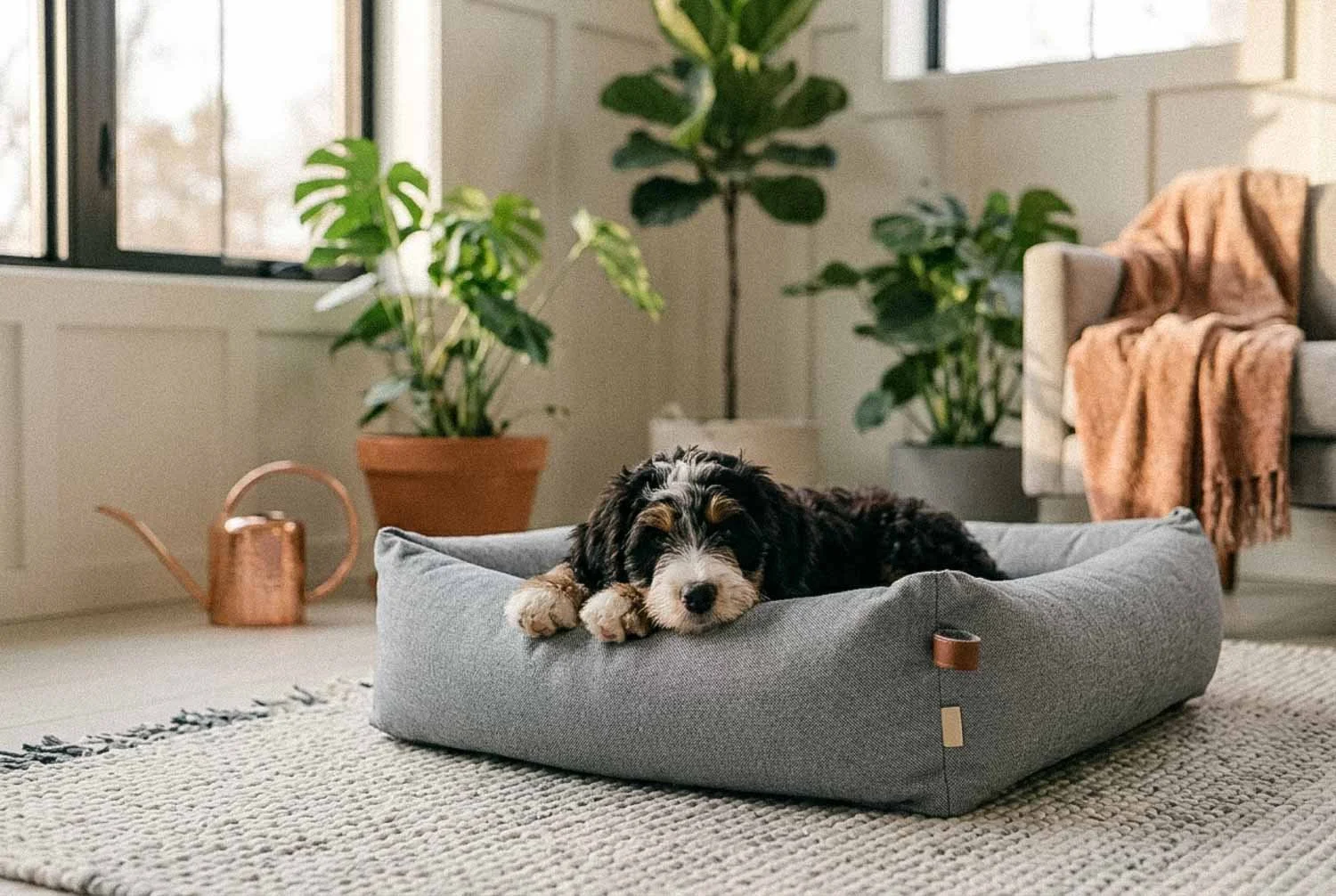
Daycare involves constant transitions. Your puppy may move from a reception area into a playroom, meet a new handler, pass through gates, enter a group, and rest away from you.
Practicing smaller versions of those experiences at home can make the real event easier.
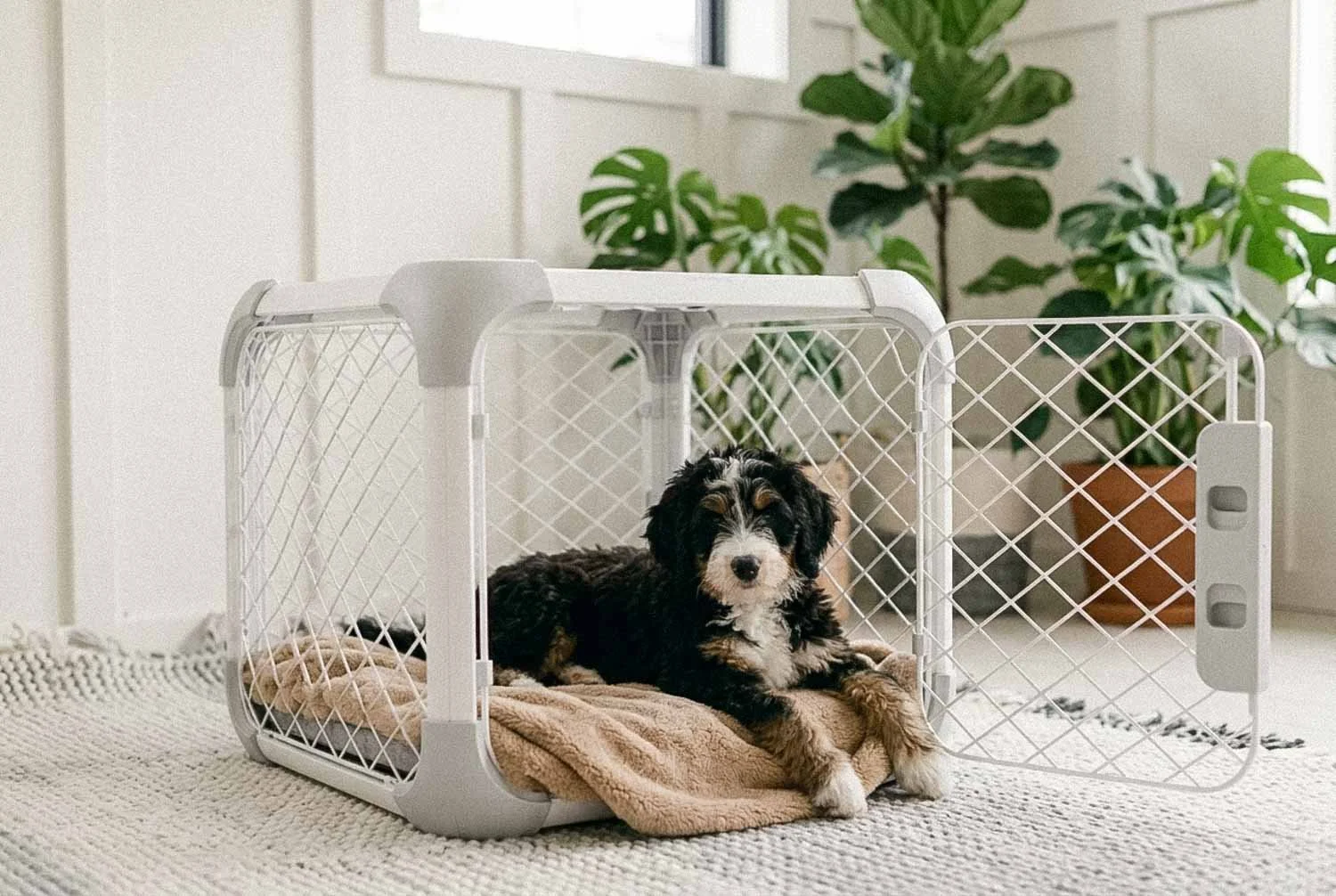
Begin by helping your puppy relax in a crate, exercise pen, or quiet room for brief periods. Introduce short separations while you remain nearby, then gradually increase the distance and duration.
A puppy who can nap independently is better prepared to rest during a daycare break. Stokeshire’s doodle puppy crate-training guide explains how to introduce the crate gradually and create a consistent home routine.
Practice calm observation around other dogs as well. Rather than allowing your puppy to pull toward every dog they see:
- Begin far enough away that your puppy can remain relaxed.
- Reward them for noticing the other dog calmly.
- Encourage them to look back at you.
- Leave before excitement becomes frustration or lunging.
This teaches your puppy that seeing another dog does not always lead to direct play. That skill can help them enter and leave group environments without expecting constant interaction.
When comparing daycare facilities or other quality pet services, ask:
- How are new puppies evaluated?
- Are dogs separated by size, age, energy level, or play style?
- How many dogs does each staff member supervise?
- Are staff trained to recognize canine stress signals?
- How are inappropriate interactions interrupted?
- Where and how often do dogs rest?
- Are puppies ever crated, and for how long?
- What happens if a puppy cannot settle in the group?
A reputable daycare should evaluate a dog before admission, employ staff who understand canine body language, and provide a designated area for rest, not simply continuous group play.
Arrange Safe, Well-Matched Puppy Interactions
A crowded dog park is not the best place to prepare a young puppy for daycare. You cannot verify the health status, behavior, training history, or play preferences of every dog present. One frightening or overly physical encounter can affect a puppy’s developing confidence.
Instead, begin with one calm, healthy dog whose behavior you know.
Choose a secure area with enough space for both dogs to move away. Avoid narrow hallways, tight corners, or small enclosures where either dog could feel trapped.
Keep the first meeting brief and interrupt play periodically. Call the dogs apart, offer a short reset, and then observe whether both choose to return.
Healthy puppy play commonly includes:
- Loose, wiggly bodies
- Curved approaches rather than direct charges
- Play bows
- Natural pauses
- Role reversals
- Self-handicapping by the larger or stronger dog
- Both dogs choosing to reengage
One puppy may chase briefly and then become the dog being chased. One may lie down or reduce the intensity to accommodate the other.
Step in when one puppy repeatedly:
- Pins or corners the other
- Body-slams with increasing intensity
- Pursues a dog that is trying to escape
- Ignores repeated requests for space
- Targets the face, neck, or legs without pausing
- Prevents the other puppy from reaching people, water, or an exit
Also watch for tucked tails, stiff posture, hiding, repeated yelping, frantic climbing onto people, or a puppy continually rolling over without willingly returning to play.
The goal is not to let puppies “work it out.” It is to give them repeated experiences in which communication is noticed and respected.
Prepare Your Puppy for Handling and Daycare Routines
Daycare staff may need to attach a leash, inspect a collar, wipe muddy paws, guide your puppy through a gate, or briefly examine them for an injury.
Gentle handling practice at home can make those moments feel routine rather than threatening.
Briefly touch your puppy’s:
- Paws and toes
- Ears
- Collar area
- Chest and sides
- Tail area
- Muzzle and mouth area
Pair the handling with small treats and stop while your puppy is still comfortable. Avoid holding your puppy in place until they struggle. That can create negative associations and make future grooming, veterinary care, and daycare handling more difficult.
Practice common daycare skills at home:
- Walking calmly through doorways instead of rushing
- Responding to their name around mild distractions
- Following a handler through a gate
- Trading toys instead of guarding them
- Pausing play when called away
- Drinking water and settling after activity
- Resting in a crate or quiet space without constant attention
- Accepting a leash or collar touch from another trusted person
Perfect obedience is not the standard. Daycare readiness is primarily about emotional regulation, communication, recovery, and the ability to pause.
Start With a Short Evaluation, Not a Full Day
Even a sociable puppy can find several hours of group play exhausting. Whenever possible, begin with a behavioral assessment, introductory visit, or short session rather than immediately scheduling a full day.
Ask the staff what they observed:
- Did your puppy enter the space willingly?
- Did they initiate and accept appropriate play?
- Could they disengage from other dogs?
- Did they respond when handlers redirected them?
- Were they able to drink and rest?
- Did they become more comfortable as the session continued?
- Were there particular dogs or play styles they avoided?
A puppy who spends the session hiding is not necessarily enjoying the experience. A puppy who runs continuously without resting may also be struggling, even when the behavior appears energetic and playful.
After pickup, observe your puppy’s physical and emotional recovery. Temporary tiredness and a longer nap can be expected after a new experience. Contact your veterinarian when you notice persistent diarrhea, vomiting, coughing, limping, pain, unusual fearfulness, loss of appetite, or extreme exhaustion.
Daycare Is Not Necessary for Every Doodle
Daycare can be a valuable resource, but it is not an essential developmental milestone for every puppy.
Some doodles prefer:
- One-on-one playdates
- Small, familiar playgroups
- Structured neighborhood walks
- Puppy training classes
- Sniffing and enrichment activities
- Individual time with a dog walker
- Quiet rest at home
A puppy who does not enjoy large-group play is not poorly socialized. Good socialization gives a dog the skills to move through the world comfortably; it does not require them to enjoy every social environment.
The right option depends on your puppy’s individual temperament, energy level, health, age, communication style, and comfort around unfamiliar dogs.
Build Confidence Before Adding Intensity
A successful first daycare visit begins well before your puppy reaches the playroom.
Focus first on:
- Short, positive exposures
- Calm separation
- Independent rest
- Appropriate interactions with known dogs
- Gentle handling
- Name recognition and simple redirection
- The ability to recover after something unfamiliar
When your doodle can explore without being forced, pause during play, accept guidance from a trusted handler, and settle after excitement, daycare is more likely to feel manageable rather than overwhelming.
That is the outcome we build toward at Stokeshire Designer Doodles: not a puppy who simply tolerates intensity, but one who has the confidence, communication skills, and emotional foundation to navigate it successfully.