
What Health Testing Should a Dog Breeder Actually Do?

When you begin the journey of welcoming a new puppy into your home, it’s easy to get swept up in the excitement of fuzzy faces and wagging tails. But beneath those adorable eyes lies a world of science, dedication, and responsibility. One of the most critical aspects of this journey is understanding what happens behind the scenes to ensure your future companion is set up for a long, healthy, and happy life.
The term “health tested” is used frequently in the breeding world — but what does it actually mean? It’s not just a quick vet check-up by a local veterinarian. True dog breeder health testing is a proactive, data-driven approach that uses advanced diagnostics to screen parent dogs for potential genetic and structural issues before a litter is ever conceived. This involves comprehensive genetic testing and structural evaluation.
At Stokeshire, we believe this academic rigor, rooted in sound veterinary medicine, is the foundation of ethical, responsible breeding.
Why Health Testing is More Than Just a "Vet Check"
Imagine building a beautiful home. You wouldn’t just eyeball the foundation and hope for the best — you’d want blueprints, assessments, and quality materials. Health testing is the blueprint for a healthy dog.
A simple vet check confirms a dog is healthy at that moment — but it doesn’t predict the future or reveal the genetic predispositions hiding in its DNA. A thorough veterinarian understands the limitations of a basic exam.
Reputable dog breeders don’t rely on luck. They invest in science to minimize the risk factor of passing on painful hereditary conditions — protecting not only the puppies but also the families who will love them for the next 10 to 15 years. That peace of mind is priceless. This commitment to selective breeding improves the heritability of desirable traits.
The Big Three: OFA, PennHIP, and Genetic Panels for Every Dog Breed
When you’re speaking with a breeder, three names should be part of the conversation: OFA, PennHIP, and Embark (or a comparable DNA testing company). These represent the gold standard in canine health screening.
1. Orthopedic Foundation for Animals (OFA): The Structural Standard
When you see a breeder referred to as an OFA dog breeder, it signifies a commitment to Orthopedic Foundation for Animals standards for screening for structural and developmental health. The Orthopedic Foundation for Animals (OFA) is a non-profit organization that has been collecting and centralizing canine health data for decades, setting a benchmark for dog breed health.
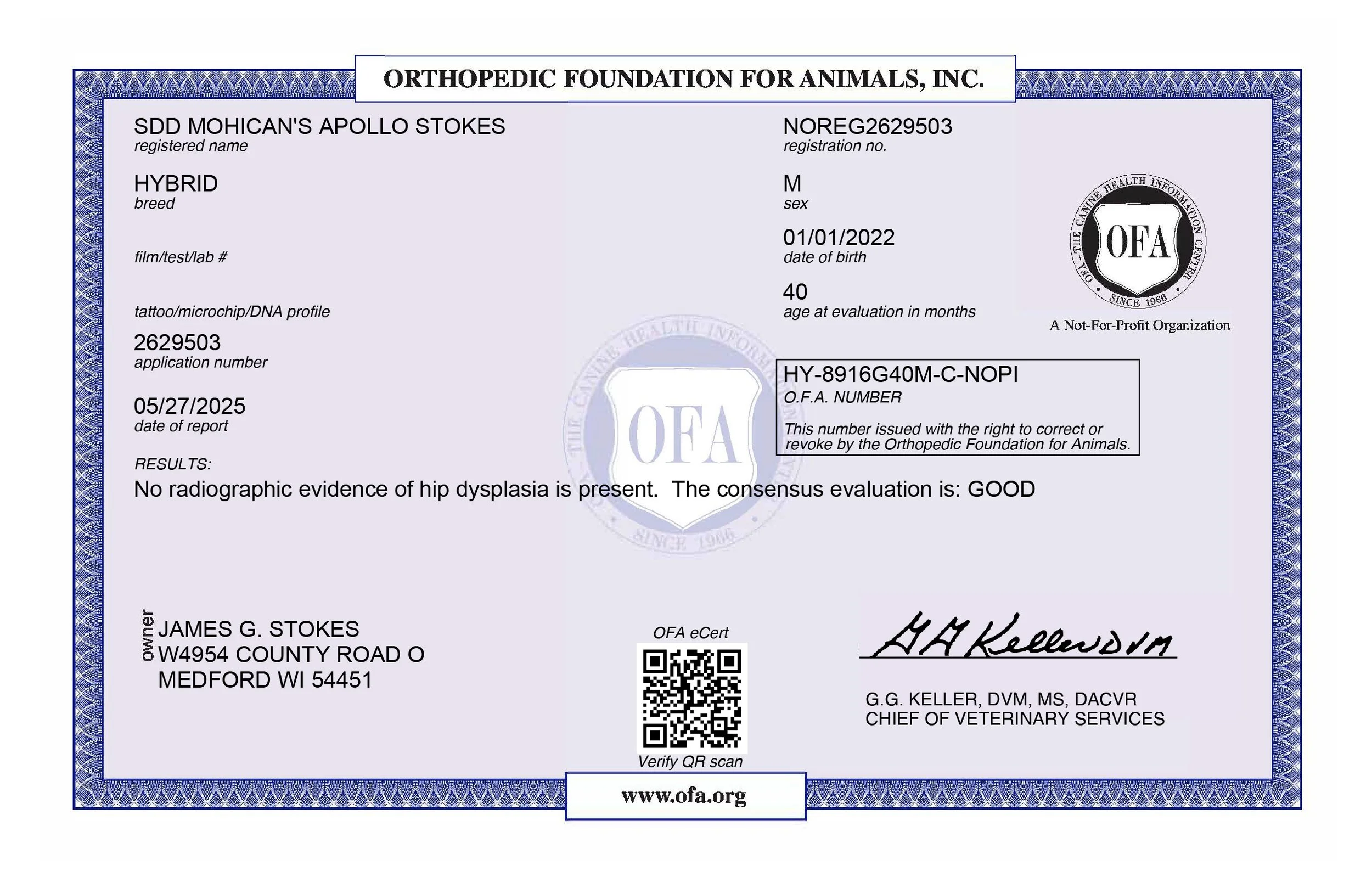
What does OFA test for?OFA offers evaluation for many conditions, but the most common for dog breeds like Doodles include:
Hips and Elbows — Radiographs (X-rays) are taken using specialized radiography techniques to check for signs of dysplasia, a painful malformation of the joint that can lead to arthritis and mobility issues. Specifically, they look for canine hip dysplasia (CHD) and elbow dysplasia. Hips are graded on a seven-point scale from Excellent to Severe, while elbows are graded as Normal or Dysplastic. The proper formation of the femoral head within the acetabulum is key.
Eyes — A board-certified veterinary ophthalmologist performs an annual exam to screen for hereditary eye diseases like Progressive Retinal Atrophy (PRA) or cataracts. These results, which track potential atrophy, are registered with the OFA Companion Animal Eye Registry (CAER).
Heart — A veterinarian listens for murmurs, and for certain dog breeds, a board-certified cardiologist may perform an echocardiogram to check for congenital heart defects.
A breeder who uses OFA demonstrates transparency and accountability — most results are publicly available online. You can (and should) ask for a dog’s registered name or number to look them up yourself. This public screening process is vital.
2. PennHIP: A Predictive Look at Hip Health
While OFA evaluates the current state of a dog’s hips, PennHIP (University of Pennsylvania Hip Improvement Program) offers a more predictive, scientific assessment. A PennHIP breeder uses this method to measure hip joint laxity — or looseness — which is the primary risk factor for developing canine hip dysplasia. This advanced radiology technique provides a precise measurement.
How does PennHIP work?A veterinarian certified in the PennHIP method takes a specific series of three radiographs while the dog is under sedation or anesthesia. These X-rays measure a numerical value called the Distraction Index (DI):
A DI closer to 0 means tight hips with a very low risk factor.
A DI closer to 1.0 means loose hips and a higher risk factor of dysplasia.
The advantage of PennHIP is that it can be performed on puppies as young as 16 weeks old, giving breeders earlier insight into genetic potential. The goal is to select dogs whose DI scores are tighter than the dog breed average — systematically improving hip health generation after generation through selective breeding and quantitative genetics.
3. Embark (and Other DNA Panels): Unlocking the Genetic Code
If OFA and PennHIP are the blueprints, then genetic testing is the instruction manual. Companies like Embark Vet use a simple cheek swab to analyze a dog’s DNA for hundreds of genetic health risks. This is a crucial laboratory step in modern breeding.
What does a DNA panel reveal?
Breed-Relevant Genetic Diseases — These tests screen for specific mutations known to cause disease in certain dog breeds. For Poodles and Golden Retrievers (the foundation of many Doodles), this includes conditions like von Willebrand’s disease (a blood clotting disorder), Ichthyosis (a skin condition), and various forms of PRA that can lead to blindness. The phenotype of these conditions can be severe.
Carrier Status — A dog can be a carrier for a disease, meaning it has one copy of the faulty gene but won’t become ill. However, if bred to another carrier, 25% of the puppies could be affected. Genetic testing allows breeders to avoid these pairings entirely, a key aspect of responsible selective breeding.
Traits and Diversity — These panels also reveal coat type, color, and furnishing genes, as well as measure a dog’s genetic diversity — a critical factor for long-term health and vitality of the breeding stock.
For breeders, utilizing an Embark breeder test or Embark breeders test provides invaluable insights into their canine breeding stock.
What to Look for in a Responsible Breeder
Now that you know the science, how do you apply it? When you’re speaking with a potential breeder, look for these green flags for comprehensive dog breeder health testing:
They Speak the Language. A responsible breeder can confidently discuss Orthopedic Foundation for Animals (OFA), PennHIP, and genetic testing protocols — and explain why they use each.
They Show, Not Just Tell. They provide documentation or public OFA profiles, and they’ll gladly email you copies of Embark breeder test results. Transparency matters.
They Test Before Breeding. Health testing is proactive, not reactive. Every screening should be complete before a dog is bred.
They Understand the Results. They don’t just collect reports; they interpret them. They can explain what a “Good” hip rating means or how carrier pairings are managed responsibly.
At Stokeshire, our dedication to responsible breeding is grounded in this scientific precision. We view dog breeder health testing not as a chore, but as an essential act of love and stewardship — the foundation of every therapy-grade temperament we raise.
It’s our promise to you that each Stokeshire puppy is the result of thoughtful selection, proven health data, and deep respect for the families who trust us with their hearts.
Your choice of breeder is a powerful one. By choosing a breeder who invests in comprehensive, science-backed health testing, you’re helping shape a future where every canine patient begins life with health, balance, and purpose.
Conclusion: The Future of Canine Health
Investing in comprehensive health testing is essential for responsible dog breeding, ensuring that future puppies are free from hereditary conditions and set up for a healthy life. By choosing a breeder who prioritizes Orthopedic Foundation for Animals (OFA), PennHIP, and genetic testing, you are not only safeguarding your future pet's well-being but also supporting ethical breeding practices. Take the next step in your journey by researching breeders who uphold these standards and provide transparency in their dog breeder health testing protocols. Together, we can foster a future where every canine thrives in a loving home.
Frequently Asked Questions about Dog Breeder Health Testing
What are the benefits of health testing for dog breeders?
Dog breeder health testing helps to identify and mitigate genetic health risks before breeding. By screening parent dogs for hereditary conditions, breeders can make informed decisions that enhance the health and longevity of their puppies.
How often should health testing be conducted for breeding dogs?
Initial tests, such as OFA and PennHIP evaluations, should be completed before a dog is bred to ensure they are free from hereditary conditions. Additionally, regular health checks and updates on genetic testing results are recommended on a regular basis, especially as new information about breed-specific health issues emerges. The frequency of certain tests may vary. .
What should I ask a breeder about their health testing practices?
Ask about the types of tests they conduct, such as Orthopedic Foundation for Animals (OFA), PennHIP, and genetic panels, and request to see documentation of the results. Also, make sure to ask how they interpret these results and what measures they take if a dog tests positive for a hereditary condition.
Are there any limitations to health testing in dogs?
Yes, not all genetic conditions can be tested for, and some tests may not predict the onset of diseases that can develop later in life. Additionally, a negative test result does not guarantee that a canine patient will be free from health issues.
How can health testing impact the future of dog breeds?
Health testing can help reduce the prevalence of hereditary diseases by identifying and screening for genetic conditions across a dog breed.
What role does genetic testing play in responsible breeding?
Through tests like those offered by the Embark breeder test, breeders can identify breed-specific genetic diseases, carrier statuses, and overall genetic diversity. This information allows breeders to make informed pairing decisions, reducing the likelihood of passing on hereditary conditions to puppies.
About the Author and Breeder: James Stokes of Wisconsin Designer Doodles
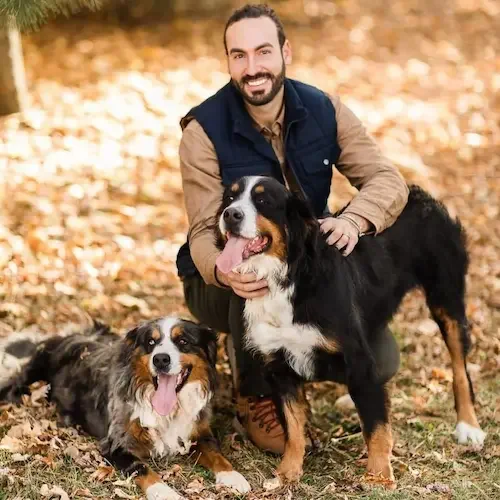
James Stokes is a trusted dog breeder of Doodles, a popular hybrid dog breed, and a responsible steward of the canine community. For over ten years, James has dedicated himself to raising healthy Bernedoodle puppies, a cross often involving the Bernese Mountain Dog and Poodle, that families can cherish, prioritizing their welfare. He works alongside his wife and children every day, ensuring each puppy from their litters receives loving care. Together, they have found wonderful homes for their Doodles across the U.S., Canada, and Mexico.
Health-tested puppies raised from proven, well-established lines and supported by a three-year genetic health guarantee, with breed-appropriate genetic testing conducted in line with current veterinarian and genetic best practices.
Hand-raised in a family home, never kept in kennels or a whelping box for too long, ensuring optimal welfare and a healthy birth environment.
Socialized early with ENS, sounds, and plenty of family time. This helps develop positive behavior and a balanced temperament and energy levels, ensuring they feel safe and relaxed, and are ready for their first vaccine and initial dog training.
Lovingly matched to each family. Every Doodle puppy from our litters is chosen based on specific criteria to fit well with their family’s way of life and needs, ensuring a perfect pet.
Part of an ethical, small-scale breeding program, driven by heart, focusing on the overall health and nutrition of each animal, including what dogs eat for optimal development.
At Stokeshire, doodles are never “just pets,” but cherished family members. They are thoughtfully raised companions—designed to become steady, intuitive members of the family for life. Every decision we make is guided by the Stokeshire Method: pairing genetics, temperament, and early-life environment to raise dogs with excellent behavior who integrate naturally into real family rhythms, upholding the dog breed standard of our program.
Our doodle puppies are known for their balanced energy, emotional intelligence, and predictable temperaments, embodying the best of their dog breed characteristics. They thrive in a wide range of households—from active families to therapy-focused homes—and are often an excellent option for those seeking allergy-friendly companions. Like our Goldendoodles and Bernedoodles, which are popular hybrid dog breeds, each puppy is raised with the intention of becoming deeply bonded, well-mannered, and trusted at every stage of life.
Stokeshire is proudly based in Medford, Wisconsin, but our families span far beyond the Midwest. Through our concierge-style transport and placement process, part of our comprehensive program, we safely deliver puppies across the United States and into Mexico—ensuring a calm, carefully managed transition from our home to yours. From day one, your puppy’s journey is handled with the same care and intention with which they were raised.