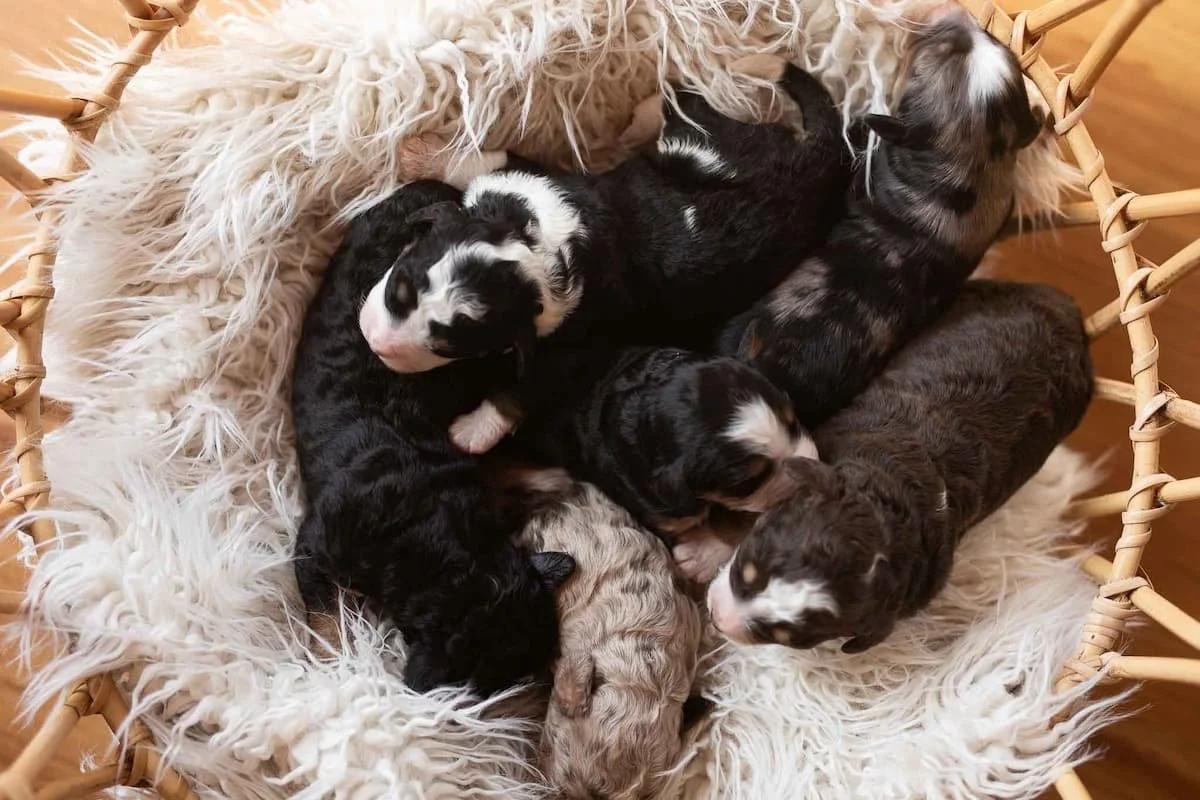
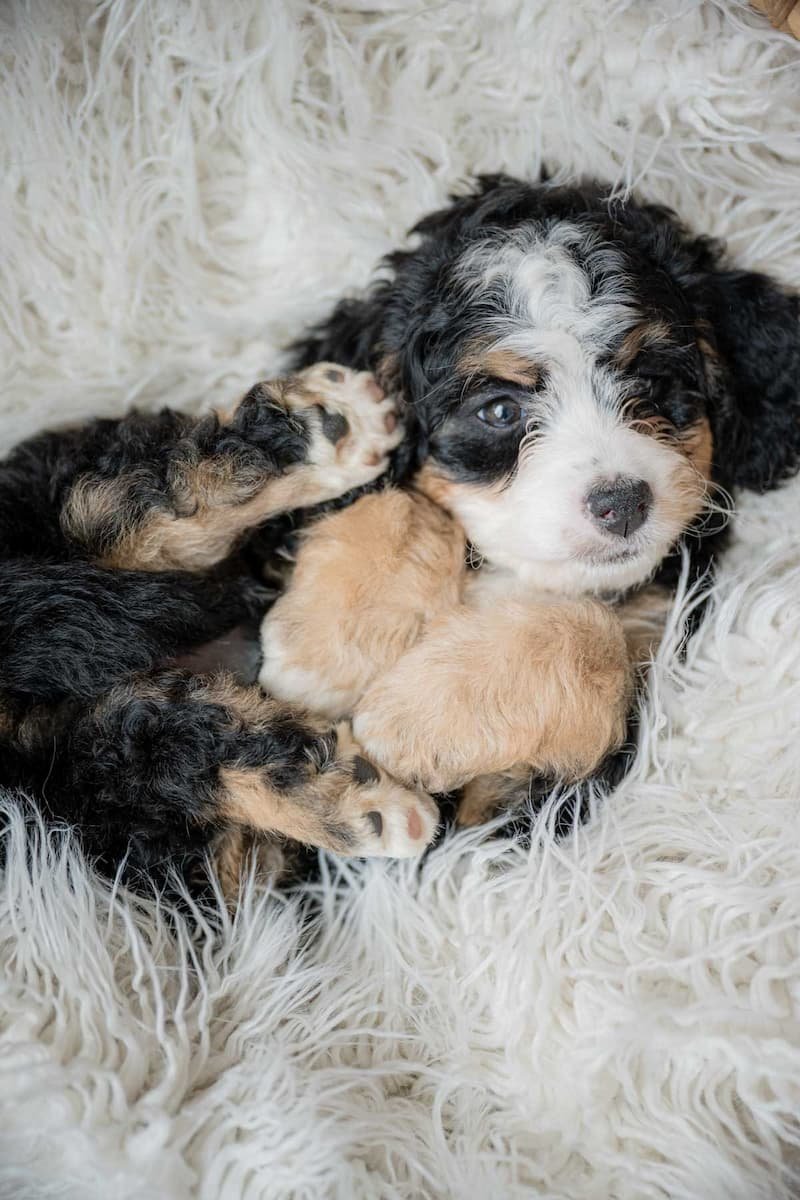
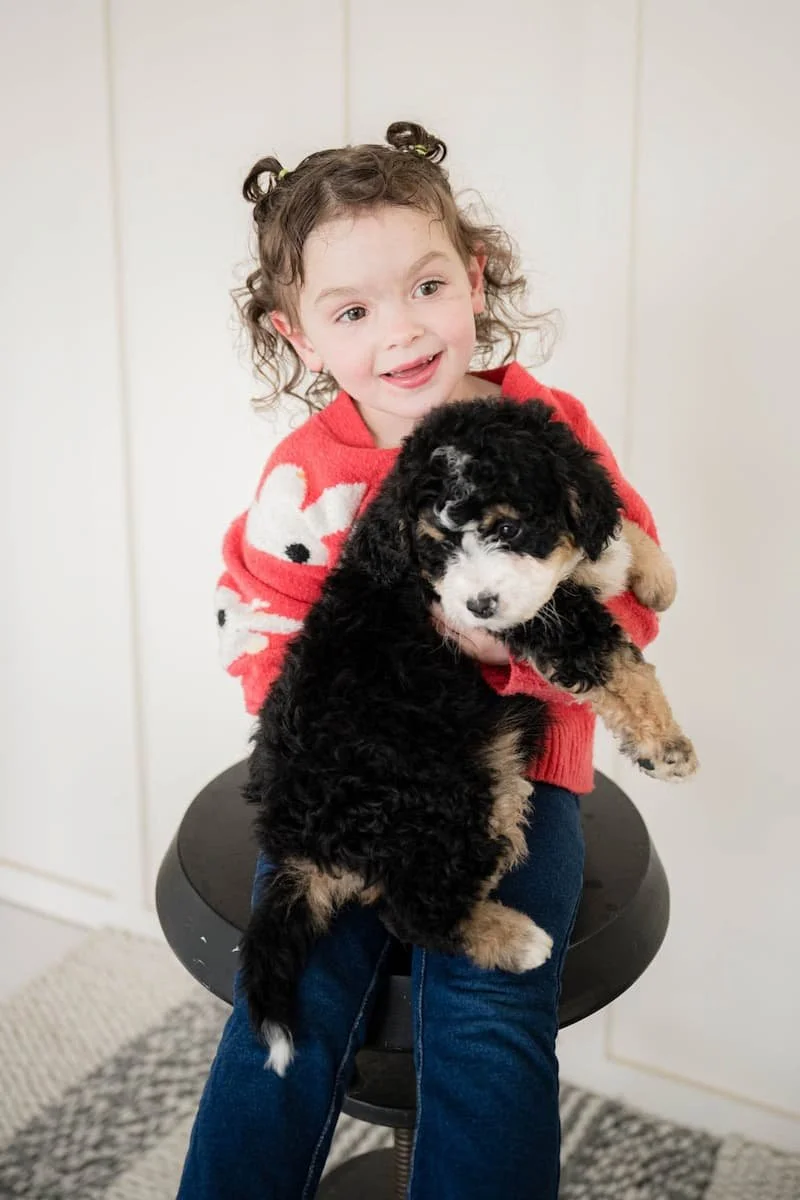
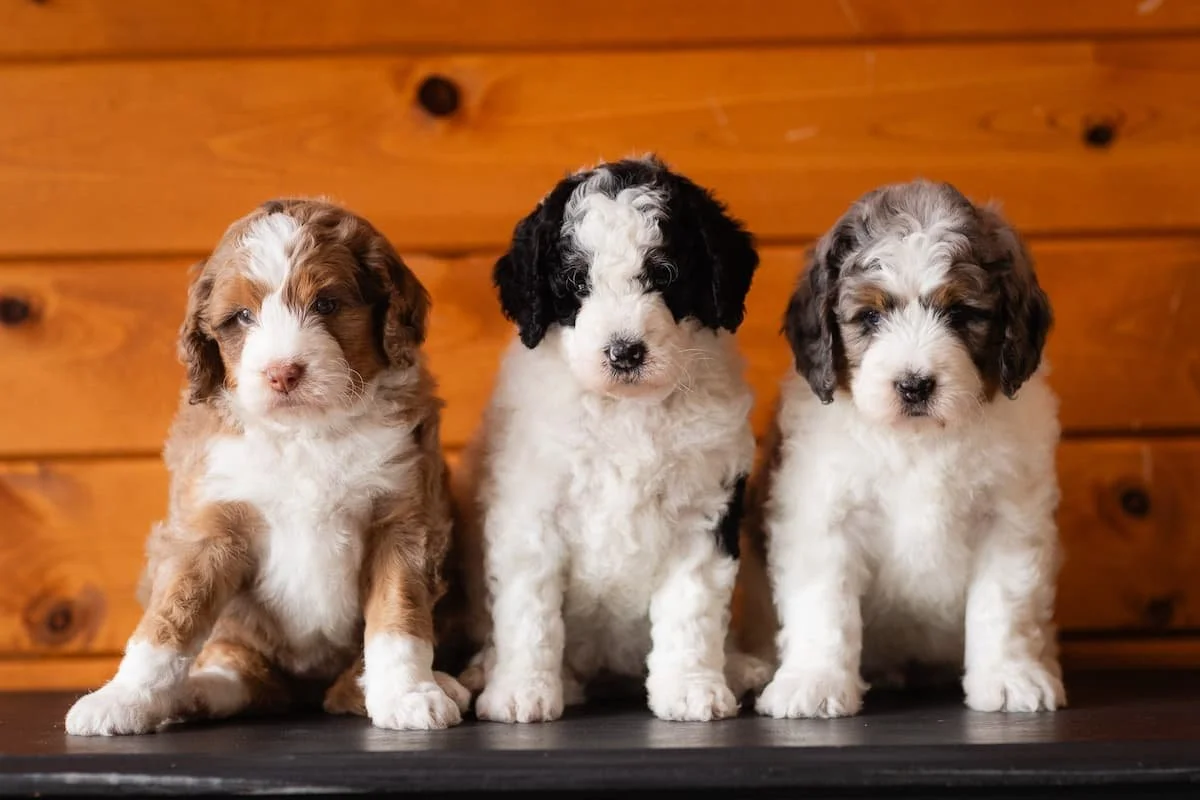
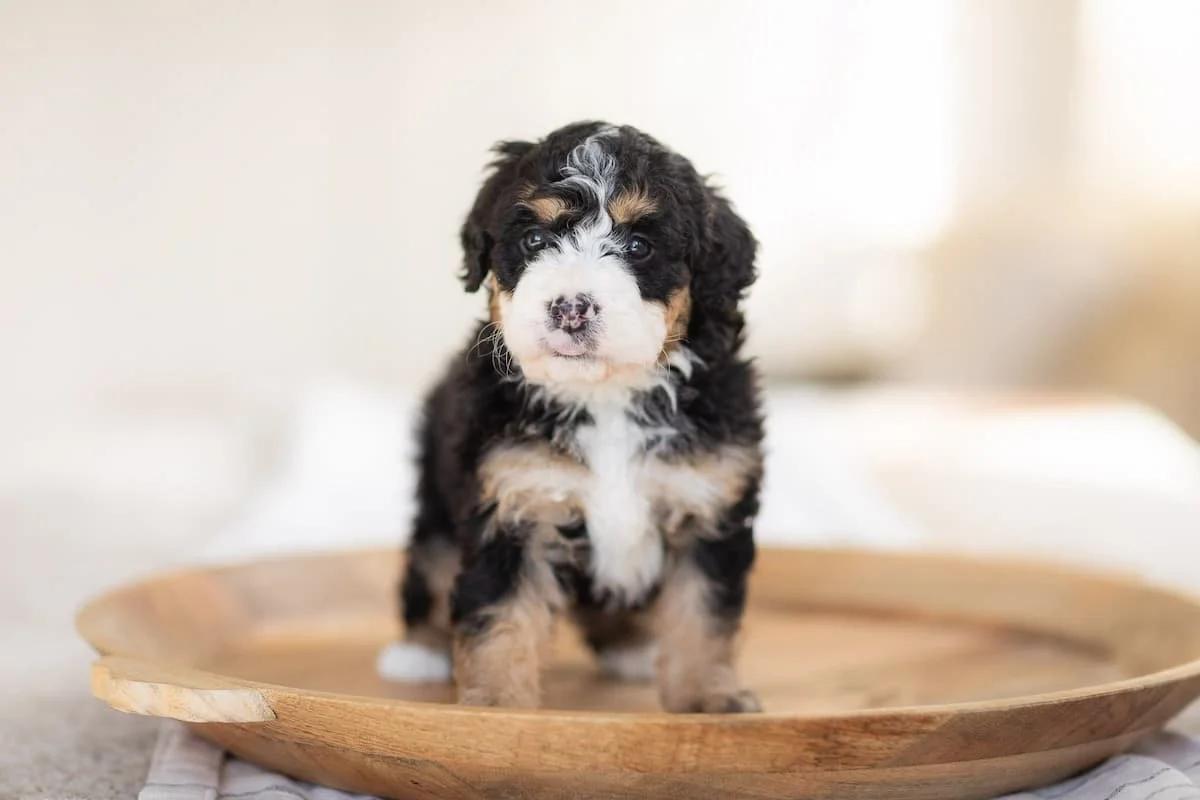
Also called: Bernese Mountain Doodle · Bernese Doodle · Bernepoo
The Bernedoodle is an intentional cross between the Bernese Mountain Dog and the Poodle, developed to preserve the Bernese's gentle, loyal temperament while extending its shortened lifespan and introducing lower-shedding coat genetics. This guide covers temperament, size classifications, F1 through Multigen generations, RSPO2 coat science, grooming by coat type, health testing, and what it takes to raise one well. Lee esta guía en español →
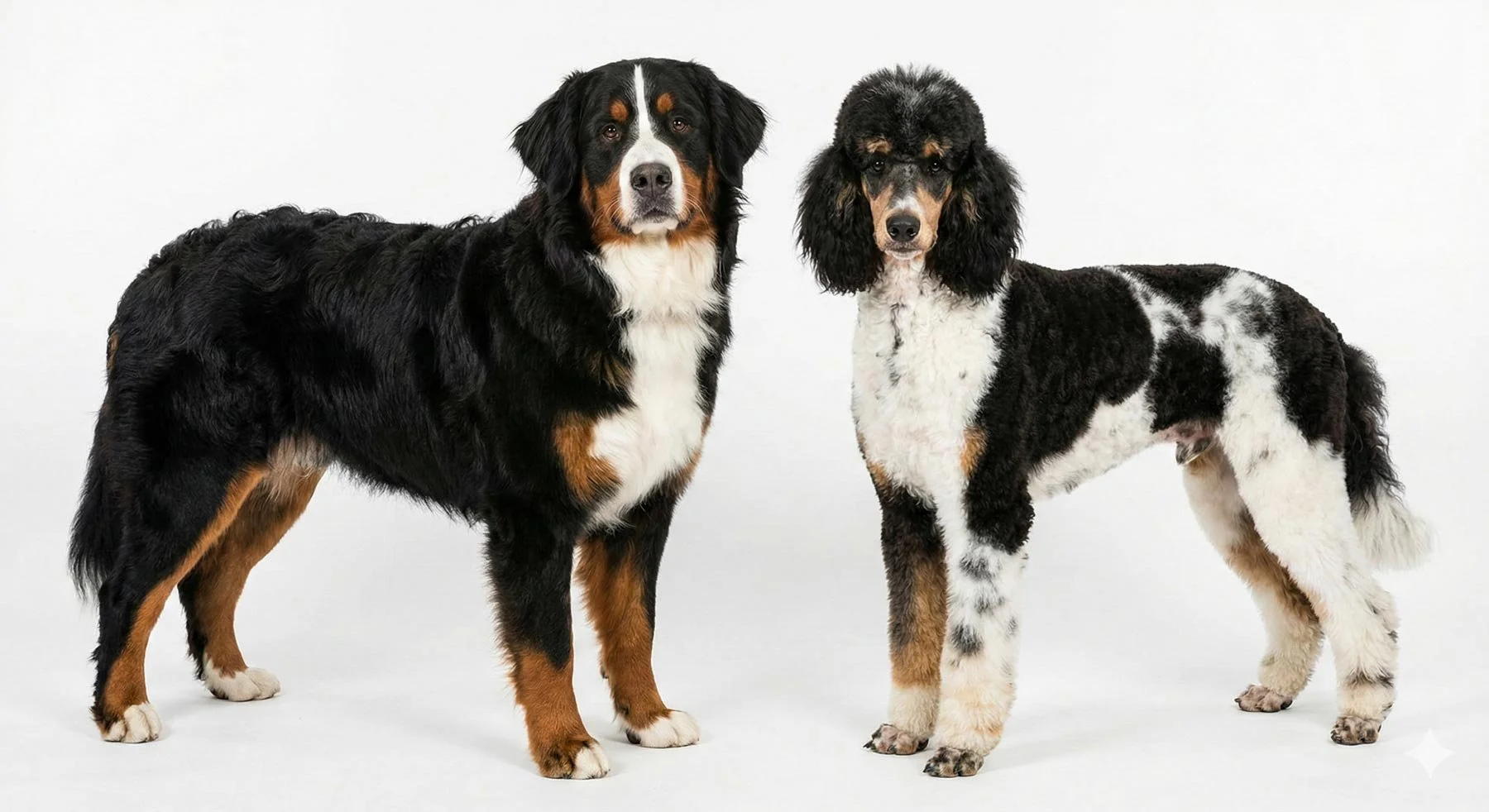
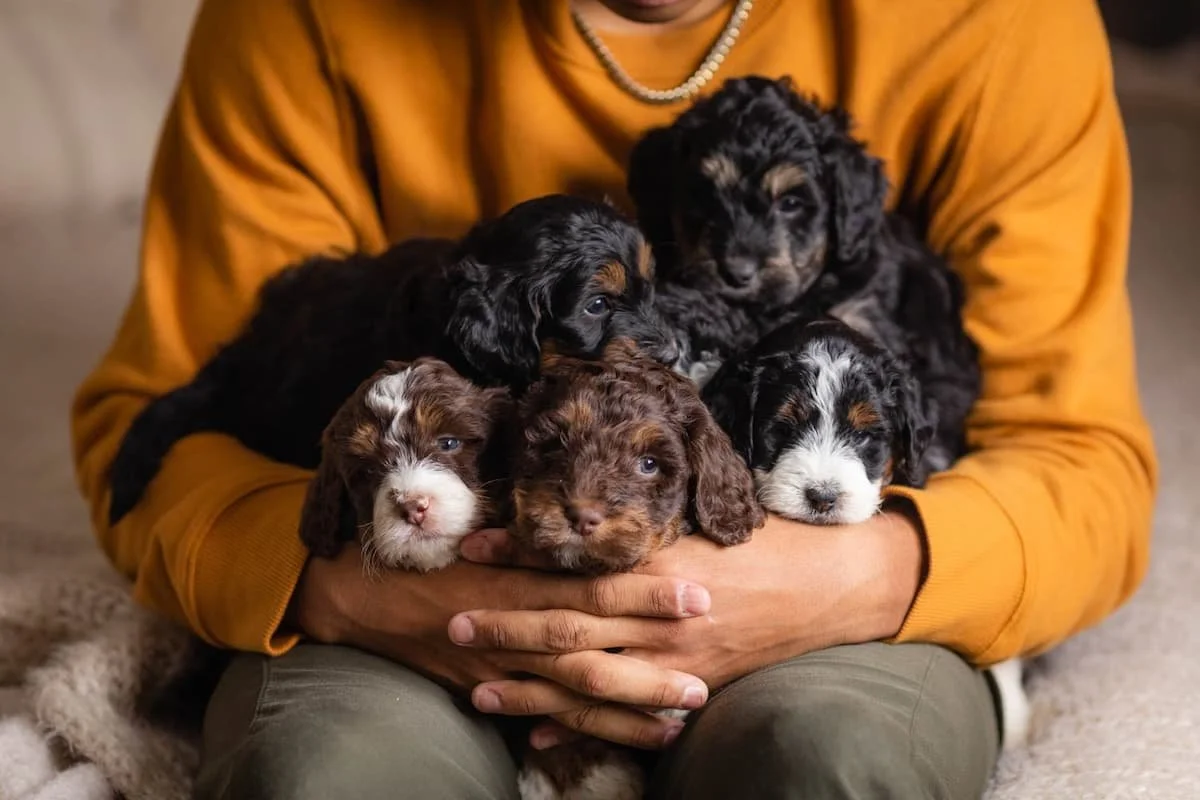
A Bernedoodle is an intentional hybrid cross between a Bernese Mountain Dog and a Poodle. The cross was first formally developed in 2003 by Sherry Rupke of SwissRidge Kennels in Ontario, Canada, with a specific objective: to create a companion that preserved the Bernese Mountain Dog's gentle, family-oriented temperament while introducing the Poodle's intelligence, lower-shedding coat genetics, and the genetic diversity needed to address the Bernese breed's challenging health profile.
The Bernese Mountain Dog, while among the most gentle and loyal large breeds available, faces one of the highest cancer-related mortality rates in the domestic canine world. Published research indicates that approximately 50 to 67 percent of Bernese die from neoplastic disease, with an average lifespan of only 6 to 8 years.2,3 This is a direct consequence of a genetic bottleneck that has produced low diversity within the breed; the Bernese coefficient of inbreeding (COI) has been measured near 0.395, significantly higher than breeds with healthier gene pools.2
The Poodle introduces a meaningfully different genome: longer lifespan (12 to 15 years in Standards, longer in Minis and Toys), the RSPO2 furnishings gene that produces lower-shedding coats, and the trainability and cognitive flexibility that make Poodle crosses among the most adaptable companion dogs available. The cross does not produce a standardized breed; no kennel club recognizes it. When bred from health-tested parents with intentional generational planning, however, it produces remarkably consistent, healthy, and temperamentally stable companions.
The Bernedoodle exists because the Bernese Mountain Dog's temperament deserves a longer life and a healthier body. The Poodle provides both, along with a coat that opens this temperament to families who could not otherwise live with a heavy-shedding breed.
Breed Composition
The Two Parent Breeds
Every Bernedoodle inherits traits from both parents. Understanding what each breed contributes, and what health risks each carries, is the most accurate way to predict what a Bernedoodle will need from its home.
The Temperament & Structure Foundation
Bernese Mountain Dog
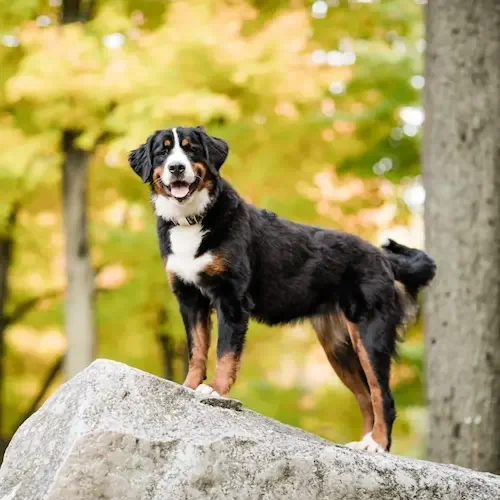
A member of the Swiss Sennenhunde group, the Bernese was a versatile farm dog used for drafting, herding, and guarding livestock in alpine environments. It contributes the calm, deeply loyal, "velcro" temperament that makes Bernedoodles so well-suited to family life. It also contributes the breed's most challenging inheritance: a high cancer mortality rate (50 to 67 percent), a COI near 0.395, predisposition to hip and elbow dysplasia, bloat risk in deep-chested individuals, and von Willebrand's disease Type 1. The Bernese also contributes the "soft" temperament, meaning emotionally sensitive dogs that may shut down under harsh correction.
Feta, Bernese Mountain Dog, Stokeshire breeding program
The Intelligence & Coat Layer
Poodle
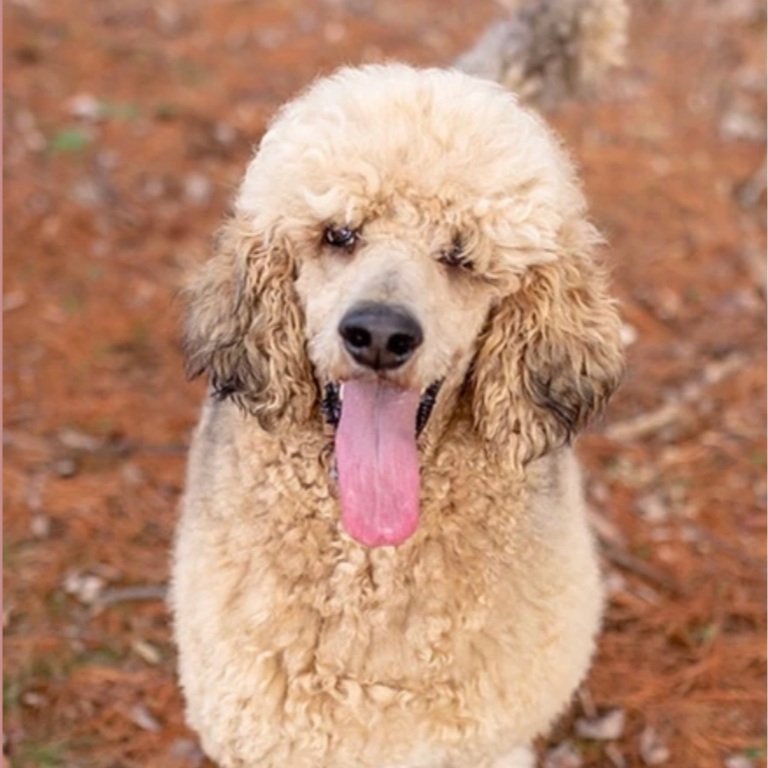
Available in Standard, Miniature, and Toy sizes, the Poodle parent determines the Bernedoodle's adult size. The Poodle contributes the RSPO2 furnishings gene (the "doodle look"), the KRT71 curl gene, and the MC5R shedding variant responsible for lower environmental shedding. It also contributes the cognitive flexibility, trainability, and emotional attunement that make Poodle crosses responsive to positive-reinforcement training. Poodle health considerations include hip dysplasia (Standards), patellar luxation (Minis and Toys), progressive retinal atrophy (prcd-PRA), von Willebrand's disease, sebaceous adenitis, and idiopathic epilepsy.
Foxy, Merle Tri Poodle, Stokeshire breeding program
The Core Value Proposition
The Healthier Bernese: Why the Bernedoodle Was Created
The Bernese Mountain Dog faces a serious health crisis. Approximately 50 to 67 percent of the breed dies from cancer.2,3 Histiocytic sarcoma, an aggressive immune-cell cancer that is often multi-focal and fatal within weeks, affects roughly 25 percent of the population.3 The breed's average lifespan of 6 to 8 years is among the shortest of any large breed, driven by a genetic bottleneck that has produced a COI near 0.395.2
The Bernedoodle addresses this crisis by introducing the Poodle's significantly more diverse genome. The resulting hybrid vigor (heterosis) dilutes deleterious recessive alleles and broadens the dog's genetic resilience. The lifespan extension is substantial:
Breed / Size
Average Lifespan
Primary Longevity Factor
Bernese Mountain Dog
6 to 8 years
High cancer mortality (50 to 67 percent), genetic bottleneck
Standard Poodle
12 to 15 years
Broader gene pool, lower cancer incidence
Standard Bernedoodle
12 to 15 years
Hybrid vigor, weight management, cardiac health
Mini Bernedoodle
14 to 17 years
Reduced orthopedic stress, manageable size
Toy Bernedoodle
15 to 18 years
Lowest systemic physical stress
A 2024 Royal Veterinary College study on designer crossbreeds found that for the majority of health conditions (86.6 percent), there was no significant difference in risk between hybrids and purebred parents.1 The benefit of the Bernedoodle is not universal disease immunity. It is a targeted extension of lifespan, a reduction in the incidence of the specific cancers that affect the Bernese population, and the introduction of coat genetics that open this temperament to allergy-sensitive families.
The Bernedoodle nearly doubles the Bernese Mountain Dog's expected lifespan. For families who have lost a Bernese at six or seven years old, that distinction changes everything.
Generation Guide
F1, F1B, F2 & Multigen Bernedoodles
Generation describes the breeding structure behind a Bernedoodle and directly influences coat predictability, shedding level, and allergy suitability. These labels describe the ratio of Bernese to Poodle genetics and the distance from purebred ancestors.
Generation
Genetic Structure
Coat Expectation
Shedding
Allergy Suitability
F1
50% Bernese / 50% Poodle
Wavy to slightly curly; variable
Low to moderate
Mild allergies, not severe
F1B
~25% Bernese / 75% Poodle
Curlier, more consistent furnishings
Very low to non-shedding
Moderate to severe allergies
Reverse F1B
~75% Bernese / 25% Poodle
Straight to wavy; more Bernese look
Moderate to high
Not suitable for allergy-sensitive homes
F2
~50% Bernese / 50% Poodle (F1 × F1)
High variability; unfurnished possible
Variable, depends on RSPO2 status
Unpredictable for allergies
Multigen
Multiple generations, selectively bred
Most consistent wavy or curly
Very low
Most suitable for allergies
The "unfurnished" trait, where a Bernedoodle lacks the characteristic facial hair and sheds more like a Bernese, can appear in F2 litters when both parents carry recessive RSPO2 genes. This is why generation and genetic testing matter: coat predictability is not about marketing labels, it is about understanding which genes each parent carries.
Stokeshire generation note: We focus on F1B and Multigen lines for their coat consistency and allergy suitability, while maintaining F1 crosses for families who prioritize maximum hybrid vigor and are comfortable with coat variability. All breeding dogs are Embark-tested for coat genetics (RSPO2, KRT71, MC5R, FGF5) before any pairing is made.
Temperament & Personality
Bernedoodle Temperament
The Bernedoodle's temperament is a blend of the Bernese Mountain Dog's calm, deeply loyal nature and the Poodle's cognitive complexity and playful energy. The result is a dog that breeders and owners commonly describe as "goofy," meaning affectionate, often humorous in its interactions, and deeply bonded to its family. Both parent breeds are emotionally sensitive, which produces a companion that reads human moods with unusual accuracy and responds well to positive reinforcement while being vulnerable to stress from harsh or inconsistent training methods.
The Bernese contribution creates what trainers call a "velcro dog," meaning a companion that wants to be physically near its people at all times. This deep attachment is the breed's greatest strength and its primary management challenge: without early independence training, it can develop into separation anxiety, a condition that multiple behavior studies and owner surveys consistently flag as the Bernedoodle's most common behavioral issue.
Intelligence
Trainability
High, but stubborn streak from Bernese
Energy Level
Moderate, adjusts to family rhythm
Calm Indoors
Good, with adequate daily exercise
Family Friendly
Good With Children
Stranger Caution
Mild, warms up with socialization
Emotional Sensitivity
Very high, shuts down under harsh correction
Separation Anxiety Risk
Moderate to high, early independence training essential
Grooming Demand
High, coat maintenance is non-negotiable
Who the Bernedoodle Is Best For
Families with children of all ages benefit from the Bernese temperament, which produces an unusually gentle, patient companion. Therapy and emotional support work candidates appreciate the breed's emotional sensitivity and calm demeanor, which make Bernedoodles natural fits for structured therapy environments. First-time and experienced dog owners alike succeed with the breed when committed to consistent positive-reinforcement training, regular grooming, and daily companionship. People who work from home or can provide consistent human interaction tend to do well; this breed does not thrive in isolation.
Who Should Consider a Different Breed
Families who are away from home for extended periods daily without prior separation conditioning may struggle with this breed. Households unwilling to commit to regular brushing (2 to 7 times per week depending on coat) and professional grooming every 6 to 8 weeks should look elsewhere; coat maintenance is non-negotiable with this breed. Households seeking a low-maintenance, independent dog will not find that here. Anyone expecting a fully hypoallergenic dog should know that no dog is completely allergen-free, and individual responses vary regardless of coat type.
"We've had our sweet boy, Winston (a Mini Bernedoodle), home for eight weeks now. We met him as a 6 lb fluffball and brought him home at 12 weeks, and he's already 24 lbs of love. James and Katie were so helpful throughout the entire process. His early training made a huge difference. He sleeps through the night, goes to his crate without a bribe, and has adjusted so well to our home."
Winston's Mom
Size Guide
Bernedoodle Sizes: Standard Through Toy
Bernedoodle size is determined primarily by the Poodle parent. Standard Poodle crosses produce Standard Bernedoodles; Miniature Poodle crosses produce Minis; Toy Poodle crosses produce Toys. Growth rate is inversely correlated with adult size, meaning smaller variants reach maturity faster.
Size
Adult Weight
Adult Height
Growth Complete
Lifespan Est.
Standard
70 to 90+ lbs
23 to 29 in
18 to 24 months
12 to 15 years
Medium
36 to 50 lbs
17 to 21 in
12 to 16 months
13 to 16 years
Mini
26 to 35 lbs
14 to 17 in
10 to 14 months
14 to 17 years
Toy
10 to 24 lbs
12 to 17 in
8 to 12 months
15 to 18 years
No specific adult size is guaranteed in any hybrid breeding program. The common 16-week "doubling formula" (multiply the puppy's weight at 16 to 18 weeks by two) provides a useful baseline estimate, but genetic variability, particularly in F1 generations, can produce outcomes 15 to 20 percent above or below predictions. Females tend toward the lower end of each range, males toward the upper.
Growth management note: Standard Bernedoodles carry the same large-breed developmental risks as their Bernese parent. Rapid weight gain during puppyhood places excessive strain on developing bone and cartilage. The standard veterinary guideline is 5 minutes of structured leash exercise per month of age, twice daily, until growth plates are confirmed closed. Large-breed puppy food formulations support steady, moderate growth rates.
Coat & Color Genetics
Bernedoodle Coat Types, Color Patterns & Genetics
The Bernedoodle's coat is its most complex and most demanding feature. Whether a Bernedoodle sheds, how curly the coat is, and whether it is appropriate for allergy-sensitive homes are determined by testable gene variants, not by generation label, color, or marketing language.
The Genetics Behind the Coat
RSPO2Furnishings Gene
Controls facial furnishings, including beard, eyebrows, and moustache. Furnished dogs (FF or Ff) have the classic "doodle look" and shed less from the face. Unfurnished dogs (ff) shed comparably to a Bernese and are not appropriate for allergy-sensitive households.
KRT71Curl Gene
Determines coat curl tightness. Two copies produce curly; one copy produces wavy; zero produces straight. Curlier coats shed least but mat most quickly without consistent brushing.
MC5RShedding Gene
Influences hair growth cycle turnover rate. Poodles typically carry the low-shedding variant. Shedding is multigenic; no single gene guarantees a non-shedding outcome.
FGF5Coat Length Gene
Controls overall coat length. Most furnished Bernedoodles carry the long-coat variant through Poodle lineage.
Coat Texture Types
Curly (Wool) Coat: Closest to the Poodle. Tight curls or ringlets. Lowest shedding. Highest grooming demand, requiring daily brushing and professional grooming every 4 to 6 weeks. Most common in F1B and Multigen lines. Most suitable for allergy-sensitive households.
Wavy (Fleece) Coat: The hallmark Bernedoodle appearance. Soft, flowing waves. Low to moderate shedding. Moderate grooming, requiring brushing every other day and professional grooming every 6 to 8 weeks. Most common in F1 lines. Suitable for mild to moderate allergies.
Straight Coat: Most resembles the Bernese parent. Softer texture than purebred Bernese. Moderate to higher shedding. Least grooming demand but least allergy protection. Requires brushing 2 to 3 times weekly to manage undercoat.
Color Patterns
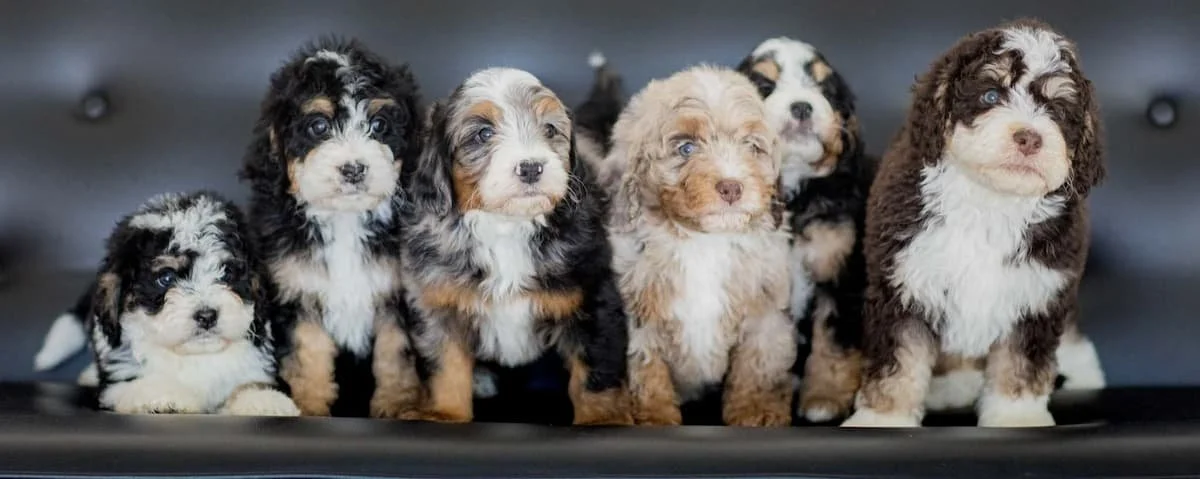
The Bernedoodle's color diversity comes from both parent breeds. The Bernese contributes the traditional tri-color pattern; the Poodle introduces additional color possibilities and modifying genes.
Traditional Tri-Color
Black, white, and rust, the iconic Bernese pattern. Most sought-after.
Merle
Mottled or marbled pattern from Poodle or Aussie lineage. Blue merle, chocolate merle, red merle. Requires DNA testing for safe pairings.
Phantom
Solid dark base with distinct lighter markings on legs, chest, face, and eyebrows.
Sable
Hair is one color at base, tipped with black. Often "clears" to lighter color as the dog matures.
Parti
At least 50% white with large patches of another color.
Solid
Black, chocolate, cream, apricot, or silver. Less common in Bernedoodle programs.
The Fading Gene: Why Colors Change
Many Bernedoodle owners are surprised when their puppy's coat color changes as it matures. The Poodle carries a "progressive graying" gene that can cause deep blacks to fade to silver or "blue," and vibrant reds or chocolates to lighten to apricot or cream over the first two years. This is a normal genetic process, not a health concern, but breeders should prepare families for the possibility that the puppy's adult color may differ significantly from its puppy coat.
Merle Safety
Two merle-carrying dogs must never be bred together. Double-merle offspring (M/M) face significant risk of bilateral deafness (up to 56 percent in published studies) and visual impairments including microphthalmia and cataracts. Cryptic merles, dogs that appear solid but carry a short merle insertion, require DNA testing to identify. Stokeshire confirms merle status on all breeding dogs via Embark before any pairing.
The Bernedoodle's coat is high-maintenance. The same coat structure that retains hair within the curl rather than releasing it into your home also accumulates tangles and mats without consistent brushing. Lower shedding does not mean lower grooming, it means different grooming. This is the single most underestimated aspect of Bernedoodle ownership.
Curly / Wool Coat
Daily brushing · Pro every 4 to 6 weeks
Highest grooming demand. Mats rapidly in high-friction zones (behind ears, under legs, collar area). Line brushing technique essential; start at hair tips, work toward skin. Daily metal comb check for hidden mats near the dermis.
Wavy / Fleece Coat
Every other day · Pro every 6 to 8 weeks
Most common Bernedoodle coat. Moderate maintenance but still mat-prone at friction zones. Slicker brush for surface detangling, metal comb for deep checks. Common styles: Teddy Bear Cut, Puppy Cut.
Straight Coat
2 to 3× per week · Pro every 8 to 12 weeks
Lowest mat risk but highest shedding. Regular brushing manages loose undercoat and prevents seasonal buildup. Not appropriate for allergy-sensitive homes.
Ear care: Floppy ears trap moisture and debris, creating bacterial and yeast infection risk. Weekly cleaning with veterinary-approved solutions, and trimming hair inside the ear canals, is essential, especially after swimming or bathing.
Grooming budget reality: Professional grooming every 6 to 8 weeks typically runs $75 to $150+ per session depending on location, size, and coat condition. Annual grooming costs for a Bernedoodle often range from $600 to $1,500. Families should budget for this before committing to the breed.
While hybrid vigor reduces the impact of some breed-specific conditions, Bernedoodles inherit health predispositions from both parent breeds. Responsible programs perform comprehensive screening on breeding dogs before any litter is planned.
From the Bernese Lineage
Hip and elbow dysplasia (heritability 24 to 43 percent for elbows in Bernese). Cancer risk, reduced but not eliminated by outcross. Gastric dilatation-volvulus (bloat) in deep-chested Standards. Von Willebrand's disease Type 1. Degenerative myelopathy (SOD1). Bernese-specific emotional sensitivity affecting training approach.
From the Poodle Lineage
Hip dysplasia (Standards) or patellar luxation (Minis and Toys). Progressive retinal atrophy (prcd-PRA). Von Willebrand's disease. Sebaceous adenitis. Idiopathic epilepsy. Addison's disease. Heart conditions including dilated cardiomyopathy in some lines.
Bloat Prevention (GDV)
Standard Bernedoodles carry bloat risk due to deep chest structure. Feed multiple smaller meals rather than one large meal. Use slow-feed bowls. Avoid vigorous activity immediately after eating. Many owners of large Bernedoodles opt for prophylactic gastropexy during spay or neuter.
Skin Allergies
Estimated to affect 30 to 40 percent of Bernedoodles. Presents as persistent itching, hot spots, ear infections, and hair loss. Can be environmental or food-related. Food elimination trials may require 2 to 3 months to identify triggers. Early veterinary consultation recommended.
PennHIP vs. OFA: Two Approaches to Hip Evaluation
Two primary methods evaluate hip health in breeding dogs. The OFA (Orthopedic Foundation for Animals) uses a subjective grading system (Excellent, Good, Fair) based on a single extended-view radiograph. PennHIP (Pennsylvania Hip Improvement Program) provides an objective, quantitative Distraction Index (DI) measurement using three different radiographic views under sedation, measuring actual joint laxity, the primary predictor of future arthritis. A DI of 0.30 or lower indicates minimal risk; above 0.30 indicates increasing susceptibility.4
Stokeshire's Health Testing Protocol
Every breeding dog at Stokeshire completes a full Embark genetic panel before inclusion in the program, screening for over 230 health conditions including DM, PRA, vWD, coat genetics, and merle status.5 Orthopedic evaluation (OFA or PennHIP) is applied where appropriate to the lineage. No pairing is made without confirmed genetic status on both parents, and no two carriers of the same recessive condition are mated. Our breeding program meets the standards required for Good Dog certification, the third-party vetting program that audits breeder health, welfare, and breeding standards. Families receive their puppy's genetic results at placement.
Bernedoodles are highly intelligent. Their Poodle heritage places them among the fastest-learning companion breeds available. They acquire new commands quickly, retain training well, and are motivated by engagement with their handler. The complication is the Bernese "stubborn streak": not a lack of intelligence, but a tendency to test boundaries, negotiate compliance, and selectively ignore commands when unmotivated. This is especially pronounced during the adolescent phase (6 to 18 months), when energy peaks and every boundary gets tested.
Positive reinforcement with consistent cues and short, engaging sessions (10 to 15 minutes, two to three times daily). The "jackpot method," meaning multiple small treats given in rapid succession for excellent compliance, is particularly effective for difficult commands or high-distraction environments. Impulse control exercises (waiting at doors, waiting for food, "leave it") develop self-regulation that pays dividends through adolescence and adulthood. All household members must use identical commands and reinforce the same rules. Inconsistency from different family members is the fastest way to create confusion and escalate the stubborn streak.
The Adolescent Phase: 6 to 18 Months
Between six months and two years, Bernedoodles often enter a challenging developmental phase where previously reliable commands seem forgotten, leash manners deteriorate, and creative boundary-testing begins. This is normal developmental behavior, not disobedience. Consistency without frustration is the key; the soft Bernese temperament means that harsh correction during this phase can create lasting behavioral damage. Owners who maintain patience and structure through adolescence typically emerge with a remarkably well-adjusted adult dog.
Preventing Separation Anxiety
Given the Bernedoodle's deep attachment to humans, preventing separation anxiety is more effective than treating it. Gradual desensitization, starting with departures of just seconds and slowly increasing duration, builds tolerance for alone time. Creating a "safe space" (a crate or specific room) with comforting items carrying the owner's scent, combined with long-lasting enrichment like frozen Kongs, helps the dog associate being alone with positive experiences. Independence training should begin from Day 1 in the new home, not after anxiety symptoms appear.
Mental Stimulation: As Important as Exercise
Physical exercise alone is not sufficient for a breed with this level of intelligence. Training sessions, puzzle feeders, scent games (hiding treats around the house), and structured play provide the cognitive engagement that prevents boredom-driven behaviors. Behavior research suggests that 20 minutes of intensive sniffing can be mentally equivalent to an hour-long walk, making scent work a critical tool for busy families. Bernedoodles that are physically exercised but mentally under-stimulated show higher rates of destructive behavior, excessive vocalization, and anxiety regardless of how much they have walked.
Gallery
Bernedoodle Puppies at Stokeshire
Serving Families Across the Midwest
Bernedoodles Near You
Stokeshire proudly serves families throughout Wisconsin and the greater Midwest,
including dedicated resources for families searching closer to home.
Stokeshire's Bernedoodle program is built on the same health-first, temperament-driven foundation that underlies our entire breeding operation. Our Bernese Mountain Dog dams, anchored by Feta, are paired with Embark-tested Poodle studs selected for coat genetics, temperament, and structural soundness. We produce F1, F1B, and Multigen Bernedoodle litters in Standard, Medium, Mini, and Toy sizes, with every pairing informed by full genetic panels.
The Bernedoodle is where many families first encounter Stokeshire. The breed's combination of gentle temperament, trainability, and coat diversity makes it one of the most versatile companion dogs in our program. Families who want the Bernedoodle's temperament with the addition of Australian Shepherd athleticism often explore our Australian Mountain Doodle program, and those who want the Bernese × Aussie cross without Poodle influence explore our Australian Mountain Dog line.
Founder & Breeding Program Director
James Stokes
Stokeshire Designer Doodles is a therapy-grade breeding program based in Medford, Wisconsin, operated by James Stokes. The program has placed over 650 dogs with families across the United States and Mexico. Every breeding dog is Embark-tested before inclusion in the program, with orthopedic evaluation (OFA or PennHIP) applied where appropriate to the lineage. Our program meets the standards required for Good Dog certification. Puppies are raised in a family home with Early Neurological Stimulation beginning at Day 3 and progressive socialization through all eight weeks before placement.
Licensed under Wisconsin DATCP #514401-DS. W4954 County Road O, Medford, WI 54451.
Current and upcoming Stokeshire Bernedoodle litters are displayed below. All breeding pairs are Embark-tested. Orthopedic evaluation (OFA or PennHIP) is applied where appropriate to the lineage. Good Dog certified breeder. Nationwide transport available.
Frequently Asked Questions
Bernedoodle FAQs
Foundations
Are Bernedoodles hypoallergenic?
No dog is completely hypoallergenic. The AAAAI and clinical allergy research consistently state that no breed reliably produces fewer allergens for all individuals.6 Furnished Bernedoodles with curly coats are among the lower-shedding companion dogs available, and many allergy-sensitive families live comfortably with them, particularly F1B and Multigen generations where Poodle coat genetics are most consistent. The real-world shedding experience is determined by coat genetics, specifically RSPO2, KRT71, and MC5R. Families with allergies are encouraged to spend time with an adult dog of the same generation before committing. Stokeshire does not guarantee allergy compatibility for any dog.
How big do Bernedoodles get?
Size depends primarily on the Poodle parent. Standard Bernedoodles often reach 70 to 90+ lbs and 23 to 29 inches. Mini Bernedoodles often reach 20 to 45 lbs and 14 to 18 inches. Toy Bernedoodles often reach 10 to 24 lbs and 12 to 17 inches. Growth occurs rapidly in the first year, with Standards reaching skeletal maturity between 18 to 24 months and smaller variants finishing earlier. No specific adult size is guaranteed in any hybrid program; the 16-week doubling formula provides a useful estimate but individual genetics can produce 15 to 20 percent variation.
How long do Bernedoodles live?
Bernedoodle lifespan varies by size. Standard Bernedoodles typically live 12 to 15 years, Minis 14 to 17 years, and Toys 15 to 18 years, a significant extension over the purebred Bernese Mountain Dog's average of 6 to 8 years. Smaller Bernedoodles tend to live longer because their cardiovascular and musculoskeletal systems face less physical stress. Lifespan is influenced by parent health testing quality, body weight management, diet, and consistent veterinary care.
Are Bernedoodles good with kids and families?
Bernedoodles tend to be gentle, patient, and deeply people-oriented, inheriting the Bernese Mountain Dog's calm temperament combined with the Poodle's playfulness and trainability. They are generally well-suited to families with children of all ages, though proper socialization during puppyhood is important for building confidence. Their emotional sensitivity makes them unusually attuned to family dynamics. Standard and Medium sizes handle rougher play better; Toy Bernedoodles may be more fragile around very small children.
Do Bernedoodles have separation anxiety?
Separation anxiety is one of the most commonly reported behavioral challenges in Bernedoodles. Both parent breeds are deeply people-bonded; the Bernese is famously a "velcro dog" and the Poodle craves human engagement. Without early independence training, this attachment can develop into distress when left alone. Prevention is more effective than treatment: gradual desensitization to departures, creating positive associations with alone time, and crate training as a "safe space" should begin from Day 1 in the new home. Families who work from home should still practice scheduled separation to build tolerance.
How much grooming does a Bernedoodle need?
Grooming demand depends on coat type. Curly coats require daily brushing and professional grooming every 4 to 6 weeks. Wavy coats need brushing every other day with professional grooming every 6 to 8 weeks. Straight coats need brushing 2 to 3 times weekly with professional grooming every 8 to 12 weeks. Lower shedding does not mean lower maintenance; the same coat structure that retains hair also accumulates mats. Annual grooming costs typically range from $600 to $1,500. Families should budget for this before committing to the breed.
What is the difference between F1, F1B, and Multigen Bernedoodles?
F1 Bernedoodles are a direct 50/50 cross between a Bernese Mountain Dog and a Poodle, providing maximum hybrid vigor but variable coat outcomes. F1B Bernedoodles result from breeding an F1 back to a Poodle, creating approximately 75 percent Poodle genetics with more consistent curly, low-shedding coats suited for allergy-sensitive homes. Multigen Bernedoodles have been selectively bred across multiple generations to stabilize desirable traits, producing the most predictable coat and temperament outcomes. Generation directly influences coat type and shedding, making it one of the most important factors for families with allergies.
Are Bernedoodles easy to train?
Bernedoodles are highly intelligent and learn commands quickly, but many inherit a "stubborn streak" from the Bernese Mountain Dog side. This presents not as a lack of understanding but as selective compliance, particularly during the adolescent phase (6 to 18 months). Positive reinforcement with consistent cues and short, engaging sessions produces the best results. Both parent breeds are emotionally sensitive, so harsh corrections cause them to shut down rather than comply. Patient, structured training yields a remarkably well-mannered adult dog.
What health problems do Bernedoodles have?
While hybrid vigor reduces the impact of some breed-specific conditions, Bernedoodles may inherit predispositions from either parent. Common concerns include hip and elbow dysplasia, progressive retinal atrophy (PRA), von Willebrand's disease Type 1, and skin allergies (estimated to affect 30 to 40 percent of Bernedoodles). Standard sizes carry bloat (GDV) risk due to deep chest structure. Cancer risk is lower than in purebred Bernese but remains a consideration in larger variants. Responsible breeding with comprehensive genetic screening significantly reduces these risks.
Why do Bernedoodle coat colors change as they grow?
Many Bernedoodles carry the Poodle's "progressive graying" gene, also called the fading gene, which causes coat colors to lighten over the first two years. Deep blacks may fade to silver or "blue," vibrant reds or chocolates may lighten to apricot or cream. This is a normal genetic process, not a health concern. Breeders should prepare families for the possibility that the puppy's adult coat color may differ significantly from its puppy appearance. Not all Bernedoodles carry this gene, and the degree of fading varies by individual.
Pricing & Cost
How much does a Bernedoodle puppy cost in 2026?
Bernedoodles from reputable breeders typically range from $3,500 to $10,500 or more, with luxury programs investing in genetic testing, structural evaluations, and early development protocols starting at $4,500 for core placements. Pricing varies based on size, generation, coat genetics, and whether the puppy includes structured early training. Mini and Toy variants often command higher prices than Standards due to the complexity of the breeding process and smaller litter sizes. Phantom, merle, and tri-color markings can add to the valuation because of the genetic precision required to produce them safely. These prices reflect the breeder's investment in orthopedic screening (OFA or PennHIP where appropriate to the lineage), full Embark genetic panels, and prenatal care. Stokeshire Designer Doodles offers transparent pricing across our placement tiers, including options that integrate our four-week Doodle School foundation training program.
Why are Bernedoodles more expensive than other hybrid dogs?
Bernedoodles command higher prices because of the substantial costs associated with parental health testing, the rarity of certain coat genetics, and the intensive labor required for early neurological development. Reputable breeders perform OFA or PennHIP joint evaluations where appropriate to the lineage, full Embark genetic panels screening for over 230 conditions, and structured veterinary care across pregnancy and the neonatal period. The pairing of the Bernese Mountain Dog with the Poodle requires careful genetic mapping to predict coat outcomes, manage merle inheritance safely, and maintain a low coefficient of inbreeding. Programs that implement Early Neurological Stimulation between days three and sixteen and provide foundational training before placement also account for specialized staff and resources. These investments produce a more predictable, emotionally stable family companion. Stokeshire Designer Doodles prioritizes these clinical standards on every litter we raise.
What is typically included in the purchase price of a Bernedoodle?
A standard purchase from a reputable breeder typically includes a multi-year health guarantee, age-appropriate vaccinations, a Certificate of Veterinary Inspection, parental genetic clearances, and a starter kit to ease the transition home. Reputable programs also share results from structured temperament evaluations to help families understand the puppy's behavioral profile. The price covers documentation of parental Embark genetic testing on both parents, plus orthopedic evaluation (OFA or PennHIP) where applied to the lineage. Higher-tier placements may include Early Neurological Stimulation, foundational crate conditioning, scent introduction, and the four-week Doodle School training program. These inclusions establish a baseline of health and behavior that reduces the risk of future complications. Every Stokeshire puppy arrives with a comprehensive documentation packet and a curated go-home folder built to support a smooth integration.
What are the estimated annual costs of owning a Bernedoodle?
Annual ownership costs for a Bernedoodle typically range from $2,000 to $4,500 once the puppy is established in the home, depending on size, coat type, and care preferences. Professional grooming is the largest recurring expense, often costing $75 to $200 per session every six to eight weeks. High-quality large-breed nutrition usually runs $50 to $120 monthly, with larger Standard Bernedoodles reaching the upper end of that range. Routine veterinary exams and annual parasite preventatives generally total $200 to $700 per year. Pet insurance, which often covers hereditary conditions like hip dysplasia, adds another $40 to $70 monthly. Owners should also budget for training, dental care, supplements, and replacement gear over the dog's lifetime. Stokeshire Designer Doodles provides families with a realistic ownership cost guide so the financial commitment is clear before placement.
Is a Bernedoodle worth the price compared to a rescue dog?
A Bernedoodle from a reputable breeder offers predictability of health, temperament, and coat outcomes that rescue placements typically cannot match because adoption histories are often incomplete or unknown. Adoption fees range from $50 to $600, while breeder pricing reflects multi-generation health testing, structured early development, and lifetime breeder support. Families with allergy considerations, multi-pet households, young children, or therapy work goals often benefit from the temperament and coat predictability of a purpose-bred puppy. Both paths are valid; rescue is the right call for many families, while breeder placement is the right call for families needing specific health, coat, or behavioral profiles. The decision should be based on lifestyle requirements, not on broad assumptions about either option. Stokeshire Designer Doodles works with families who prioritize lifelong predictability and ongoing breeder partnership.
Breed Comparisons
How does a Bernedoodle compare to a Goldendoodle?
Bernedoodles tend to be more reserved and bonded to their immediate family, while Goldendoodles tend to be more socially exuberant and friendly toward strangers. The Bernedoodle often inherits a calm, patient demeanor from the Bernese Mountain Dog, contrasting with the high-drive, eager-to-please nature of the Goldendoodle's Golden Retriever lineage. In terms of activity, Bernedoodles typically have a more pronounced indoor off-switch, making them suitable for moderate lifestyles. Goldendoodles often require more consistent mental and physical engagement to prevent boredom-related behaviors. Both are lower-shedding when the furnishings gene is present in furnished generations. Bernedoodles are frequently selected for their tri-color and phantom markings, while Goldendoodles offer cream, apricot, and red color profiles. Stokeshire Designer Doodles raises both breeds and matches each puppy's energy level to your family's daily rhythm.
What is the difference between a Bernedoodle and an Aussiedoodle?
Bernedoodles tend to be calmer and more adaptable for first-time owners, while Aussiedoodles tend to be high-energy working dogs that benefit from a structured job. The Aussiedoodle, a cross with the Australian Shepherd, is characterized by extreme intelligence and a drive to organize their environment, which can manifest as herding instincts toward children or other pets. Bernedoodles offer a more sedentary indoor disposition, often content with daily walks rather than the intense athletic stimulation an Aussiedoodle prefers. Both hybrids are highly trainable, but Aussiedoodles can become destructive without daily physical and mental challenge. Families seeking a more relaxed companion typically find the Bernedoodle a better fit for suburban or urban life, while Aussiedoodles fit active outdoor households. Stokeshire Designer Doodles provides structured temperament profiles to help families understand these distinct behavioral patterns.
How does a Bernedoodle differ from a Labradoodle?
Bernedoodles tend to be more independent indoors and content to lounge near their family, while Labradoodles tend to be more socially driven and oriented toward constant interaction. Labradoodles, particularly those with Australian Labradoodle heritage, were initially developed for service and therapy work, leading to high attentiveness and focus on their handlers. Bernedoodles, though loyal, may show a mild stubborn streak inherited from the Bernese Mountain Dog, which often calls for a patient training approach. Physically, Bernedoodles typically have a sturdier, blockier build compared to the more athletic frame of the Labradoodle. Both are excellent with families, but the Bernedoodle is often preferred by households seeking lower exuberance indoors. Stokeshire Designer Doodles selects breeding pairs that support a calm home environment while maintaining the trainability that makes both breeds successful family companions.
How does a Bernedoodle compare to a purebred Bernese Mountain Dog?
Bernedoodles tend to live significantly longer and have lower-shedding coats than purebred Bernese Mountain Dogs, while purebreds tend to have more predictable physical aesthetics but face higher risks for cancer and joint disease. The average lifespan of a Bernese is often only six to eight years, whereas Standard Bernedoodles typically reach twelve to fifteen years and Mini and Toy variants often reach fourteen to eighteen. The purebred Bernese is a heavy shedder and typically not suitable for allergy-sensitive homes, while Bernedoodles can be bred for more manageable curly or wavy coats. Introducing Poodle genetics dilutes the high incidence of histiocytic sarcoma and other cancers that affect roughly fifty to sixty-seven percent of the purebred Bernese population. The Bernedoodle was developed specifically to extend the gentle Bernese temperament into a healthier, longer-lived companion. Stokeshire Designer Doodles uses intentional hybridization to improve longevity and overall welfare.
How does a Bernedoodle compare to an Australian Mountain Doodle?
Bernedoodles tend to be more laid-back and goofy, while Australian Mountain Doodles tend to be more intuitive, socially steady, and slightly more eager to please. The Australian Mountain Doodle is a triple cross involving the Bernese Mountain Dog, Australian Shepherd, and Poodle, designed to occupy the temperament middle ground between the calm Bernedoodle and the higher-drive Aussiedoodle. The Australian Shepherd influence in an AMD can soften the stubborn streak sometimes seen in Bernedoodles, producing a dog that responds quickly to commands. Both hybrids are well-suited to families, though the AMD is often considered more versatile for advanced therapy and service work due to its balanced energy and social adaptability. Both benefit from Poodle intelligence and the gentle nature of the Bernese. Stokeshire Designer Doodles raises both breeds and helps families select the temperament profile that matches their household. Curious about the Australian Bernedoodle specifically? Learn more about the Australian Bernedoodle →
Lifestyle Fit
Are Bernedoodles a good choice for first-time dog owners?
Bernedoodles are frequently recommended for first-time owners because of their forgiving temperaments and natural tendency to form deep bonds with their human family. Unlike higher-drive working breeds, Bernedoodles typically possess an indoor off-switch that supports smooth transitions between play and rest. Their intelligence, inherited from the Poodle parent, makes them quick to learn foundational commands, though owners should expect a playful stubbornness during the adolescent phase between six and eighteen months. First-time owners must commit to regular professional grooming, consistent positive-reinforcement training, and early socialization to ensure the dog remains well-adjusted. Puppies raised with structured early development are generally less likely to exhibit fear-based reactivity in adulthood. Stokeshire Designer Doodles supports new owners through training resources, the Doodle School foundation program, and lifetime educational partnership.
Can a Bernedoodle live comfortably in an apartment?
Bernedoodles can thrive in apartment settings provided owners commit to meeting their daily physical and mental stimulation needs through structured walks, training sessions, and indoor enrichment. While Standard Bernedoodles can reach seventy to ninety pounds, their relatively calm indoor demeanor makes them less disruptive than many smaller, higher-energy breeds. Mini and Toy variants are especially suited to urban living because they require less square footage for movement while maintaining the breed's signature loyalty. A dog's activity level and the owner's exercise commitment matter more than the size of the home. Providing puzzle toys, scent work, and a consistent routine helps prevent boredom-related behaviors like excessive barking or chewing. Stokeshire Designer Doodles offers Mini and Toy sizes specifically curated for families who need a more compact companion for urban or condo life. Families in the Minneapolis and Twin Cities area can explore Bernedoodle availability near Minneapolis →.
How do Bernedoodles handle hot climates and summer weather?
Bernedoodles can adapt to warm climates but require careful management in extreme heat because of their thick, double-layered coats. While Poodle lineage provides some thermal regulation, the Bernese influence makes them especially fond of cooler weather and more susceptible to heat stress in temperatures above eighty-five degrees Fahrenheit. Owners should prioritize walks during early morning or late evening hours and ensure continuous access to water and shade. Darker-coated Bernedoodles may absorb more solar heat than lighter variants, which can increase overheating risk during prolonged outdoor activity. A shorter summer trim can help manage body temperature without compromising skin protection from the sun. Air-conditioned indoor space during peak summer hours is recommended for households in southern or desert climates. Stokeshire Designer Doodles educates families on seasonal care to ensure their companions remain safe and comfortable year-round.
Are Bernedoodles compatible with cats and other dogs?
Bernedoodles typically display a gentle, curious nature toward other household pets and often coexist peacefully with cats and other dogs when properly introduced. Their lack of high prey drive, compared to many terrier or hound breeds, makes them less likely to chase or harass smaller animals. Many owners report that their Bernedoodles act as gentle companions, often allowing cats to establish social dominance within the shared home. Successful integration depends on early socialization and the temperament of the individual animals already in the household. Puppies exposed to cats and other dogs during the critical developmental window between three and sixteen weeks tend to view them as family rather than as novel stimuli. Gradual, supervised introductions over the first weeks at home support a strong long-term relationship. Stokeshire Designer Doodles uses early scent introduction and structured socialization to prepare puppies for multi-pet households.
Is a Bernedoodle suitable for elderly owners?
Bernedoodles often pair well with seniors because of their calm, predictable temperaments and their ability to read the emotional needs of their handlers. The breed's moderate exercise requirements align with a lifestyle of daily walks and gentle indoor play rather than high-intensity activity. Smaller variants such as Mini or Toy Bernedoodles offer the benefit of a sturdy companion that remains manageable on a leash, reducing the risk of accidental falls. Their tendency to form close attachments provides consistent companionship, which can help alleviate loneliness in a quieter home. Seniors should plan for regular grooming, which often requires professional assistance to maintain coat health. Choosing a puppy with a steadier temperament profile from breeder evaluations can help ensure a calm, predictable fit. Stokeshire Designer Doodles specializes in matching steadier puppies with families who prioritize peace and predictability in the home.
Can Bernedoodles be used for therapy or emotional support roles?
Bernedoodles are frequently selected for therapy and emotional support work because of their high emotional sensitivity and naturally gentle, patient demeanor. Their ability to remain calm in diverse environments and their attunement to human emotion make them strong candidates for hospital, school, library, and nursing home visits. While no breeder can ensure a dog reaches certification, selecting for temperament traits like low reactivity and high social attraction increases the likelihood of success in these roles. The Poodle's intelligence supports the complex tasks required for support work, while the Bernese's steady nature provides calmness in high-stress settings. Families pursuing these roles often benefit from puppies that have undergone Early Neurological Stimulation and structured socialization from birth. Stokeshire Designer Doodles raises therapy-grade companions through rigorous selection, structured early development, and the Doodle School foundation program.
Care & Operations
What are the exercise requirements for a Bernedoodle?
A Bernedoodle typically requires forty-five to sixty minutes of daily physical exercise, which can be met through walks, backyard play, structured training, or moderate hiking. While they enjoy outdoor activity, most Bernedoodles possess a natural off-switch that allows them to remain calm indoors once their needs are met. Mental stimulation matters as much as physical exercise; puzzle toys, scent work, and short training sessions help satisfy the intelligence inherited from the Poodle parent. Owners should not overexert puppies during the first year, since high-impact exercise can negatively affect developing growth plates. The standard guideline is roughly five minutes of structured leash exercise per month of age, twice daily, until growth plates close. Maintaining a lean body weight through consistent moderate movement is one of the most effective ways to delay osteoarthritis. Stokeshire Designer Doodles provides families with a developmental exercise guide for the first year and beyond.
What should I feed a Bernedoodle puppy?
A Bernedoodle puppy should be fed a high-quality large-breed formula that supports a slow, steady growth rate to prevent developmental orthopedic issues. Veterinary nutritionists generally recommend formulas with twenty-six to thirty percent protein and nine to fourteen percent fat on a dry matter basis. Maintaining a calcium-to-phosphorus ratio between 1:1 and 1.3:1 supports proper skeletal development without causing bones to grow too quickly for the supporting soft tissues. Overfeeding should be avoided, since excess weight during the first twelve months places undue stress on developing joints. Many families incorporate slow-feed bowls or interactive food toys to provide mental engagement during meals and reduce the risk of bloat in larger Bernedoodles. Always consult your veterinarian for a feeding plan tailored to your puppy's growth rate and body condition. Stokeshire Designer Doodles provides nutritional guidance as part of the go-home documentation packet.
When should you spay or neuter a Bernedoodle?
Recent veterinary research from the University of California, Davis suggests that delaying spay or neuter procedures until a Bernedoodle reaches at least twelve months of age can reduce the risk of joint disorders in larger sizes. The presence of sex hormones during the first year is essential for proper closure of growth plates in long bones. Early sterilization in some large breeds has been linked to increased incidence of cranial cruciate ligament tears, hip dysplasia, and certain cancers. Each individual dog should be considered based on size, sex, lifestyle, and household needs. Standard Bernedoodles often benefit from waiting until eighteen to twenty-four months, while Mini and Toy variants may be candidates for earlier timing under veterinary guidance. Always consult a licensed veterinarian to determine the right timing for your specific dog. Stokeshire Designer Doodles advocates an informed, case-by-case approach to support lifelong musculoskeletal health.
How often should I bathe a Bernedoodle?
A full bath for a Bernedoodle is generally recommended every four to six weeks to maintain skin health without stripping essential natural oils. Frequent bathing can lead to dry, itchy skin and a brittle coat, while bathing too rarely allows debris to accumulate in wavy or curly fur. Thoroughly brush and detangle the dog before bathing, since water can tighten existing mats and make them harder to remove. Use high-quality dog shampoo formulated for sensitive skin, and dry the coat completely with a high-velocity dryer to prevent new mats from forming during the drying process. Regular brushing between baths, ideally three to four times weekly, is the most effective way to keep the coat clean and manageable. Owners with allergies often benefit from bathing more frequently to reduce dander accumulation. Stokeshire Designer Doodles educates families on coat maintenance through the Doodle School program.
What is the most effective way to crate train a Bernedoodle?
Effective crate training relies on building a positive association with the crate as a safe den from the very first day in the home. Introduce the puppy to the crate through short, low-pressure sessions using high-value rewards and calm verbal cues to encourage voluntary entry. The crate should never be used as punishment, since negative associations can lead to anxiety, resistance, or generalized stress around the space. A structured schedule of crate naps, training sessions, potty breaks, and play helps the puppy develop the emotional regulation needed for adulthood. Gradually extend crate time over the first several weeks while remaining within the puppy's developmental capacity for bladder control. Beginning the process during the critical imprinting window typically produces a calmer, more confident adult. Stokeshire Designer Doodles integrates foundational crate conditioning into the Doodle School curriculum so puppies arrive home with the routine already established.
Buyer Journey
What should I look for when choosing a Bernedoodle breeder?
A reputable Bernedoodle breeder should provide verifiable documentation of parental health testing, state licensing, and a structured early socialization program. Families should prioritize programs that screen both parents through a comprehensive Embark genetic panel covering over two hundred conditions, plus OFA or PennHIP joint evaluations where appropriate to the lineage. Indicators of ethical practice include attention to the coefficient of inbreeding, transparent generational planning, and structured temperament evaluations rather than first-come, first-served selection. A breeder should be a lifetime resource, offering a written health guarantee and a clearly defined return policy if a family can no longer care for the dog. Third-party certification, such as Good Dog, adds an independent layer of accountability. Transparency about the raising environment, such as home-raised versus kennel-raised, is also a critical factor for emotional development. Stokeshire Designer Doodles operates under Wisconsin DATCP license number 514401-DS, maintains an A+ BBB rating, and meets the standards required for Good Dog certification to support full accountability.
What specific questions should I ask a Bernedoodle breeder?
Ask the breeder to share parental health clearances, genetic testing results, and the calculated coefficient of inbreeding for the intended pairing. Request a week-by-week breakdown of the early socialization curriculum, including whether they use Early Neurological Stimulation between days three and sixteen and Early Scent Introduction protocols. Ask how puppies are matched to families; ethical programs use behavioral data from week six or seven rather than allowing color or sex to drive selection. Confirm the presence of a written contract that includes a health guarantee and a clearly defined return policy. Ask about lifelong support, whether they maintain direct communication for health or behavioral questions, and whether they have placed dogs in similar households to yours. Finally, ask to see veterinary records and references from past placements. Stokeshire Designer Doodles welcomes these questions and provides detailed answers through our structured placement process.
How does the Bernedoodle waitlist and reservation process work?
The reservation process typically begins with joining a breeder's email waitlist for litter notifications, followed by a formal application and a virtual or in-person meeting with the breeder. Once approved, families secure their position on a specific litter-priority list with a deposit, which is usually applied toward the final purchase price. Selection order is often determined by the date the deposit is received, though the breeder typically provides guidance on puppy suitability based on temperament evaluations conducted at six to seven weeks of age. Families should monitor dedicated litter pages for updates on confirmed pregnancies, whelping milestones, veterinary exams, and match day timelines. Review specific refund and transfer terms associated with the deposit before committing to a litter. Stokeshire Designer Doodles uses a structured application and matching process to ensure each family is paired with a litter aligned to their lifestyle.
How is out-of-state transport handled for Bernedoodle puppies?
Out-of-state transport is most commonly managed through professional flight nannies who hand-deliver the puppy from the breeder's nearest airport directly to the family's local destination. This method keeps the puppy in a climate-controlled cabin under constant supervision, significantly reducing the stress associated with cargo travel. Costs for domestic hand-delivery typically range from $1,300 to $1,800, covering the nanny fee, airline tickets, and applicable pet fees. Ground transport with a vetted, professional driver is also available for families on routes where flight nanny coverage is limited. International placements often require additional documentation such as USDA APHIS endorsement, a microchip implant scan, and breed-specific health certifications. Many families also choose to travel for in-person pickup at the breeder's facility, which allows for a direct handoff. Families in nearby states like Illinois and Minnesota often opt for a short ground transport or in-person pickup given our proximity to Chicago, Minneapolis, and the greater Midwest. Stokeshire Designer Doodles offers nationwide concierge delivery to support safe arrival regardless of distance.
How does a breeder match a puppy to a family?
Professional matching is based on structured temperament evaluation conducted at six to eight weeks of age, measuring social attraction, following, restraint, stability, and response to novel stimuli. Breeders analyze household dynamics, including the presence of children, other pets, work-from-home schedules, and the family's experience level, to ensure the puppy's assessed energy and confidence are compatible. This data-driven approach is more reliable than allowing families to choose based on color or aesthetics alone, which can lead to long-term lifestyle mismatches. The objective is to place calmer, more sensitive puppies in quieter homes while matching exploratory and socially confident puppies with active or multi-child households. Families are typically presented with their match through a virtual meeting or in-person visit before final placement. Stokeshire Designer Doodles uses a structured match process to align every puppy with the right family environment.
Do you use guardian homes for your Bernedoodle breeding program?
Yes — many of Stokeshire's Bernedoodle breeding dogs live with local guardian families in Wisconsin rather than at a central kennel. This gives the dog a normal home life, full-time companionship, and individualized care, while remaining part of our health-testing and breeding program under contract. Guardian families typically keep the dog as a full-time pet and cover day-to-day care, while Stokeshire retains breeding rights, handles all health testing costs, and covers veterinary care related to breeding. Learn more about becoming a Bernedoodle guardian home.
Doodle Category Authority
What exactly is a Doodle?
A Doodle is a generic term used to describe any hybrid dog produced by crossing a Poodle with another breed, originally intended to combine Poodle intelligence and lower-shedding coat genetics with the temperament of the second parent. Crosses can be first-generation (F1), with two purebred parents, or multigenerational, involving several generations of selective pairing to stabilize specific traits. The introduction of Poodle genetics was popularized in the late twentieth century to create allergy-friendly service and companion animals for modern families. While Doodles are not recognized as official breeds by the AKC, they have become widely sought for their sociability and adaptability. Consistency across a Doodle litter depends heavily on the quality of the breeding stock, generation planning, and the intentionality of the pairing. Stokeshire Designer Doodles focuses on purpose-bred hybrids developed for predictable temperament, coat outcome, and family fit.
Is it ethical to breed Doodles?
Ethical Doodle breeding is defined by the commitment to comprehensive health testing, genetic transparency, and the long-term welfare of both the puppies and their parents. Reputable programs screen both parents through Embark or comparable genetic panels, perform OFA or PennHIP joint evaluations where appropriate to the lineage, and use structured behavioral testing to support stable temperaments. Concerns about Doodle ethics generally focus on high-volume operations that produce litters without health clearances, generational planning, or post-placement support. Responsible breeders operate under state licensing, maintain a low coefficient of inbreeding, and contribute to the long-term health of the canine population through intentional pairings. Many veterinarians, therapy organizations, and educators now trust well-bred Doodles for their emotional attunement and reliability in service roles. Stokeshire Designer Doodles operates as a licensed breeding program defined by clinical rigor, transparent documentation, and intentional development from conception through placement.
Why have Doodles become so popular in North America?
Doodles have become widely popular because of their reputation as emotionally intelligent, lower-shedding companions that integrate well into modern family lifestyles. Families frequently prioritize these hybrids for their range of sizes, the potential for a teddy-bear aesthetic, and their compatibility with allergy-sensitive households when bred from furnished lines. The blend of Poodle trainability with the temperament of breeds like the Bernese Mountain Dog, Golden Retriever, or Australian Shepherd creates a companion that is engaging, adaptable, and manageable indoors. Search interest in Bernedoodles alone reaches roughly 165,000 monthly inquiries, reflecting strong consumer preference compared to many traditional purebreds. Demand is further supported by visible success of Doodles in therapy and emotional support roles across schools, hospitals, and senior care environments. Stokeshire Designer Doodles raises companions for families who want a thoughtfully developed dog rather than one selected by aesthetics alone.
Are Doodles healthier than purebred dogs?
The overall health of a Doodle is often comparable to its parent breeds, though hybridization can reduce the impact of specific recessive disorders prevalent in closed purebred gene pools. Royal Veterinary College research indicates that for the majority of health conditions, designer crossbreeds and their parent breeds show similar risk levels. However, hybrids can show meaningful longevity gains in specific cases; Bernedoodles typically live several years longer than purebred Bernese Mountain Dogs, who average only six to eight years. Source quality matters more than breed label; well-bred purebreds from ethical breeders are often healthier than poorly-bred hybrids from volume operations. Focusing on parental health clearances, coefficient of inbreeding, and breeder transparency is more predictive of outcomes than choosing based on hybrid versus purebred alone. Stokeshire Designer Doodles uses comprehensive genetic testing and intentional pairing to maximize the health potential of every puppy raised.
References
Brand CL, O'Neill DG, Belshaw Z, et al. (2024). "Designer crossbreed dogs and their purebred parents: a comparison of common disorders." Royal Veterinary College VetCompass Programme. RVC.ac.uk
Bernese Mountain Dog Club of America Health Foundation. Health Surveys, 2005 to 2020. Cancer mortality and coefficient of inbreeding data. BMDCA.org
Egenvall A, Bonnett BN, Hedhammar Å, Olson P. (2005). "Mortality in over 350,000 insured Swedish dogs from 1995 to 2000: II. Breed-specific age and survival patterns and relative risk for causes of death." Acta Veterinaria Scandinavica.
University of Pennsylvania School of Veterinary Medicine. PennHIP Distraction Index reference standards. PennHIP Program
Embark Veterinary. Breeder Health Panel coverage, 230+ genetic conditions. Embarkvet.com
American Academy of Allergy, Asthma & Immunology (AAAAI). Position statements on hypoallergenic dog breeds and pet dander allergens. AAAAI.org
Begin Your Journey
Explore Bernedoodle Litters at Stokeshire
Stokeshire raises Standard, Medium, Mini, and Toy Bernedoodles in Medford, Wisconsin. Nationwide transport available. Designed for Health, Harmony, and Heart.
Reviewed by the Stokeshire Breeding Team · Updated June 2026
Deep-Dive Guides
Explore the Complete Bernedoodle Guide
Each guide below covers a specific aspect of Bernedoodle ownership in depth — sizes, generations, coat genetics, health testing, and how the Bernedoodle compares to related breeds in the Stokeshire program.
A family-run breeding and development program in Medford, Wisconsin, established 2020.
Our program is structured around temperament stability, genetic diversity, and COI analysis.
Licensed by the Wisconsin Department of Agriculture, Trade and Consumer Protection
(License #514401-DS).
James on LinkedIn