
Understanding the Australian Labradoodle: A Story of Intention, Science, and Stewardship
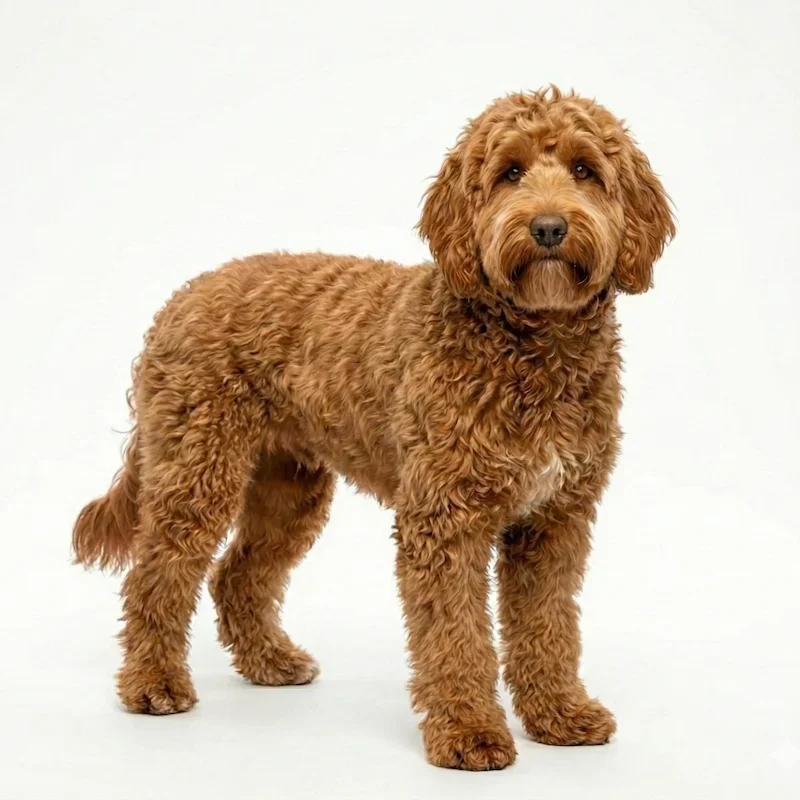
At Stokeshire, we believe that dogs are not products, trends, or commodities — they are living beings entrusted to human care. Bringing a dog into a family is not simply a lifestyle choice; it is a long-term commitment that carries ethical, genetic, and emotional responsibility.
For that reason, we believe education must always come before acquisition.
The world of Doodles is both fascinating and complex, and few dog breeds illustrate this better than the Australian Labradoodle and its closely related counterpart, the Australian Cobberdog. These dogs were not created by accident. Their story is one of sincere intention — an effort to combine temperament, function, and allergy-friendly coats through thoughtful breeding.
Yet as science has advanced, so has our understanding of genetics, population structure, and long-term health outcomes. What began as an innovative solution for service work and therapy dogs’ roles has evolved into a global breed movement with both strengths and limitations that deserve honest examination.
Although Stokeshire does not breed Australian Labradoodles or Cobberdogs, we believe their history offers critical insight into modern canine breeding as a whole. Their development provides one of the clearest real-world case studies of how selective pressure, closed registries, and well-intended goals can shape — and sometimes constrain — genetic diversity over time.
This article is written not to promote a breed, but to explain one.
Together, we will explore the origins of the Australian Labradoodle, what modern genomic science reveals about its true genetic makeup, how registries and naming conventions emerged, and why conversations about genetic diversity matter deeply — not just for this breed, but for the future of all purpose-bred companion dogs.
Our hope is simple: that knowledge empowers families to make informed decisions, and that truth — even when complex — always leads to better stewardship.
From Guide Dog to Global Companion: The Labradoodle's Origin
The story begins in 1988 with the Royal Guide Dogs Association of Australia. A breeder named Wally Conron was given a unique challenge: create a guide dog for a woman whose husband had severe allergies. The solution was a thoughtful cross between a Labrador Retriever and a Standard Poodle. One of those puppies, Sultan, became a successful guide dog, and the Labradoodle was born.
As you can imagine, the idea caught on like wildfire. Soon, breeders outside the guide dog program began creating Labradoodles. However, this early enthusiasm led to a lot of inconsistency in temperament and coat type. Two dedicated Australian breeders, Beverley Manners of Rutland Manor and Angela Cunningham of Tegan Park, saw the need for a more structured approach. They embarked on a mission to create a stable, reliable breed, laying the foundation for what we now know as the Australian Labradoodle.
What's in an Australian Labradoodle? A Dash of This and That
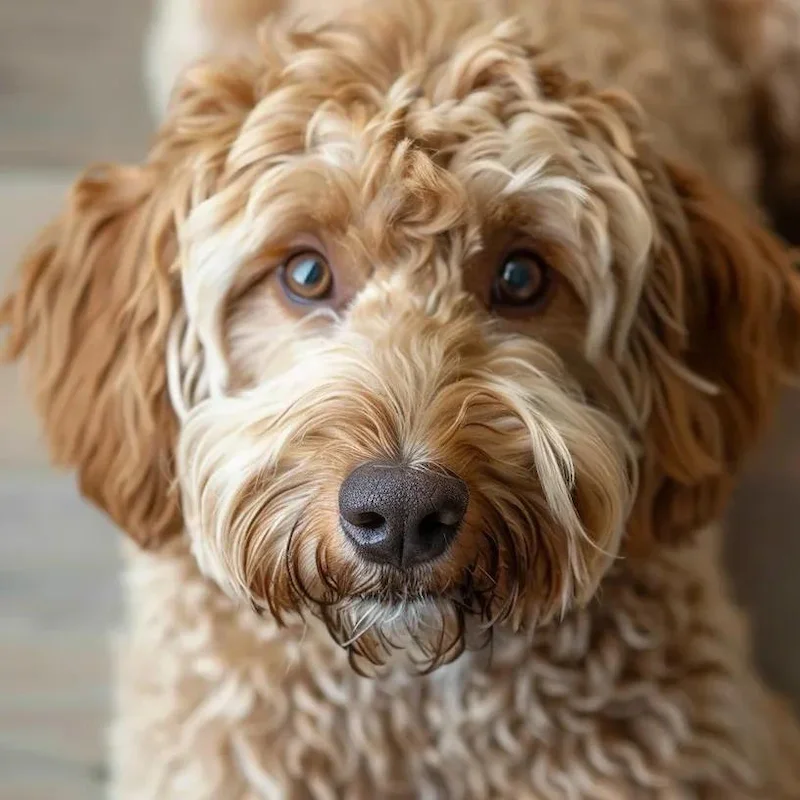
The Australian Labradoodle is a mix of a Labrador Retriever, Poodle, and Cocker Spaniel.
While many think of the Australian Labradoodle as simply a Labrador-Poodle mix, its heritage is a bit more complex—like a cherished family recipe passed down through generations. To refine the breed and achieve the qualities we love, early breeders mindfully introduced a few other breeds into the mix.
These "infusions" included:
Standard, Miniature, and Toy Poodles
English Cocker Spaniel and American Cocker Spaniel
A touch of Irish Water Spaniel (though documented only once)
These additions were not random. They were chosen to help perfect the coat, create size variety, and ensure a gentle, consistent temperament suitable for families, therapy work, and service roles. After these foundational infusions, breeders began focusing on developing the breed from within, carefully selecting dogs that embodied the ideal Australian Labradoodle.
Unraveling the Genetics: What Science Tells Us
For years, the story of the Australian Labradoodle was based on breeder records and pedigrees. But today, modern science gives us a clearer picture. A groundbreaking genomic study in 2020 looked at the DNA of Australian Labradoodles to see their genetic makeup.
The results were fascinating. The study found that the modern Australian Labradoodle genome is predominantly Poodle. This isn't a surprise when you think about it. Breeders have long prioritized that wonderful, low-shedding coat, which is a trait carried in Poodle genetics. The genes for facial furnishings (that adorable bearded look) and a curly coat are strongly linked to Poodles.
By consistently choosing dogs with these desirable coat traits, breeders naturally enriched the Poodle's genetic contribution. This intentional selection is what gives the Australian Labradoodle its predictable, allergy-friendly coat and has largely removed the uncertainty of first-generation crosses.
What Recent Genomic Research Reveals
The findings of that 2020 study confirmed that, over successive generations, intentional selection for a low-shedding, allergy-friendly coat led to a strong enrichment of Poodle genetics—particularly in regions of the genome linked to coat type and hair growth.
This does not mean Australian Labradoodles are “just Poodles,” nor does it negate the Labrador and Spaniel contributions that shaped their temperament, structure, and working ability. Rather, it explains why multigenerational Australian Labradoodles tend to be far more predictable than early Labradoodle crosses. By consistently selecting for a small set of functional traits, breeders stabilized outcomes that families value most: coat consistency, trainability, and a steady, people-oriented temperament.
Importantly, the same research shows that genetic health is not determined by breed labels alone.
The Australian Cobberdog: A New Name for a Classic Line
In 2012, a new name appeared on the scene: the Australian Cobberdog. The name "Cobber" is charming Australian slang for "friend," which perfectly captures the spirit of these dogs.
So, what’s the difference between an Australian Labradoodle and an Australian Cobberdog? Genetically, not much. The Cobberdog is essentially a specific lineage of Australian Labradoodles, descending directly from the original Rutland Manor and Tegan Park lines. It was recognized by the Master Dog Breeders & Associates (MDBA) to create a "breed in development" with a closed registry. This means its pedigrees are strictly documented to preserve its heritage. Think of it as a special branch of the same family tree, distinguished by its registry rather than its DNA.
The Importance of Genetic Diversity
The journey of the Australian Labradoodle highlights a crucial concept in breeding: genetic diversity. The 2020 genomic study found that the average coefficient of inbreeding (COI)—a measure of genetic similarity—in multigenerational Australian Labradoodles is around 5%. This is quite good, especially when compared to many purebred dogs, where the COI can be much higher.
However, this is where responsible breeding becomes paramount. When a breed becomes popular, there's a risk of the gene pool shrinking. If breeders rely too heavily on a few popular sires or close their registries entirely, genetic diversity can decline. This can lead to an increase in hereditary health issues, something we’ve seen in many long-established breeds.
At Stokeshire, our dedication to the future of these dogs is backed by academic rigor. We believe that a healthy breed is a diverse one. By using genetic testing and embracing thoughtful, open-infusion breeding practices, we can protect the vitality of these dogs for generations to come. It’s about prioritizing long-term health over cosmetic trends.
A Fresh Look at Health and "Hybrid Vigor"
There’s a common belief that crossbreed dogs are inherently healthier than purebreds due to "hybrid vigor." While this can be true for first-generation crosses, the benefits tend to diminish in multigenerational breeds that are bred among themselves.
A major 2024 study from the Royal Veterinary College confirmed this, finding that designer breeds like Labradoodles weren't automatically healthier than their parent breeds. The health of any dog—purebred or crossbreed—comes down to responsible breeding, genetic health screening, and a little bit of luck.
Similarly, the term "hypoallergenic" can be misleading. Allergies are caused by proteins found in a dog's dander and saliva, not the hair itself. While no dog is truly 100% hypoallergenic, breeds with low-shedding coats can be a wonderful option for many families with allergies because they release less dander into the environment.
Australian Labradoodle vs Other Dog Breeds
The Australian Labradoodle is known for its friendly and intelligent disposition. In contrast, the more robust Australian Mountain Dog is ideally suited for those seeking a loyal companion with excellent protective instincts and the Australian Mountain Doodle is a loyal, allergy-friendly pup great for families.
Breed Comparison Overview
| Breed | Parent Breeds | Coat Type | Energy Level | Key Traits |
|---|---|---|---|---|
| Australian Labradoodle | Labrador Retriever, Poodle, Cocker Spaniel | Low-shedding, curly or wavy | Moderate to High | Friendly, intelligent |
| Australian Mountain Doodle | Australian Shepherd, Poodle | Wavy, low-shedding | Moderate to High | Loyal, intelligent, allergy-friendly |
| Golden Mountain Doodle | Golden Retriever, Bernese Mountain Dog, Poodle | Curly, wavy, or straight | Moderate | Gentle, loyal, great with children |
| Australian Mountain Dog | Australian Shepherd, Bernese Mountain Dog | Medium-length double coat | High | Intelligent, protective, needs daily exercise |
Relative Energy Level Comparison
The Future is Bright and Built on Intention
Why This Story Matters — Even for Breeds We Do Not currently Produce
The story of the Australian Labradoodle is not a failure, nor is it a cautionary tale meant to assign blame. It is, instead, one of the most important breeding experiments of the modern era — and one from which the entire dog world continues to learn.
In just a few decades, intentional selection produced remarkable consistency in temperament and coat type. At the same time, modern genomic research has revealed an unavoidable truth: the very traits that created predictability also narrowed the breed’s genetic foundation.
This is not unique to Australian Labradoodles.
It is the same pattern that has shaped nearly every closed canine population in history.
What makes this breed especially valuable is that it allows us to observe this process in real time — supported not by opinion or tradition, but by measurable DNA, population genetics, and veterinary data.
At Stokeshire, our decision not to breed Australian Labradoodles or Cobberdogs is not a rejection of the breed, nor of the families who love them. It is simply the result of following the science where it leads.
We believe long-term canine health depends on:
maintaining broad genetic diversity
avoiding closed population bottlenecks
prioritizing function and stability over cosmetic uniformity
using modern genomic testing to guide every generation
Our program was built around these principles — not because tradition demands them, but because biology does.
The Australian Labradoodle remains a beloved companion for countless families, and when bred with transparency, restraint, and rigorous health testing, these dogs can live full, joyful lives. But their story reminds us that responsible breeding must never stand still.
Science advances. Knowledge grows. Ethics deepen.
Our responsibility is to grow with them.
Whether a family ultimately chooses an Australian Labradoodle, a Mountain Doodle, or another breed entirely, our hope is that education leads the journey — and that every dog, regardless of lineage, is bred with intention, humility, and respect for generations yet to come.
Because at the end of the day, breeding is not about creating dogs for today.
It is about protecting dogs for tomorrow.
Frequently Asked Questions
How do I take care of an Australian Labradoodle?
Australian Labradoodles need regular grooming, daily exercise, mental stimulation, and close family involvement to stay healthy and well-balanced.
What Sizes of Australian Labradoodle are there?
Australian Labradoodles come in three distinct sizes: standard, medium, and miniature, which further adds to their appeal among potential dog owners.
What is an Australian Labradoodle's temperament like?
Australian Labradoodles are generally sociable and enjoy being around people, including children, which makes them a fantastic option for families.
How Much Does an Australian Labradoodle Cost?
An Australian Labradoodle can cost between $1,500 to $5,000 for a puppy.
How often do you have to Groom and bathe an Australian Labradoodle?
It is generally recommended to bathe your Labradoodle every four to six weeks and brush at least once a week.
What Color Coat Does an Australian Labradoodle Have?
Australian Labradoodles come in a range of colors, including apricot, cream, chocolate, black, and red, with some variations featuring subtle shades or unique markings.
What are the key characteristics of an Australian Labradoodle?
Australian Labradoodles are known for their friendly temperament, intelligence, and hypoallergenic coats.
How does the breeding process impact the health of Australian Labradoodles?
The breeding process significantly influences the health of Australian Labradoodles by screening and maintaining genetic diversity to reduce the risk of hereditary health issues.
What should potential owners consider before getting an Australian Labradoodle?
Before acquiring an Australian Labradoodle, potential owners should consider their lifestyle, activity level, and commitment to grooming.
Are Australian Labradoodles suitable for families with allergies?
Yes, Australian Labradoodles are often considered suitable for families with allergies due to their low-shedding, allergy-friendly coats.
What is the significance of genetic diversity in dog breeding?
Genetic diversity helps prevent hereditary health issues and promotes overall breed vitality.
How can I find a reputable breeder for an Australian Labradoodle?
Start by researching breed clubs and associations that maintain breeder directories and look for breeders who prioritize health testing, transparency, and ethical breeding practices.
Are Australian Labradoodles easy to train?
Australian Labradoodles can be easy to train because of their intelligence, combined with a gentle disposition.
How much exercise do Australian Labradoodles need?
Australian Labradoodles need a moderate to high level of exercise.
Conclusion
Understanding the Australian Labradoodle's journey highlights the importance of intentional breeding and genetic diversity for the health of all dog breeds. By prioritizing education and responsible practices, families can make informed choices that benefit both their future pets and the broader canine community. We encourage you to explore more about ethical breeding and the breeds that resonate with your family's needs. Join us in advocating for a future where every dog is bred with care, respect, and a commitment to their well-being.
About the Author and Breeder

James Stokes is the Founder and Program Director of Stokeshire Designer Doodles, a family-run breeding and early-development program based in Medford, Wisconsin.
With over a decade of hands-on experience, James designs ethical breeding systems focused on genetic health, stable temperament, and family-first placement. He works alongside his wife and children each day, raising puppies in a home environment with structured early development and intentional care.
Stokeshire puppies are:
Health-tested and raised from proven, well-established lines
Hand-raised in a family home with early socialization and ENS
Matched intentionally to each family’s lifestyle and needs
Part of a small-scale, ethical breeding program built for long-term outcomes
Through a concierge-style placement and transport process, Stokeshire supports families across the United States and into Mexico, ensuring a calm, well-managed transition from breeder to home.