
Australian Mountain Doodle vs Australian Cobberdog
Two Purpose-Bred Dogs — Built for Different Missions
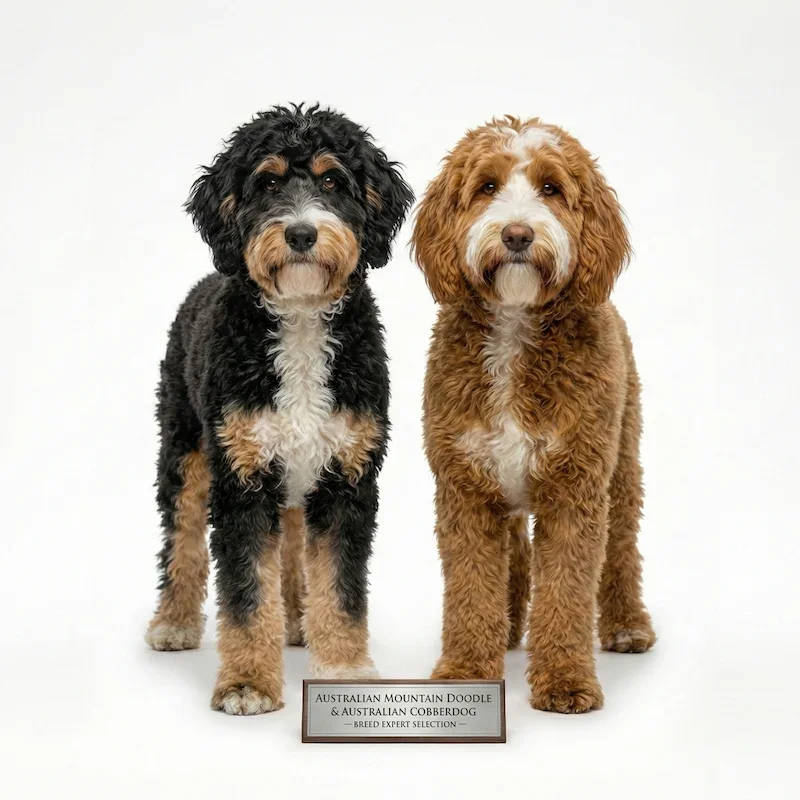
Families searching for a thoughtful, intelligent, low-shedding companion often encounter two names that sound strikingly similar:
Australian Cobberdog
While both are intentional, purpose-bred dogs developed with therapy temperament and family companionship in mind, they come from very different breeding philosophies — and understanding that difference helps families choose wisely for their future pet.
This guide is not about declaring one dog “better” than the other.
It’s about explaining why they exist, how they are built, and which mission each was designed to serve.
The Australian Cobberdog: A Breed-in-Development
The Australian Cobberdog traces its roots back to the original Labradoodle program developed in Australia in the late 1980s. This lineage often includes a significant Poodle influence, contributing to its desired traits.
After early Labradoodle breeding produced wide inconsistency, pioneering breeders at Rutland Manor and Tegan Park committed decades to refining temperament, coat predictability, and allergy-friendliness through careful selective breeding.
Their work included:
multigenerational selection
controlled breed infusions
intensive record keeping
strict pedigree tracking
In 2012, the Master Dog Breeders & Associates (MDBA) recognized the Australian Cobberdog as a breed in development, establishing a closed registry with the goal of long-term purebred recognition and a consistent breed standard.
Core goals of the Cobberdog program:
predictable hypoallergenic coat
calm, intuitive temperament
suitability for therapy and assistance roles
breed uniformity and stability
Cobberdogs are widely loved for their affectionate nature, intelligence, and consistency — especially for families seeking a well-adjusted puppy or adult dog with clearly defined expectations.
The Australian Mountain Doodle: A Mission-Driven Companion Dog
The Australian Mountain Doodle (AMD) was developed from a different starting point.
Rather than pursuing kennel-club breed recognition, the AMD was intentionally designed to address a modern concern facing many established breeds:
Genetic bottlenecks created by closed populations.
Stokeshire developed the Australian Mountain Doodle by blending:
Bernese Mountain Dog — emotional steadiness, grounding temperament
Miniature American Shepherd — intelligence, engagement, athletic balance (a smaller variant of the Australian Shepherd)
Poodle — coat structure, allergy-friendliness, trainability
The result is not a breed-in-development, but a purpose-built companion dog focused on function over form, aiming for a longer life expectancy.
Core goals of the AMD program:
long-term genetic diversity
low coefficient of inbreeding (COI)
strong immune resilience
emotional regulation and stability
suitability for therapy, families, and modern lifestyles, often excelling as therapy dogs
optional furnished or unfurnished coats
The AMD is not designed to converge toward a single visual “type,” but toward a reliable outcome in real life.
Side-by-Side Comparison
Australian Cobberdog vs Australian Mountain Doodle
Two intentionally developed dogs — shaped by different philosophies, goals, and long-term visions.
| Feature | Australian Cobberdog | Australian Mountain Doodle |
|---|---|---|
| Primary Purpose | Establishing a recognized pure breed | Purpose-driven companion & therapy dog |
| Breeding Philosophy | Closed registry, pedigree preservation | Open, intentional genetic diversity |
| Genetic Base | Labradoodle-derived, heavily Poodle dominant | Bernese Mountain Dog × Mini American Shepherd × Poodle |
| Typical Poodle Influence | Approximately 70–85% | Approximately 25–50% depending on generation |
| Registry Status | MDBA — Breed in Development | Not registry-driven |
| Gene Pool Structure | Closed population | Managed open population |
| COI Strategy | Maintains established breed lines | Actively minimizes coefficient of inbreeding |
| Coat Type | Furnished, low-shedding required | Furnished or unfurnished options available |
| Grooming Needs | Moderate to high | Flexible — lower grooming options possible |
| Temperament Focus | Calm, intuitive, gentle | Emotionally grounded, confident, people-focused |
| Therapy Suitability | Excellent | Excellent |
| Visual Uniformity | High | Secondary to function |
| Long-Term Goal | Formal breed recognition | Human impact & canine longevity |
The Australian Cobberdog and the Australian Mountain Doodle are both intentional, well-designed dogs — but they are guided by fundamentally different missions. Cobberdogs pursue registry stabilization and breed recognition, while Australian Mountain Doodles prioritize genetic diversity, emotional stability, and long-term health sustainability. Neither path is wrong — they simply serve different goals.
Why Stokeshire Chose the Australian Mountain Doodle
We deeply respect the Australian Cobberdog and the extraordinary work that went into its creation. It remains one of the most thoughtfully developed modern breeds, often drawing from the Labrador Retriever and Poodle lines that formed the original Labradoodle.
However, Stokeshire’s mission required something different.
Our focus is not breed recognition — it is human impact.
We work with:
children
families
clinicians
veterans
schools
therapy and support environments
For these roles, we prioritize:
emotional resilience
neurological stability
adaptability across households
lower maintenance options
broader immune diversity
long-term health sustainability and a good life expectancy
Rather than closing a gene pool, we intentionally steward it, ensuring genetic health for every puppy.
Rather than breeding toward uniform appearance or a strict breed standard, we breed toward predictable experience.
Which Dog Is Right for You?
The Australian Cobberdog may be ideal if you want:
a formally structured breed program
consistent appearance and coat, adhering to a developing breed standard
traditional multigenerational Labradoodle lineage
participation in an emerging purebred movement
The Australian Mountain Doodle may be ideal if you want:
strong therapy or emotional support potential, making them excellent therapy dogs or assistance dogs
lower long-term genetic risk and a robust life expectancy
flexibility in coat and grooming
stable temperament without narrow genetics
a dog bred for life — not lineage
Two Good Dogs. Two Different Missions.
Both the Australian Cobberdog and the Australian Mountain Doodle exist because people cared enough to ask:
How can dogs better serve humans — and how can we protect dogs from repeating historical mistakes?
They simply answered that question differently.
At Stokeshire, we chose the path of mission over registry, health over labels, and people over pedigree.
Because at the end of the day, our dogs are not meant to win ribbons.
They are meant to change lives.
Frequently Asked Questions
What are the main differences in temperament between the Australian Cobberdog and the Australian Mountain Doodle?
The Australian Cobberdog is known for its calm, gentle temperament, while the Australian Mountain Doodle is characterized by its emotionally grounded and confident nature, showcasing remarkable intelligence.
How do grooming needs compare between the two breeds?
Australian Cobberdog has generally moderate to high grooming needs, while the Australian Mountain Doodle has less grooming needs and an allergy-friendly coat.
What health considerations should I be aware of for each breed?
Australian Cobberdog can have genetic issues associated with its closed breeding registry, which may limit genetic diversity and potentially impact life expectancy. In contrast, the Australian Mountain Doodle can have more genetic diversity, which can contribute to stronger immune resilience and overall health, aiming for a longer life expectancy.
Can both breeds be trained for therapy work?
Yes, both the Australian Cobberdog and the Australian Mountain Doodle are well-suited for therapy work, often serving as excellent therapy dogs, assistance dogs, or even guide dogs.
What is the significance of the breeding philosophies behind each dog?
Australian Cobberdog breeding focuses on establishing a recognized pure breed through controlled selective breeding practices. In contrast, the Australian Mountain Doodle's breeding philosophy emphasizes intentional genetic diversity.
How do the long-term goals of each breed differ?
The long-term goal of the Australian Cobberdog is to achieve formal breed recognition and establish a stable, purebred lineage, adhering to a specific breed standard. The Australian Mountain Doodle prioritizes human impact and canine longevity, focusing on emotional resilience and adaptability, aiming for a healthy life expectancy for every pet.
Conclusion
Choosing between the Australian Cobberdog and the Australian Mountain Doodle ultimately depends on your family's needs and lifestyle. Both breeds offer unique benefits, from the Cobberdog's structured breeding for consistency to the Mountain Doodle's focus on genetic diversity and emotional stability. Understanding these differences empowers you to make an informed decision that aligns with your goals for companionship and support. Explore our resources to find the perfect pet for your family today.
About the Author and Breeder
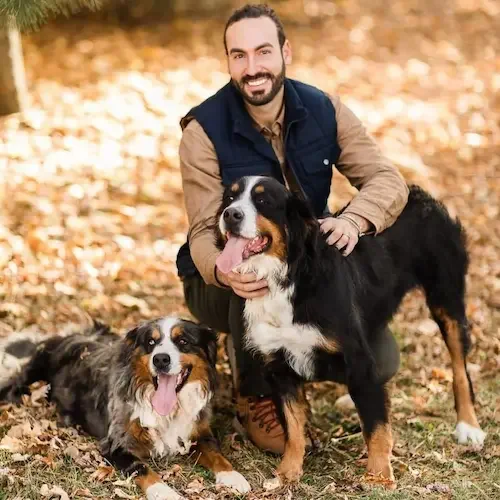
James Stokes is the Founder and Program Director of Stokeshire Designer Doodles, a family-run breeding and early-development program based in Medford, Wisconsin.
With over a decade of hands-on experience, James designs ethical breeding systems focused on genetic health, stable temperament, and family-first placement. He works alongside his wife and children each day, raising puppies in a home environment with structured early development and intentional care.
Stokeshire puppies are:
Health-tested and raised from proven, well-established lines
Hand-raised in a family home with early socialization and ENS
Matched intentionally to each family’s lifestyle and needs
Part of a small-scale, ethical breeding program built for long-term outcomes
Through a concierge-style placement and transport process, Stokeshire supports families across the United States and into Mexico, ensuring a calm, well-managed transition from breeder to home.