
Australian Mountain Doodle vs Bernedoodle vs Aussiedoodle
All three share Poodle genetics and low-shedding coat potential. The real difference is temperament, energy level, and which parent breed shapes the dog's personality. This guide breaks down the Australian Mountain Doodle, the Bernedoodle, and the Aussiedoodle so you can match the right dog to the way your family actually lives.
The shift from purebred archetypes toward purpose-bred hybrids is not a passing aesthetic trend. It is a calculated response to the demands of modern families who need dogs that are healthier, more predictable, and better suited for roles ranging from active family companion to professional therapy partner. Each of these three crosses occupies a distinct position on the spectrum of energy, drive, and emotional temperament.
At Stokeshire Designer Doodles, we do not sell breeds. We match temperaments. Understanding the genetic and behavioral foundations behind each cross is the first step toward finding the dog your family has been looking for.
The Breeding Philosophy Behind Purpose-Bred Hybrids

Furnished and unfurnished Australian Mountain Doodles from the Stokeshire program, illustrating the range of coat types possible within a single cross.
Central to responsible hybrid breeding is the concept of heterosis, commonly called hybrid vigor. By intentionally crossing distinct lineages such as the Bernese Mountain Dog, the Australian Shepherd, and the Poodle, breeders produce offspring with broader genetic diversity and reduced coefficients of inbreeding (COI). This approach directly addresses the critical health vulnerabilities of purebred populations.
The Bernese Mountain Dog is a prime example: published research indicates a median lifespan of only six to eight years, with histiocytic sarcoma affecting roughly 25% of the breed population. Crossing these dogs with Poodles and Australian Shepherds dilutes harmful recessive genes and introduces protective genetic diversity. The result is not a random mix. It is a calculated genetic strategy designed to produce dogs with improved health, longer lifespans, and more stable temperaments. Read more about the Bernese Mountain Dog and the health challenges that drive this approach.
All parent dogs undergo comprehensive screening covering 200+ genetic conditions through Embark and PawPrint Genetics. OFA clearances for hips and elbows, cardiac and ophthalmologic evaluations, and COI analysis are completed before any breeding decisions are made. View the full health guarantee and testing documentation.
The Aussiedoodle: The High-Drive Working Partner

The Aussiedoodle is the result of crossing the Australian Shepherd with the Poodle. This produces an exceptionally intelligent, athletic, and deeply bonded companion. The Australian Shepherd, developed in California for intensive ranch work, contributes high-level problem-solving ability and a strong "velcro" tendency, meaning these dogs often form intense attachments to their primary handler.
Aussiedoodles are characterized by a "work-ready" mindset. They thrive in environments where they are provided with a job: agility training, nose work, or advanced obedience. However, this intelligence can work against unprepared owners. Without sufficient mental and physical stimulation, the Aussiedoodle may redirect energy into destructive behaviors or attempt to "organize" household members through herding instincts.
For highly active families who can commit to significant structured activity, the Aussiedoodle is a remarkable partner. For families seeking a calmer presence, the intensity may be more than they bargained for. Our Toy Aussiedoodle page covers the smaller size options within this cross, and we recommend reading the AMD vs. Bernedoodle vs. Aussiedoodle comparison for a side-by-side temperament analysis.
The Bernedoodle: The Gentle Family Companion
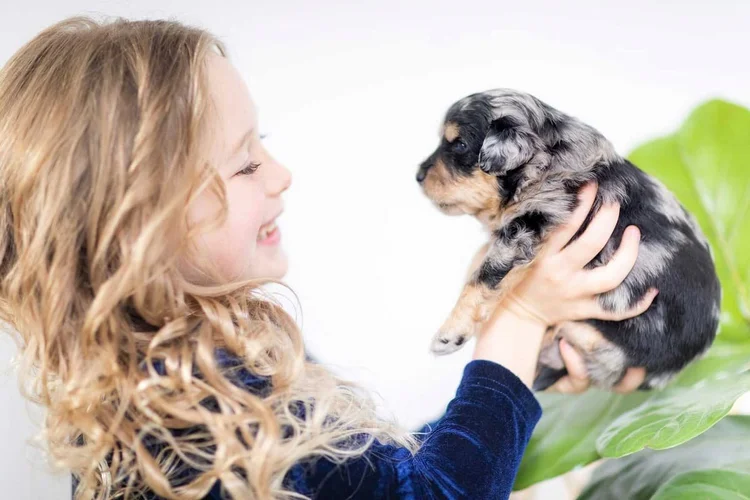
The Bernedoodle combines the calm, affectionate nature of the Bernese Mountain Dog with the intelligence and low-shedding properties of the Poodle. This cross is designed for gentle, loyal companionship. Bernedoodles are often noted for their goofy and playful personalities, though they may inherit a degree of stubbornness from the Bernese lineage, often manifesting as a refusal to move when they disagree with a command.
Unlike the high-drive Aussiedoodle, the Bernedoodle typically possesses a natural "off switch," allowing the dog to transition easily from outdoor walks to indoor relaxation. This makes the Bernedoodle a strong choice for first-time owners due to its more forgiving temperament and adaptable nature. While regular exercise is important, energy demands are generally moderate compared to Shepherd-based hybrids.
The "stubborn streak" is one of the breed's most commonly discussed traits. It is not defiance. It is the Bernese Mountain Dog's deliberate, measured approach to requests. Patience and positive reinforcement resolve it consistently. For families considering the smaller end of this cross, see our Mini and Micro Bernedoodle page or the Ultra Bernedoodle for the larger, more Bernese-forward option.
For a detailed temperament comparison between the Bernedoodle and the Australian Mountain Doodle, read Bernedoodle vs. Australian Mountain Doodle: Why Temperament Matters More Than Breed.
The Australian Mountain Doodle: The Triple-Cross Synthesis
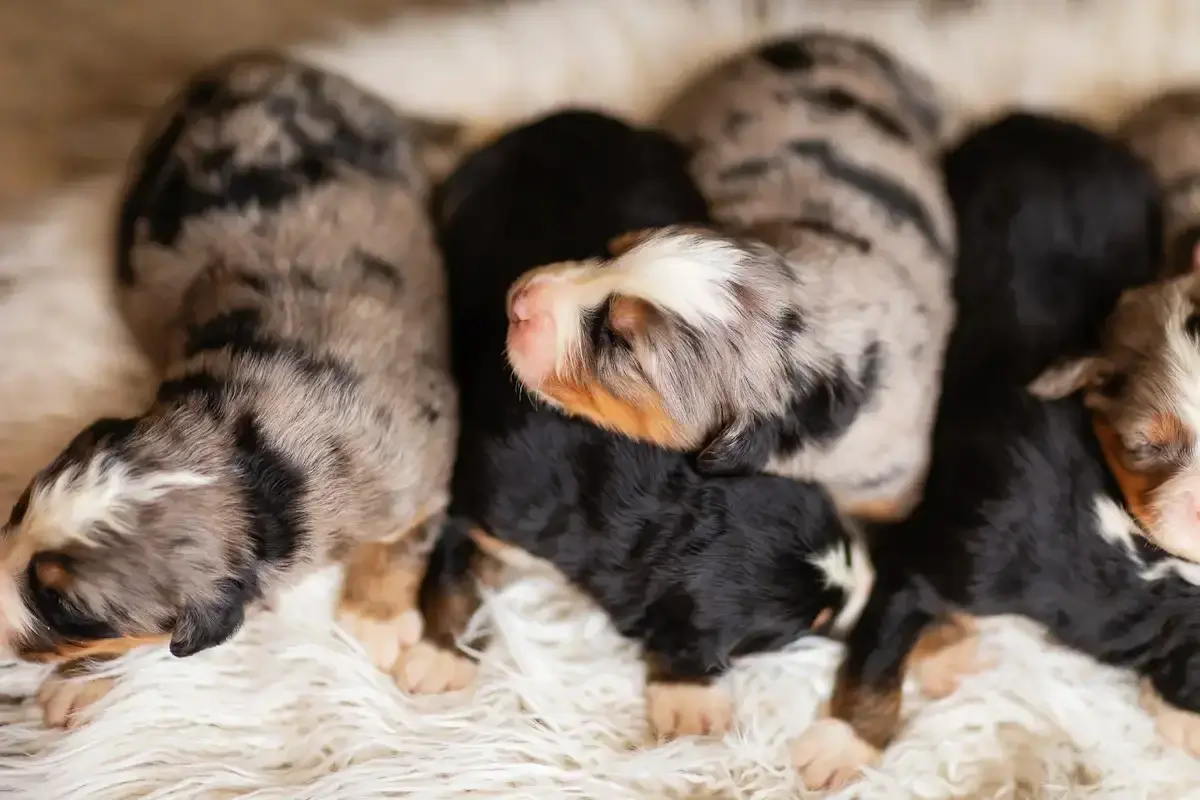
Australian Mountain Doodle puppies from the Stokeshire program. Bernese Mountain Dog, Australian Shepherd, and Poodle combined into a single, balanced companion.
The Australian Mountain Doodle is a triple-cross hybrid incorporating the Bernese Mountain Dog, the Australian Shepherd, and the Poodle. The objective of this cross is to occupy the temperament middle ground. By introducing the Bernese as a calm anchor, the high-drive intelligence of the Australian Shepherd is moderated, resulting in a dog that is intelligent and trainable but possesses a steadier and more relaxed demeanor indoors.
The AMD is designed to solve specific challenges found in its parent hybrids. It reduces the overall energy level of the Aussiedoodle while significantly increasing the lifespan and health profile compared to the purebred Bernese Mountain Dog. The Australian Shepherd's intense handler focus and eagerness to work moderates the Bernese's stubborn streak. Australian Mountain Doodles tend to comply more readily, with less negotiation, while maintaining the emotional sensitivity that makes the training relationship meaningful.
For first-time owners, this can be the difference between a challenging first year and a smooth one. The Aussie contribution raises the AMD's energy slightly above the Bernedoodle's, but the Bernese in the cross still provides the "off switch" that pure Aussie crosses often lack. The result is a dog that is more engaged during outdoor activity, more responsive during training, and more willing to sustain physical effort, but still settles indoors when exercise needs are met.
For the complete breed guide including sizes, coat genetics, health testing protocols, and therapy potential, visit the Australian Mountain Doodle Breed Guide.
Side-by-Side Breed Comparison
The following table summarizes the practical differences families should consider. Trait ratings are relative comparisons based on typical parent breed characteristics. Individual dogs vary significantly. Early socialization, training, and environment shape adult behavior more than breed ancestry alone.
| Trait | Aussiedoodle | Bernedoodle | Australian Mountain Doodle |
|---|---|---|---|
| Energy Level | High / Driven | Low to Moderate | Moderate / Balanced |
| Trainability | Extremely High | High (with patience) | High (Eager to please) |
| Temperament | Alert, Athletic, Loyal | Gentle, Goofy, Patient | Intuitive, Social, Steady |
| Exercise Needs | High (Physical + Mental) | Moderate (Daily walks) | Balanced (Active play) |
| Typical Lifespan | 10 to 13 Years | 12 to 18 Years | 12 to 15 Years |
| First-Time Owner | Challenging | Highly Recommended | Recommended |
| Drive Type | Herding / Working | Companion / Drafting | Intuitive / Social |
| Herding Instinct | Strong | None | Moderate (redirectable) |
| "Off Switch" | Limited | Strong | Present |
| Separation Tolerance | Low (velcro tendency) | Moderate | Low to Moderate |
Naming Distinction: Aussie Bernedoodle vs. Australian Bernedoodle
A significant source of confusion in the designer dog market is the distinction between the "Aussie Bernedoodle" and the "Australian Bernedoodle." These terms describe fundamentally different genetic architectures.
The Aussie Bernedoodle, also known as the Australian Mountain Doodle, is the cross involving the Australian Shepherd, Bernese Mountain Dog, and Poodle. This is the cross described on this page and the one Stokeshire primarily produces.
The Australian Bernedoodle (ABD) is a combination of a Bernedoodle and an Australian Labradoodle. Because the Australian Labradoodle is itself a complex blend of up to six breeds, including the Labrador Retriever, Poodle, and Cocker Spaniel, the resulting ABD carries a different temperament profile. It often leans toward a mellow, "happy-go-lucky" personality rather than the athletic herding drive of the Australian Shepherd.
On our site, "Australian Mountain Doodle" always means Bernese Mountain Dog, Australian Shepherd, and Poodle. For the full naming explanation and breed comparison, visit our Aussiedoodle and Bernedoodle Mix guide.
Coat Genetics: The Furnishing Gene and What It Means for Your Family
Coat genetics in Poodle crosses. The furnishing gene (RSPO2) determines whether a doodle has the classic teddy-bear face or a smooth, retriever-like muzzle.
One of the most critical considerations for prospective owners is coat type and its associated grooming demands. In designer hybrids, the primary determinant of coat appearance and shedding is the RSPO2 gene, commonly known as the "furnishing gene." This gene controls whether a dog has the classic doodle beard and eyebrows or a smooth, retriever-like face. Understanding your options here is as important as understanding temperament. For the full science behind coat inheritance, read our coat genetics deep dive.
Classic "teddy bear" look. Curly or wavy coat that traps dander effectively. Lowest shedding. Requires daily brushing and professional grooming every 6 to 8 weeks.
Wavy or looser coat with some facial hair. Sheds less than purebred mountain dogs or shepherds but produces some dander. Weekly brushing; grooming every 8 to 10 weeks.
No doodle beard or eyebrows. Resembles the non-Poodle parent breed. Moderate shedding. Lowest grooming maintenance. Not recommended for severe allergies.
No dog is 100% hypoallergenic. Shedding level is determined by coat genetics (RSPO2, KRT71, MC5R), not by the number of breeds in the cross. Stokeshire does not guarantee allergy compatibility for any dog. Families with moderate to severe allergies should spend time with doodles in person before reserving. See our full hypoallergenic doodle guide for more detail.
The Growing Demand for Unfurnished Doodles
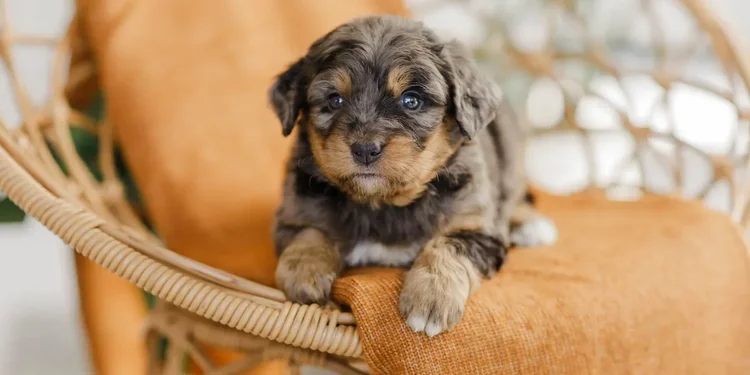
A growing number of families want dogs that possess the intelligence and health advantages of a doodle but prefer the lower grooming requirements and natural appearance of a smooth face. This has driven significant interest in unfurnished variants across all three crosses. Without the facial furnishings, common issues like food-stained beards are eliminated. Grooming bills are lower. While these dogs shed more than their furnished counterparts, they still shed far less than a purebred Bernese or Australian Shepherd.
For families where severe allergies are not a concern, unfurnished doodles represent a sustainable balance of temperament, health, and ease of care. Explore the options:
What is an Unfurnished Doodle? | Unfurnished Bernedoodle | Unfurnished AMD
The Stokeshire Method: Building a Therapy-Grade Foundation
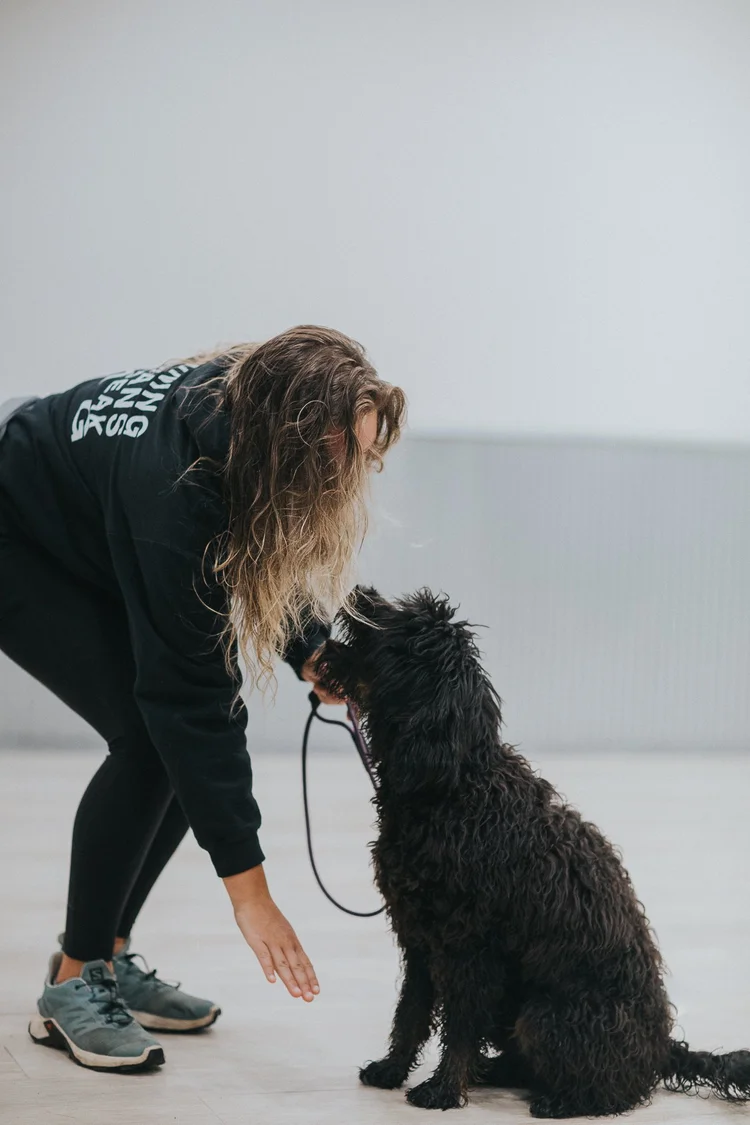
Regardless of which cross you choose, the developmental foundation matters as much as the genetic one. The Stokeshire Method combines four layers of intentional development, beginning before a puppy is born through the selection of parents from lines that exhibit high approach, low shyness, and strong nerve strength.
Early Neurological Stimulation (ENS)
Beginning at three days of age, puppies undergo specific tactile and thermal exercises designed to improve cardiovascular performance, strengthen the immune system, and increase stress resilience. This is based on protocols originally developed for military working dogs. Learn more about the science behind this approach on our Empowered Breeder page.
Structured Socialization
During the critical 3 to 14 week window, every Stokeshire puppy is exposed to a wide range of stimuli through an 80-point socialization checklist. This includes children, elderly adults, medical equipment, various floor surfaces, and loud environmental noises. The goal is to produce puppies that have experienced the world as safe and manageable before they ever leave the program. Read our guide on how to socialize a doodle puppy.
Doodle School and Bootcamp
For families seeking a higher level of preparation, Stokeshire offers Doodle School, a structured 4-week program covering crate confidence, nighttime settling, leash introduction, and basic obedience cues at $200 per day. Bootcamp extends this foundation with an emphasis on emotional regulation, the ability to settle after excitement and recover from a startling experience without spiraling into fear or anxiety.
Training is a continuum, not a handoff. Stokeshire encourages every family to continue the foundations established during these early weeks, focusing on impulse control and positive reinforcement throughout the dog's life.
Matching the Right Breed to Your Family
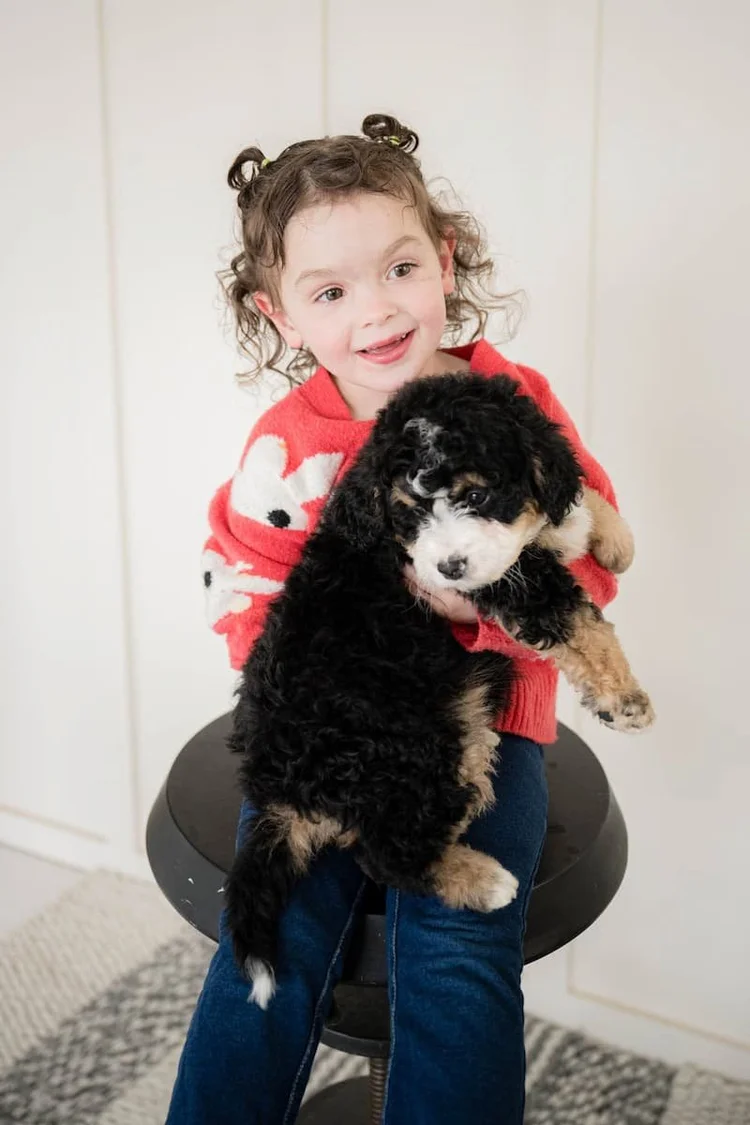
The "best" dog is not the most beautiful puppy in the litter. It is the one that aligns with your household's energy, schedule, experience level, and long-term goals. Stokeshire emphasizes honest lifestyle assessment over aesthetic preference.
| Lifestyle Profile | Recommended Breed | Rationale |
|---|---|---|
| High Activity / Working Goal | Aussiedoodle | High drive. Thrives on sustained physical and mental tasks. Ideal for sport, agility, and advanced obedience. |
| Calm Household / First-Time Owner | Bernedoodle | Forgiving temperament. Natural off switch. Lower energy demands and a patient disposition. |
| Professional Therapy / Versatile Family | Australian Mountain Doodle | Intelligent yet stable. Intuitive emotional connection. Balanced between active and settled. |
| Urban / Small Space | Mini Bernedoodle or Mini AMD | Smaller stature with manageable energy. Adaptable to apartment life with daily exercise. |
| Allergy-Sensitive Household | Any (Furnished, Curly Coat) | Coat genetics, not breed, determine shedding. FF genotype with curly coat offers the lowest dander output. |
A Note on "Velcro" Traits
Shepherd-based hybrids, including Aussiedoodles and AMDs, are frequently reported to follow their owners from room to room. While this is ideal for therapy work and creates a deeply bonded companion, it can increase the risk of separation anxiety if not managed through proper crate training and independence-building exercises from the start. Bernedoodles tend to be slightly more independent, though they still prefer the company of their family. Our FAQ page covers common questions about managing separation tolerance across all three crosses.
Grooming and Maintenance by Coat Type
Grooming requirements are determined by coat genetics, not by which breed your dog is. A furnished Aussiedoodle, a furnished Bernedoodle, and a furnished AMD with the same genotype will have nearly identical grooming needs. The key variables are the furnishing gene (RSPO2) and the curl gene (KRT71).
| Coat Type | Genetic Marker | Appearance | Brushing | Professional Grooming |
|---|---|---|---|---|
| Fully Furnished / Curly | FF + TT | Tight curls, full beard | Daily | Every 4 to 6 weeks |
| Fully Furnished / Wavy | FF + CT | Soft waves, beard | Every other day | Every 6 to 8 weeks |
| Partially Furnished | F/I | Looser coat, light beard | 2 to 3 times weekly | Every 8 to 10 weeks |
| Unfurnished / Straight | IC/IC | Smooth face, flat coat | 2 to 3 times weekly | Every 10 to 12 weeks |
Mats develop fastest in areas where the coat experiences repeated friction: behind the ears, under the collar, armpits, inner thighs, under harness straps, facial furnishings, and paw feathering. Always brush before bathing. Water tightens existing tangles and can set them permanently. For a complete grooming protocol including tool recommendations, mat zone diagrams, and a puppy introduction program, read our grooming guide and the Teddy Bear Cut guide for groomers.
Health Protocols and Long-Term Care
Health is a long-term investment. The genetic advantages of hybrid vigor must be supported by appropriate care standards from puppyhood through adulthood. At Stokeshire, every puppy is placed with a written contract and a 3-year genetic health guarantee, but the guarantee's validity depends on adherence to established standards of care.
Critical Timing Protocols
Spay/Neuter Timing: Puppies should be altered between 12 and 24 months. Early procedures (before 12 months) can disrupt the hormonal signals required for proper closure of growth plates, increasing the risk of orthopedic complications.
Impact Exercise Restriction: For the first 12 months, avoid high-impact activities such as repetitive jumping, running on hard surfaces, or treadmill work. Developing joints need protection during the rapid growth phase.
Nutrition: Species-appropriate, high-quality diet from the start. Stokeshire puppies are raised on Diamond Naturals Skin and Coat (Salmon and Potato) to minimize common allergens, with a recommendation to transition to raw or whole-food diet within the first year. For complete care instructions, visit How Do I Care for a Doodle Puppy?
Beyond the Three: The Golden Mountain Doodle
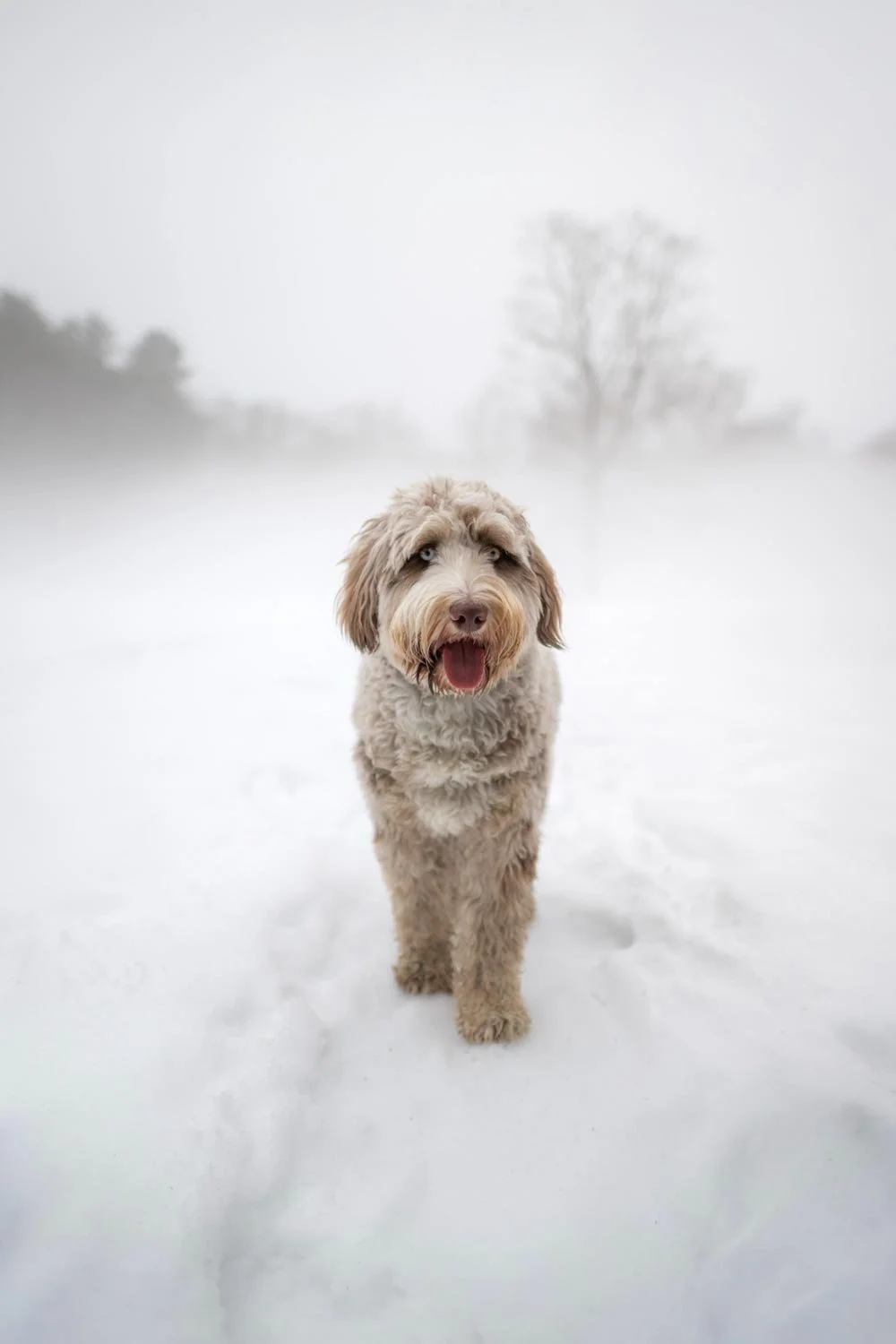
While the Aussiedoodle, Bernedoodle, and Australian Mountain Doodle represent the three primary crosses in the Stokeshire program, the Golden Mountain Doodle (GMD) deserves mention as a fourth option for families torn between the Goldendoodle and the Bernedoodle. The GMD combines Golden Retriever, Bernese Mountain Dog, and Poodle, inheriting the Goldendoodle's social confidence alongside the Bernedoodle's gentle loyalty in a single dog. It offers the widest range of coat colors of any common Poodle cross and benefits from three-breed genetic diversity that dilutes cancer risk from both the Golden Retriever and Bernese lineages.
Stokeshire also produces the Australian Mountain Dog, an unfurnished, double-coated cross between the Australian Shepherd and the Bernese Mountain Dog for families who prefer a traditional working-dog look without Poodle influence.
Choosing the Right Dog for Your Family
The Aussiedoodle remains the premier choice for the high-performance, active handler. The Bernedoodle serves as the benchmark for gentle, family-oriented companionship. The Australian Mountain Doodle represents the most balanced option, a triple-cross architected to moderate the extremes of its parent breeds while offering a stable, intelligent, and healthy companion suited for both therapy environments and diverse family lifestyles.
The decision should be guided by an honest assessment of your energy levels, your time availability for mental stimulation and training, your tolerance for grooming maintenance, and the needs of everyone in your household, including children and existing pets.
Whether choosing a furnished "teddy bear" or an unfurnished "natural" coat, the goal remains the same: a loyal partner capable of transforming the emotional landscape of your home.
Stokeshire matches families by temperament assessment, not breed label. If you are ready to begin the process, explore our current availability or start a conversation about which cross fits your household.
View Available Puppies Read the FAQContinue Reading
Australian Mountain Doodle: Complete Breed Guide
AMD vs. Bernedoodle vs. Aussiedoodle Comparison
Bernedoodle vs. AMD: Why Temperament Matters
Coat Genetics: Understanding Shedding in Doodles
Hypoallergenic Doodle Guide for Allergy-Sensitive Families
Raising and Training Therapy-Grade Dogs
Doodle Puppy Education for Parents and Breeders