
Questions to Ask a Dog Breeder Before You Put Down a Deposit
The moment you decide to add a puppy to your family, the excitement is palpable. You start imagining the cozy snuggles, the playful romps in the backyard, and the new rhythm of life with a four-legged pet. But before you pick out a collar or start brainstorming names, there is a critical step that often gets rushed in the thrill of the moment: the interview.
Finding a breeder isn't just about a transaction; it's about entering into a relationship. You are trusting someone to bring a new life into the world that will live in your home for the next 10 to 15 years. That’s a big deal for any dog breed. At Stokeshire Designer Doodles, we believe that transparency is the love language of ethical breeding. We want you, as a prospective buyer, to ask us the hard questions. In fact, we worry a little when you don’t!
To help you navigate this process with confidence, we’ve put together a guide on the essential questions to ask a dog breeder before you ever hand over a credit card payment. Think of this as your dog breeder interview checklist—a tool to ensure your future pup comes from a place of love, science, and integrity. You can read more about ethical dog breeders.
Why Asking the Right Questions Matters
In a world where online listings can be deceiving, asking specific, probing questions is your best defense against puppy mills and backyard breeders. A deposit is a commitment—often a non-refundable one—so it’s vital to ensure you, as a buyer, are comfortable with the breeder’s practices before you make that financial leap.
The right breeder deposit questions will reveal more than just logistics; they will reveal the breeder's heart. You want to find someone who cares as much about where their puppies end up as you care about where they came from.
The Health and Genetics Checklist
Your first set of questions should dive deep into the science of genetic testing. A cute puppy is wonderful, but a healthy puppy is non-negotiable.
1. What specific health testing have the parents undergone?
Notice the word "specific." Simply asking "Are they healthy?" allows a breeder to say "Yes" based on a quick vet check. You want to hear about genetic panels and orthopedic evaluations recommended by a trusted veterinarian or breed club.
What to listen for: Mention of OFA (Orthopedic Foundation for Animals) testing for hips, elbows, and patellas. Mention of genetic disease panels relevant to the dog breed (like progressive retinal atrophy or von Willebrand's disease) is often aligned with American Kennel Club (AKC) health recommendations for purebred lines.
Red Flag: "My vet said they look great," or "We don't test because the parents have never been sick."
2. Can I see proof of these health clearances?
Trust, but verify. A reputable breeder will have these documents ready to share digitally or in person. They usually link to the OFA database, where results are public, or provide official genetic testing reports. These are often part of the overall contracts.
What to listen for: "Absolutely, here is a link to their OFA profile," or "I'll email you the PDF of the genetic panel right now."
Red Flag: "I can't find the papers right now," or "I'll give them to you when you pick up the puppy."
3. What is your guarantee if the puppy develops a genetic condition?
Even with the best science, biology can be unpredictable. An ethical breeder stands behind their program with a solid health warranty policy, often detailed in their contracts.
What to listen for: A contract that covers genetic defects for at least the first two years of life.
Red Flag: A guarantee that only covers the first 72 hours, or one that requires you to return the dog to get a refund (which most families effectively cannot do emotionally).
The Temperament and Socialization Checklist
We believe that a "Tulum-style chill" isn't just an accident—it's cultivated through early dog training and socialization. How a puppy is raised in its first eight weeks shapes who they become in your living room.
4. How do you socialize your puppies?
Puppies aren't just born knowing how to handle the vacuum cleaner or a crying baby. They need exposure and early training.
What to listen for: Structured curricula like Puppy Culture or ENS (Early Neurological Stimulation). Mention of exposure to different sounds, floor textures, people of various ages, and car rides.
Red Flag: "They play with our kids sometimes," or "We let them run in the yard." (While good, this isn't a structured socialization plan or comprehensive training.)
5. Where are the puppies raised?
This reveals the level of care and attention the puppies receive.
What to listen for: "In our living room," "In a dedicated nursery in our home," or "Right in the middle of family life."
Red Flag: "In the kennel out back," "In the barn," or vague answers about facility locations you aren't allowed to see.
6. How do you match puppies to families?
This is a controversial one for some, but crucial for success. Does the breeder let you pick based on color alone, or do they guide you, the buyers, based on personality?
What to listen for: "We temperament test at 7 weeks and guide you to the puppy that fits your lifestyle," or "We help you choose based on energy level and dominance."
Red Flag: "First person on the list gets first pick of any puppy," regardless of whether that high-drive puppy fits their sedentary lifestyle.
The Breeder Relationship Checklist
Finally, you want to assess the human behind the dog. You are entering a long-term relationship.
7. Will you take the dog back if I can no longer keep it?
This is the hallmark of ethical breeding. A responsible breeder never wants their dogs to end up in a shelter and will have a clear return policy.
What to listen for: "Yes, absolutely, at any age, for any reason."
Red Flag: "No, once you buy it, it's your responsibility," or "We can help you list it on Craigslist."
8. How many litters do you have per year?
This helps you identify high-volume operations, which might resemble a puppy mill or large commercial kennel.
What to listen for: A number that seems manageable for the number of people involved. If it's a family, 2-4 litters might be a lot. If they have staff, they might handle more.
Red Flag: Dozens of litters a year with no clear explanation of how each puppy gets individual attention.
9. Can I speak to references or past buyers?
A happy community is the best advertisement. Many reputable breeders are also active in local breed club communities.
What to listen for: "Sure! Check out our Facebook group," or "I can put you in touch with a family who has a sibling from a previous litter."
Red Flag: Hesitation or refusal to connect you with others.
Before You Sign: The Final Gut Check
Once you have answers to these breeder deposit questions, and before you sign any contracts, take a quiet moment. Sit with a cup of coffee and review the information. Does it feel right?
At Stokeshire, we strive to be the kind of breeder who answers these questions before you even have to ask. We provide academic rigor in our genetic testing, a warm Midwest welcome in our communication, and a lifetime of support for our families.
Remember, you have the power in this situation. It is okay to walk away if an answer doesn't sit right with you. Your future family member is out there, and finding the right person to bring them to you is worth the extra diligence.
If you’re ready to ask us these questions, we’re ready to chat. We love nothing more than talking about how we can bring a little more joy—and a lot more wagging tails—into your world.
Frequently Asked Questions
What should I look for in a breeder's facility?
Look for cleanliness, organization, and overall environment. A responsible breeder will have a welcoming space where puppies are raised in a home-like setting, not in isolated kennels or barns.
How can I ensure the breeder is ethical?
Ask about their breeding practices, health testing, and socialization methods. An ethical breeder will be transparent about their processes and provide documentation for health clearances and their overall policy for the specific dog breed they raise.
What is the importance of puppy socialization?
Early exposure to different environments, people, and experiences helps puppies learn how to behave in various situations, reducing the likelihood of behavioral issues later in life. This is a crucial part of early dog training.
What should I ask about the puppy's parents?
Ask about their health testing results, genetic history, and any behavioral traits, as well as living conditions and how the puppies are socialized. Inquire specifically about the sire and dam's health clearances and temperament for their dog breed.
How can I prepare for bringing a puppy home?
Start by puppy-proofing your home, removing hazards, and setting up a designated space for the puppy with a bed, toys, and food/water bowls. Additionally, consider scheduling a veterinarian appointment for a health check and vaccinations shortly after bringing your puppy home. Discuss initial dog training, future dog grooming needs, and the breeder's policy on neutering or spaying your new pet.
What are the signs of a reputable breeder?
A reputable breeder will demonstrate a commitment to the health and well-being of their dogs. Look for breeders who provide health clearances, are knowledgeable about their specific dog breed, and are willing to answer your questions thoroughly. Many are also members of a breed club or adhere to American Kennel Club (AKC) standards for their purebred lines.
About the Author and Breeder: James Stokes of Wisconsin Designer Doodles
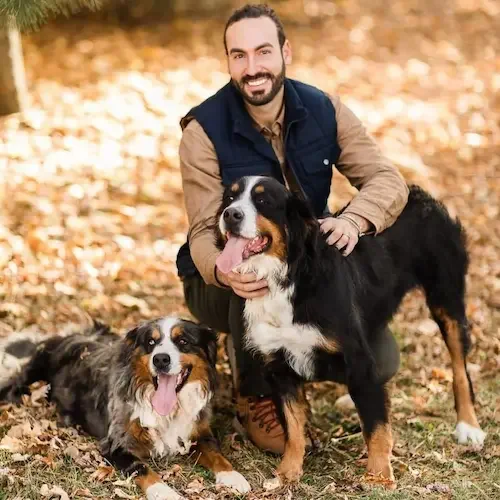
James Stokes is a trusted breeder of Doodles, a popular hybrid dog breed, and a responsible steward of the dog breed. For over ten years, James has dedicated himself to raising healthy Bernedoodle puppies, a cross often involving the Bernese Mountain Dog and Poodle, that families can cherish, prioritizing their welfare. He works alongside his wife and children every day, ensuring each puppy from their litters receives loving care. Together, they have found wonderful homes for their Doodles across the U.S., Canada, and Mexico.
Health-tested puppies raised from proven, well-established lines and supported by a three-year genetic health guarantee, with breed-appropriate genetic testing conducted in line with current veterinarian and genetic best practices.
Hand-raised in a family home, never kept in kennels or a whelping box for too long, ensuring optimal welfare and a healthy birth environment.
Socialized early with ENS, sounds, and plenty of family time. This helps develop positive behavior and a balanced temperament and energy levels, ensuring they feel safe and relaxed, and are ready for their first vaccine and initial dog training.
Lovingly matched to each family. Every Doodle puppy from our litters is chosen based on specific criteria to fit well with their family’s way of life and needs, ensuring a perfect pet.
Part of an ethical, small-scale breeding program, driven by heart, focusing on the overall health and nutrition of each animal, including what dogs eat for optimal development.
At Stokeshire, doodles are never “just pets,” but cherished family members. They are thoughtfully raised companions—designed to become steady, intuitive members of the family for life. Every decision we make is guided by the Stokeshire Method: pairing genetics, temperament, and early-life environment to raise dogs with excellent behavior who integrate naturally into real family rhythms, upholding the breed standard of our program.
Our doodle puppies are known for their balanced energy, emotional intelligence, and predictable temperaments, embodying the best of their dog breed characteristics. They thrive in a wide range of households—from active families to therapy-focused homes—and are often an excellent option for those seeking allergy-friendly companions. Like our Goldendoodles and Bernedoodles, which are popular hybrid breeds, each puppy is raised with the intention of becoming deeply bonded, well-mannered, and trusted at every stage of life.
Stokeshire is proudly based in Medford, Wisconsin, but our families span far beyond the Midwest. Through our concierge-style transport and placement process, part of our comprehensive program, we safely deliver puppies across the United States and into Mexico—ensuring a calm, carefully managed transition from our home to yours. From day one, your puppy’s journey is handled with the same care and intention with which they were raised.